Late-blooming joys
Walking along a quiet, simple road nestled deep in the hills on a sunny May day, we arrived at Quả Cảm Leprosy Colony. At one point, hundreds of leprosy patients from many provinces and cities in northern Vietnam came to live here. During the years when the disease was still stigmatized, many had to leave their families, carrying their shame and living quietly behind the gates of the leprosy colony.
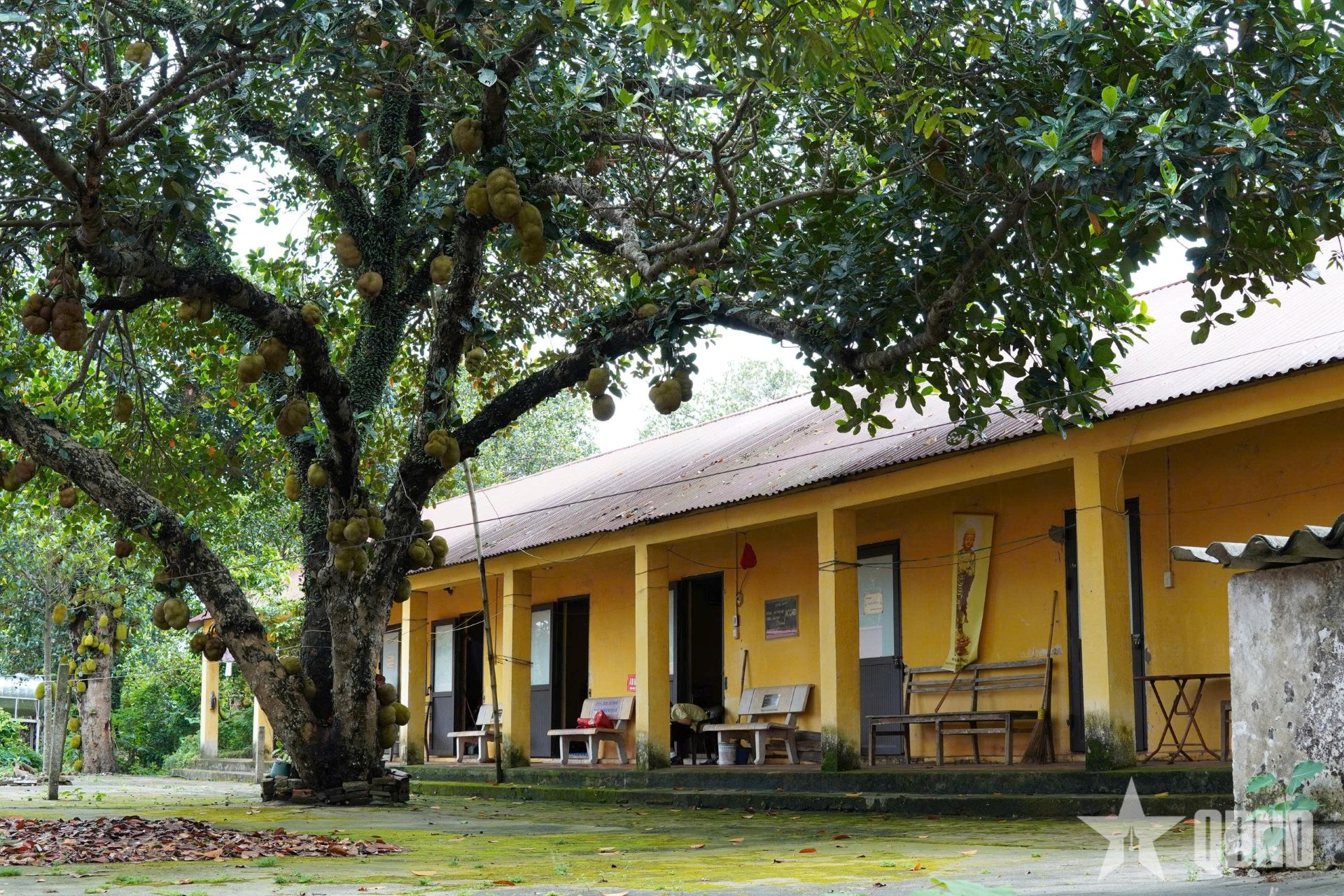 |
| Although the living quarters for patients at the Quả Cảm Leprosy Camp are old, they are still spacious, with many green trees and fruit trees, creating a pleasant living environment for daily life. |
Sitting in the temple courtyard, looking up the slope where the patients often gathered to chat each afternoon, we perceived a different side of Quả Cảm than we had imagined a leprosy colony to be. On ordinary days, the patients and their relatives still planted trees and vegetables. Along the slope leading to the colony, rows of jackfruit and longan trees were lush and bearing fruit. Under the trees, flocks of chickens clucked and scratched the ground for food. Occasionally, the whole flock would scatter in a panic when chased by the colony's yellow dog, then quickly disperse throughout the garden.
Every day, Mrs. Lanh watches her flock of chickens. She doesn't raise chickens to eat them; she raises them to have the sound of their clucking every day to "bring joy to the house."
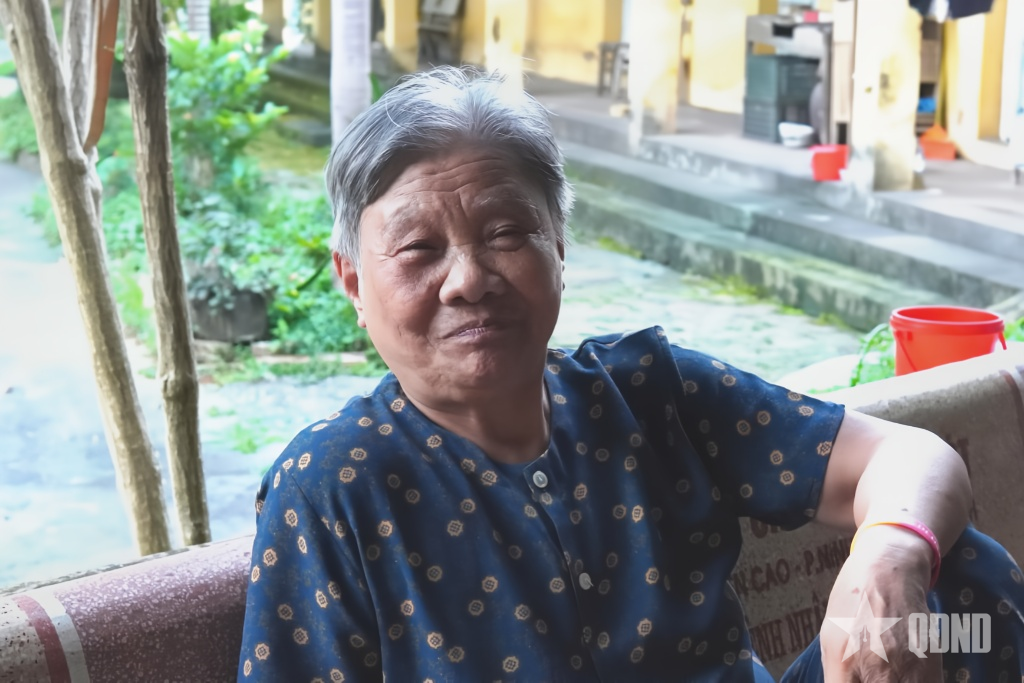 |
| Ms. Do Thi Lanh, 79 years old , has been a patient here since she was 20. |
Ms. Do Thi Lanh, 79 years old, has been associated with Qua Cam for over half a century.
She entered the camp in 1974, when she was just over twenty years old. A few years after giving birth to her daughter, leprosy struck. Her fingers and toes gradually eroded. Her husband left her to marry someone else. She entered Quả Cảm alone at a time when the disease was still a terrifying threat to the entire region. She began, her voice low and somber: “Back then, people were very afraid. Family members who came to visit only dared to stand outside under the banyan tree, calling out, giving a few gifts, and then quickly leaving.” But things are different now. Occasionally, the grandchildren of the elderly residents still return to visit, bring gifts, and sit and chat with them like any other family.
"In the old days, no one dared let children play here," she continued. "Now they run and jump around all the time." Children aged 5-8, after school, would ride their bikes around the camp's roads. They pedaled hard, chasing each other with gusto, their laughter ringing out.
Climbing up the slope, we met Mrs. Nguyen Thi Thanh, over 70 years old, who has lived in Qua Cam for more than 30 years. She is still healthy, and her house is right near the camp, so she occasionally rides her bicycle to the market or for sightseeing around the area.
Seeing the visitors, she pulled an old plastic chair out in front of the room, saying cheerfully, "I'm old now, so I like being around people. Before, it was so quiet here; many days I wouldn't hear a single person from morning till night. Now, charity groups come here regularly, so it's very lively."



Sitting amidst the old buildings, chatting with the elderly residents, we clearly felt that the most significant change in the lives of these patients was their spiritual well-being. From lives huddled in shame and silence, they have gradually opened up. Sitting on the porch enjoying the breeze, listening to children playing in the yard, the clucking of chickens, or receiving phone calls from their children and grandchildren have now become daily joys for them.
The Children of Courage
"Don't be so reckless next time!" Around late afternoon, a commotion suddenly erupted in the temple courtyard. Three children sped down the hill on their bicycles, racing all the way to the steps in front of the temple, startling the elderly people sitting there. More than a dozen elders surrounded them, scolding and admonishing them, their voices filling the entire courtyard.
We found it strange. This was a leprosy colony, so whose children were these, playing around here and seemingly so close to the elderly? I asked Mrs. Lanh. She fanned herself with a bamboo fan: "They're Ms. Dan's grandsons. Ms. Dan is also a leprosy patient here! Ms. Dan's daughter gave birth to twins. They're so cute!" A lump formed in my throat; perhaps for too long, the prejudice against leprosy colonies as "dead lands" had taken root in the minds of many people.
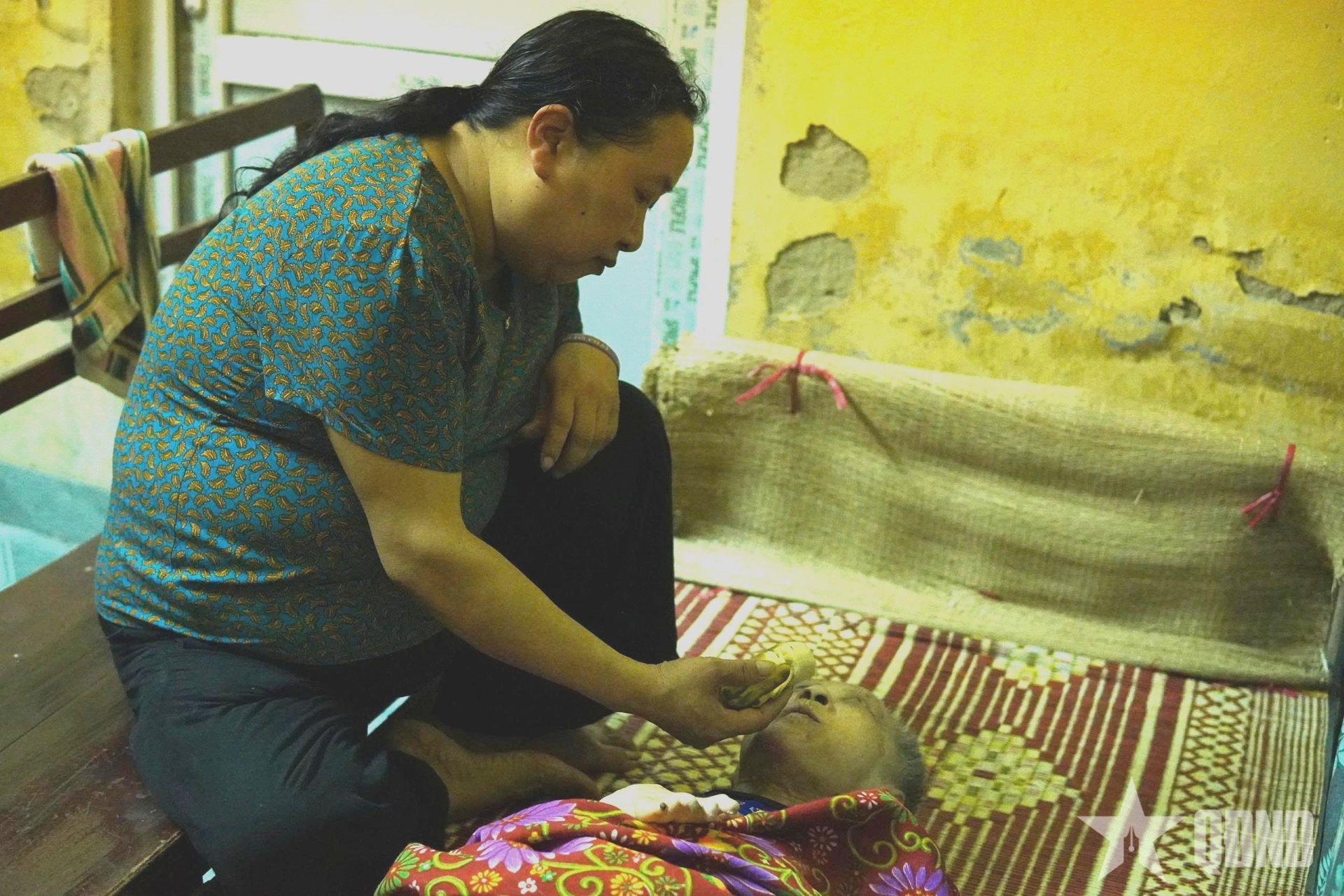 |
| Ms. Nguyen Thi Ngoc is the daughter of Ms. Nguyen Thi Tinh (a leprosy patient), and she is now a nurse's assistant at the leprosy colony. |
We met Ms. Nguyen Thi Ngoc, a woman known as the successor to Ms. Nguyen Thi Xuan - a nurse who has cared for leprosy patients at Qua Cam for over 40 years.
Born into a family where both parents were leprosy patients, Ngoc, a 13-year-old girl who followed her parents to the leprosy colony, has, after 36 years, become a nimble and capable nurse, a pillar of support for many elderly and frail patients. Every day, she cares for the elderly who are no longer able to live independently, just as the colony once cared for her own family.
"While I was here, the staff at the camp also created opportunities and found suitable jobs for the children of patients like me," Ms. Ngoc confided.
The Quả Cảm leprosy colony is like a miniature "village." Here, some families have been together for two, even three generations. At its peak, the colony housed around twenty or thirty children. According to Ms. Ngọc, even though they grew up in the leprosy colony, the children still went to school like other children.
Many adults who grew up in Quả Cảm now have stable lives outside the camp: some are doctors, teachers, officials, and hold managerial positions in businesses. The children who grew up in Quả Cảm are now in their thirties and forties. They go to school, work, start families, and raise children. Some, like Ms. Ngọc, have chosen to stay at the leprosy colony. These children use their ordinary lives to answer for the vibrant spirit of this land.
Many families have remained connected for generations, a prime example being the family of Mrs. Dan, currently the deputy manager of the leprosy colony. From grandparents to children and grandchildren, they have all lived and grown up here; successive generations continue this life cycle on this land.



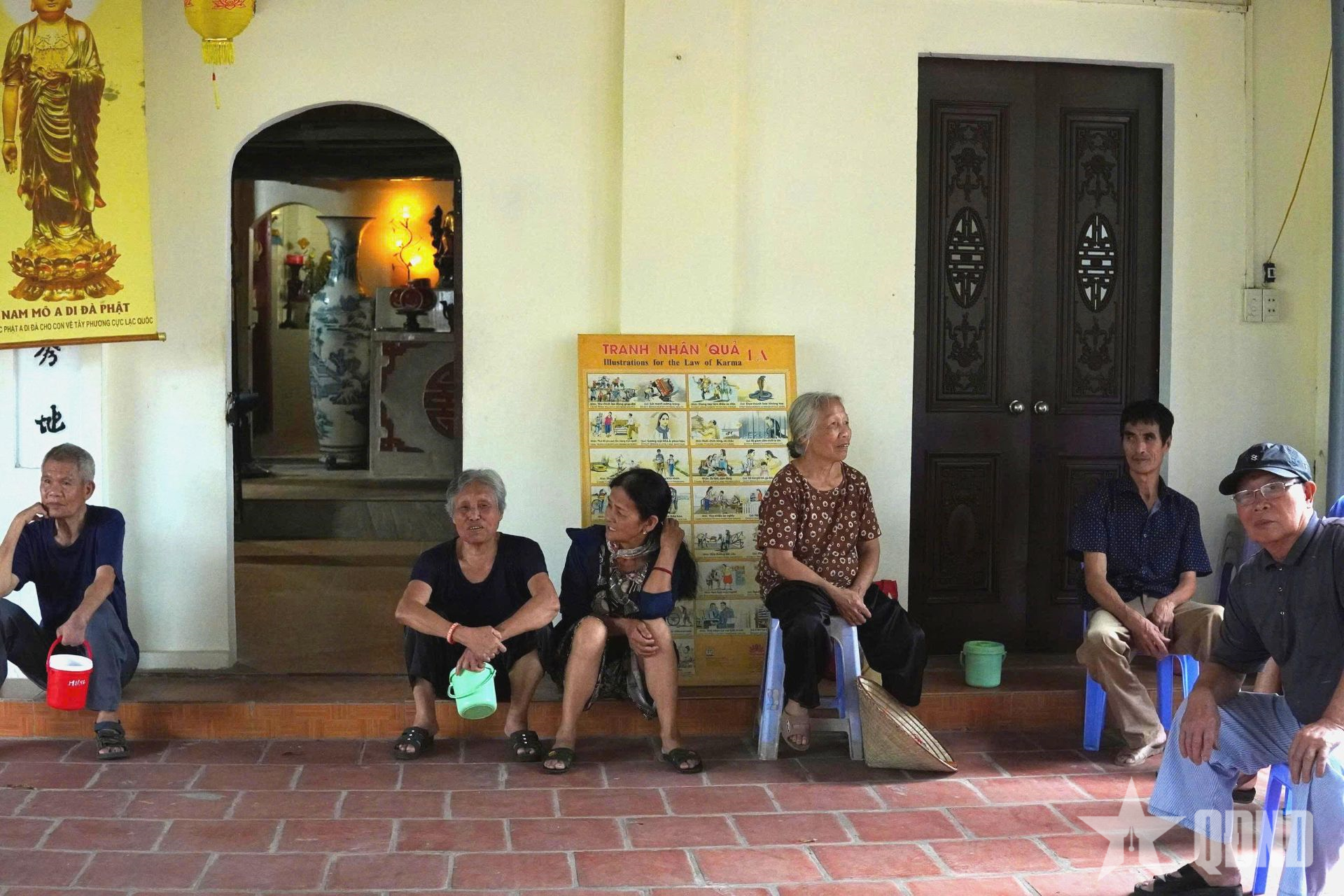 |
| Every afternoon, the patients at Quả Cảm Leprosy Camp would gather and chat in the temple courtyard. |
The transformation in Quả Cảm today is the result of advances in leprosy prevention and control, along with the Party and State's concern for patients through healthcare policies and social security guarantees. Simultaneously, community awareness has also gradually changed for the better. This is a welcome sign not only for leprosy patients but also for patients with other serious illnesses, showing that humanitarian values are increasingly spreading in society, ensuring that no one is left behind.
When darkness fell completely, we left Quả Cảm. Looking back, the yellow lights still flickered from the small rooms nestled at the foot of the hill. Outside the gate, the sound of children laughing and talking still echoed, a sound that, though ordinary, had become strangely special in this place.
At the foot of Cai Vang mountain, perhaps peace is quietly blossoming.
Source: https://www.qdnd.vn/phong-su-dieu-tra/ky-su/trai-phong-qua-cam-ngay-nang-moi-1044880
![[Photo] Strengthening character and expertise: Intense training for artillery soldiers.](https://vphoto.vietnam.vn/thumb/1200x675/vietnam/resource/IMAGE/2026/06/30/1782815602541_lu-368-1875-4571-jpg.webp)