

These stories range from the days when the "flame" of revolution was first kindled in the poor countryside, to the days when the people were enlightened about the revolution, nurturing, protecting, and hiding revolutionary cadres...
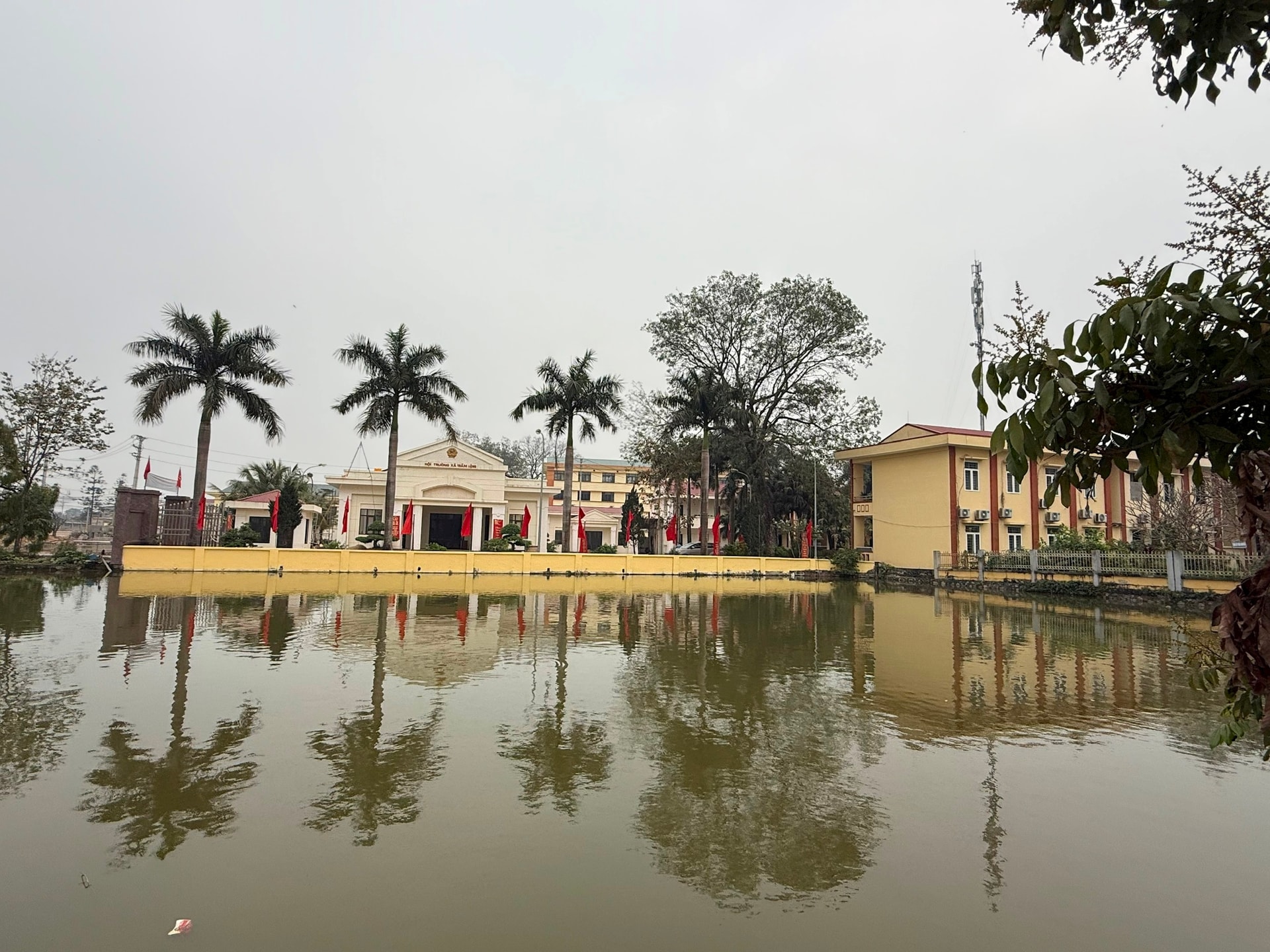
A place where history is recorded.
Sitting at an old table in the corner of the yard, neatly stacked with newspapers and magazines, Mr. Tran Quyet Tien, former Chairman of the Veterans Association of Tram Long commune, slowly began his story. With a resolute gaze, he posed the question: Why did Tram Long village (Tram Long commune) become a safe zone for the Northern Vietnam Party Committee? Then he calmly recounted: Tram Long used to be a low-lying area, making trade very difficult. For six months of the year, people had to use boats as a means of transportation. The village was poor and remote, forcing many to leave their homes to seek work elsewhere. Among those who left were people from middle-class farming families and children from well-off families who went to learn trades...
During the period of 1936-1939, many places were witnessing workers' movements demanding higher wages and shorter working hours. People from the countryside had access to revolutionary newspapers and brought them back to their villages to read to the people. From stories of the times, they became the first revolutionary propagandists in their impoverished rural areas.
Through the process of development, the first revolutionary mass organizations in Tram Long village were gradually established and began operating. Following the Party's policy, the Northern Regional Party Committee selected the South Ung Hoa area to build a safe zone (ATK), with Tram Long village (Tram Long commune) and Tao Khe village (Tao Duong Van commune) as the center of the safe zone – where the Regional Party Committee's headquarters were located and worked.
In conjunction with the revolutionary movement in the region, on June 20, 1942, at the house of Mrs. Ta Thi Nam (Mrs. Khuon), the Party Committee organized the admission of three individuals into the Party: Pham Dinh Hong, Nguyen Ngoc Diep, and Pham Thi Chuoc. Simultaneously, they announced the establishment of the Tram Long Commune Party Branch and assigned Comrade Dang Dinh Tan, a cadre of the Northern Regional Party Committee, as the Branch Secretary.
From here, many cadres of the Regional Party Committee came to carry out revolutionary activities. At this time, Comrade Hoang Quoc Viet, posing as a geography teacher, stayed at the house of Mrs. Ta Thi Nam (Mrs. Khuon), later moving to the house of Mr. Chu Dan in Thu Noi village to continue his activities. The ATK Cadre Committee also arranged a place for printing documents, holding meetings and discussions, and organizing training classes...
The operational base of the Tram Long ATK was established, including: Chong Pagoda, the central operational base of the ATK, where cadres of the Regional Party Committee and some Central Committee cadres were received and sheltered, including comrades: Hoang Quoc Viet, Binh Phuong, Tran Thi Minh Chau, Bach Thanh Phong...
Dinh Cu is located outside the Cua Sy rice paddy area, situated on a high mound surrounded by rice fields. In 1942, this was the venue for the main meetings of the Regional Party Committee.
Mrs. Nguyen Thi But's (Mrs. Phuong's) house was the location of the first printing workshop, which was later moved to the ancestral house of Chong Pagoda. This also served as the financial office of the Regional Party Committee. Mr. Nguyen Van Dan's house was organized into a weaving workshop and used as a communication center. Mrs. Pham Thi Nganh's (Mrs. Gioi's) house was a training class. Mr. Nguyen Van Thin's (Nghin's) house was a place for secret meetings and discussions...
To protect the ATK (Viet Minh Resistance Zone), the Viet Minh Front of Tram Long commune focused on security, espionage prevention, and the sheltering and protection of Party cadres. When the Regional Party Committee held conferences or training courses, the Viet Minh Front of the commune would often divide its members to be responsible for different sections of the route, each with its own secret code. Participating in the protection efforts were also "three-person teams" consisting of youth, women, and children's groups, who all knew the secret codes to signal when strangers arrived in the village. As a result, Tram Long successfully protected many meetings, including those attended by comrades Truong Chinh and Hoang Van Thu.
After a period of operation, the secret agents, transferred from the Northern Regional Party Committee's ATK to Nam Ung Hoa, on the night of November 7, 1942, raided Ung Hoa from Hanoi , simultaneously searching both the Tram Long and Tao Khe villages... However, thanks to the concealment by the people, many Party leaders were protected and rescued in time.
Following the terrorist attack, to ensure safety, the Regional Party Committee decided to relocate the ATK (Revolutionary Base Area) to Bac Ninh , assigning Comrade Tran Thi Minh Chau (also known as Mai) to stay behind to encourage the people and consolidate the movement. More than a month later, the revolutionary movement in Tram Long stabilized again. Tram Long and Chong Pagoda remained revolutionary bases, locations for transporting, sheltering, and storing cadres, and for storing documents of the Regional and Provincial Party Committees.
The ATK (Anti-French Resistance Zone) was located in Tram Long and Tao Khe for only about a year (1942), but the people of Tram Long - Tao Khe and the southern communes of Ung Hoa district fulfilled their duty to protect the Party's ATK...
Continuing the story, Nguyen Khac Tam, Deputy Secretary of the Party Branch of Tram Long village (Tram Long commune), recalled that by the August Revolution of 1945, Ung Hoa district had 4 Party branches: Tao Khe, Tram Long, Vien Noi, and the combined Kim Cham - Xuan Quang - Trieu Khuc - Phu Luu branch, with 31 Party members.
In March 1945, the Ha Dong Provincial Party Committee assigned Comrade Do Muoi to lead preparations for the August General Uprising. Comrade Do Muoi established Tram Long as a base to direct the movement in the southern Ung Hoa and southern My Duc areas. Under the leadership of Comrade Do Muoi and other comrades at the grassroots level, the revolutionary movement in Ung Hoa developed steadily. After five months under Comrade Do Muoi's leadership (from March to August 1945), cadres, party members, and the masses were ready to rise up and seize power.
The stories that remain
To date, the names of many families have been recorded in history for their significant contributions to nurturing, protecting, and concealing Party and Regional Committee cadres, including comrades such as Hoang Quoc Viet, Tran Thi Minh Chau, Bach Thanh Phong, Bui Quang Tao... Besides exemplary bases such as the homes of Mr. and Mrs. Ly Dan, Ly Dich, Mrs. Tuy, Ta Thi Nam, Mrs. Pham, Mrs. Phuong, Mr. Nghin..., there are many other households and individuals who also participated in supporting, concealing, and transporting revolutionary cadres...
"As a place steeped in history, the Chòng communal house and pagoda were the first places to welcome officials. This area is a complex; before entering the communal house and pagoda, one had to pass through the market. At each stall, there were signs and codes for officials to identify. If it was safe, they would enter the communal house and pagoda; otherwise, they would avoid it," recalled Nguyen Khac Tam, Deputy Secretary of the Party Branch of Tram Long village (Tram Long commune).
The revolutionary traditions of Ung Hoa commune have fostered a spirit of unwavering loyalty to the revolution among its people. With achievements that left a lasting mark on history, Tram Long commune has one collective (Rong hamlet) and 11 households that were awarded the "Meritorious Service to the Nation" certificate by the State for their contributions in sheltering revolutionary cadres.
The houses that once sheltered revolutionary cadres have changed, leaving no trace of the past, but every son of Tram Long remains proud of those early days.
“We are the younger generation, but we still hear about the activities of our fathers and grandfathers in sheltering cadres. For example, Mrs. Ta Thi Nam's house had two attic rooms. After cooking rice, Mrs. Nam's family would leave rice balls on those attic rooms. According to the agreement, cadres passing by would reach in and take the rice…,” Mr. Tran Quyet Tien recounted.
Born and raised in a house used as a revolutionary training base, Mr. Nguyen Dai Hai, from Tram Long village, recounts: “I often heard my mother tell stories about the days when my grandmother served as a guard during training sessions at our house and cooked meals for the trainees. I remember, when the French came to arrest Mr. Dan and his son in Rong hamlet, my grandmother disguised herself as a rice measurer to guide the cadres to a safe area. The house where my family lived back then is now a lush green garden, a memory not only for my family but also for this entire village.”
Those stories instilled in Mr. Hai a revolutionary spirit. He volunteered to join the army, but was exempted because he was an only child. In 1975, when the State issued a general mobilization order, he enthusiastically enlisted again and actively strived, eventually being admitted to the Party while in the army...
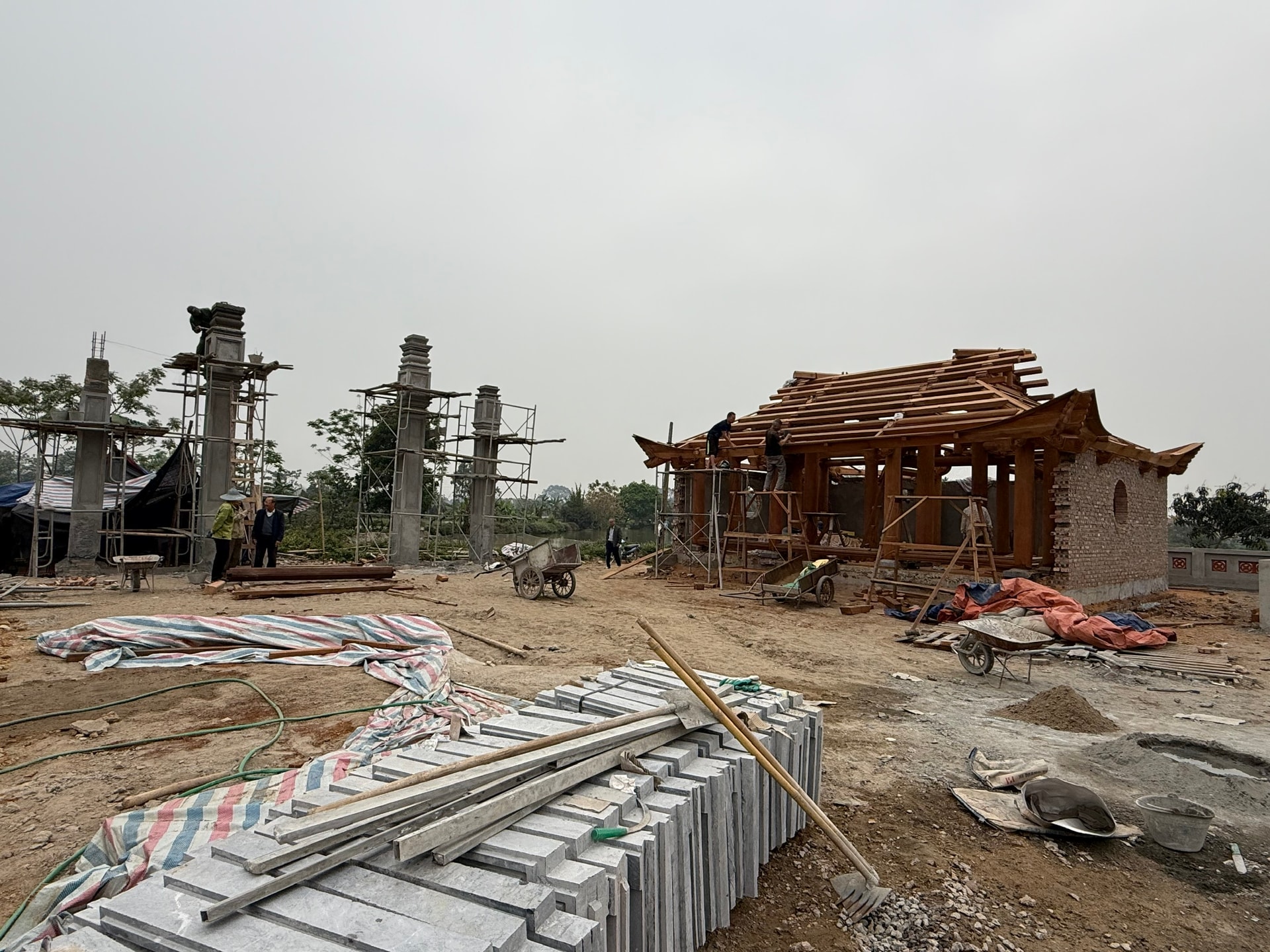
In accordance with Resolution No. 1286/NQ-UBTVQH15 of the Standing Committee of the National Assembly on the rearrangement of commune-level administrative units in Hanoi City for the period 2023-2025, from January 1, 2025, Tram Long commune and Hoa Lam commune will be merged, retaining the name Tram Long. In 2024, the commune completed 19 out of 19 criteria for advanced new rural development according to the criteria set for the period 2021-2025 by the Hanoi City People's Committee. In 2025, the commune aims to achieve the model new rural development standard.
The village of Rồng is now spacious, clean, and beautiful. The Cụ communal house – a secret meeting place of the Regional Party Committee and a center for revolutionary propaganda among the people; the Đông communal house – where the Regional Party Committee's secret mailbox was located; and the Chòng communal house and pagoda complex are now receiving investment from Hanoi city and Ứng Hòa district for restoration and reconstruction to make them larger and more beautiful. Many new roads are also being invested in and expanded by the city, bringing a new look and creating momentum for socio-economic development in Trầm Lộng today.
“In the coming time, the commune will continue to apply scientific and technological advancements to agricultural production and continue to transform economic models. The locality will strengthen efforts to attract and create favorable conditions for businesses to invest in agriculture, linking agricultural product consumption along the value chain. The commune will also focus on developing and expanding several industries, such as industrial garment manufacturing and the production and trading of construction materials… We encourage all organizations, businesses, and households to establish workshops to produce goods in order to develop industrial and commercial-service economies, and increase the local economic income,” emphasized Dinh Quang Linh, Secretary of the Party Committee of Tram Long Commune.
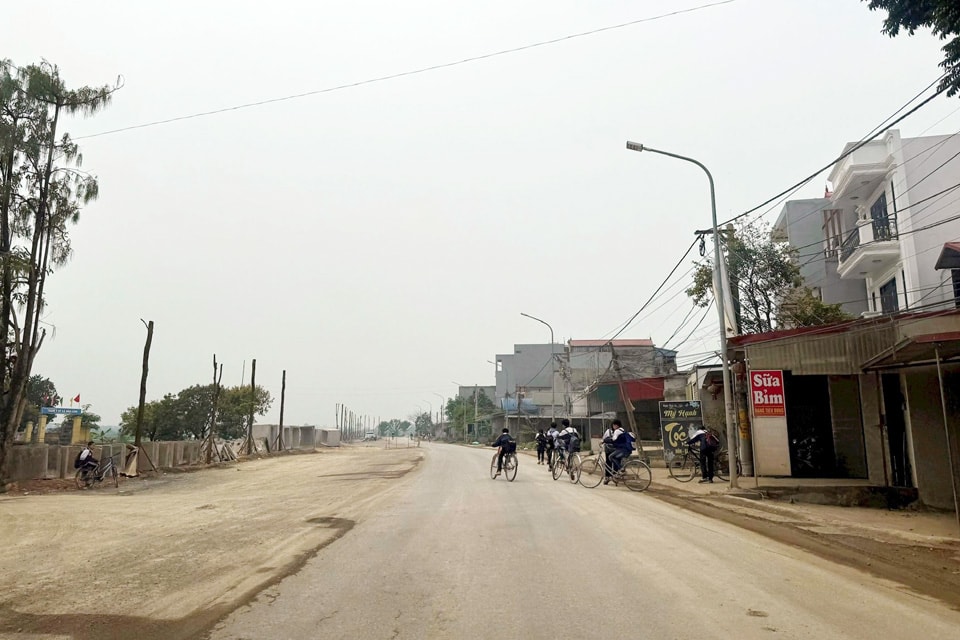
Generations of our ancestors have passed away over the years, but their image remains etched into every fiber of this homeland. “Generations have always been proud of the patriotic traditions and revolutionary fervor of our forefathers. We will strive to preserve and continue these traditions, building Tram Long into an increasingly prosperous village,” shared Pham Dinh Le, Party Secretary and Head of Tram Long Village.
Source: https://hanoimoi.vn/tram-long-vung-que-cach-vang-699252.html


![[Hightling] Conference on the Implementation of Tasks for 2026](/_next/image?url=https%3A%2F%2Fvphoto.vietnam.vn%2Fthumb%2F402x226%2Fvietnam%2Fresource%2FIMAGE%2F2026%2F01%2F27%2F1769477856197_dsc01637.jpeg&w=3840&q=75)


![OCOP during Tet season: [Part 2] Hoa Thanh incense village glows red.](/_next/image?url=https%3A%2F%2Fvphoto.vietnam.vn%2Fthumb%2F402x226%2Fvietnam%2Fresource%2FIMAGE%2F2026%2F01%2F27%2F1769480573807_505139049_683408031333867_2820052735775418136_n-180643_808-092229.jpeg&w=3840&q=75)
![OCOP during Tet season: [Part 1] Ba Den custard apples in their 'golden season'](/_next/image?url=https%3A%2F%2Fvphoto.vietnam.vn%2Fthumb%2F402x226%2Fvietnam%2Fresource%2FIMAGE%2F2026%2F01%2F26%2F1769417540049_03-174213_554-154843.jpeg&w=3840&q=75)



Comment (0)