

The economy is booming, but accumulated wealth is not yet high.
Currently, Lao Bao commune has 115 businesses, 1,796 stalls and service businesses, and 248 transport and passenger vehicles. Import-export, transportation, warehousing, and goods transshipment activities are thriving, generating significant revenue for the budget, businesses, and households, and providing employment for workers. The import-export turnover through the Lao Bao International Border Gate is projected to reach US$448 million in 2025, generating over VND 446 billion in budget revenue.
Business activities in border areas, pedestrian streets, markets, shopping centers, hotels, restaurants, food services, passenger and goods transportation remain stable, effectively meeting the production, business, and consumption needs of the people. The value of production, trade, services, and tourism in 2025 is expected to reach 5,630 billion VND, accounting for 73% of the local economic structure.
 |
| The Lao Bao border market attracts a large number of people - Photo: NTH |
The bustling development of trade and services through the Lao Bao International Border Gate is driving the local economy. However, with trade and services accounting for such a large proportion, while industry and agriculture have not developed proportionally, the Lao Bao economy is easily susceptible to dependence. In reality, when the regional market changes or trade policies are adjusted, import and export activities are immediately affected, and the Lao Bao economy is clearly impacted.
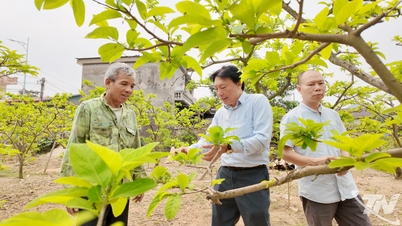
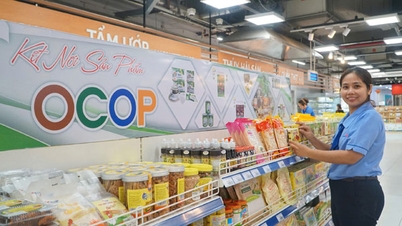
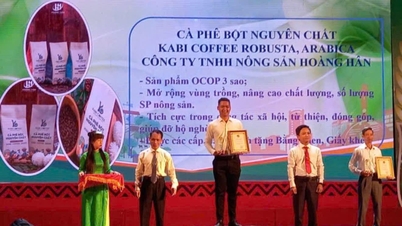
Currently, production facilities in Lao Bao commune are still small-scale, with low added value and no closed production-processing-consumption chains have been formed. Although agriculture has some bright spots, such as bananas achieving OCOP 3-star certification, it remains fragmented and lacks linkages.
Notably, while the number of businesses has increased rapidly, their quality and scale have not yet truly achieved a breakthrough. The majority are small and medium-sized enterprises (SMEs) and individual business households, primarily operating in the service sector. This leads to a paradox: a vibrant economy, but low accumulated capital. To date, the average per capita income in Lao Bao commune is only 47.5 million VND/year. Many activities remain transit-oriented, benefiting more from its border gate location than from its inherent capabilities.
From "transfer" to "value creation"
The advantages of being a border gate area are undeniable. However, for sustainable development, Lao Bao cannot rely solely on the number of goods passing through. To maximize the strategic advantages of Lao Bao's location within the border economic zone and on the East-West Economic Corridor, Lao Bao commune has identified the need to promote innovation in trade, services, and logistics linked to the border economy; and to develop tourism associated with historical and cultural relics and key agricultural products.
According to Le Ba Cuong, Vice Chairman of the Lao Bao Commune People's Committee, in recent years, trade and service activities in the Lao Bao International Border Gate area have been quite bustling, providing many jobs and income for a large number of border residents. However, frankly speaking, while there are many businesses in Lao Bao commune, they mainly operate in the trade and service sector, while the manufacturing sector remains relatively quiet.
“This reality presents a challenge: restructuring the economy towards a more balanced direction, focusing on developing the processing industry, especially the processing of agricultural and forestry products, and products with existing advantages such as bananas and local agricultural products that can reach larger markets. Simultaneously, redefining the role of border trade in a more modern direction, not just as a transit point for goods, but as a logistics center and value-added service hub. This requires long-term planning, attracting strategic investors, and upgrading infrastructure; promoting digital transformation in production and business. When people and businesses know how to utilize digital platforms to expand markets and enhance product value, they will be a crucial driving force for growth,” Mr. Cuong stated.
Lao Bao's economy has experienced an impressive growth period, laying an important foundation for the future. However, to go further, Lao Bao cannot rely solely on its existing geographical advantages; it needs to shift from a "transit hub" to a "value creator." When container trucks pass through the Lao Bao International Border Gate full of goods in both directions, and when production activities are vibrant in the border area, it presents an opportunity for this border region to break through and assert its position in the overall development picture of the province.
Thanh Hai
Source: https://baoquangtri.vn/kinh-te/202604/tran-tro-lao-bao-a993775/





![[Photo] “Red Journey” 2026: Vietnamese Youth Continue Building the Bridge of Friendship Between Vietnam and China](https://vphoto.vietnam.vn/thumb/1200x675/vietnam/resource/IMAGE/2026/04/20/1776629730866_4055880775670638308-9618-4200-jpg.webp)






































































Comment (0)