Determination to overcome difficulties
Formed by merging three communes: Ninh Phuoc, Que Lam, and Phuoc Ninh (formerly Que Son district), Que Phuoc commune has a natural area of 359.11 km² and a population of over 14,100 people.
In the past, all three communes merged to form Que Phuoc commune, which belonged to the old Nong Son district. It possessed a sprawling, fragmented terrain bordering mountainous areas. This posed numerous challenges in management, administration, and serving the local population.
According to Ms. Tao Thi To Diem, Chairwoman of the People's Committee of Que Phuoc commune, after the official operation, the locality promptly reorganized its structure; reviewed and assigned specific tasks to each official and employee according to their expertise and practical experience. They also promptly issued working regulations, clearly defining the functions and responsibilities of each specialized unit.

"We quickly put the Public Administrative Service Center into operation to ensure that administrative procedures are handled continuously and without interruption. People who come to work or handle procedures are served attentively and thoughtfully, and express high satisfaction," Ms. Diem shared.
Regarding key tasks for the last six months of 2025, Que Phuoc aims to achieve a total production value of 414 billion VND; and an average per capita income of 55 million VND/year. The commune strives to maintain 13 out of 13 villages meeting the "Cultural Village" standard; reduce the number of poor households by 5-6; maintain a forest cover rate of 70% or higher; and ensure 100% of the population has access to clean drinking water. The locality also aims to build a strong commune in terms of national defense and security.
According to Mr. Bui Xuan Trung, Secretary of the Party Committee and Chairman of the People's Council of Que Phuoc commune, the locality has identified improving the quality of service to the people as its top priority.



Therefore, the commune is focusing on reviewing and supplementing facilities and equipment to meet work requirements; at the same time, it requires the staff and civil servants to improve their sense of responsibility and adhere to administrative discipline and regulations… It is also urgently receiving files, documents, and equipment from former communes in accordance with regulations, creating favorable conditions for management and serving the people.
"In the coming time, we will focus on preparing the necessary conditions to successfully organize the Party Congress of Que Phuoc commune for the 2025-2030 term, contributing to building a stronger and more comprehensive Party Committee of Que Phuoc commune," Mr. Trung affirmed.
There are still many concerns.
In Que Phuoc commune, one of the most disadvantaged villages is Ninh Khanh. The village has approximately 350 households, most of whom live by farming and forestry. During the rainy season, many roads in the area are flooded and damaged by landslides. The village is also isolated by the Thu Bon River, making travel and access to public services difficult for residents.

According to Mr. Nguyen Van Lanh, Vice Chairman of the People's Committee of Que Phuoc commune, there are 6 villages (formerly part of Ninh Phuoc commune) located across the Thu Bon River in the area, with approximately 6,000 inhabitants. Ninh Phuoc commune, along with the other two communes before the merger, had already achieved the standards of a new rural commune. Internal transportation infrastructure has been solidified, making travel convenient. However, external transportation between the three former communes remains limited; residents of the former Ninh Phuoc commune have to travel through the new Nong Son commune to reach the administrative center of Que Phuoc commune (the former Phuoc Ninh commune headquarters).
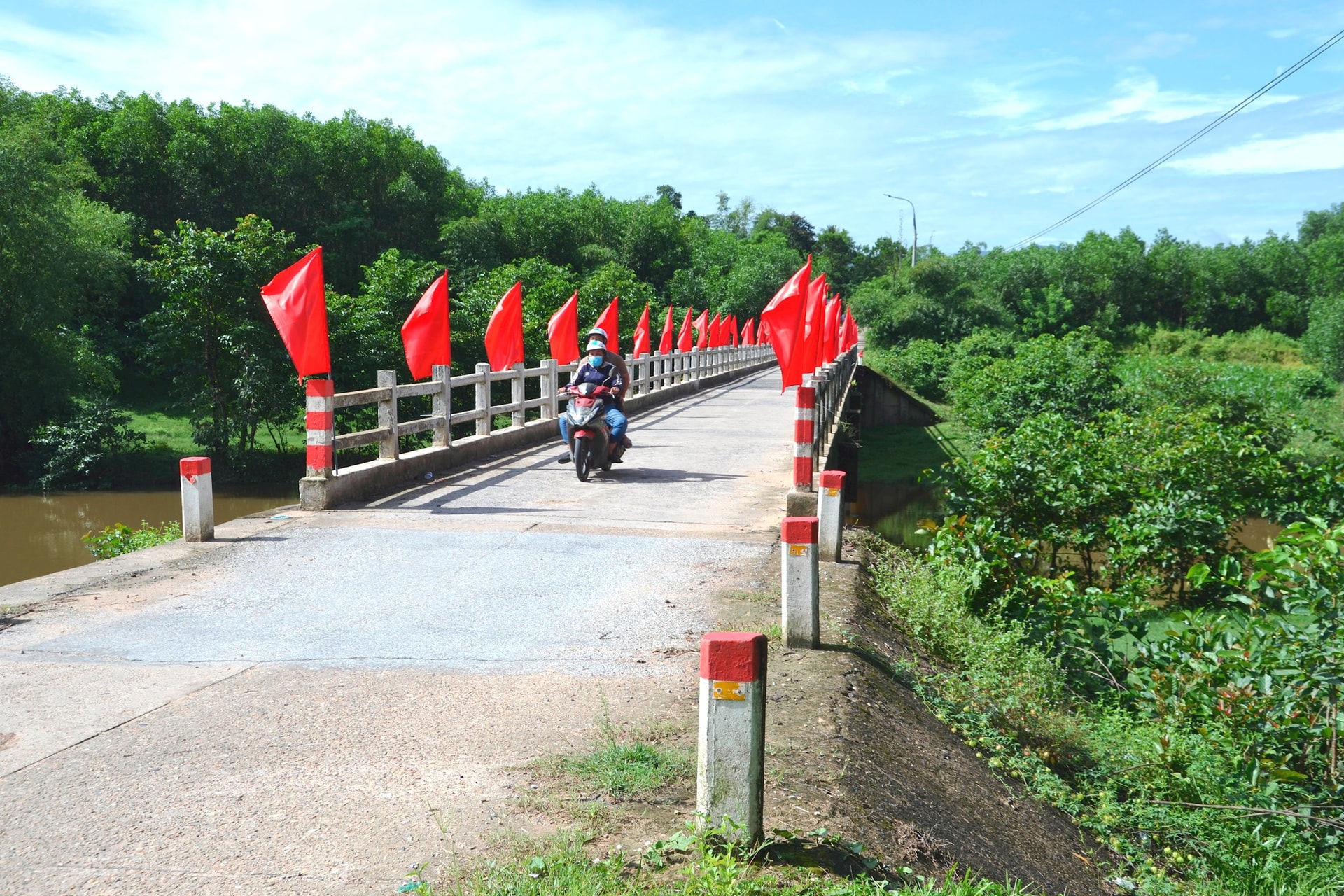
The important external transportation route through Que Phuoc, National Highway 14H, is currently too narrow, with many bridges having small cross-sections and low foundations, making them frequently flooded by heavy rains. A typical example is the Khe Rinh bridge, where floodwaters from the Thu Bon River crossed even before reaching flood alert level 2, causing traffic disruptions for several days.
The operation of the irrigation system is unstable due to many dams being old and having accumulated sediment, preventing them from operating at full capacity. The power system is also intermittent at times.
Ms. Tao Thi To Diem added that the locality still faces difficulties in terms of working facilities. For example, the main office of Que Phuoc commune is currently being used from the former Phuoc Ninh commune People's Committee office, which was built in 2009 and is now dilapidated and no longer suitable for the work requirements in the new phase. Many specialized machines and equipment are old and insufficient.


Specialized agencies and units have to be scattered across many locations such as village community centers, kindergartens, and the former headquarters of Ninh Phuoc and Que Lam communes. Many officials and civil servants have to travel long distances to work. This situation creates difficulties in managing and coordinating the implementation of tasks.
In the long term, the newly established commune, located at the headwaters of the Thu Bon River, urgently needs investment in its currently inadequate infrastructure. This includes the construction of a bridge across the Thu Bon River, connecting Phu Gia village (formerly Ninh Phuoc commune) to Binh Yen village (new Que Phuoc commune) to shorten travel distances and provide easier access to public services for residents; creating conditions for the commune to accelerate the restructuring of its agricultural sector towards commodity production linked with ecotourism development and the construction of new rural areas...
Source: https://baodanang.vn/tran-tro-que-phuoc-3265132.html