Hemorrhoids are one of the most common diseases affecting the anal-rectal region. Hemorrhoids occur when the veins in this area become excessively dilated, forming hemorrhoidal lumps. Normally, these veins are held in place by connective tissue. However, over time, especially after the age of 20, this tissue can weaken, causing the veins to sag and prolapse.
- 1. Symptoms of grade 2 internal hemorrhoids
- 2. Diagnosis of grade 2 internal hemorrhoids
- 3. Possible complications of grade 2 internal hemorrhoids
- 4. Does grade 2 internal hemorrhoid require surgery?
- 5. When should a patient see a doctor?
In stage 2 internal hemorrhoids, the hemorrhoidal tissue is clearly formed and tends to prolapse outside the anus when the patient strains during bowel movements. However, a characteristic of stage 2 internal hemorrhoids is that the hemorrhoidal tissue can still retract spontaneously after the patient finishes defecating.
Grade 2 internal hemorrhoids often develop when a patient already has grade 1 internal hemorrhoids but they are not detected and treated promptly, causing the condition to worsen. In addition, several other risk factors can promote the development of the disease, including:
- A diet lacking in fiber.
- Prolonged tension and stress.
- A habit of sitting for long periods and lack of exercise.
- Drink less water. Pregnancy and childbirth.
- Chronic constipation or diarrhea.
- Old age.
- Regularly carrying heavy objects and overexerting oneself during labor.

The incidence of hemorrhoids is increasing nowadays, largely due to unhealthy diets and lifestyle habits, lack of exercise, etc.
1. Symptoms of grade 2 internal hemorrhoids
In stage 1 internal hemorrhoids, the hemorrhoidal tissue is newly formed, so patients usually don't feel pain. However, during bowel movements, stool can rub against the hemorrhoids, causing bleeding.
In stage 2 internal hemorrhoids, the hemorrhoidal tissue begins to prolapse, but this is usually not very noticeable; the hemorrhoidal tissue may be partially visible inside the anal canal. When the patient strains during bowel movements, the hemorrhoidal tissue may prolapse and then retract spontaneously without manual intervention.
Common symptoms of grade 2 internal hemorrhoids include:
- Bleeding during bowel movements
This is the most typical sign of hemorrhoids. During bowel movements, patients may notice blood dripping or spurting out. The blood is usually fresh, sometimes accompanied by blood clots.
- A burning or uncomfortable sensation in the anus.
In stage 2 internal hemorrhoids, the hemorrhoidal tissue prolapses, causing a feeling of fullness, obstruction, and discomfort in the anus. During bowel movements, stool rubs against the hemorrhoids, causing burning pain, sometimes even severe pain. Initially, the hemorrhoids may retract on their own, but if left untreated, they will prolapse further and will no longer retract spontaneously, progressing to stage 3 or 4 hemorrhoids.

- Mucus discharge and itching around the anus
When hemorrhoids become inflamed, the anus increases mucus secretion, causing the anal area to become moist, leading to itching and discomfort.
- Hemorrhoids prolapse and then retract on their own.
A typical characteristic of grade 2 internal hemorrhoids is that during bowel movements, the hemorrhoid prolapses from the anus and can be felt by hand. After defecation, the hemorrhoid will retract spontaneously without intervention.
2. Diagnosis of grade 2 internal hemorrhoids
To accurately diagnose grade 2 internal hemorrhoids, the doctor will conduct a clinical examination and inquire about risk factors such as constipation, diet, bowel habits, and whether the nature of the job requires prolonged sitting.
The doctor will also assess the extent of inflammation, skin irritation, and mucus around the anal area. In some cases, a proctoscopy may be prescribed to accurately assess the severity of hemorrhoids, differentiate between simple grade 2 internal hemorrhoids and mixed hemorrhoids, and rule out other conditions with similar symptoms such as rectal prolapse, anal canal polyps, rectal-anal canal tumors, anal skin tags, etc.
3. Possible complications of grade 2 internal hemorrhoids
If left undiagnosed and untreated, grade 2 internal hemorrhoids can progress to grade 3 or 4, causing significant inconvenience and greatly affecting quality of life. Some possible complications include:
- Prolonged bleeding leads to anemia, causing dizziness, fatigue, and pale skin.
- Anal infections, even anal fissures or anal abscesses, can be caused by excessive mucus secretion leading to prolonged irritation and itching.
- The prolapsed hemorrhoids worsen, progressing to grade 3 or 4 hemorrhoids.
- Increased risk of thrombosed hemorrhoids, or blockage of the hemorrhoidal tissue due to poor blood circulation, causing swelling, significant pain, and even pain upon light touch.
4. Does grade 2 internal hemorrhoid require surgery?
For grade 1 and 2 internal hemorrhoids, these are considered mild stages of the disease, where the hemorrhoidal tissue is small, has not prolapsed completely, or can still retract on its own. At this stage, surgery is usually not necessary.
Patients can manage their disease with conservative treatments such as:
- Adjust your diet: increase fiber intake and drink enough water every day.
- Change your bowel habits: go to the toilet at regular times and avoid straining.
- Use medication exactly as prescribed by your doctor.
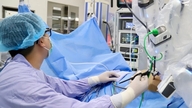
For cases that do not respond well to medical treatment or where grade 2 hemorrhoids are large and cause significant discomfort in daily life and work, doctors may prescribe minimally invasive procedures such as: rubber band ligation, sclerotherapy, thermal cauterization, electrocautery, cryotherapy, radiofrequency or infrared ablation. These are commonly used methods for grade 2 prolapsed internal hemorrhoids.



Additionally, in some cases, ligation of the artery supplying the hemorrhoid may be indicated, or suturing of the vascular pedicle to reduce blood supply, helping the hemorrhoid to gradually shrink.
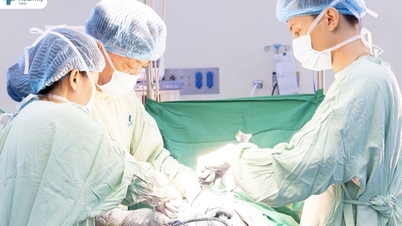
These procedures should be performed by specialist doctors at reputable medical facilities. After the procedure, patients need to be monitored to assess the effectiveness of the treatment and promptly manage any complications that may arise, ensuring safety before discharge.
5. When should a patient see a doctor?
Grade 2 internal hemorrhoids are completely manageable if detected early and treated properly through a healthy diet, exercise, and prescribed medication. Early diagnosis helps prevent the disease from progressing to more severe stages, where the hemorrhoids prolapse significantly, bleed heavily, and require surgery.
Patients should consult a gastroenterologist or proctologist if they experience the following symptoms:
- Pain, bleeding, and swelling in the anal area do not improve despite treatment.
- Prolonged rectal bleeding or heavy bleeding.
- Hemorrhoids prolapse, become swollen, painful, and cannot retract on their own.
- Persistent pain, burning, swelling, and inflammation of hemorrhoids and the anal area.
- Difficulty defecating, feeling of anal obstruction, retained stool.
- The hemorrhoid feels hard and painful to the touch.
Source: https://suckhoedoisong.vn/tri-noi-do-2-co-can-mo-khong-169260113084124928.htm
![[Photo] General Secretary and President To Lam receives Palestinian Ambassador Saadi Salama](https://vphoto.vietnam.vn/thumb/1200x675/vietnam/resource/IMAGE/2026/06/25/1782365384740_a1-bnd-9423-8322-jpg.webp)
![[Image] Schools organize meetings and introduce teaching models to students admitted to grade 10.](https://vphoto.vietnam.vn/thumb/1200x675/vietnam/resource/IMAGE/2026/06/25/1782368077271_ndo_br_z7970052192242-1ec8daeb77a6eed1a4e9f58c564ddd3e-jpg.webp)

![[Image] Ho Chi Minh City: Ma Lang area, Chicken-Rice Market about to change its appearance](https://vphoto.vietnam.vn/thumb/1200x675/vietnam/resource/IMAGE/2026/06/25/1782377698627_ndo_br_m1-jpg.webp)