


Advanced farming practices are transferred to farmers; businesses focus on standardizing raw material areas... creating a solid foundation for the greening process of the rice industry.
For the 2025 summer-autumn crop season, 11 models were implemented covering an area of 543.5 hectares with 355 participating households; reducing costs by 1.7 to 4.9 million VND/ha; and increasing profits by 4.6 to 15.8 million VND/ha compared to areas outside the models.
New, highly effective technology
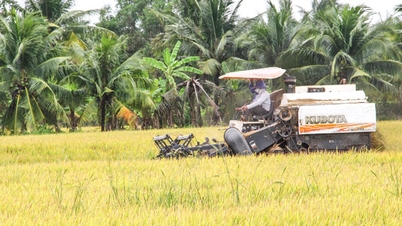
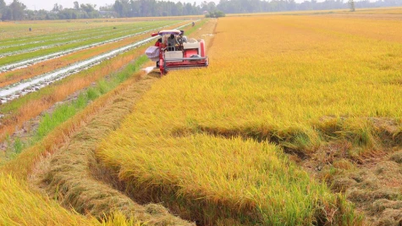
Mr. Nguyen Cao Khai, Director of Tien Thuan Agricultural and Service Cooperative (Thanh Quoi commune, Can Tho city), said: The cooperative currently has about 70 hectares of rice cultivated using a model that reduces emissions, resulting in high yield and quality. In the 2025 summer-autumn crop alone, rice yield reached nearly 7.9 tons/ha, an increase of about 1.6 tons/ha compared to areas outside the model.
Meanwhile, rice cultivation has been reduced by 50-65%; fertilizer use has been reduced by 15%; the number of pesticide applications has been halved; irrigation has been reduced through alternating wet and dry irrigation methods; and straw has been collected from the fields. “After deducting production costs, profits from rice and by-products have increased by 7 to 8 million VND/ha compared to areas outside the model. Therefore, many farmers have increased their area participating in the model. It is expected that in the upcoming winter-spring crop, the cooperative will expand the area of low-emission rice cultivation to over 100 hectares,” Mr. Khai emphasized.
According to the Department of Crop Production and Plant Protection ( Ministry of Agriculture and Environment ), across 11 high-quality, low-emission rice cultivation models in the 2025 summer-autumn crop season, fertilizer use decreased by an average of 31.3%; pesticide spraying decreased by 1 to 3 times; seed sowing decreased by 70-130 kg/ha; and most models ensured the correct number of water drainage cycles.
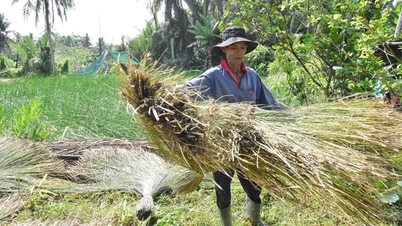
100% of the models involved collecting straw from the fields, with five models selling straw at the highest price of 1 million VND/ha.
In particular, regarding the reorganization of production, all farmers are organized into cooperatives, with linkages between inputs and consumption. To facilitate the implementation of the Project, a tool for assessing compliance with production processes, called ViRiCert, has recently been developed. This tool is expected to become a "green compass" guiding millions of farmers on their journey towards sustainable farming.
According to Mr. Nguyen Van Hung from the International Rice Research Institute (IRRI), the scoring system design tool is based on 10 practice stages with different weighting for each factor.
In this framework, water management based on the principle of alternating wet and dry cycles and the prohibition of burning rice straw in the fields are mandatory requirements; the water management criterion is given double weight because it is the most decisive factor in reducing greenhouse gas emissions.
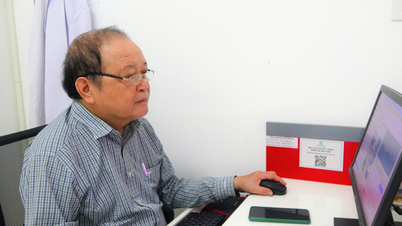
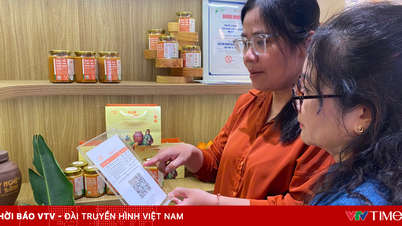
The tool's unique feature is its high applicability and easy accessibility, allowing farmers to quickly access it. With just a smartphone and internet connection, farmers can access the website https://viricert.easyfarm.vn or scan the QR code to immediately evaluate their fields according to 10 criteria. When widely shared, the tool will accompany and help farmers monitor and improve their farming processes daily.
According to Le Thanh Tung, Vice President of the Vietnam Rice Industry Association (VIETRISA), the necessity of assessment tools lies not only in measuring compliance with procedures but also in creating a transparent mechanism that helps farmers confidently assert the value of their green products in the market.
New advantages for exports
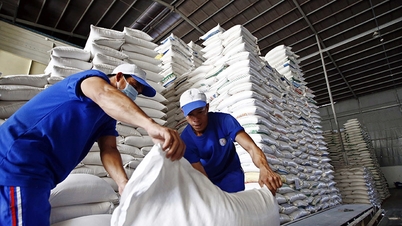
Mr. Pham Thai Binh, Chairman of the Board of Directors of Trung An High-Tech Agriculture Joint Stock Company, commented: High-quality, low-emission rice is increasingly gaining an advantage in the export market. When businesses establish standardized raw material areas and can demonstrate reduced emissions through measurement, they will have a greater chance of negotiating better prices with importers, especially given that many foreign partners are now paying attention to the "carbon footprint" of the product.
“Currently, the company is boosting the production and export of low-emission rice. In June 2025, the company exported 500 tons to Japan; by September 2025, it exported 160 tons to the Australian market, and in December, it exported approximately 500 tons more to this market. To increase the production of low-emission rice, we hope to have the projects under the Scheme approved soon to create close links between participating parties and to provide a basis for borrowing capital from banks,” Mr. Binh proposed.
According to many businesses, the true value of low-emission rice lies in two levels of benefits: directly increasing selling prices, establishing a premium rice brand, and creating a foundation for the Vietnamese rice industry to participate in carbon credit mechanisms in the future.
Recognizing that the project is not only a production project but also plays a role in restructuring the rice industry, the Ministry of Agriculture and Environment will implement many solutions in the coming time to expand the area and improve the quality of the model.
According to Deputy Minister of Agriculture and Environment Tran Thanh Nam, the Ministry will finalize and issue the measurement-reporting-evaluation (MRV) process for emission reduction solutions; issue regulations on supply chain linkages; mobilize resources from international partners; and promote low-emission rice.
At the local level, plans will be developed based on ecological zones linked to consumption; support will be provided to cooperatives to improve capacity and mechanize production; farmers and cooperatives will receive training on MRV (Maritime, Vehicle, and Recycling) processes; the area for expansion will be reviewed to ensure the objectives of the Project are met; and business-cooperative linkage projects will be approved as requested by businesses…
In the context of the global rice trade shifting strongly towards sustainable standards, accelerating the implementation of the Project will have a significant impact on the market expansion capacity of Vietnamese businesses.
Simultaneously, it creates new value in the fields by encouraging farmers to innovate production towards a more professional and responsible approach, adhering to green agricultural standards.
According to nhandan.vn
Source: https://baodongthap.vn/trien-vong-moi-cho-gao-phat-thai-thap-a234082.html
























































Comment (0)