

 |
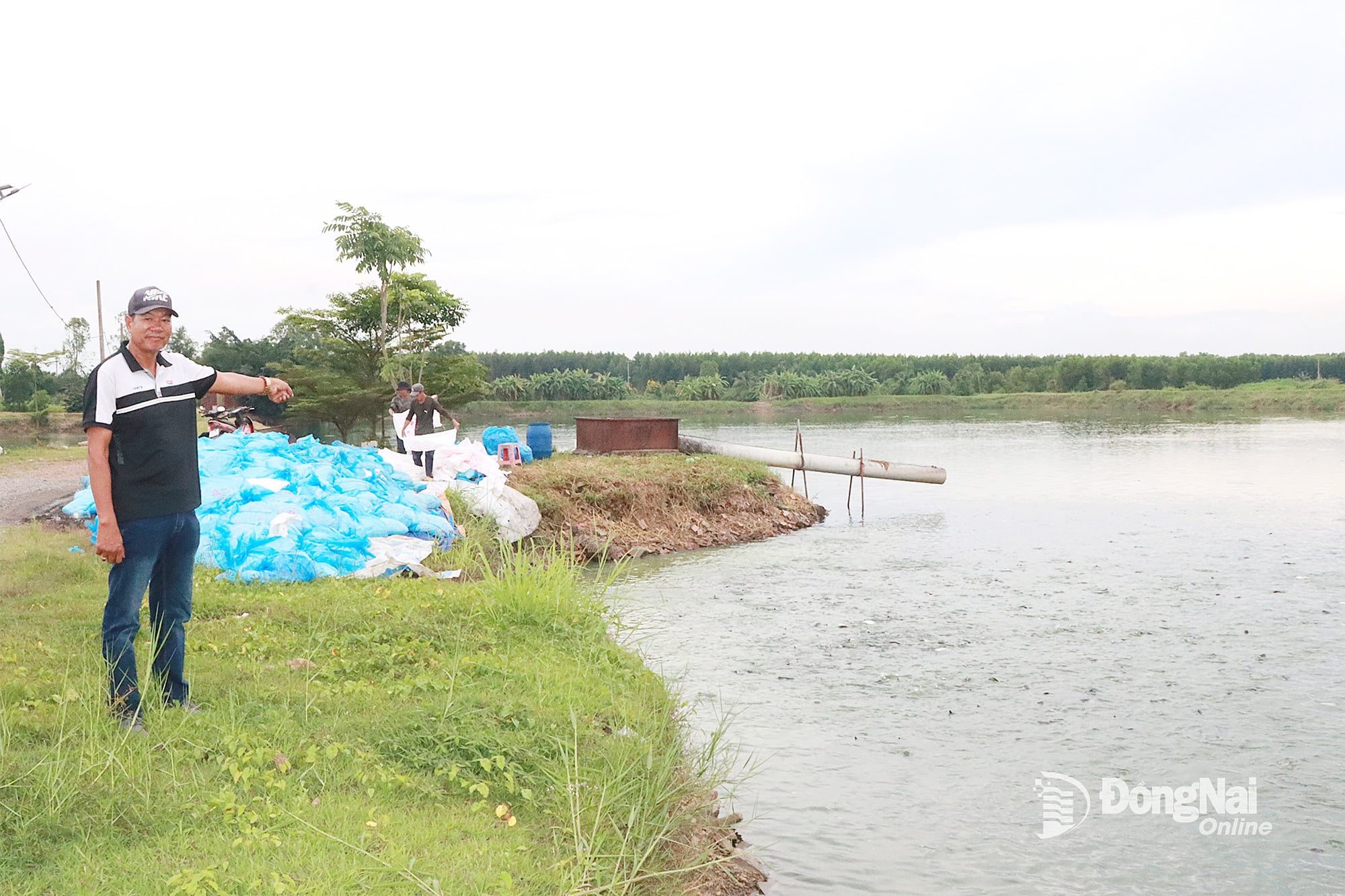
| Mr. Nguyen Van Thuan (residing in Vam Hamlet, Trang Dai Ward) has become wealthy from his 6 fish ponds with a total area of nearly 20 hectares, earning hundreds of millions of dong in profit each year. Photo: Quang Minh |
Utilize leftover food to feed fish.
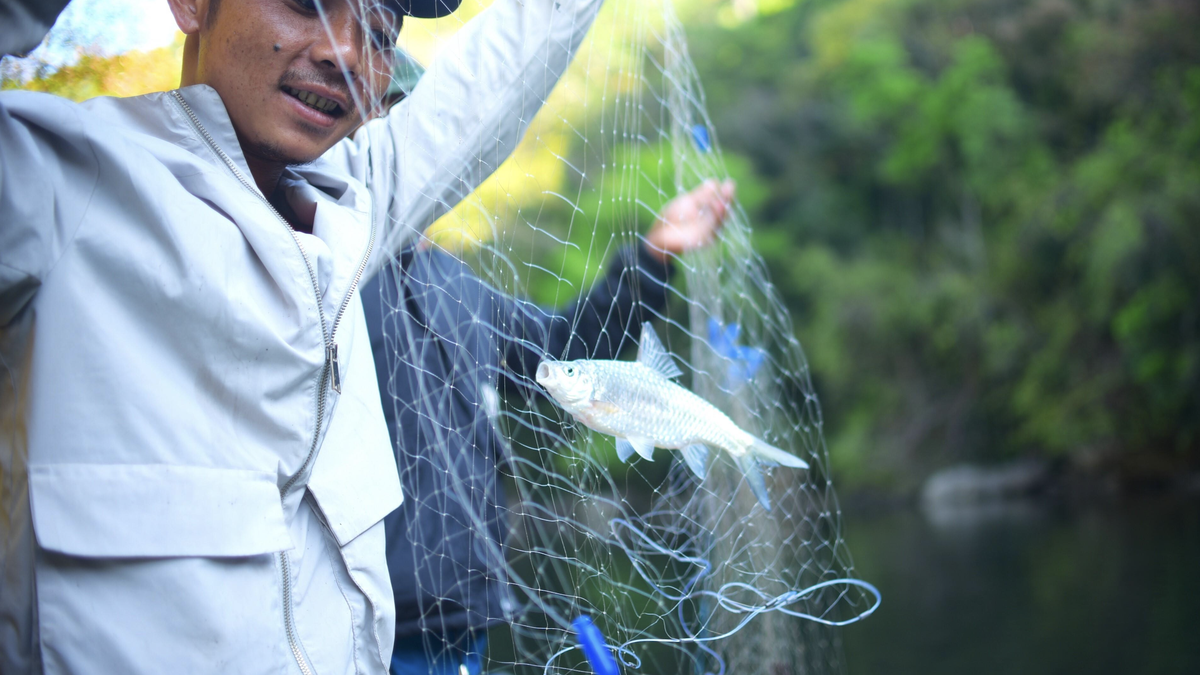
With its convenient canal system, Vam hamlet in Trang Dai ward has long been considered an area with many advantages for raising freshwater fish. Mr. Nguyen Van Thuong's family has three fish ponds with a total surface area of 6 hectares. The most commonly raised species are tilapia, carp, and catfish. The family buys the fingerlings from the Mekong Delta provinces, at a price of about 50,000 VND/kg. Each batch of fish takes about a year to raise. The fingerlings are raised in small ponds and fed entirely with compound feed pellets. After each batch of fish reaches marketable size, the remaining smaller fish are raised alongside the broodstock. Using this staggered breeding method, Mr. Thuong's family harvests an average of 3-4 crops per year. To feed the fish, Mr. Thuong's family buys leftover food from workers in industrial zones in the province daily. Each drum contains 200 liters and costs 250,000 VND. On average, his family buys about 10 drums of feed per day, equivalent to 2.5 million VND. Mr. Thuong said: "With this type of feed, the cost is lower than synthetic pellet feed, the fish grow faster, and the fish meat tastes better. However, I have to periodically drain the pond bottom and change the water to minimize risks."
In Vam hamlet, Nguyen Van Thuan's family is the largest fish farming household with 6 ponds, totaling approximately 20 hectares. Mr. Thuan stated: "Fish farming has many advantages because when the water environment is well-treated, the likelihood of disease outbreaks is very rare. The large water surface area and readily available food mean the fish grow quickly."
“The people here have a long-standing tradition of fish farming, so connecting with traders for sales is easy. When it's time to sell, they just need to make a phone call, and buyers will come. They sort the fish by type to supply Binh Dien market or sell to wholesalers at smaller markets. The selling price of different types of fish depends on the market, but if the average price is 20,000 VND/kg or more, after deducting costs for feed and labor, the farmers still make a profit of about 25-30%,” Mr. Thuan shared.
However, Mr. Thuan also added: "The dry season usually lasts 6 months, and fish farming is difficult due to the scarcity of natural water sources. Therefore, we propose that the local government and relevant agencies at the ward and provincial levels pay attention to supporting the people in building an electricity grid system for pumping water, improving the environment, and thereby making fish farming more effective."
Towards sustainable aquaculture
According to the Department of Livestock and Fisheries, Dong Nai Provincial Department of Agriculture and Environment, the province's aquaculture industry has continued to develop steadily in recent years, affirming its important role in the province's agricultural structure. The province currently has over 95,000 hectares of water surface used for aquaculture. Of this, the area of ponds owned by households is approximately 9,800 hectares, with an annual production of over 80,000 tons. By 2025, the projected production is over 82,500 tons of various aquatic products. Many intensive farming models have been boldly adopted by farmers, such as high-tech shrimp farming in Nhon Trach and Long Thanh; and tilapia, snakehead, and common carp farming models according to VietGAP standards in Trang Dai. Snakehead and common carp farming models achieve yields of 40-250 tons/hectare. Whiteleg shrimp farming models achieve 25-40 tons/hectare/season, significantly exceeding traditional farming methods. In addition, cage fish farming models on the Dong Nai River, Tri An Lake, and Thac Mo Lake are developing in the direction of intensive and semi-intensive farming of species such as carp, tilapia, catfish, and snakehead fish, with a yield of 3-8 tons per cage. These models yield high economic efficiency, contributing to increased income, stable employment, and environmental protection.
“The Department of Livestock and Fisheries will coordinate with localities to strengthen propaganda, training, and technology transfer to farmers, supporting aquaculture farmers in promoting digital transformation in aquaculture management. The overall goal is to develop Dong Nai's aquaculture industry in an efficient and environmentally friendly direction, contributing to building an ecological, modern, and sustainable agriculture .”
Deputy Head of the Department of Livestock and Fisheries , LE THI LOAN
Ms. Le Thi Loan, Deputy Head of the Department of Livestock and Fisheries, stated: “Besides the achievements, there are still shortcomings such as the lack of synchronized infrastructure in aquaculture areas, especially the electricity and water supply and drainage systems. Production scale remains small, fragmented, and lacks chain linkages. In addition, the impact of climate change and water pollution in some areas also affects the productivity and quality of aquatic products. In the coming time, Dong Nai's fisheries sector will continue to plan and overcome the above limitations, encourage investment in infrastructure for concentrated aquaculture areas, high-tech application models, smart management, and product traceability. At the same time, we will build a linked chain from production to consumption, improve the quality of breeding stock and food safety.”
Quang Minh
Source: https://baodongnai.com.vn/kinh-te/202512/trien-vong-tu-nuoi-ca-nuoc-ngot-1a3067b/
![[Photo] Memorable moments at the 10th Vietnam-China Border Defense Friendship Exchange](https://vphoto.vietnam.vn/thumb/1200x675/vietnam/resource/IMAGE/2026/03/20/1773986226876_giao-luu-bien-gioi-vntq-lan-10-ben-tq-9737-4225-jpg.webp)






















































Comment (0)