

Perhaps nowhere else in the world is the issue of clothing as likely to spark debate as in Vietnam. Recently, right in the National Assembly, the issue of attire once again stirred public opinion with both praise and criticism, both positive and negative, stemming from the appearance of a delegate wearing a traditional five-panel ao dai and a headscarf to a meeting.
But that's not the real issue, because this isn't the first time this delegate has dressed like this, and in fact, he's not the only one who has chosen this style of dress. The real issue is that, in his speech during the discussion on socio -economic issues and the state budget, he suggested that the National Assembly consider including in the session's resolution a provision allowing delegates to wear traditional Vietnamese five-panel robes (áo dài ngũ thân) at sessions, in addition to wearing suits.
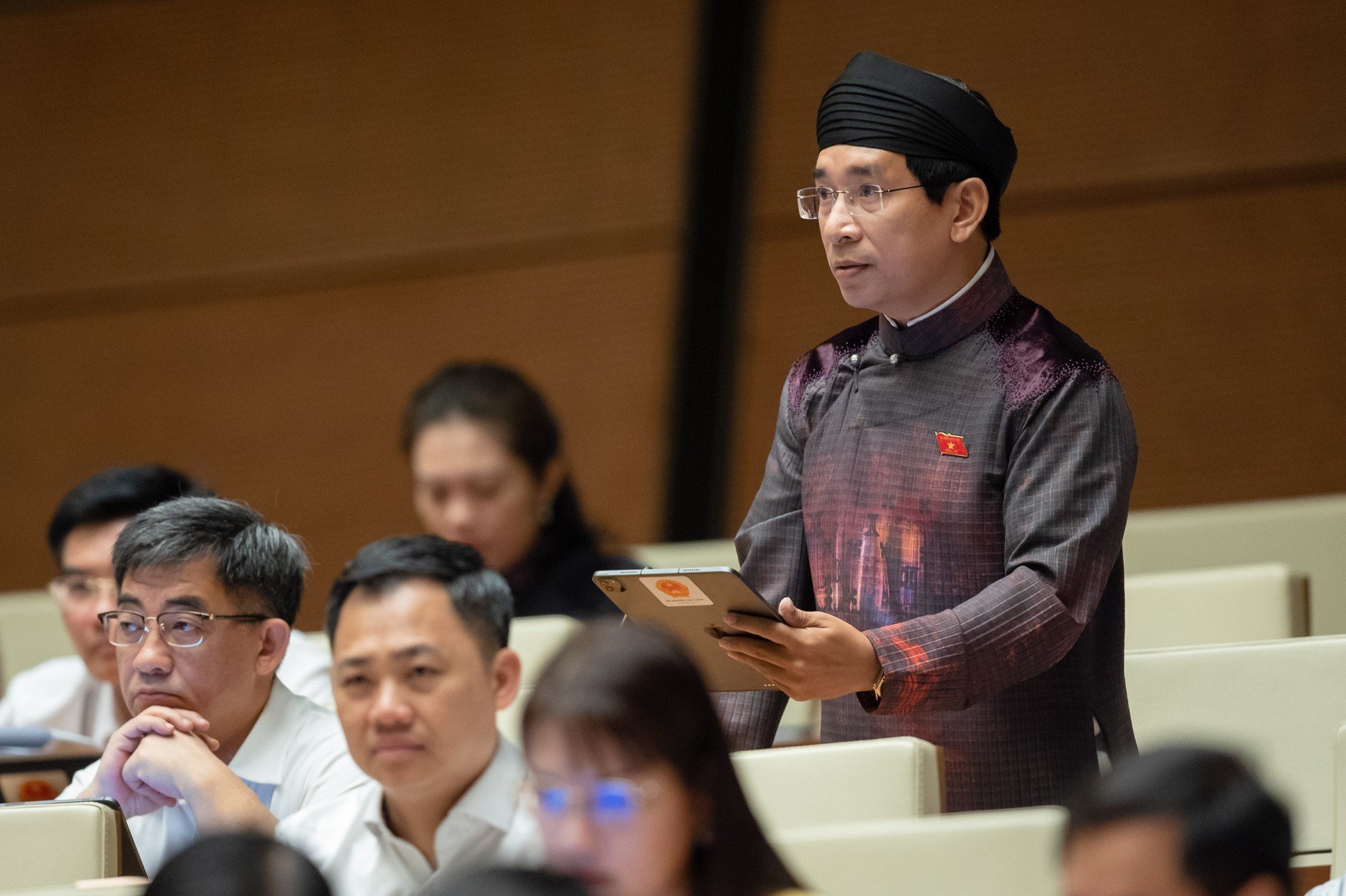
National Assembly Deputy Nguyen Van Canh (Binh Dinh delegation) wore a traditional five-panel ao dai to attend the sessions of the 5th session of the 15th National Assembly .
This proposal has sparked a debate that is not new but never ceases to be heated. To broaden public discussion, Nguoi Dua Tin (The News Reporter) interviewed Dr. Phan Thanh Hai, Director of the Department of Culture and Sports of Thua Thien Hue province, on this topic of current interest.
Preparation for integration with the world
Reporter (NĐT): Sir, recently the appearance of a National Assembly delegate in a traditional five-panel dress and the related proposals regarding this type of attire in the National Assembly forum have truly become a topic of much discussion. To begin our conversation today, let me first ask you this question: Is how one dresses really worth discussing, debating, or even regulating?
Mr. Phan Thanh Hai: For quite some time now, the use of traditional costumes, aiming towards the formation of a national costume, has been the desire of many cultural managers and researchers. However, for various reasons, we have only discussed this issue at workshops, conferences, and forums. The concretization of these ideas and the transformation of these ideas into reality have not yet yielded the desired results.
Regarding the recent proposal by National Assembly delegate Nguyen Van Canh, he suggested that the National Assembly consider including in a resolution allowing male delegates to wear traditional five-panel robes at sessions, in addition to suits. That is, he hoped the National Assembly would provide another suitable option, instead of a rigid regulation that male delegates can only wear suits.
At the same time, he affirmed that allowing men to wear the traditional five-panel áo dài at conferences and events helps responsible agencies and the public gain a realistic perspective and time to better understand traditional values; aiming towards proposing the creation of a separate traditional ceremonial attire for Vietnamese people at major cultural conferences and state diplomatic events. I believe that is a suitable proposal.
I think it's time we seriously and objectively looked at the issue of choosing national costume and ceremonial attire. I completely agree with the regulation that the ceremonial attire of Vietnamese people should be the traditional ao dai, for both men and women. Our ao dai fully meets the requirements of formality, beauty, and cultural identity of a ceremonial outfit. However, there needs to be specific regulations regarding the style, color, decorative patterns, and accompanying accessories.
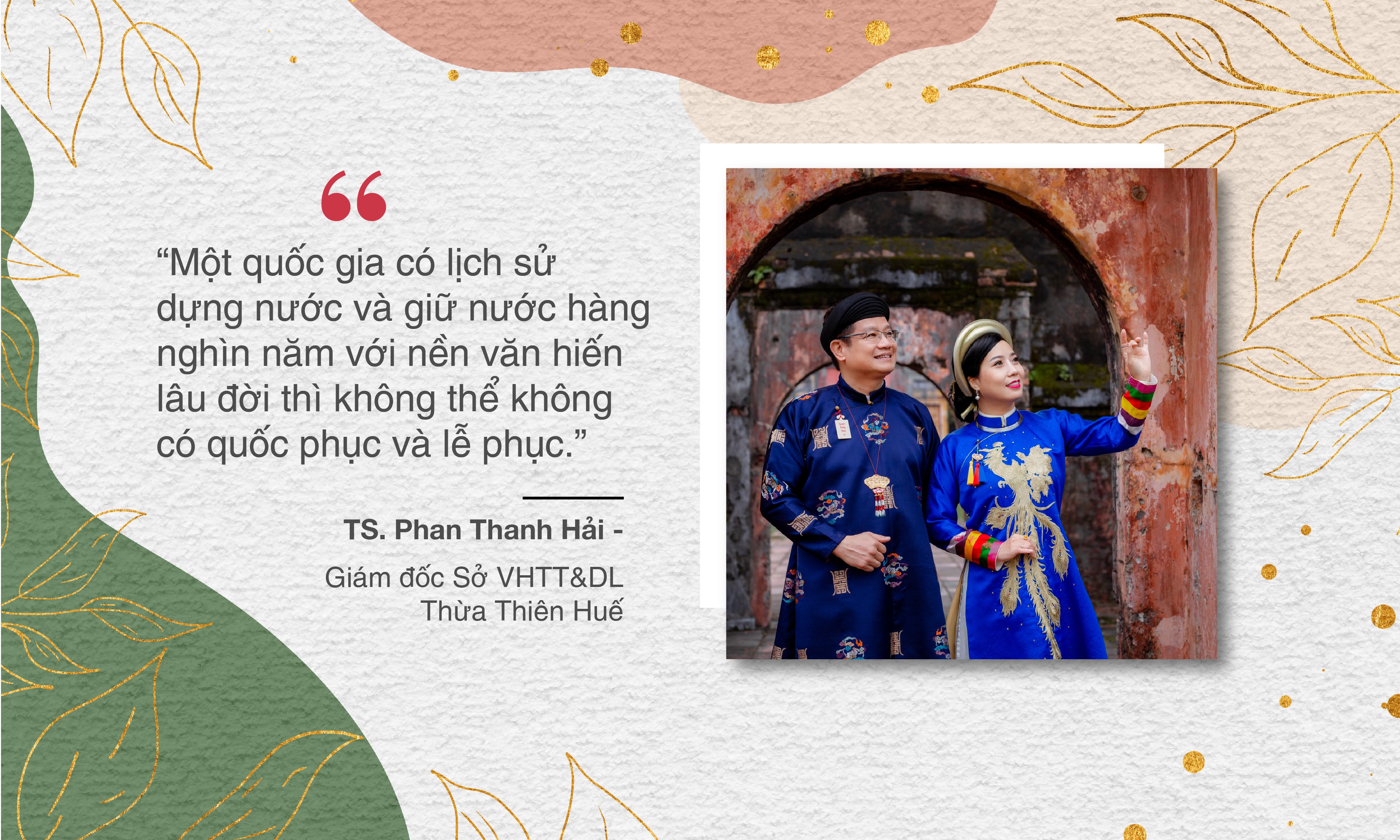
A nation with a history of nation-building and defense spanning thousands of years, and a long-standing civilization, cannot exist without its national costume and ceremonial attire. These are invaluable assets that enable us to integrate with the world without being assimilated.
Interviewer: Sir, if we're talking about national costume or state ceremonial attire, why is it the five-panel ao dai and not some other type of clothing? Because historically, the five-panel ao dai wasn't the only type of clothing men ever wore?
Mr. Phan Thanh Hai: First of all, that's because the five-panel ao dai is a unique creation of the Vietnamese people, and historically, it was the national costume of our entire nation for hundreds of years, when the country was unified and had a territory equivalent to what it is today.
The five-panel ao dai (traditional Vietnamese dress) was originally created by the people of Dang Trong (Southern Vietnam) around the beginning of the 17th century and was gradually perfected. After Lord Nguyen Phuc Khoat ascended the throne in 1744, he planned and rebuilt the capital city of Phu Xuan, proclaimed himself king, and implemented reforms in many aspects, including the government apparatus, the system of official attire and ceremonial music, and modernized customs and clothing throughout the entire Dang Trong region.
For everyday wear, he mandated that both men and women wear a five-panel tunic with a standing collar and buttons on the right side, along with two-legged trousers, their hair styled in a bun, and a turban or headscarf (for women), a type of clothing that was already well-established and widely used among the people.
During the Nguyen Dynasty, the court sought to unify the clothing styles of the two regions, beginning with Emperor Gia Long (following the reforms of Prince Vo Nguyen Phuc Khoat), and then vigorously implemented during the reign of Emperor Minh Mang. From the perspective of cultural unity and autonomy in terms of clothing, Emperor Minh Mang issued numerous regulations to change attire, creating uniformity between the North and South. The five-panel ao dai, with a standing collar and five buttons on the right side, paired with two-legged trousers, was officially recognized as the national costume of Vietnam, becoming widespread from the royal court to the common people.
Thus, the five-panel ao dai originated in the early 17th century, was established by Lord Nguyen Phuc Khoat, and then mandated by Emperor Minh Mang as the common attire for the entire population, becoming widespread throughout the country.
To date, this unique garment has a history of over 300 years. Its classic beauty and cultural values have been tested and affirmed. Therefore, the five-panel ao dai deserves to be chosen as the national costume or state ceremonial attire for Vietnamese people. Wearing the five-panel ao dai will honor national culture, help us become more aware of our roots, and thus make us more proud of our country.
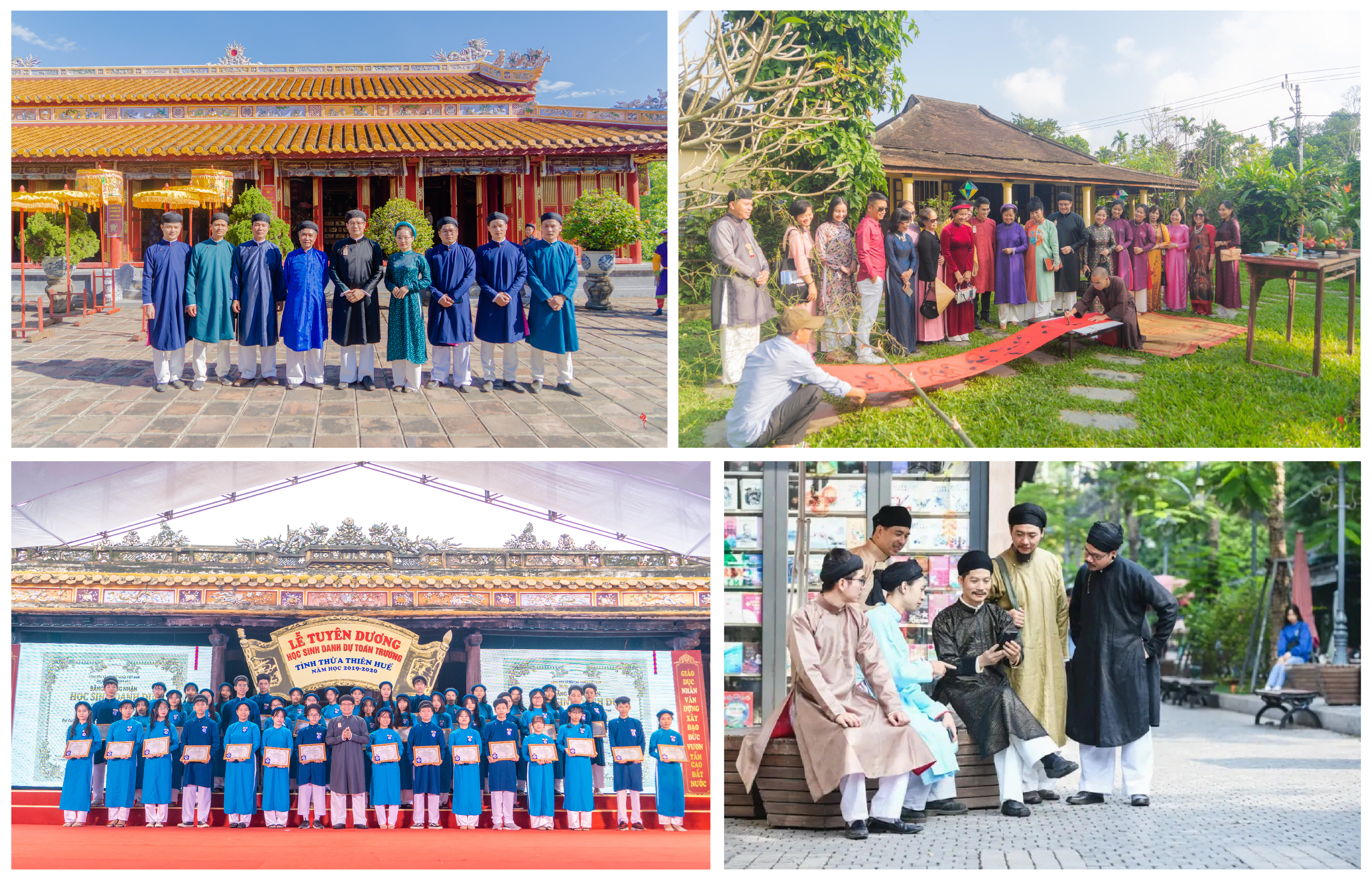
A positive sign in preserving Vietnam's cultural heritage.
Interviewer: The five-panel ao dai (traditional Vietnamese dress) used to be everyday attire in society, so why is restoring a tradition that once existed facing so many obstacles? What are your thoughts on this issue?
Mr. Phan Thanh Hai: The five-panel ao dai (traditional Vietnamese long tunic) was once a garment worn in the daily lives of Vietnamese people. However, preserving and promoting the value of the five-panel ao dai currently faces many obstacles. First, some people believe that men's ao dai are not as convenient or neat as suits. But the problem is that most people who think this way have never worn or experienced an ao dai before. I think men wearing an ao dai still exude an elegant and refined appearance.
Interviewer: Sir, when and how did the discussion about restoring and promoting the value of the five-panel ao dai (traditional Vietnamese dress) begin?
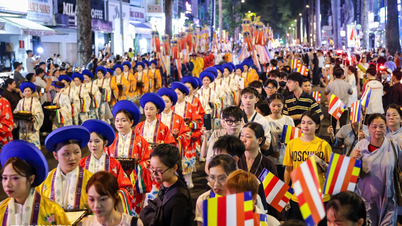
Mr. Phan Thanh Hai: The issue of restoring and promoting the value of the five-panel ao dai (traditional Vietnamese dress) has attracted the attention of the community in the last three years, linked to the brand building activities of "Hue - The Capital of Vietnamese Ao Dai". This is a story of reviving a traditional cultural heritage, bringing that heritage into contemporary life, and allowing it to shine as it once did. Leading the way is the Department of Culture and Tourism, followed by many agencies and departments in the province that have implemented the wearing of ao dai in offices, daily life, and cultural activities.
I understand that there are currently clubs with tens of thousands of young members that have implemented a rule requiring the wearing of traditional five-panel ao dai (Vietnamese long dress) during their activities.
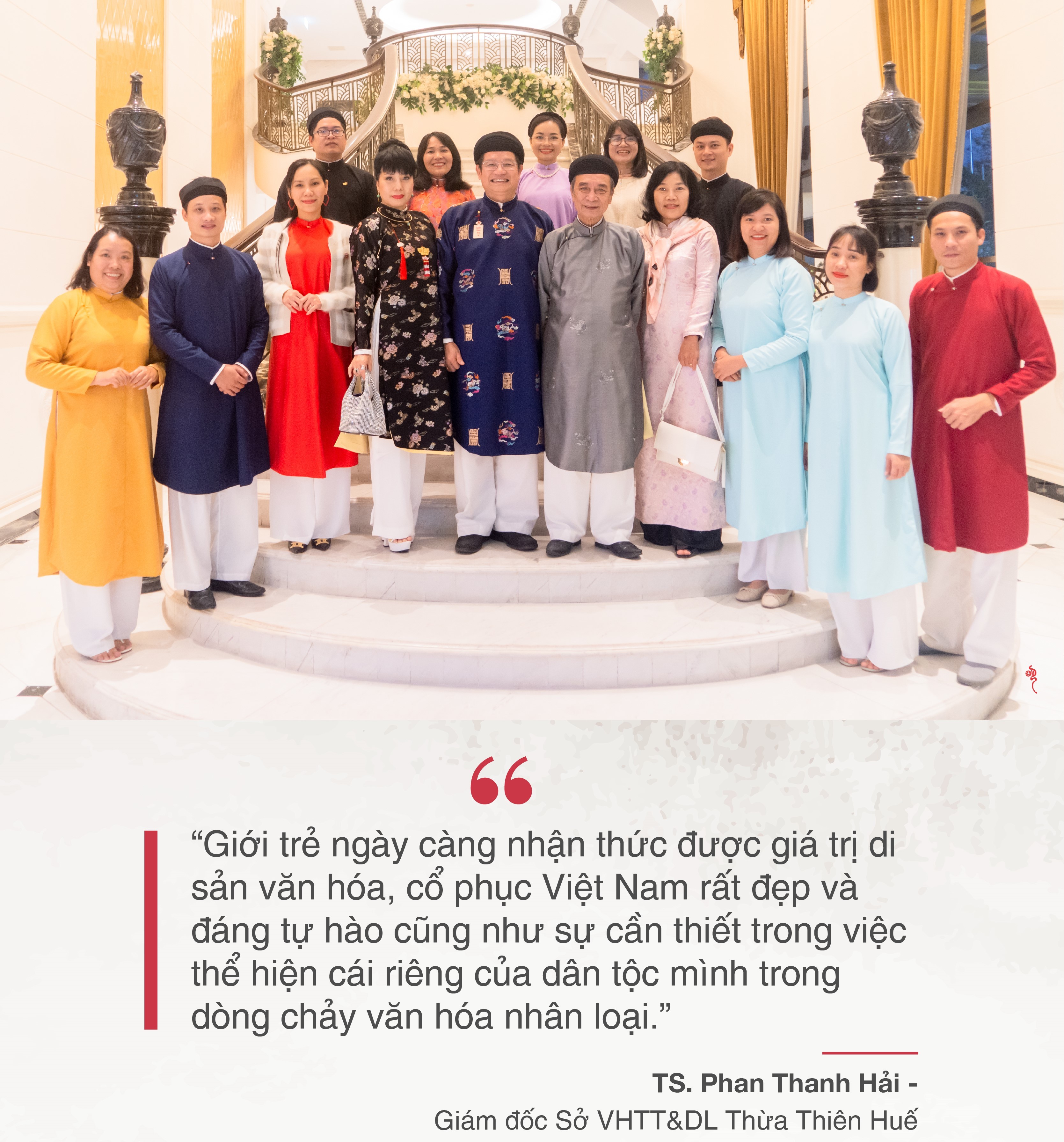
It can be said that the movement to research and revive traditional Vietnamese clothing, including the ao dai, and bring this heritage into contemporary life, has been receiving enthusiastic attention and acceptance from a large number of young people. This is truly a positive sign, showing that young people are increasingly aware of the value of Vietnamese cultural heritage, the beautiful and proud traditional clothing, and the necessity of expressing their national identity within the flow of global culture.
Interviewer: In recent years, there have been projects, organizations, and individuals deeply committed to restoring and promoting the value of the five-panel ao dai (traditional Vietnamese dress). How do you assess these initiatives, especially the values they bring?
Mr. Phan Thanh Hai: It must be affirmed that these are encouraging and valuable signs in the restoration and promotion of the value of the five-panel ao dai. It not only shows that many people still cherish this type of clothing, but also contributes significantly to affirming that the five-panel ao dai is still "alive" in modern life. Many people, especially young people, know about, love, and wear the five-panel ao dai thanks to the spread of projects or individuals like these.
Professor Dr. Thai Kim Lan, the owner of the Huong River Ancient Ceramics Museum, which houses a rare collection of ao dai (Vietnamese traditional dress), always maintains that the ao dai is not outdated or backward, but rather very fashionable and enhances the beauty of Vietnamese women. The ao dai emphasizes harmony and reflects the spirit and pride of the nation.
Although it has not been officially declared the national costume, the ao dai has become ingrained in the consciousness of generations of Vietnamese people, becoming a garment that identifies Vietnamese identity to foreigners.
Or take designer Quang Hoa, for example, one of the people who brought the five-panel ao dai back and spread it throughout the ancient capital of Hue. Designer Quang Hoa has continued to preserve the value of traditional ao dai and constantly innovate to convey messages and humanistic values through Hue ao dai. To develop his passion, he is still nurturing many new projects to create five-panel ao dai that bear the brand and distinctive characteristics of Hue.
These are exemplary individuals, but the Vietnamese Village Temple Club is one of the first organizations to advocate for the return of the traditional five-panel ao dai (long tunic) for men to everyday life. From 2015 to the present, the Vietnamese Village Temple Club has continuously organized activities to promote and raise public awareness of the value of the traditional ao dai.
The Center for Supporting the Development of Traditional Five-Panel Ao Dai - Vietnamese Village Temples has recently intensified its efforts to promote and support artisans and consumers in accessing traditional garments that are suitable for modern life. To date, the making and wearing of traditional Ao Dai is achieving positive results. The number of people making and wearing five-panel Ao Dai is increasing and spreading throughout the community, especially among young people.
It can be said that the aforementioned exemplary individuals and organizations have contributed to the revival and promotion of the value of the ao dai in the context of contemporary life.
The Ao Dai is associated with the sustainable development of the cultural industry.
Interviewer: Hue is currently a leading locality in preserving and promoting the value of the ao dai (Vietnamese traditional dress). Could you tell us what the locality expects from the ao dai, from the connection between the ao dai and Hue, especially the values it brings to the development of the province?
Mr. Phan Thanh Hai: Currently, Thua Thien Hue is promoting the sustainable development of its cultural industry. The ao dai (Vietnamese traditional dress) is truly a special craft that creates impressive products. Therefore, implementing the "Hue - Capital of Ao Dai" project will create opportunities for businesses to participate in the production, supply, introduction, and promotion of Hue ao dai products to the Vietnamese community and international friends.
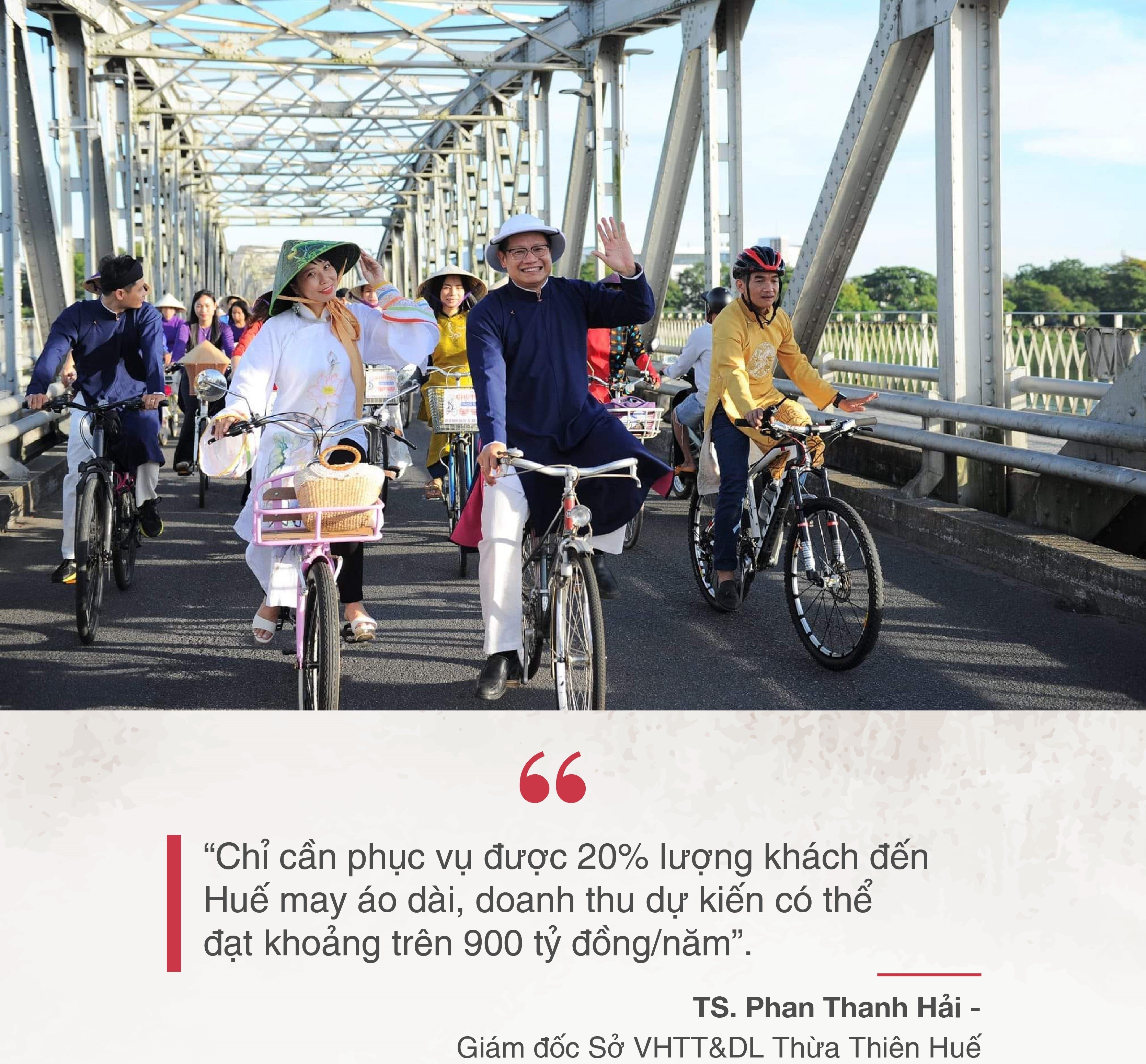
I can give a specific example: in 2019, Hue welcomed over 4.9 million visitors. If we could serve just 20% of those visitors by offering a custom-made ao dai (traditional Vietnamese dress) for around 1 million VND per person, the projected revenue could reach over 900 billion VND per year.
Along with the ao dai (Vietnamese traditional dress), we can promote the development of traditional crafts and supporting accessories. This is a way to develop the cultural industry, serving domestic and export needs, creating jobs, generating revenue for businesses, increasing people's income, and simultaneously preserving and spreading traditional cultural values.
Interviewer: Based on the practical experience that Hue is currently implementing, what do you think needs to be done to truly and sustainably "revive" the ao dai in modern life?
Mr. Phan Thanh Hai: We have always believed that heritage must belong to the community, must be held and protected by the community, and only then can that heritage be sustainably protected and its value best promoted. The ao dai (Vietnamese traditional dress) is a special heritage of the ancient capital of Hue, and it inherently belongs to the community. Therefore, our work is to "revive" the ao dai and bring its heritage back into contemporary community life, encouraging the community to participate in protecting and promoting this heritage.
This is also the process of gradually building the image and brand of Hue's ao dai (traditional Vietnamese dress), making it a unique cultural tourism product and a special advantage of the ancient capital of Hue. Thus, the ao dai is not only an image and cultural identity of Hue, but also a distinctive tourism service product, contributing significantly to making Hue rich and elegant through its own strengths and advantages.
I believe that, with the attention of the provincial leadership, the efforts of the Department of Culture, Sports and Tourism and related departments, and especially with the strong support of the local community, the Hue - Capital of Ao Dai project will be successfully implemented and bring about many encouraging results.
Investor: Thank you for the conversation .
Source
















































































Comment (0)