

SGGP
Varsha Sharma, who lives in Himachal Pradesh, northern India, said that hybrid rice varieties help increase yields, but require a lot of additives, which weakens the soil.
 |
| Rice harvesting in India |
Her family has been involved with rice cultivation for over a century, having profited considerably from hybrid rice varieties, but now she is returning to traditional rice varieties to protect the land.
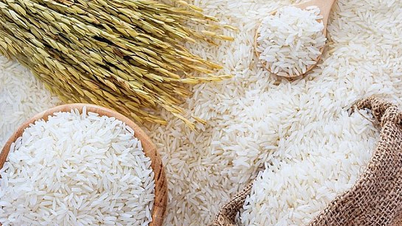
Varsha Sharma decided to change her farming practices in 2018, expanding the area planted with red rice, a rice variety with a long history in Himachal Pradesh that had been shrinking as farmers switched to modern varieties. Despite being organically produced, red rice is still of good quality, with healthy, fast-growing rice plants that require no fertilizers or chemicals. Many studies have also shown that red rice offers greater nutritional benefits than white rice. The biggest appeal of red rice lies in its high sales volume and good price, averaging $3-4 USD/kg in the retail market. Given the increasing market demand for organic rice, the Himachal Pradesh state government is promoting the expansion of red rice production, increasing the cultivated area to 4,000 hectares.
In India, new hybrid rice varieties were widely adopted in the 1970s, when irrigation techniques developed. However, the impacts of climate change and continuous farming practices, as well as the improper use of chemical fertilizers and pesticides, have led to severe soil degradation. Faced with these negative changes in farming practices, protecting traditional agricultural systems is a hot topic in India's agricultural sector. Besides encouraging farmers to choose organic specialty rice varieties, new farming methods are being actively researched by Indian agricultural authorities.
Shankar Patnaik, a farmer and seed conservationist, said that in the past, farmers planted hybrid rice to recoup their investment quickly. Although the trend of choosing traditional rice varieties has returned, most farmers are not yet enthusiastic about it. Some native rice varieties can yield higher productivity, even without chemical fertilizers, but their potential has not been fully exploited.
Mr. Patnaik has a collection of 500 rice varieties and is experimenting with many types on 56,000 square meters of land. He also researches water-efficient farming methods to protect the environment. In particular, he uses the alternating wet-dry irrigation (AWD) method. With this method, farmers flood the fields, allow the water to drain for several days, and then flood them again. This is one of the processes that the Centre for Sustainable Agriculture (CSA) in India is using in collaboration with farmers to promote more sustainable agricultural production.
In India, several non -governmental organizations, along with government agencies, are working to preserve indigenous rice varieties. Some notable examples include the State Seed Testing Laboratory (SSTL) in Bhubaneshwar, the Central Rice Research Institute (CRRI) in Cuttak, Odisha, and the Indian Council of Agricultural Research (ICAR) in New Delhi.
The goal of these units is to cultivate indigenous rice varieties, preserve them for research, breeding, and the creation of high-yield varieties. In addition, India has also collaborated with many international organizations on the conservation of valuable rice varieties.
Source
























































































Comment (0)