| Businesses face numerous digital export opportunities in 2023. Many opportunities for Vietnam in attracting foreign investment and achieving growth targets. |
2023 was an extremely difficult and challenging year, but the economic growth for the whole year still reached 5.05%, ranking among the highest in the region and the world… What is your assessment of these results?  |
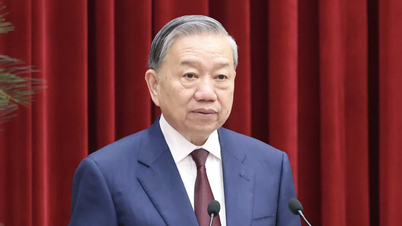
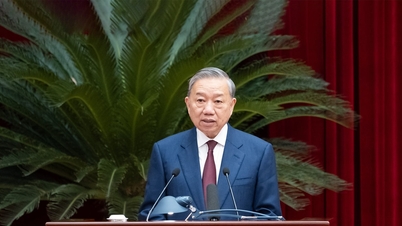
| Associate Professor Dr. Hoang Van Cuong, Member of Parliament, Member of the National Assembly's Finance and Budget Committee. |
First of all, it must be said that 2023 was a year when the whole
world faced many "headwinds," resulting in slower and much lower global economic growth than the expected targets. The "headwind" faced globally was the wave of high inflation, which led many countries and major markets to implement policies of raising interest rates to combat inflation. Raising interest rates reduces investment and increases the cost of capital. High inflation also caused a sharp decline in global demand in 2023, resulting in very low purchasing power parity (PMI) indices for manufacturers in most regions, indicating that manufacturing sectors did not grow due to a lack of output markets. Vietnam's economy is highly open, so when the global economy faces difficulties, it strongly impacts our economic growth. However, Vietnam's achievements are a testament to our ability to weather this "headwind." As a country heavily reliant on imports and exports, when global inflation rises, especially in major export markets, it directly impacts domestic inflation, a situation known as imported inflation. In this context, we must allocate resources to combat inflation, even sacrificing economic growth to curb it. We all know that implementing such measures will restrict and discourage investment, thus hindering economic growth.
 |
But in such difficult circumstances, we still achieved a growth rate of 5.05%. Compared to the target of 6.5%, although not yet reached, this is a tremendous effort. While most countries in the world have very low growth rates, such as the US at around 2.4%, Europe at over 1%... the 5.05% growth rate is the highest in the region and the world. But more importantly, this 5.05% growth is based on a 2022 growth rate of 8%, which is much more difficult than the countries with low growth rates in 2022. In addition, we have truly succeeded in going against the "headwind" of the global inflation trend. While most major economies like the US and Europe experience high inflation rates, forcing monetary policy-making bodies to repeatedly raise interest rates, Vietnam has bucked this trend, becoming one of the pioneering countries to reduce interest rates four times. This has resulted in a very low inflation rate in 2023, reaching only 3.25% compared to the target of 4.5%. Another success is that while public and corporate debt are rising rapidly worldwide, Vietnam's public debt has decreased significantly. In 2023, the public debt ratio was below 40% of GDP, very low compared to the safe limit of 60%. It is noteworthy that public debt has continuously decreased over the past years, demonstrating a great success in controlling national financial security. Furthermore, in 2023, we proactively and flexibly managed the exchange rate, resulting in a stable currency value and building confidence among investors, especially foreign investors, to invest in Vietnam. This is also one of the reasons why, despite the challenging global context of 2023, foreign investment in Vietnam continued to increase, other indicators showed good growth, and macroeconomic indicators remained stable. Vietnam's credit rating in 2023 improved to a stable outlook, while some countries experienced a decline. This success was achieved thanks to the highly effective implementation of fiscal and monetary policies to stabilize the macroeconomy. It was precisely this stable fiscal policy and flexible monetary policy that created macroeconomic stability, providing the impetus for growth in other sectors.
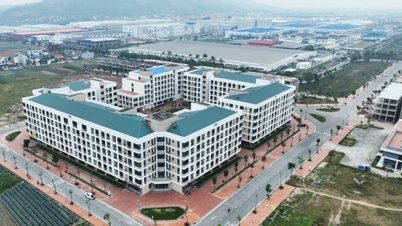
Besides the achievements, what shortcomings and limitations, in your opinion, are creating "bottlenecks" hindering growth in the past year? What solutions do we need to address them in the coming year? It's true that we have achieved successes, but looking back at the economy, we still see many shortcomings and weaknesses that need to be addressed. The most typical and obvious weakness currently is the significant decline in the capacity and potential of businesses. Businesses no longer have sufficient resources or reserves for investment; even now, while credit is readily available and relatively cheap, businesses are unable to absorb it for investment because they lack business development direction and markets… This poses a challenge for us in 2024: designing policies to continue supporting businesses. Because for the economy to grow and develop, it depends on whether businesses can recover and break through. Another weakness is that the Vietnamese economy is heavily dependent on FDI. Most domestic businesses only participate in low value-added stages, resulting in low productivity. We need to restructure the business sectors and restructure the attraction of foreign investment. FDI attraction must be based on science and technology and innovation. The opportunities for 2024 are wide open for us to enter high-tech industries such as semiconductors and artificial intelligence. If we have a suitable strategy, and can seize the opportunity of the new wave of investment in these industries, we expect to create opportunities for a more in-depth economic restructuring. Another issue is that market demand remains very difficult. To stimulate demand, we need to follow two approaches. First, continue to increase public investment, boost investment in transportation infrastructure to reduce connection costs and logistics costs, and increase the attraction of domestic and foreign investment. However, it is also necessary to expand into new areas of public investment, especially public investment in technology infrastructure, digital transformation, and science and technology infrastructure, creating new impetus for innovation and the digital economy. Secondly, we must continue to implement policies to stimulate consumer demand through tax support programs, VAT reductions, promoting conditions for business recovery, creating jobs, implementing new salary reform policies, increasing income for the public sector, etc., thereby spreading to other sectors. Simultaneously, we must implement social security policies to increase income for vulnerable groups, creating additional revenue sources to further stimulate consumer demand. Another weakness in 2023 was the tendency of officials to avoid and shirk responsibility. This is a bottleneck not only in the public sector but also creates negative impacts and hinders the development of the private sector. Therefore, in 2024, we must accelerate institutional reforms and remove bottlenecks to overcome this situation. I believe this will be one of the focuses of institutional reform, but also a breakthrough solution to encourage officials to think boldly, act decisively, and be dynamic and creative… as stated in Conclusion No. 14 of the
Politburo , creating new momentum for development.
At the recent 6th session, the National Assembly passed a resolution with the goal of GDP growth in 2024 of 6 to 6.5%, while controlling inflation at around 4-4.5%. Do you think we can achieve this goal? International organizations all predict that in 2024, the world economy will continue to face difficulties and growth will be lower than in 2023. Accordingly, the global economic growth rate in 2024 is projected to be only 2-3%. Other major economies are also forecasting declines, such as the US, which is projected to reach 2.4% in 2023 and only 1.5% in 2024; Japan, which is projected to reach 2% in 2023 and only about 1% in 2024; and China, which is projected to reach 5.2% in 2023 and only 4% in 2024... China, the world's second-largest economy, has a very strong direct impact on Vietnam's economic growth, so it's clear that the unfavorable global economic context will present many challenges for Vietnam's economy. Therefore, achieving the 6-6.5% target requires tremendous effort and is still achievable due to several prerequisites. Firstly, if 2023 is a year in which the whole world faces difficulties such as inflation and political conflicts, these will have a very strong impact on our country. Domestically, we are also going through a difficult period after battling the Covid-19 pandemic, which had a very strong impact on businesses in early 2023. The situation with bond debt puts many businesses at risk of default, and the SCB Bank case has had a significant impact on the economy… However, in 2024, the unfavorable factors in the global and domestic context will lessen. Global economic forecasts show that inflation in most major markets is decreasing, and interest rates are also falling… This will help us no longer worry about imported inflation, allowing us to allocate more resources to prioritize investment and growth.
 |
Secondly, domestically, although businesses are facing difficulties, threats such as debt/bankruptcy and instability in the financial system have improved and are in a relatively good state. The forecast for investment growth in 2024 is likely to be stable and better than in 2023. In fact, Vietnam's economic growth rate from 2023 to date has been quite good, with Q1 at 3.41%, Q2 at 4.25%, Q3 at 4.57%, and Q4 at 6.72%. Thus, the domestic and global context in 2024 is trending better than 2023, creating expectations that growth in 2024 will continue on the foundation of 2023, and we will achieve the set targets. Besides that, we also see new development opportunities for Vietnam such as high-tech investment flows, attracting large corporations in semiconductors, artificial intelligence, and the application
of science and technology, innovation, etc. If we seize this opportunity in 2024, we will not only create a change in our future position and expectations, but more importantly, it will open up qualitative development for the economy in the coming time.
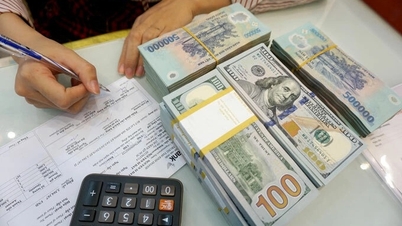
In this context, what recommendations do you have for monetary policy management to achieve the growth target in 2024? 2024 will have many prerequisites for us to implement a more solid monetary policy than in 2023. This is because inflationary and exchange rate pressures will lessen in 2024, and current lending interest rates are also low. Based on the premise of low interest rates, we can also expect that in 2024, interest rates will continue to be maintained at a reasonable level, not too high to affect the goal of supporting businesses. Therefore, monetary policy in 2024 needs to move towards an expansionary, flexible, but cautious monetary policy... In the context where businesses still lack sufficient resources and potential to create stable growth, and many businesses are currently in a state of outstanding debt, even bad debt, and no longer have collateral... banks providing credit need to shift to a new management and supervision method: monitoring cash flow according to programs and projects requiring capital financing, rather than based on the historical factors of the business. Regarding exchange rates, 2024 will present more challenges than 2023 because when we expect an economic recovery, the trade balance between exports and imports will also change. Especially during a period of strong economic recovery, import demand is quite high, and thus the trade deficit may not be a large positive balance. In that case, foreign exchange reserves may be a factor to consider in order to manage monetary policy flexibly;
a flexible but stable exchange rate, without affecting investor sentiment, especially as we are actively attracting foreign investment.
Thank you!









































































































Comment (0)