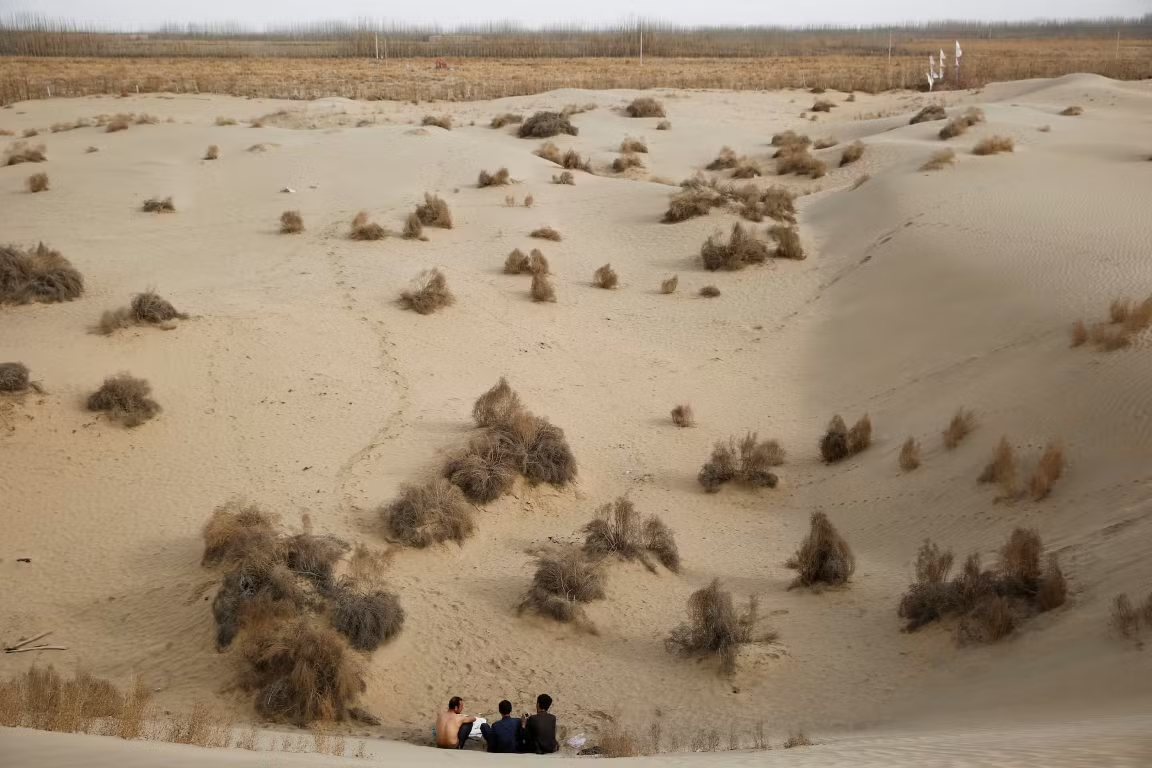
China Central Television (CCTV) reported that the Taklamakan Desert in Xinjiang – the country's largest desert – experienced its first floods of the year in early June. Images released by CCTV showed the rare sight of floodwaters inundating and filling the normally arid sand dunes.
Although the Taklamakan Desert has experienced similar floods since 2021, they typically only occur in August – the time of year when temperatures peak. This year, however, things have changed as the heat waves arrived much earlier.
According to data from Reuters climate monitor, on June 12th, temperatures in Xinjiang were 7.3 degrees Celsius higher than the average for the same period in previous years, reaching 38 degrees Celsius. Simultaneously, western and southern Xinjiang also recorded heavier rainfall. CCTV reported that rainfall in some areas in early June was double, or even triple, the historical average.


The combination of intense heat and heavy rainfall has become the trigger for desert floods. Large amounts of glaciers and snow cover on the Tianshan and Kunlun mountain ranges have melted rapidly. This massive volume of water flows into the Tarim River – China's longest inland waterway.
The sudden surge in water flow caused the river to overflow its banks, flooding large volumes of water into the low-lying areas of the desert.
Floodwaters inundating the desert can temporarily create short-lived "oases" and provide crucial irrigation water for local forests. However, experts believe these flooded areas will not last long. Because the Taklamakan Desert is located deep inland and surrounded by high mountain ranges, the low humidity and extremely high evaporation rate will quickly dry out the surface.
More worryingly, local officials have issued warnings about the serious risks to infrastructure caused by the flooding.



Source: https://cand.vn/trung-quoc-canh-bao-lu-lut-tai-sa-mac-post813747.html



![[Image] Overview of the construction site for the underground station of metro line 5 at the Hanoi Ring Road 1 intersection.](https://vphoto.vietnam.vn/thumb/1200x675/vietnam/resource/IMAGE/2026/07/03/1783065595682_ndo_br_z7974930852369-100ca093c306e72675f1d3700966a86b-jpg.webp)