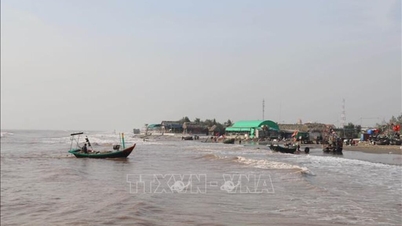
The renowned figure Bui Vien (1839 - 1878) was from Trinh Pho village, An Boi commune, Truc Dinh district, Kien Xuong prefecture, Nam Dinh province (later An Ninh commune, Tien Hai district, Thai Binh province, now part of Hung Yen province). Although not born in Hai Phong , he was the one who chose Ninh Hai wharf in the former Hai Duong province to build the Ninh Hai trading port, the predecessor of Hai Phong Port.
The old Ninh Hai Wharf, the present-day Hai Phong Port.
The renowned cultural figure Bui Vien (1839 - 1878) was born in Trinh Pho village, An Boi commune, Truc Dinh district, Kien Xuong prefecture, Nam Dinh province (later An Ninh commune, Tien Hai district, Thai Binh province, now part of Hung Yen province). Born into a well-established Confucian family, he passed the baccalaureate and then the bachelor's degree examinations at an early age.
According to the book "Historical Figures of Hai Phong" (Volume 1, edited by Ngo Dang Loi and Trinh Minh Hien), around 1871, he was invited by Doan Khue, the land reclamation official of Nam Dinh province, to assist in land reclamation in that province. Later, he assisted Pham Phu Thu, the governor-general of Hai-Yen (Hai Duong - Yen Quang), in the coastal defense of Hai Duong. According to the Dictionary of "Historical Figures of Vietnam," edited by Nguyen Quang Thang and Nguyen Ba The, published in 2013 (Culture and Information Publishing House), Bui Vien played a major role in developing Ninh Hai port into the Hai Phong seaport. He is remembered as the first Vietnamese person to twice cross the ocean to the United States to seek assistance against French colonialism. He is also considered the "chief architect" who transformed the old Ninh Hai port into the bustling Hai Phong trading port of today.
According to the book "Bui Vien - The First Vietnamese Envoy to the United States" (compiled by Quang Khai, Labor Publishing House, 2006), around the mid-19th century, under increasing pressure from French colonial aggression, the Nguyen dynasty was forced to consider opening up trade to increase national resources. The Governor of Nam Dinh was entrusted with the important task of building a trading port in Tonkin that could serve as a gateway for the entire region to trade with the outside world. With his talent, Bui Vien was chosen to undertake this difficult task.
After surveying the area, Bui Vien chose Ninh Hai – a small fishing village on the banks of the Cam River. At that time, Ninh Hai was just a muddy swamp with a few scattered thatched huts of fishermen, and it was also a place frequently harassed by pirates. He, along with about 200 soldiers and laborers, set about digging canals to drain water, leveling the land to build foundations, opening roads, constructing fortifications, establishing the Hai Phong office, and setting up a customs station at the confluence of the Cam and Tam Bac rivers. During the day, he supervised the digging of canals, draining water, and leveling the land; at night, he had to deal with pirates and bandits. His vision was not just to build a harbor, but to create a "commercial port combined with a military port" – a place where the economy was linked to national defense.

According to the book "Cultural Tourism in Hai Phong" by author Tran Phuong, these early constructions laid the foundation for the later development of Hai Phong as a city and seaport. Professor of history Le Van Lan also noted that thanks to Bui Vien's vision, Hai Phong port was formed and quickly became a major trading port.
Notably, when tasked with the project, Bui Vien did not choose Tra Ly or Ba Lat estuaries – more advantageous locations in his hometown of Son Nam Ha – but instead proposed Ninh Hai. More than a century later, the alluvial deposits and waterways of the Cam estuary area prove that this choice was a long-term vision. Historian Le Van Lan affirms that, not swayed by local interests, Bui Vien placed national interests above local ones. History may acknowledge many contributors, but Bui Vien deserves to be considered the "chief architect" of the first seaport city in Northern Vietnam.
Reformist ideology and the aspiration to cross the ocean.
In Bui Vien's thinking, building ports was not just for trade, but also for protecting the sea. This was a very modern, integrated economic and military perspective.
In the book "Bui Vien - The First Vietnamese Envoy to the United States" (compiled by Quang Khai, Labor Publishing House, 2006), it is written that, faced with the turbulent times, he realized that the policy of "closed-door" was outdated. In 1873, sent to the United States by Emperor Tu Duc with the mission of seeking support and learning about development models, Bui Vien set off. Thanks to a letter of introduction, he was granted an audience with the US President. However, because he did not have official credentials, the trip remained at the level of informal contact. On his second trip to the US, he still did not achieve the desired diplomatic agreement. Although these two trips to the United States did not result in formal diplomatic agreements, they became a breakthrough: for the first time, a Vietnamese person traveled so far as an envoy, proactively seeking a strategic partner outside the traditional East Asian sphere.
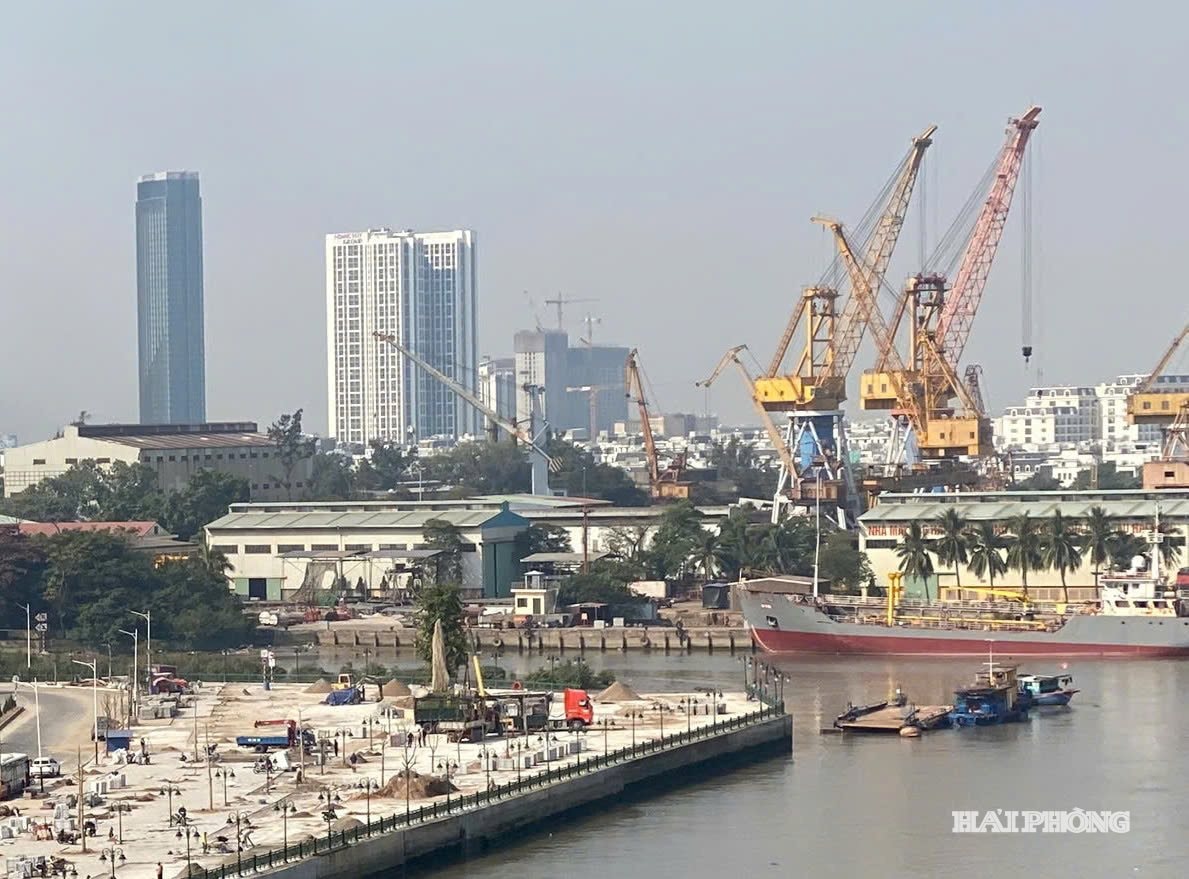
Upon returning to Vietnam, he continued to submit petitions proposing the establishment of a patrol force and the development of trade. Bui Vien was the organizer of the first patrol force of the Nguyen dynasty. Appointed as the Chief Commander of the Coastal Patrol Department, he organized the Thanh Đoàn and Thủy Dũng forces, building hundreds of patrol warships along the coast to eliminate pirates and expand trade and exchange between regions and foreign countries by sea.
He also proposed the establishment of the Chiêu Thương Bureau – the agency responsible for foreign trade of the Nguyen dynasty – and was appointed as the Chief Commercial Officer; at the same time, he opened a branch office in Ninh Hai. The Chiêu Thương district later became bustling, attracting Vietnamese, Chinese, and Western merchants. Rice, forest products, agricultural products, and seafood flowed freely on the docks and boats. A port city was formed from this vision of combining economics with national defense…
History will remember.



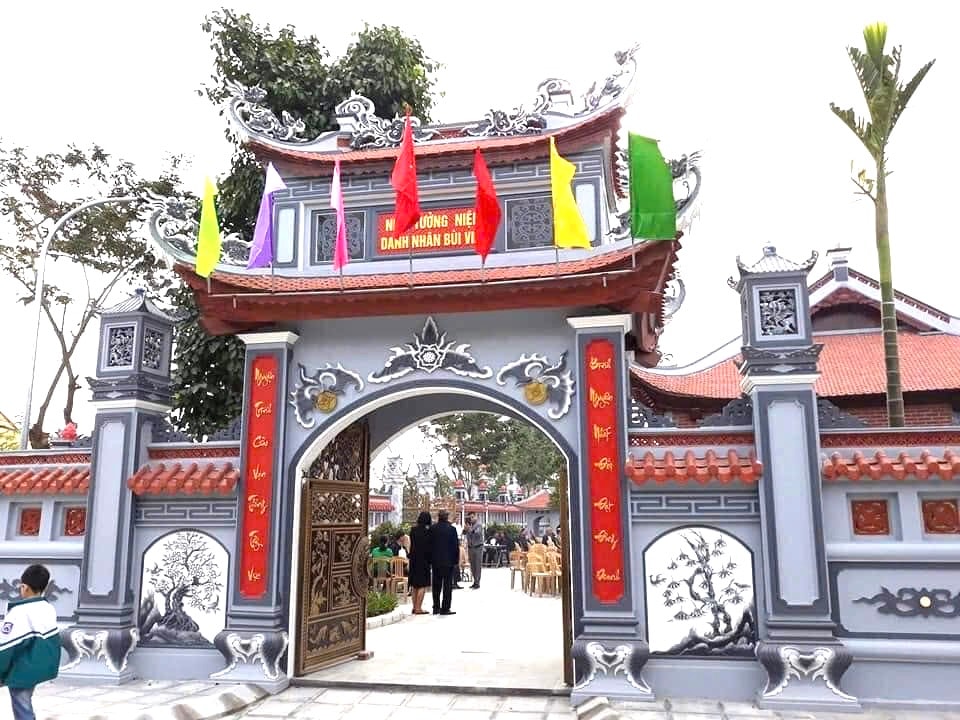
In recognition of his contributions, in 1989, the State recognized and granted the Bui clan ancestral temple in An Ninh commune a historical and cultural relic status. In 2021, his hometown (Tien Hai district, former Thai Binh province), along with the joint efforts of many individuals and groups from Hai Phong and fellow Tien Hai residents in Hai Phong, contributed their efforts to build a spacious Bui Vien Memorial House on the site of the old ancestral temple – a national-level relic – in his hometown of An Ninh commune. The project was inaugurated on March 7, 2021. Spanning nearly 900 square meters, the nearly 900 square meter structure features a prominent bronze statue of Bui Vien, serving not only as a source of pride for the Bui clan descendants and their hometown, but also as a place of remembrance and traditional education for future generations.
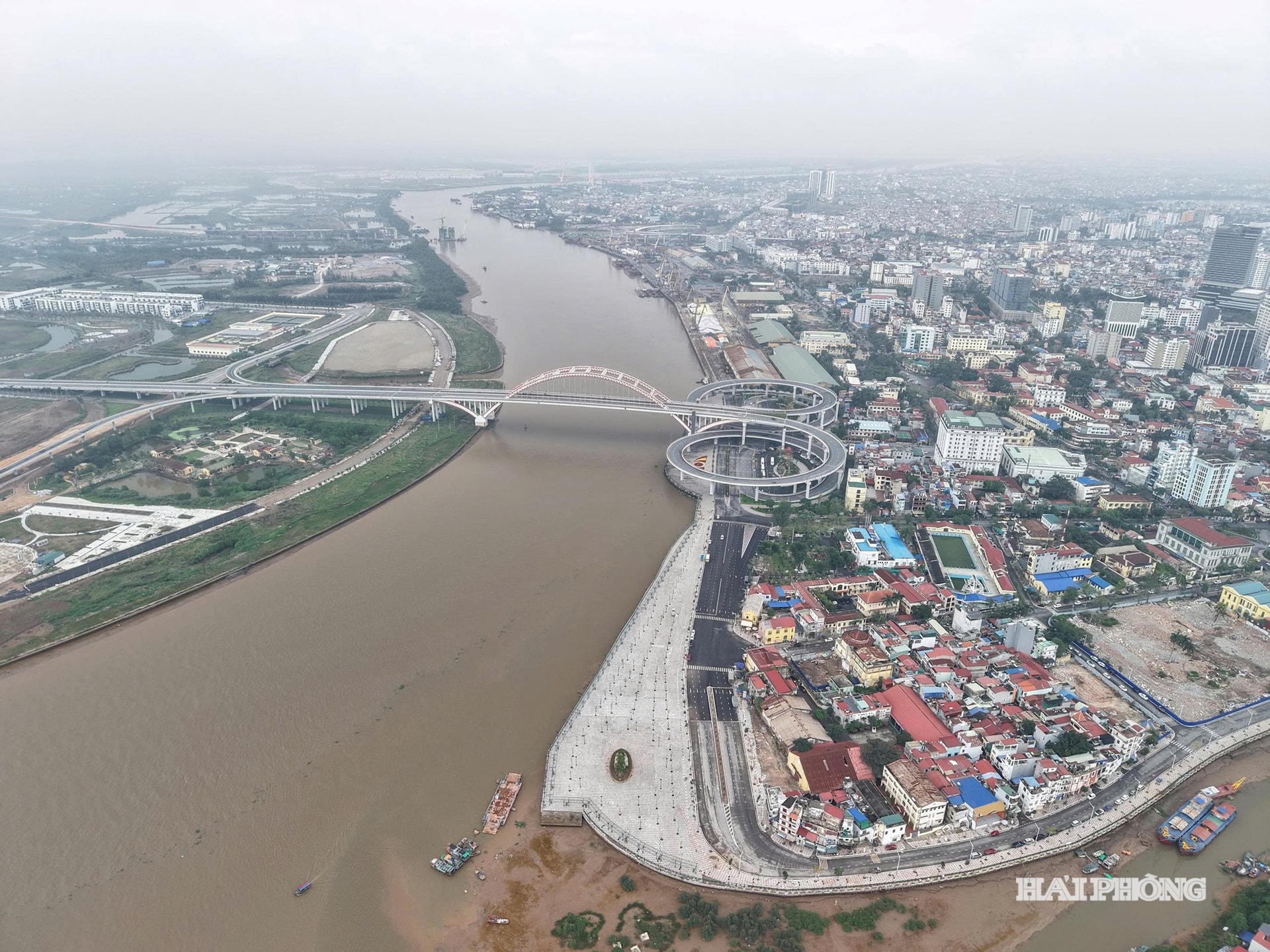
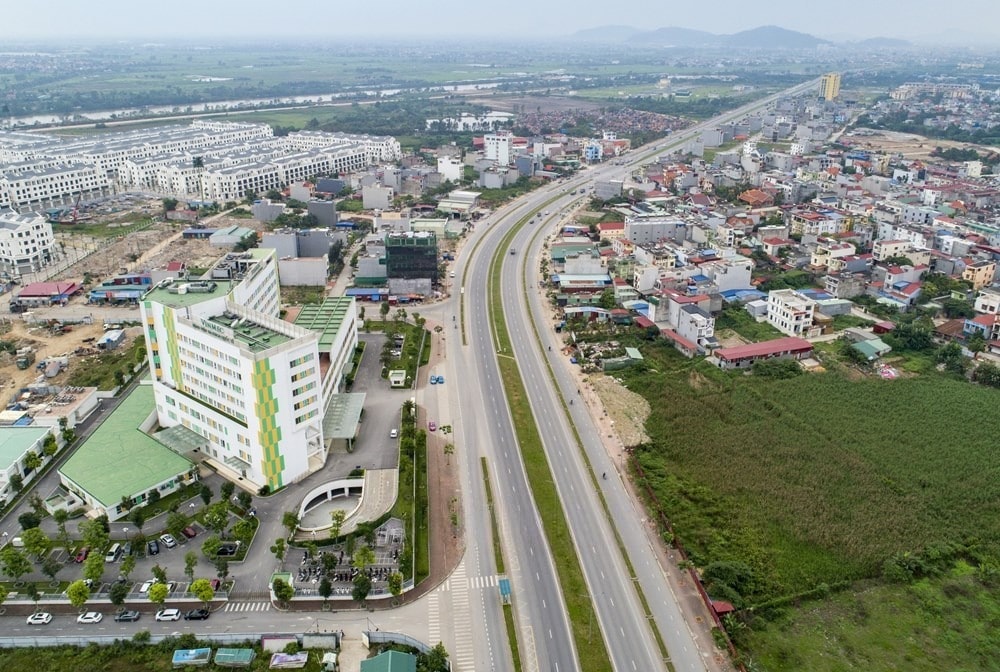
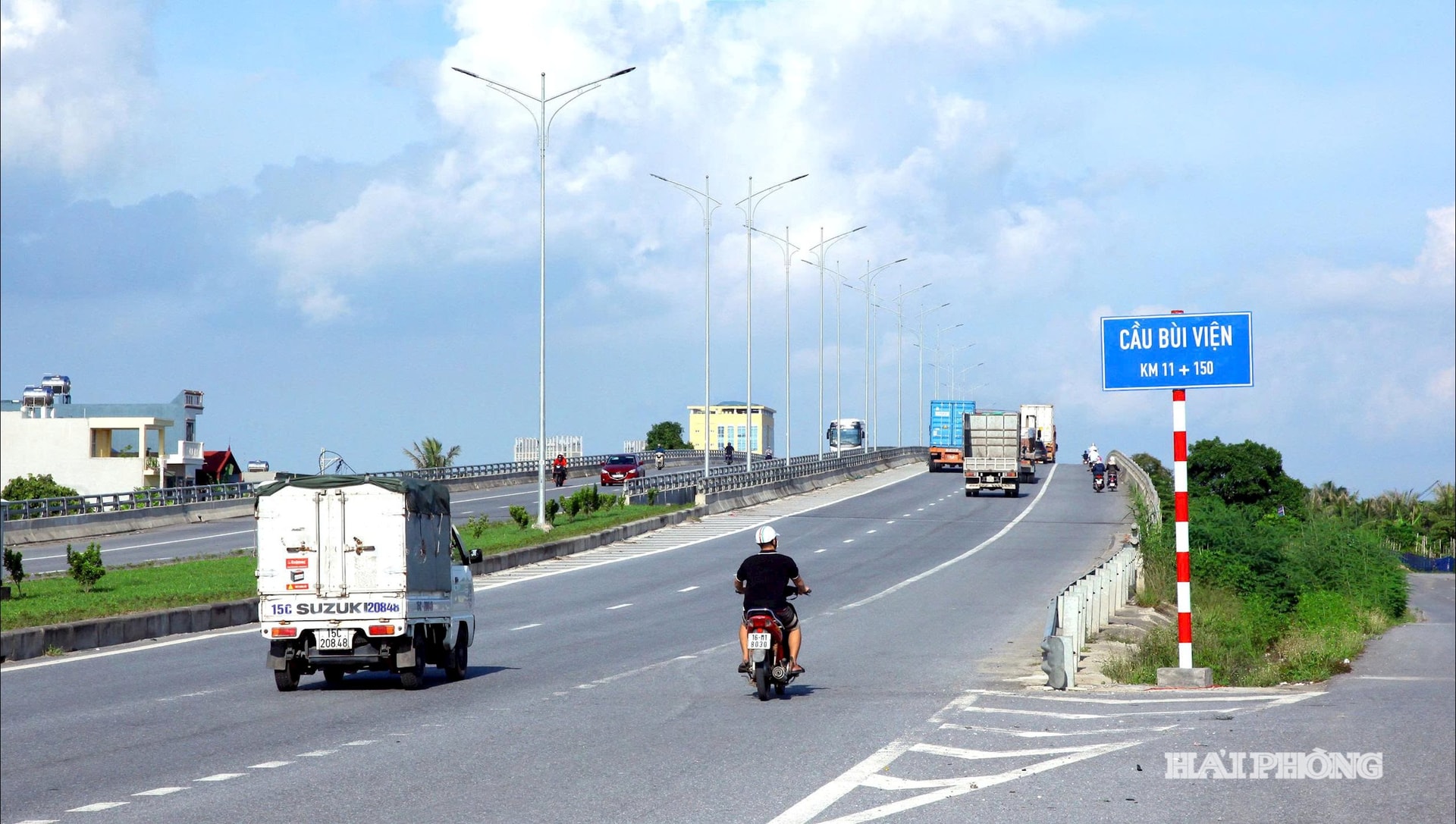
In Hai Phong, on July 22, 2020, the Hai Phong City People's Council issued Resolution No. 01/2020/NQ-HĐND on naming roads and public works in the city. Bui Vien Street is 11.6 km long and 40 m wide, starting at the Hai An area and ending at Lam Khe Bridge crossing Truong Chinh Street. This long, modern road passes through many new urban areas and dynamic economic spaces, serving as a reminder of the person who chose the Cam River estuary for the future. Along this road is Bui Vien Bridge (formerly known as Niem 2 Bridge), spanning the Lach Tray River. This structure, approximately 700 m long and 50 m wide, contributes to completing the transportation infrastructure of the southern gateway and creates momentum for the development of new urban spaces in the city.
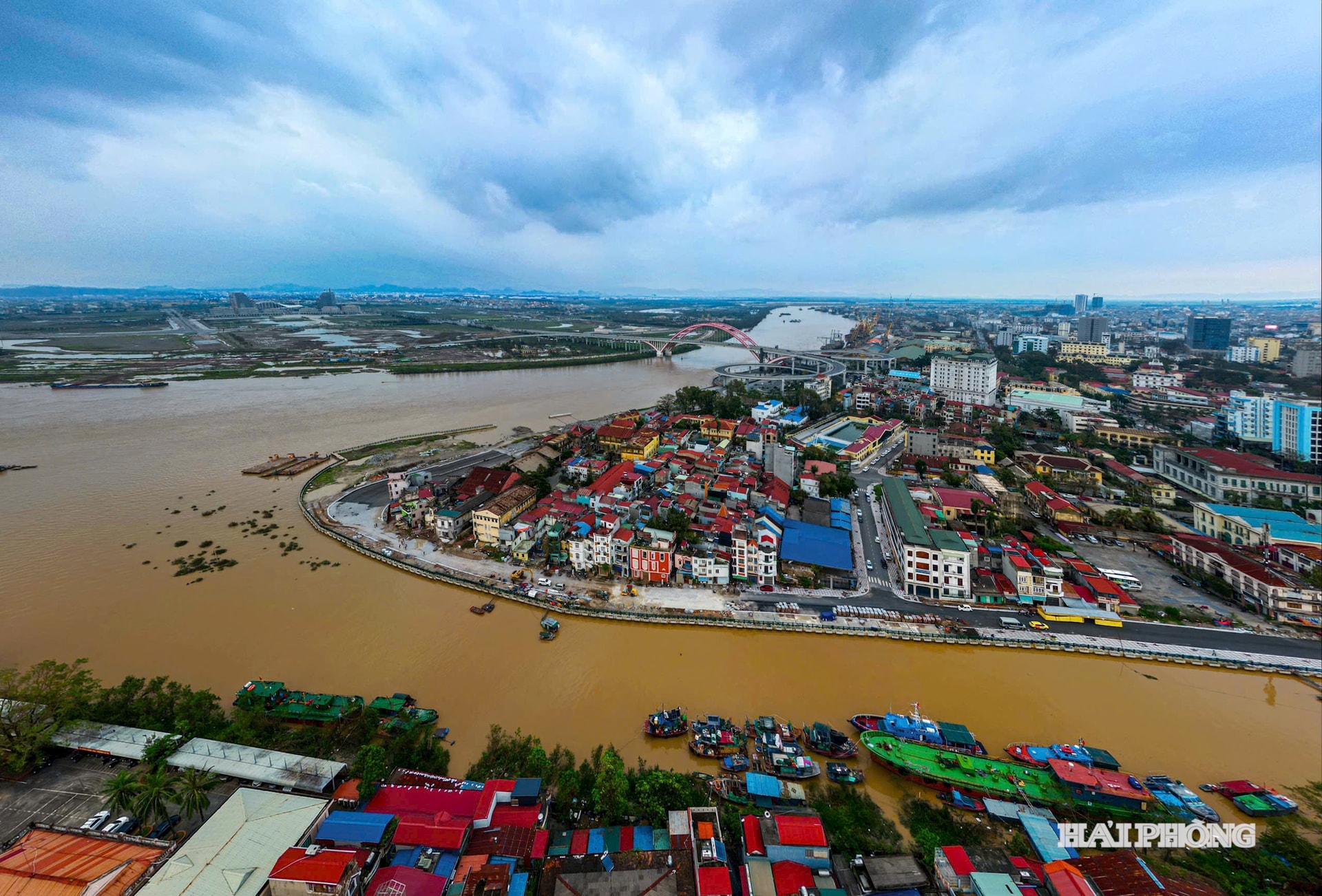
According to research documents, Mom Thủy Đội, now located at the former Ninh Hải junction on the Cấm River, remains a historical site within the central urban area of Hai Phong. From a place controlling the entry and exit of ships at Cấm estuary in the 19th century, it is now part of a traditional port area, directly connected to the modern seaport system extending to Đình Vũ - Lạch Huyện. No longer a defensive "mom," it remains a key hub for maritime traffic and logistics – a vivid testament to the vision of a "commercial and military port" that Bùi Viện laid the foundation for over 150 years ago. Many believe that Hai Phong city has significant projects to commemorate Bùi Viện's contributions, such as the Bùi Viện road and bridge. The merger of Hai Phong and Hai Duong further highlights Bùi Viện's role in expanding the territory of the former Hai Duong province. Therefore, a memorial is urgently needed at Thuy Doi promontory, Cam Gate, a place that marks the early days of the Ninh Hai port, laying the foundation for the vast and brilliant Hai Phong Port of today, the heroic port city - the land of Eastern culture.
HAI HAUSource: https://baohaiphong.vn/tu-ben-ninh-hai-den-cang-hai-phong-536820.html
![[Photo] National Assembly Chairman Tran Thanh Man attends the Conference to announce the Master Plan for Hanoi Capital City with a 100-year vision.](https://vphoto.vietnam.vn/thumb/1200x675/vietnam/resource/IMAGE/2026/06/29/1782709639728_ndo_br_1-jpg.webp)
![[Image] A look back at the capital's preparations for the century-long master plan.](https://vphoto.vietnam.vn/thumb/1200x675/vietnam/resource/IMAGE/2026/06/29/1782750453122_quy-hoach-100-nam-minh-duy-1-2118-jpg.webp)
![[Photo] General Secretary and President To Lam works with the Party Committee of the Government on the work of preventing and combating storms, floods, extreme natural disasters and climate change.](https://vphoto.vietnam.vn/thumb/1200x675/vietnam/resource/IMAGE/2026/06/29/1782729441945_a1-bnd-0385-9454-jpg.webp)