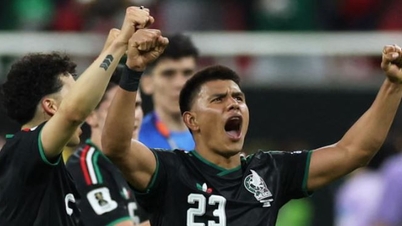
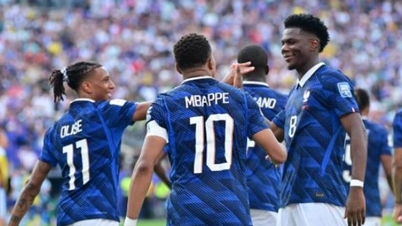
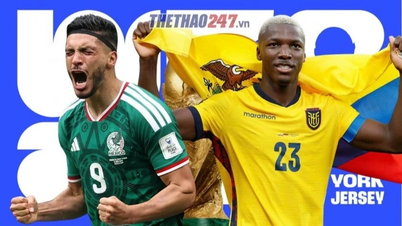
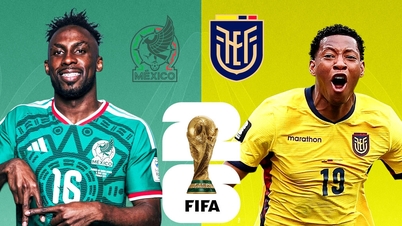
While FIFA's list of official sponsors and partners at previous World Cups primarily consisted of beverage brands, sportswear, financial services, automobiles, or airlines, this year it includes several personal care brands.
When the World Cup officially kicks off on June 11th, personal care and beauty brands like Dove, Paula's Choice, and Unilever are all betting on the tournament's appeal. According to Bloomberg, a sunscreen, a restorative serum, or an after-workout moisturizer marketed as a tool to help skin adapt to sun, sweat, pollution, climate change, and intense outdoor activity is more believable than promises of spa-like skincare benefits.
Amidst the fierce brand battles at the 2026 World Cup, a quiet but intriguing appearance that's gaining widespread attention on global social media is the Rexona deodorant logo being printed under the armpits of the fourth official's shirt – a position visible whenever they raise their boards to announce injury time or substitutions. With cameras pointed directly at them, the Rexona logo appears naturally, visible to anyone watching the live football match. Bloomberg analyzes that, while seemingly humorous, this is one of the most effective advertising placements at the tournament and a carefully calculated marketing move by Unilever, the official personal care sponsor of the FIFA World Cup 2026.



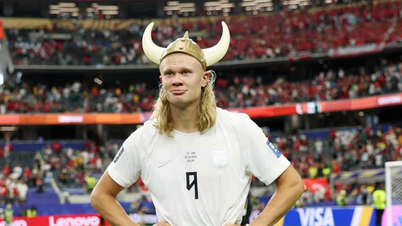
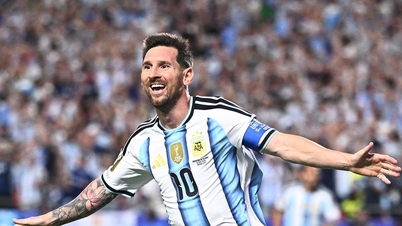
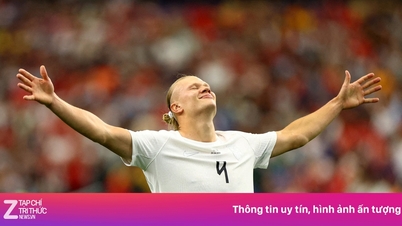
The 2026 World Cup marks a new phase of development for the personal care industry. As the lines between sports and entertainment continue to blur, brands' competitive advantage will increasingly depend on their ability to connect with the lives of celebrities. Fans don't just follow a player for 90 minutes on the field; they want to know what lotion Lionel Messi uses in hot, humid weather. They want to see the products Cristiano Ronaldo uses for muscle recovery after a match and what shampoo Erling Haaland uses for hair care. Therefore, as the World Cup becomes the biggest entertainment event on the planet, it also presents a golden opportunity for the personal care industry.
According to Euromonitor, 82% of Gen Z sports fans identify themselves as health, fitness, and grooming enthusiasts. Self-care is also a form of training for professional athletes, something fans are increasingly emulating. For years, men's grooming was considered a niche market segment. Today, it has become a mainstream trend, and the men's grooming industry is projected to grow by 6.8% to $73 billion by 2027.
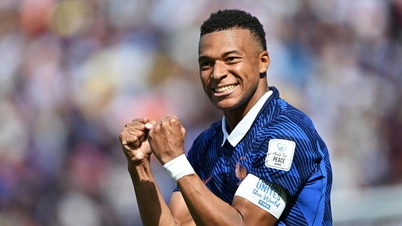
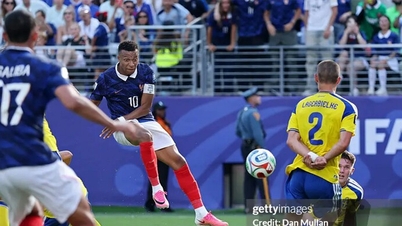
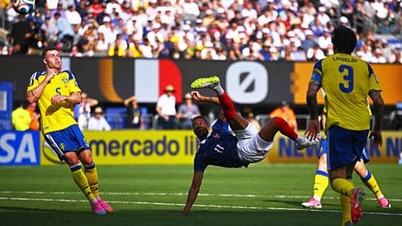
The popularity of football players, both on and off the field, is something beauty brands always pay attention to. With each World Cup, brands closely search for emerging faces and inspiring stories to choose as brand ambassadors. Before the World Cup began, beauty brands took the opportunity to introduce new brand ambassadors. These included Vichy with player Vitinha, L'Oréal Paris with Declan Rice, and Dove with Clint Dempsey. However, Lionel Messi, Cristiano Ronaldo, and Kylian Mbappé remain the three most talked-about stars in both fashion and personal care during this year's World Cup.
According to Nhandan.vn



Source: https://baoangiang.com.vn/tu-cau-chuyen-cua-rexona-a490847.html



![[Photo] Strengthening character and expertise: Intense training for artillery soldiers.](https://vphoto.vietnam.vn/thumb/1200x675/vietnam/resource/IMAGE/2026/06/30/1782815602541_lu-368-1875-4571-jpg.webp)