

In the early days of its founding, the fledgling government faced countless challenges: internal and external enemies, widespread famine, and depleted finances. In these circumstances, alongside the task of defending independence, President Ho Chi Minh and the Provisional Government placed special emphasis on education , considering it a top national priority. He affirmed: "An ignorant nation is a weak nation."
In reality, over 90% of the population at that time was illiterate, schools were scarce, and the teaching staff was very small. Uncle Ho's teachings served as both a warning and a guiding principle for a long-term development strategy: raising the people's intellectual level to build a solid foundation for independence.
Eradicating ignorance has become an urgent task, placed on par with fighting hunger and foreign invasion. Only with knowledge can the people have the capacity to control their own destiny, protect the achievements of the revolution, and together build the future of the nation.
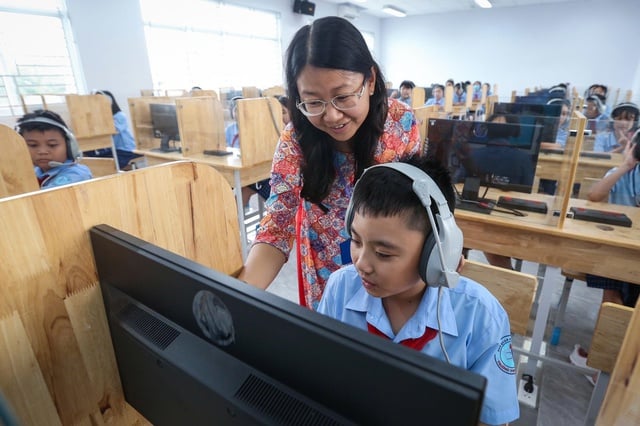
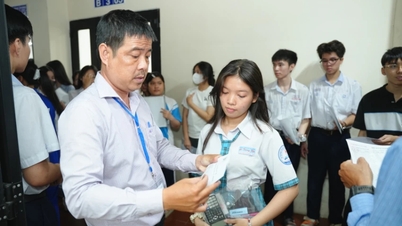
Eighty years ago, our nation eradicated ignorance to gain control of its own destiny; today, we firmly grasp digital technology to stand shoulder to shoulder with the world's leading powers.
PHOTO: NHAT THINH
EDUCATIONAL REFORMS OF 1945 ESTABLISHED A NATIONAL EDUCATION SYSTEM
Just weeks after independence, the Ministry of National Education drafted a comprehensive education reform plan. This was a bold step, demonstrating the strategic vision of the fledgling revolutionary government in creating a new education system, breaking away from the colonial orbit and aligning with the aspiration for national independence.
The highlight of the project is the establishment of a national education system – education for all citizens, serving the national interest, replacing the old system which only trained civil servants to serve the ruling apparatus. From this point on, education becomes both a right and a duty of every citizen.
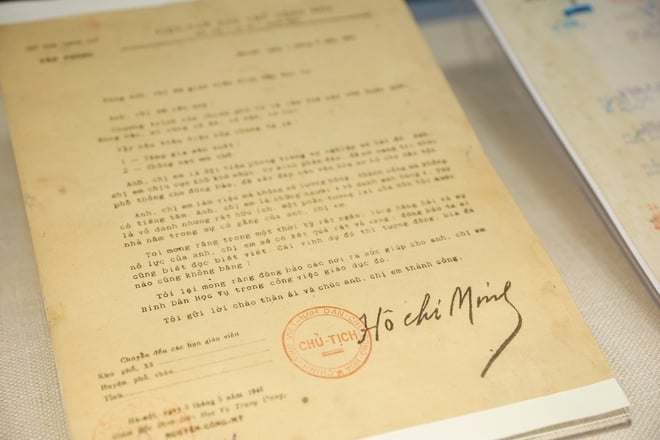
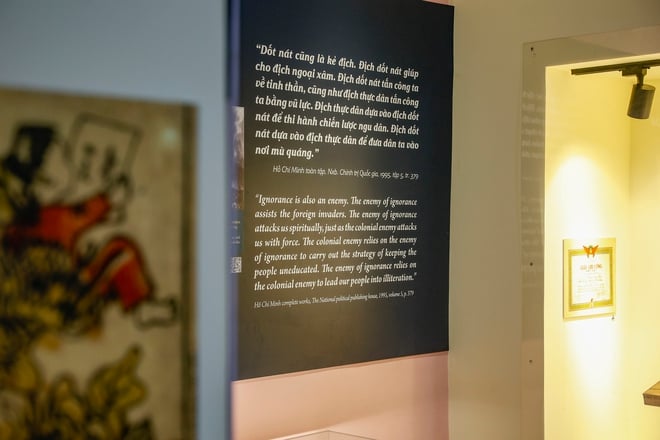
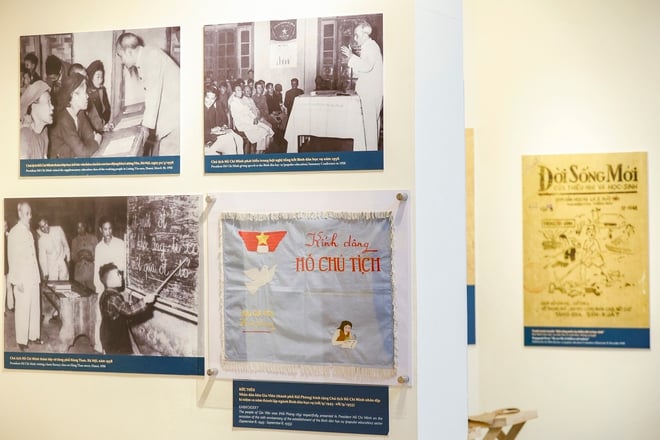
Eighty years ago, in the early days of independent Vietnam, amidst numerous difficulties, President Ho Chi Minh and the Government recognized that what the nation needed to do immediately was to eradicate illiteracy.
PHOTO: TUAN MINH
The project identifies four basic objectives: to popularize the national script to make it a widely used tool for knowledge; to build an education system connected to social life, training a generation of young people with knowledge and the will to build the nation; to combine learning with productive labor, overcoming the learning style focused solely on exams and degrees; and to emphasize moral education, civic spirit, patriotism, and the holistic development of personality.
In 1946, the Government issued Decrees 146-SL and 147-SL, affirming the new educational principle of serving national and democratic ideals, based on three principles: national, scientific, and popular. This is considered the ideological foundation for Vietnamese education after independence.
A significant step forward was the free, and eventually compulsory, primary education, affirming the right to education for all children. Notably, from 1950 onwards, universities began teaching in Vietnamese – a crucial milestone reflecting national identity and the spirit of independence in education.
POPULAR EDUCATION: CULTIVATING A SPIRIT OF SELF-LEARNING AND LIFELONG LEARNING
If the 1945 Education Reform Plan was a strategic vision, then the Popular Education Movement was a vibrant reality, demonstrating the determination to "resist" the war of resistance in education.
On September 8, 1945, President Ho Chi Minh signed Decree 17-SL establishing the Department of Popular Education and Decree 19-SL opening evening classes for farmers and workers. This was a historic decision, marking the beginning of the nationwide literacy campaign.
The movement quickly spread, becoming a nationwide campaign. The slogan "Those who know how to read teach those who don't, and those who don't know should go to school" resounded everywhere. Classrooms were set up in village communal houses, granaries, and open fields; people took advantage of the nights to study, with only oil lamps as light, but their determination shone brightly.
Just one year later, more than 2.5 million people had learned to read and write. The Mass Literacy Movement was a vast social movement, not simply an educational activity. It fundamentally changed the cultural landscape of the country.
From a humanitarian perspective, the movement gave millions of poor people the opportunity to access knowledge and escape the darkness of ignorance. From a democratic perspective, for the first time in history, education became a right and duty of all citizens, regardless of class, gender, or age. In terms of lasting value, the movement sowed the seeds of self-learning and lifelong learning. Many, after becoming literate, continued their education, becoming officials, teachers, and researchers. The image of teachers and students gathered under a thatched roof, by the light of an oil lamp, learning each letter, became an immortal symbol of a time when the entire nation "thirsted for literacy" as much as it thirsted for food and water.
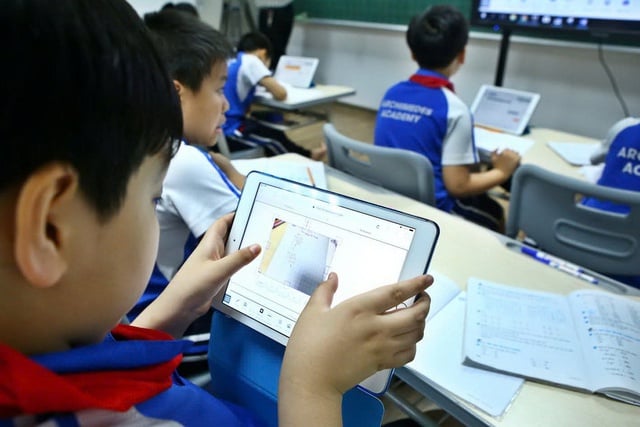
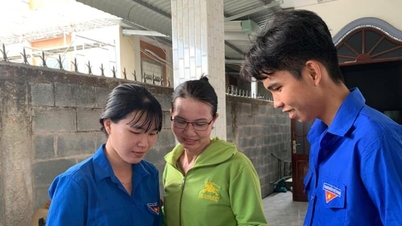
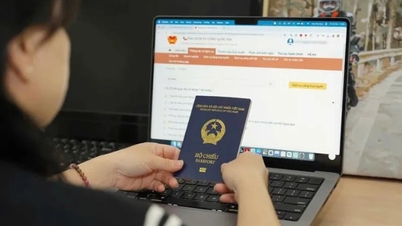
If the previous "Popular Education Campaign" empowered people to read and write, today's "Digital Popular Education Campaign" must empower people to access technology and digital knowledge.
Photo: Ngoc Thang
" POPULAR EDUCATION": ACCESSING DIGITAL TECHNOLOGY AND KNOWLEDGE
The 1945 education reform and the popular literacy movement are glorious milestones in the nation's history. From a country where over 90% of the population was illiterate, in just a few years, millions of people received the light of knowledge. A young government, amidst countless difficulties, still managed to ignite and implement a large-scale educational revolution.
As Vietnam enters an era of self-improvement, international integration, and the Fourth Industrial Revolution, national intellect becomes its most important resource. The story of 1945 reminds us that education is always the key to the future. If, back then, our nation "eradicated ignorance" to gain control of its destiny, today we must "eradicate intellectual backwardness," carrying out "digital literacy campaigns" to stand shoulder to shoulder with the world's leading nations.
This is strongly reflected in Resolution No. 57-NQ/TW of the Politburo on breakthroughs in the development of science, technology, innovation, and national digital transformation.
If the previous "Popular Education Campaign" empowered people to read and write, today, the "Digital Popular Education Campaign" must empower people to access technology and digital knowledge, from smartphones for banking transactions to digital applications for learning, working, starting businesses, and serving daily life.
To ensure no one is left behind in the digital age, a synchronized approach is needed: widespread digital infrastructure, popularization of digital skills, mobilization of the entire society to create free digital learning materials and platforms, and special priority given to disadvantaged groups in training and equipment support. Only then will digital transformation and "digital literacy for all" truly become the foundation for a just, modern, and sustainable society.
To concretize this aspiration, the Politburo recently issued Resolution No. 71, which sets the goal that by 2045, the 100th anniversary of Vietnam's National Day, our country will have a modern, equitable, and high-quality national education system, ranking among the top 20 countries in the world. All citizens will have the opportunity for lifelong learning, improving their skills and maximizing their personal potential. High-quality human resources and scientific and technological talents will become the driving force and core competitive advantage of the country, contributing to making Vietnam a developed, high-income nation. The goal is to have at least 5 higher education institutions among the top 100 universities in the world in certain fields according to reputable international rankings.
Lessons on the spirit of humanistic education
Eighty years have passed, but the lessons from 1945 remain just as relevant.
Regarding vision: Even during times of immense national hardship, the Party and State leaders prioritized education as a national priority, considering it the key to the future. Today, the reform of education requires an even greater long-term strategic vision.
Lessons on the spirit of national unity: Without the joint efforts of all sectors, the Popular Education Movement could not have succeeded. Today, education also requires the cooperation of the State, families, society, and especially businesses.
A lesson in humanism: Education for people, by people, leaving no one behind. This is the spirit of humanistic education and lifelong learning that the modern world is striving for.
Source: https://thanhnien.vn/tu-con-chu-den-khat-vong-tri-thuc-so-185250829235016393.htm


![[Photo] Conference on the transfer and reception of Party organizations and Party members between the Party Committee of the Government and the Party Committees of the Central Party Agencies](https://vphoto.vietnam.vn/thumb/1200x675/vietnam/resource/IMAGE/2026/04/01/1775036784472_ndo_br_bnd-2620-jpg.webp)
![[Photo] Conference announcing the Politburo's Decision on organizational and personnel matters](https://vphoto.vietnam.vn/thumb/1200x675/vietnam/resource/IMAGE/2026/04/01/1775017881825_bnd-2410-1472-jpg.webp)











































![[Photo] Prime Minister Pham Minh Chinh receives the Ambassador of the Russian Federation to Vietnam](https://vphoto.vietnam.vn/thumb/402x226/vietnam/resource/IMAGE/2026/04/01/1775046774818_anh-man-hinh-2026-04-01-luc-19-32-33.png)
















Comment (0)