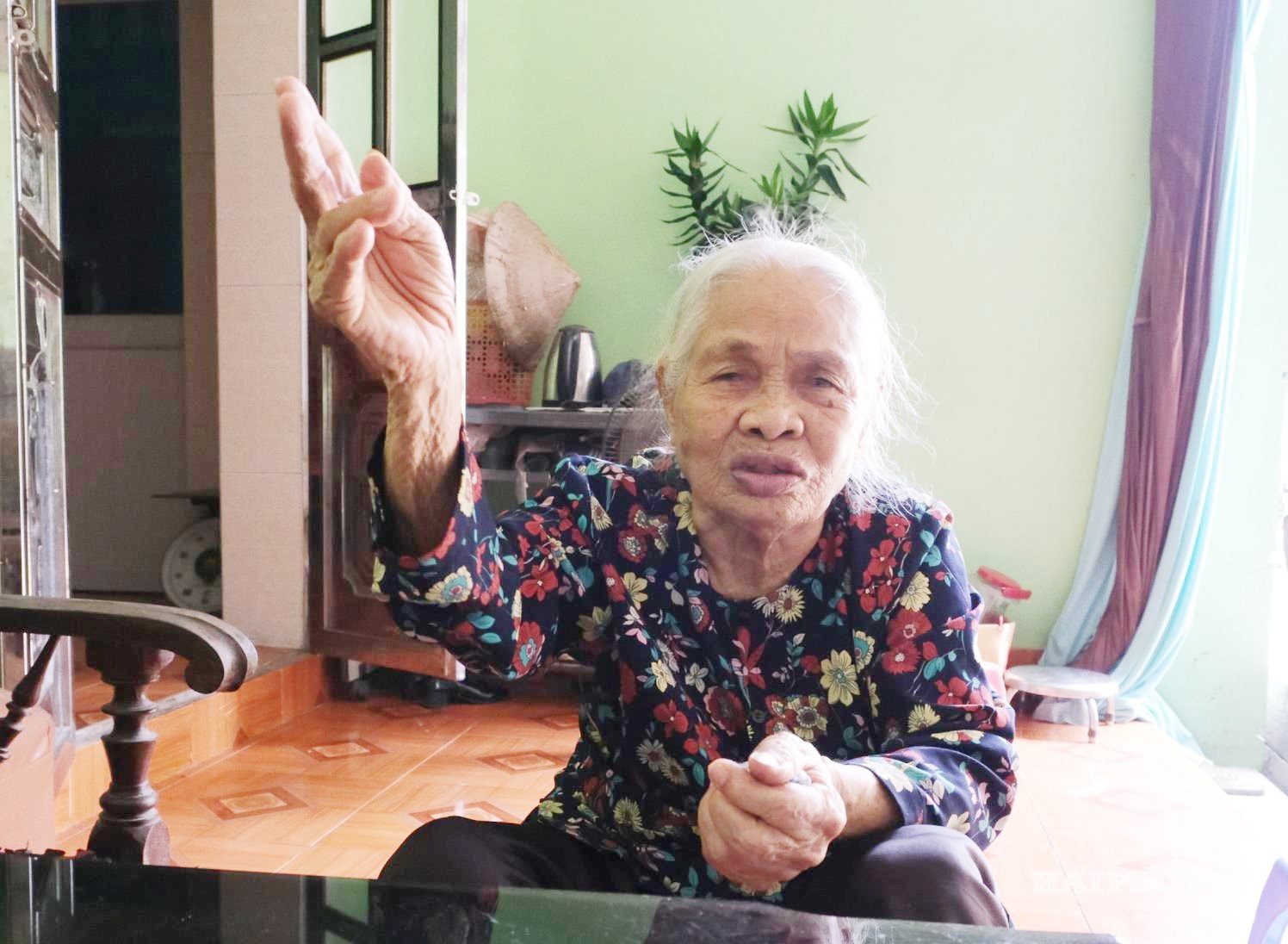
Having lived nearly a century, born and raised on this land, Mr. Bé is the oldest person in the village currently practicing the craft, making him like a "living dictionary" of pottery making in the village.
Once upon a time, the docks and boats were bustling with activity.
In the past, a tributary of the Kinh Mon River extended right up to the front door of what is now Mr. Be's house. During the heyday of pottery in Quao village, all the houses along the river had pottery kilns. At its busiest, the entire village had hundreds of kilns burning year-round. Before the development of roads, almost all transactions took place via the river, from buying and selling land and materials, bamboo, and firewood for the kilns, to exporting goods. The river was bustling with activity on the docks and boats. On days with high tides, sailboats would sail all the way to the village.
The river is now silted up, only slightly higher than a canal bank. Digging down a few meters along the riverbank still reveals countless pottery fragments – sediment from an ancient pottery village accumulated over centuries.
Quao Village, formerly part of Phu Dien Commune, Nam Sach District, Hai Duong Province, is now Lam Xuyen Hamlet, An Phu Commune, Hai Phong City. In the former Hai Duong Province, there were three traditional pottery villages: Quao and Chu Dau in the former Nam Sach District, and the remaining one, Cay Pottery, in Long Xuyen Commune, former Binh Giang District. While Chu Dau pottery, thought to be lost, has been revived and is thriving, Cay Pottery is operating at a standstill, and Quao Pottery is almost completely dormant.
Grandma Bé is 94 years old this year. She worked as a maid since childhood; her father was a tailor and her mother a potter, so she learned pottery at the age of eight. Later, Grandma Bé and Mr. Nguyễn Văn Mừng, from the same village, married. Her parents-in-law were also potters, so Grandma Bé remained closely involved in the craft until 1997 when she retired. That was also when the pottery kilns in the village gradually went out. The traces of the kilns are now gone; the intact pieces have been taken over by museums. Therefore, visiting Quao village today, few people know that it was once an ancient pottery village with kilns burning brightly for hundreds of years.
.jpg)
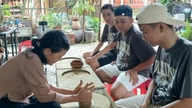
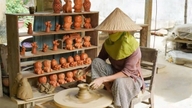

According to the "Hai Duong Gazetteer," pottery from Quao village originated around the 15th century, flourishing most in the early 19th century. The saying "An Dien rice, Quao village money" refers to the prosperity that pottery brought to the village. An Dien was also a place name in the former Nam Sach district.
“Take me, and I’ll prepare everything for you / I’ll buy you two stove hats / I’ll bring in plenty of firewood / I’ll pack a thousand extra ingots for you to use / From Chu wood to Thanh Hoa wood…” – these verses suddenly flooded back into Grandma Bé’s memory. She recounted: Chu wood from Bac Giang, bamboo from Thanh Hoa – these were the best fuels for firing pottery. “Ingots” were wooden blocks, the wood was packed into blocks and transported by boat to the docks to be sold to pottery makers. The clay for pottery was also packed into blocks and brought back.
"The villagers bought the clay back then from Khanh Chu in the Kinh Mon mountain region," Mr. Be continued. Perhaps the memories of a nearly hundred-year-old village artisan have gradually crumbled, because the Kinh Mon region has only ever had a place name called Kinh Chu. Each boat carried five compartments of clay, leaving Kinh Mon the morning before and arriving at Quao village the following morning. The kiln owner mobilized workers to transport it to the yard. The clay was sifted, pounded, and kneaded until it was smooth, fine, and pliable like taffy. That was the only type of clay used to make the best pottery products of Quao village for centuries...
Quao Market is bigger than the district market.
Believed to have originated around the same time as Cay pottery in the 15th century and about a century later than Chu Dau pottery, Quao village pottery is the only unglazed type of pottery among them.
.jpg)
Quao pottery products are not as diverse as Cay and Chu Dau pottery, but are purely household items. These are familiar items such as rice steamers, fish stew pots, water jars, lime containers, kettles, laundry basins, and mortars for crushing crabs...
At that time, in addition to buying and selling agricultural products, livestock, and poultry, the most important stalls in Quao Market were always the pottery shops, which were always bustling and lively. Most of the pottery was transported to other provinces by merchant ships, while the rest was sold here to local people. Therefore, Quao Market was even larger and more crowded than the district market. This shows that pottery from Quao village was once very popular among the people.
Pottery making is a hard job, and professional Quao potters often don't live long due to the strenuous work and health problems caused by the firing process. But in the story, Mrs. Bé always proudly says she lived almost her entire life with this arduous profession.
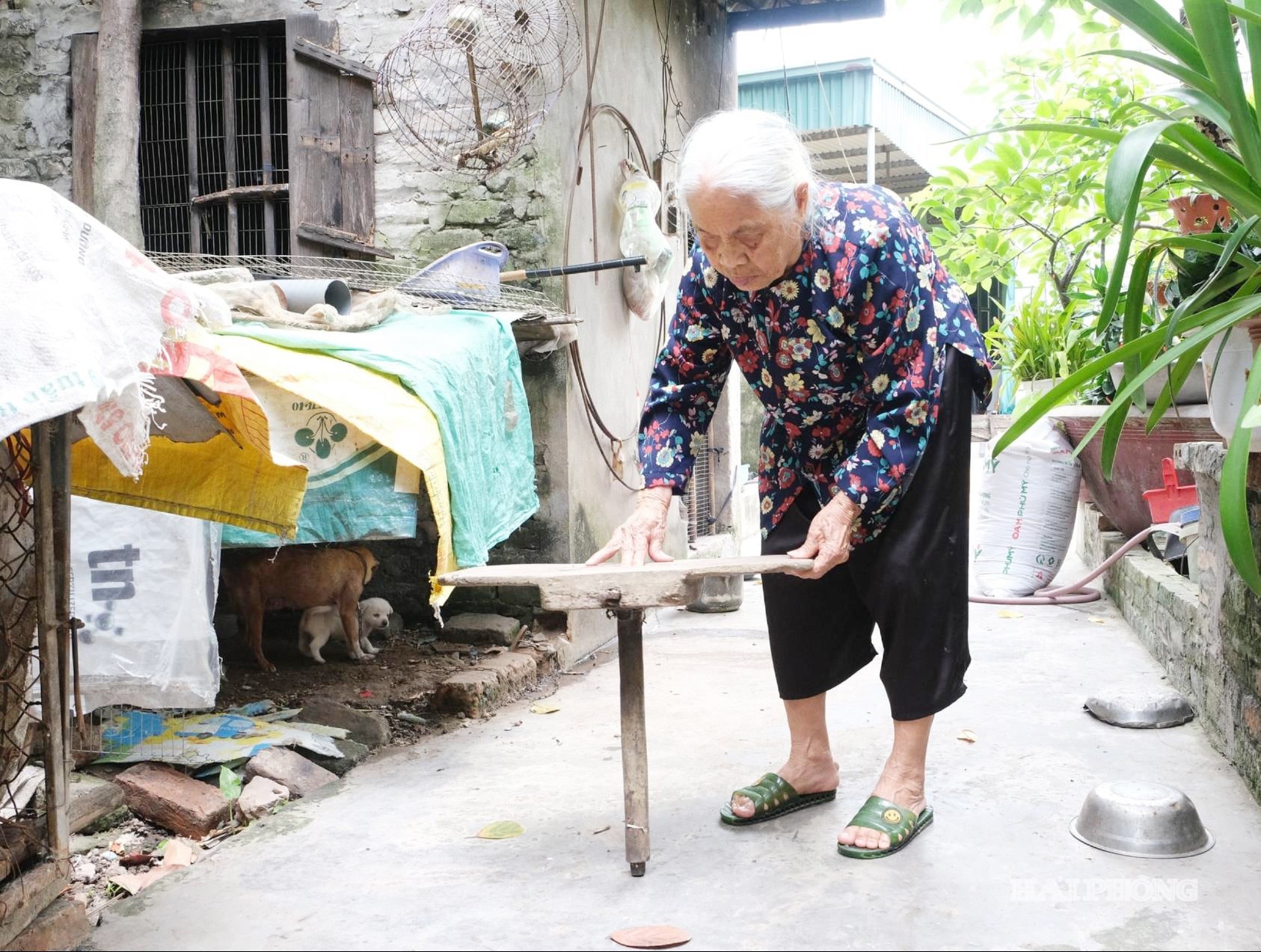



Having started pottery at the age of eight, Mrs. Bé only retired later in life when her hands weakened and her eyesight deteriorated. The pottery kilns in Quao village only went out of service once, briefly before the August Revolution due to difficulties in trade caused by the colonialists, but they were immediately restored after the revolution. In 1965, the Phu Dien Pottery Cooperative was established to unite the villagers, but it also faced many challenges. Especially after the advent of aluminum, cast iron, and later plastic pottery, the household pottery of Quao village became disadvantaged and eventually ceased production.
In 1945, over 700 people in the region died of famine, and Bé's mother's family also lost 4-5 members. Although pottery making wasn't lucrative, and didn't even provide any extra income, it helped families in Quao village get through those difficult times...
Grandma Bé had ten children in total, and now six remain. Some of them also tried their hand at pottery, but none were passionate about it. In Quao village, Grandma Bé is still the oldest person who has ever made pottery. Therefore, the stories about the pottery-making process and the vibrant scenes of the once bustling ancient pottery village will gradually fade away...
TIEN HUYSource: https://baohaiphong.vn/tu-dien-song-ve-gom-co-lang-quao-544651.html

![[Photo] Strengthening character and expertise: Intense training for artillery soldiers.](https://vphoto.vietnam.vn/thumb/1200x675/vietnam/resource/IMAGE/2026/06/30/1782815602541_lu-368-1875-4571-jpg.webp)