

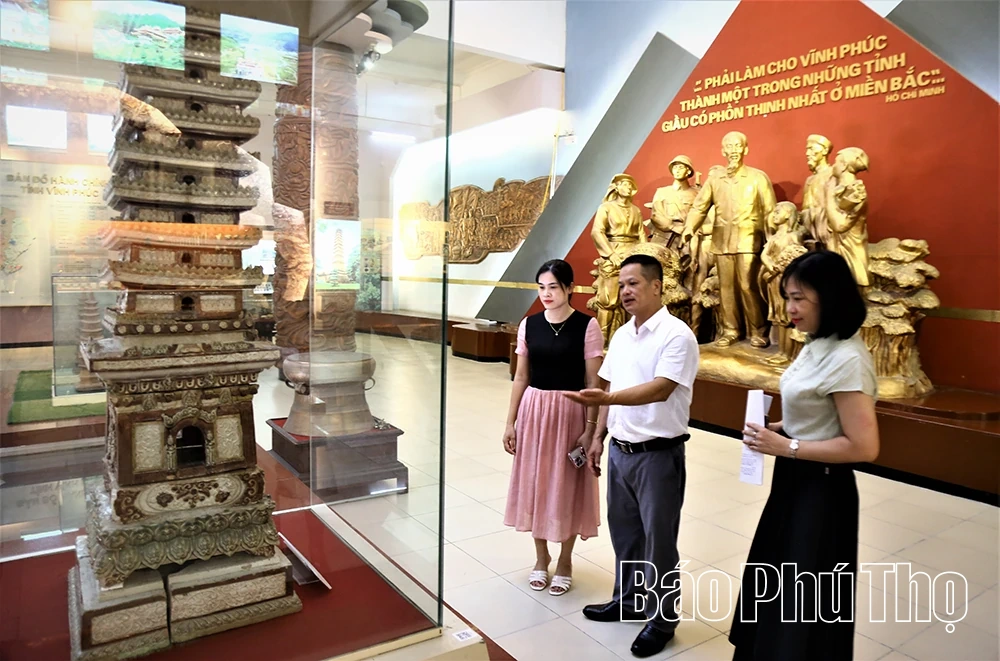
Staff from the Hung Vuong Museum, Branch 2, introduce the national treasure, the glazed ceramic tower of Tro Pagoda.
Where treasures gather sacred spirits.
The first stop on our journey to admire these treasures is the Hung Vuong Museum, located within the Hung Temple historical site. This museum manages and protects two special national treasures: the Hung Temple bronze drum and a set of bronze belt buckles. These two original artifacts are prominently displayed on the second floor of the museum, attracting visitors from all over to stop and admire them.
The Hung Temple bronze drum, discovered in 1990 at the foot of Nghia Linh mountain, is the largest Type I Dong Son drum ever found in Vietnam to date. With a diameter of 93cm and a weight of 90kg, the drum demonstrates the masterful metallurgical skills of our ancestors and carries profound spiritual significance. According to researchers, the drum is believed to have been a sacred object used in rituals to pray for favorable weather and bountiful harvests by the agricultural communities of the Hung King era.
Beside the majestic bronze drum is a set of bronze belt buckles featuring the unique image of eight turtles. This is a clear symbol of the power of the leaders of that time, evidence of the high aesthetic sense and profound social stratification within the Dong Son culture more than 2,000 years ago. Each carved detail on the buckles not only demonstrates exquisite craftsmanship but also reflects the vibrant worldview of the ancient Vietnamese people.
Standing before these treasures, many young people were deeply moved. Nguyen Minh Anh, a third-year student at the Foreign Trade University, shared: “I’ve read a lot about the history of the Hung Kings era through books and newspapers, but when I stood before the bronze drums at Hung Temple, my friends and I were truly overwhelmed. It felt like the breath of our ancestors from thousands of years ago was still present in every exquisite detail of the patterns. As a young person, I feel I have a greater responsibility to learn about and spread these precious values.”
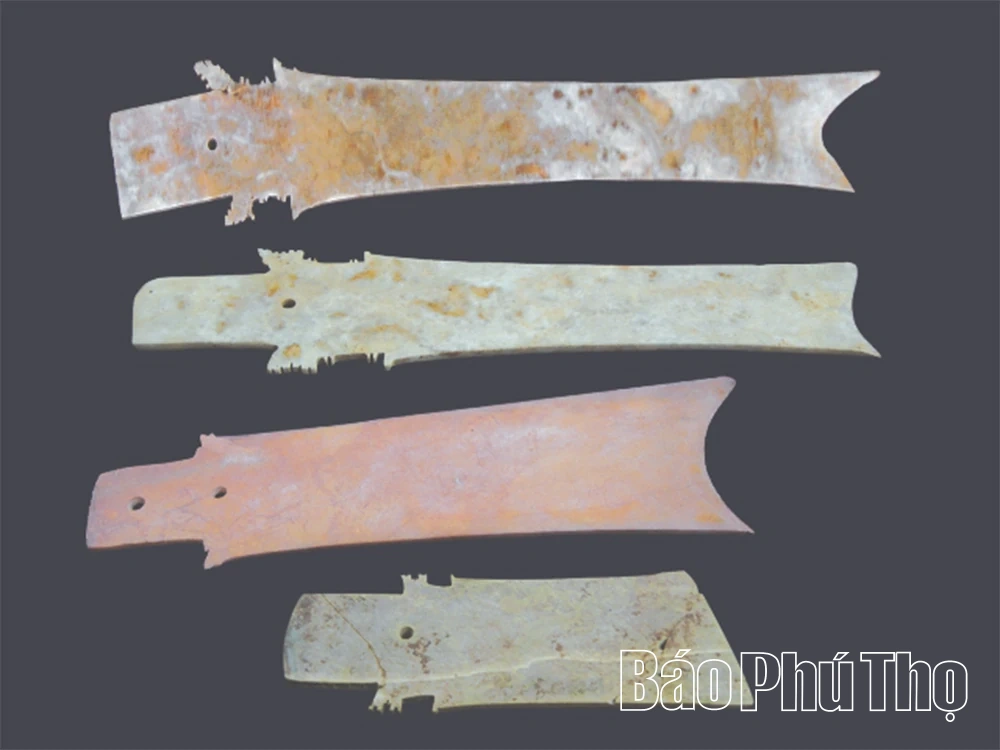
National Treasure: The Nha Chuong Collection, original artifacts at Hung Vuong Museum, Campus 1.
To ensure the absolute safety of the national treasures, the museum has installed a 24/7 surveillance camera system directly connected to the control center. Ms. Nguyen Thi Bich Phuong, Deputy Head of the Department of Relic, Culture, and Festival Management (Hung Temple Historical Site), said: “Propaganda and promotion efforts have been intensified, especially during the Hung Kings Commemoration Day, aiming to connect the value of national treasures with the Hung Kings worship belief – a representative intangible cultural heritage of humanity.”
The journey from the ancient tower of Tro Pagoda to a thousand-year-old treasure.
Leaving Hung Temple, we visited the Hung Vuong Museum, Branch 2 – home to the national treasure, the glazed ceramic tower of Tro Pagoda. This tower, originating from Tro Pagoda, bears the distinct artistic imprint of the Tran Dynasty, dating back to the 14th century. The tower is a hollow square cylinder, currently with nine levels and intricate decorative patterns. The motifs on the tower reflect the flourishing of Buddhism at that time and the cultural exchange between the Vietnamese and Indian, Chinese, and Cham cultures, while still maintaining the national character.
Looking at the entire province of Phu Tho , the system of national treasures is incredibly diverse. At the Hung Vuong Museum, campus 1, visitors can admire the collection of Nha Chuong (a type of ceremonial insignia) belonging to the Phung Nguyen culture, dating back approximately 3,500 years. The collection consists of four pieces, original artifacts of unique and precious value. These are products of the first stage in the formation of the Van Lang state and were discovered only in Phu Tho - the first capital of the nation. The Nha Chuong were crafted from precious stones with exquisite techniques, carrying spiritual significance and symbolizing the authority of the early chieftains or kings. This is an invaluable source of historical information about the era of the Hung Kings who founded the nation.
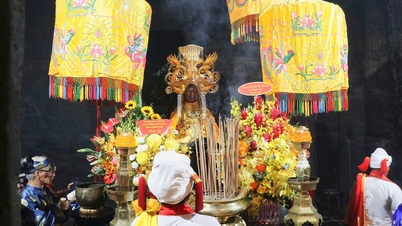
Heading towards the Mother Goddess Temple in Hien Luong commune, the statue of Mother Au Co, carved from jackfruit wood and gilded with red lacquer, is another highlight of the heritage. Despite the vicissitudes of time and harsh climate, the statue seems to have retained its original form with an ancient and majestic aura. Compared to other Mother Goddess statues in the North, the statue of Mother Au Co here is completely different in style and attire, containing many elements of court art due to its creation by the Nguyen dynasty. The statue is a great symbol associated with the legend of "Dragon Father - Fairy Mother" of the Vietnamese people.
The final National Treasure on our exploration journey was the Buddhist altar (Stone Buddha Altar) at Xuan Lung Pagoda. With its unique form and carvings reflecting the cultural characteristics of the Tran Dynasty (13th-14th centuries), the stone altar is a powerful testament to the distinct identity of Vietnamese culture. For nearly seven centuries, the local community has preserved and protected this treasure as a resilient cultural heritage, unaffected by foreign influences.
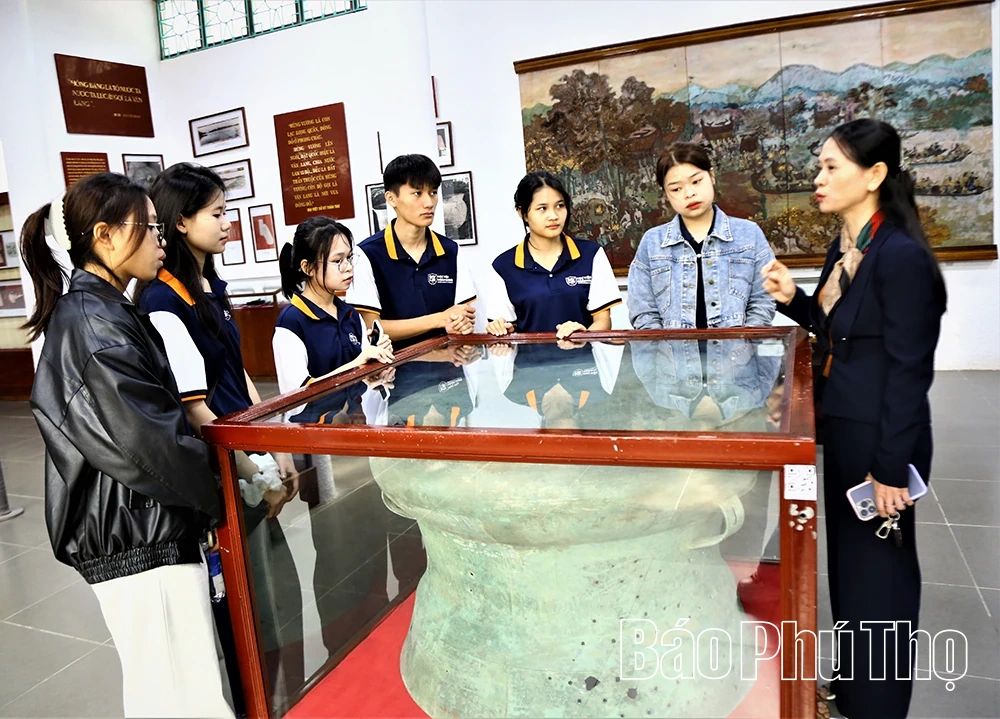
Staff from the Hung Vuong Museum, located within the Hung Temple historical site, introduce the Hung Temple Bronze Drum, a national treasure.
Assessing the significance of the heritage system, Mr. Pham Nga Viet - Deputy Head of the Cultural Heritage Management Department (Department of Culture, Sports and Tourism) emphasized: Each national treasure in the ancestral land is not only an invaluable historical treasure but also the "soul" of the land of origin. Currently, protection is being carried out at the strictest level. In the near future, the province hopes to promote digitalization and experiential tours so that tourists can admire the treasures in the most vivid way, transforming heritage into an asset and a driving force for tourism development.
This spring, as Vietnamese people make pilgrimages to their ancestral land, they not only light incense to express gratitude for their ancestors' merits, but also take pride in the millennia-old treasures that shine brightly. These national treasures are the thread connecting the past with the present, a reminder of the nation's identity and inherent strength in its journey towards the future.
Huong Lan
Source: https://baophutho.vn/tu-hao-bao-vat-quoc-gia-248063.htm






















































Comment (0)