


VHO - The Sa Huynh salt-making craft in Pho Thanh ward, Duc Pho town ( Quang Ngai province) has been included in the list of national intangible cultural heritage by the Ministry of Culture, Sports and Tourism. This craft has a history of hundreds of years and has become a traditional occupation and a distinctive cultural feature of the locality.
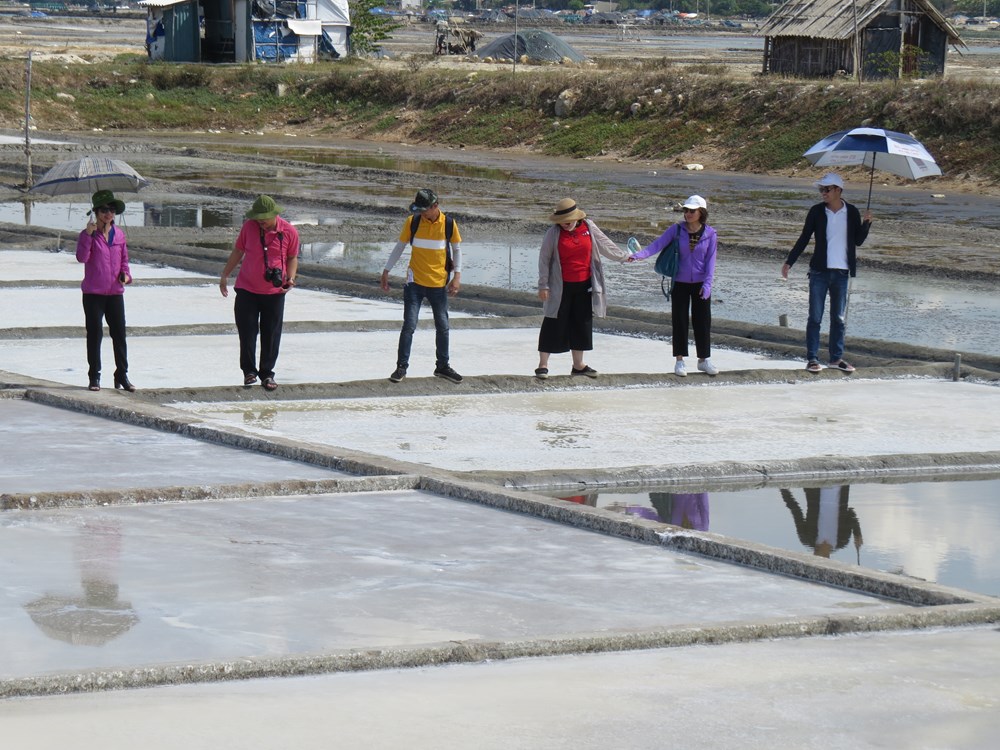
Currently, the Sa Huynh salt fields cover a total area of approximately 106 hectares, with over 560 salt-producing households belonging to three residential areas: Tan Diem, Long Thanh 1, and Thanh Duc 1 in Pho Thanh ward. Annually, the Sa Huynh salt fields supply about 6,500-7,000 tons of salt. Salt production in Sa Huynh is a unique traditional craft of Quang Ngai province, representing the community and local identity, passed down through generations, and voluntarily protected by the people of Sa Huynh and Pho Thanh.
Salt farmer Tran Son from Pho Thanh ward shared that salt production requires diligence, hard work, and knowledge and experience related to the natural weather conditions. To achieve high yields and good quality salt, salt producers must carefully and scientifically plan each stage of the process, drawing on years of experience. This experience is passed down from generation to generation, a tradition of "father to son."
According to the salt farmers here, on each salt field, the salt makers prepare the soil very tightly, minimizing the penetration of seawater. This process is very labor-intensive, involving compaction and rolling. Afterward, seawater is added and left to dry to increase the soil's firmness. Once the salt field reaches the required level, the farmers pump seawater into it. “The field where seawater is initially added is called the ‘drying field.’ Under the influence of sunlight, the water in the seawater gradually evaporates. At this point, the salinity in the water on the drying field has increased compared to the beginning. The farmers then drain this water into the field below to create salt. This field is called the ‘eating field,’ which is already compacted and smooth. When the salt begins to precipitate (grains fall), the salt farmers use tools to rake the salt together into conical shapes on each field,” said salt farmer Son.
Currently, the locality is implementing the project "Preserving traditional salt fields associated with community tourism development" funded by the United Nations Development Programme, the Global Environment Fund's Small Grants Programme (UNDP/GEF SGP). This includes building eco-friendly homestay models and creating several check-in points for tourists visiting Sa Huỳnh…
“Salt fields are home to many species of plants and animals and help prevent flooding. Implementing this project aims to preserve traditional salt fields, contribute to environmental protection, improve salt quality, and create sustainable livelihoods for salt farmers, adapting to climate change... This is a great opportunity for Sa Huynh salt to establish its brand in the market and to promote the development of community tourism,” said Mr. Thai Thuan Lang, Chairman of the Farmers' Association of Pho Thanh Ward.
The Sa Huynh salt fields have two main salt and goods trade routes connecting various regions. These are: from Sa Huynh - An Lao - La Vuong and then up to the Cham Hroi region; and from Sa Huynh - Cho Cung - Ba Kham - Ba Trang - Vi O Lac Pass and up to the Mo Nam region. Even today, traders still transport salt along the route used by the past: Cho Cung - Ba Kham - Ba Trang - foot of Vi O Lac Pass. And residents at the foot of Vi O Lac Pass buy salt and then transport it to the Mo Nam region in the distant highlands.
In the past, salt from Quang Ngai was exported by sea in large quantities. The book "Quang Ngai Provincial Chronicle" (by Nguyen Ba Trac and colleagues) states: "The amount of salt exported from Quang Ngai was handled by three commercial departments. Of these, the Sa Huynh commercial department exported over 1,094 tons in 1929, over 7,634 tons in 1930, and over 2,636 tons in 1931. Sa Huynh was the largest exporter of salt in Quang Ngai province. This shows that the salt industry in this area was very prosperous in the past."
The Sa Huynh salt flats, breezy all year round, are nestled near breathtakingly beautiful landscapes. This area is connected to the Sa Huynh culture, dating back approximately 3,000 years, and holds many mysteries. Tourists visiting An Khe lagoon, Go Co community tourism village, and the ancient Sa Huynh burial sites often stop by the salt flats to take photos, capturing these dreamlike scenes.
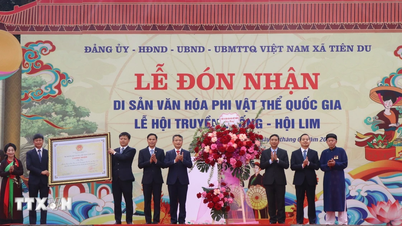
The Ministry of Culture, Sports and Tourism has recognized the traditional craft of Sa Huynh salt making in Pho Thanh ward, Duc Pho town, as a national intangible cultural heritage. The recognition of Sa Huynh salt making in the National Intangible Cultural Heritage List not only affirms its long-standing cultural value but also serves as a driving force for the preservation and development of this traditional salt-making craft.
Source: https://baovanhoa.vn/van-hoa/tu-hao-nghe-muoi-sa-huynh-118806.html







































































Comment (0)