The significance of open access (OA) lies in democratizing information, accelerating research progress, and increasing the impact of research. The process of submitting preprints to preprint archives is becoming increasingly common. Sharing work in progress to seek feedback and assert priority is now a regular practice. Notable examples of preprint servers are arXiv and bioRxiv. The Directory of Open Access Journals (DOAJ) is the most comprehensive, community-managed database of OA journals. For more information on OA and the OA movement, consult the SPARC and Open Access Week websites, and for informed decisions about publishing articles in journals, consult ThinkCheckSubmit.
Impact and Open Metrics
The Open Access (OA) movement plays a crucial role in fostering a more inclusive and collaborative research environment, thereby fostering progress and accessibility. Publishing research in OA journals offers an attractive opportunity to enhance the visibility and impact of academic work. Researchers can strategically select reputable OA journals that align with their specific field and target audience, ensuring a broader readership, increased citations, and potential collaboration opportunities. To maximize the impact of their work, authors can adopt best practices that contribute to the advancement of both academia and society. To effectively leverage the potential of OA, researchers should familiarize themselves with the principles, policies, and funding requirements relevant to their field and institution.
Open metrics provide transparent and accessible methods for assessing the impact of academic research. They go beyond traditional citation-based metrics by encompassing a broader range of indicators reflecting research influence and social impact. These indicators take into account factors such as social media mentions, downloads, and citations. Open metrics are particularly important in the context of OA, as they align with principles of transparency and openness. They provide a holistic view of research impact, allowing for a holistic understanding beyond journal-based measures. This enables researchers, institutions, funders, and policymakers to assess the effectiveness, social value, and reach of research. Platforms like Altmetric.com and Plum Analytics provide researchers with comprehensive insights into the reach and impact of their research outputs, going beyond traditional citation-based metrics.
The San Francisco Declaration on Research Evaluation (DORA) recognizes the importance of evaluating academic products and researchers based on their intrinsic value. The declaration emphasizes that metrics should not replace the assessment of the quality of individual studies. Furthermore, DORA stresses the need to consider the context and methodology of journal metrics when using them to guide publication choices.
Copyright and Open Licensing
Copyright plays a crucial role in academic communication, particularly in the field of open access (OA). While copyright protects original ideas, overly strict regulations can hinder the flow of knowledge and impede access to research. Traditional publishing models, which involve transferring copyright to publishers, restrict access and increase costs. OAs offer a solution to this problem by providing unlimited access. Creative Commons licenses, which operate within the framework of copyright law, allow authors to retain their rights while granting other rights. When opting for open publishing, researchers must familiarize themselves with copyright policies and licensing. Open licenses allow researchers to clearly specify the rights of use and exploitation, ensuring unlimited availability for others to read, reuse, adapt, and attribute their work.
In academic communication, open licensing plays a crucial role in ensuring that works are openly accessible while preserving rights and control. Open licenses facilitate the dissemination, collaboration, and exchange of knowledge by providing clarity and reducing barriers to access. They promote transparency and can be applied to a wide variety of research products, fully aligning with the principles of Open Authorisation (OA). Open licensing extends rights beyond default copyright law, allowing creators to define how others can access, interact with, share, and develop their work. Creative Commons licenses are a prime example of this approach.
Best Practices in OA Publishing
Best practices for open access (OA) encompass a range of factors that researchers should consider. First and foremost, prioritizing OA journals or preprint servers that adhere to OA principles ensures that research receives widespread exposure. Uploading preprints to servers allows for rapid dissemination and early feedback, fostering transparency and collaboration in research efforts. Adopting open-source data and code sharing practices further enhances transparency, reproducibility, and collaboration, facilitating peer review and in-depth analysis. Open licenses, such as Creative Commons, are crucial for publishing research products, as they clearly define rights and encourage the development of derivative works. To improve both reproducibility and comprehensiveness, publicly available supplementary materials are essential. Active participation in OA communities provides a platform for effective collaboration with like-minded researchers, contributing to broader OA initiatives. Ultimately, maintaining ethical publishing practices is paramount – this includes upholding ethical standards, avoiding dubious journals (predatory journals), adhering to proper citation rules, preventing plagiarism, and assuming ethical authorship. The prestige, visibility, and impact of a researcher's academic contributions within the OA context can be significantly enhanced by adopting these practices.
Creative Commons License
Creative Commons is a non-profit organization that provides a free, legally-based set of tools for creators to share their works with others while retaining certain rights. The primary purpose of Creative Commons licenses is to allow a more flexible and open approach to copyright, enabling creators to specify how their work can be used by others. There are several types of Creative Commons licenses, each indicated by a combination of symbols and letters that signify different levels of permission. These licenses give creators various options for determining how others can use their work, whether for commercial purposes, allowing modifications, or simply sharing with appropriate attribution.
The main Creative Commons licenses include:
- Attribution (CC BY): This license allows others to use, remix, modify, and distribute the work, even for commercial purposes, provided they appropriately attribute the original author.
- Attribution-ShareAlike (CC BY-SA): Similar to CCBY, this license allows for remixing, modification, and distribution, provided that derivative works are shared under the same license terms.
- Attribution-No Derivatives (CC BY-ND): This license allows others to redistribute the work for both commercial and non-commercial purposes, but prohibits altering or creating derivative works.
- Attribution-Non-Commercial (CC BY-NC): This license permits others to use, remix, and modify the work, except for commercial purposes. Appropriate attribution is required.
- Attribution-Non-Commercial-ShareAlike (CC BY-NC-SA): Similar to CCBY-SA, this license restricts the use of the work to commercial purposes.
- Attribution-NonCommercial-NoDerivatives (CC BY-NC-ND): This is the strictest license, allowing others to download and share the work with appropriate attribution, but prohibiting any modifications or commercial use.
Authors can choose the license that best suits their intentions for their work. These licenses provide a legal framework for sharing and collaboration in the digital age while respecting the rights of creators. It is important to note that while Creative Commons licenses are a powerful tool for sharing content, they do not replace copyright law; instead, they operate within an existing framework to provide more flexible options for creators and users of creative works.
Conclude
By applying proper publishing practices, researchers promote the principles of open access (OA), benefiting the scientific community and society as a whole. Their selection of reputable OA journals or platforms that align with their research focus and target audience is crucial. Considerations such as peer review quality, indexing, licensing options, and visibility are vital. Licensing options, such as Creative Commons licenses, effectively communicate the rights and limitations on research products. OA revolutionizes research by fostering collaboration, knowledge sharing, and increased impact. Choosing a suitable OA-oriented publishing platform, combined with the use of appropriate tools, will amplify the impact of research and encourage interdisciplinary collaboration. OA democratizes knowledge, maximizes the impact of research, and promotes scientific progress. Researchers can broaden their readership, foster collaboration, and promote transparency, thereby fostering an inclusive and innovative research ecosystem.

Nguyen Thai Binh An
Source: Gutam, S. (2023, November 11). Open Access best practices and licensing . Sridhar Gutam. https://sgutam.wordpress.com/2023/11/11/open-access-best-practices-and-licensing/
| Chengdu University Address: Km15, National Highway 32, Hoai Duc , Hanoi  Strengthening the friendship between Vietnam and the United States.On July 3rd, as part of the Pacific Partnership - Friends of the Pacific 2026 program, the U.S. Army Pacific delegation, led by Lieutenant General Joel Vowell, Deputy Commander of the U.S. Army Pacific, paid a courtesy visit to the Quang Tri Provincial Military Command. 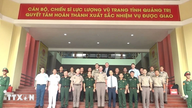 The U.S. Army Pacific delegation visits the Quang Tri Provincial Military Command.2026 marks the first time the Pacific Partnership-Friends of the Pacific program will be jointly organized in Quang Tri, creating a large-scale cooperation framework with 25 activities.  The Ministry of Foreign Affairs received a copy of the Letter of Credence for the U.S. Ambassador to Vietnam.On the afternoon of July 2nd, at the Ministry of Foreign Affairs headquarters, Mr. Le Cong Dung, Director of the State Protocol and Foreign Interpretation Department, received a copy of the Letter of Credence from Ms. Jennifer Wicks, Ambassador of the United States of America to Vietnam. Hotline: 0934 07 8668 – 0243 386 1601 Website: https://thanhdo.edu.vn/ |
Source: https://thanhdo.edu.vn/tung-buoc-nhap-mon-khoa-hoc-mo