

 |
Italy will miss out on the 2026 World Cup. |
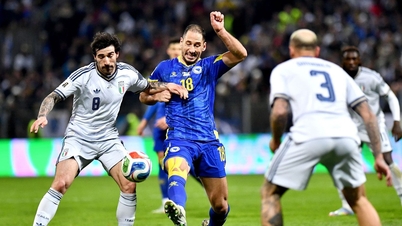
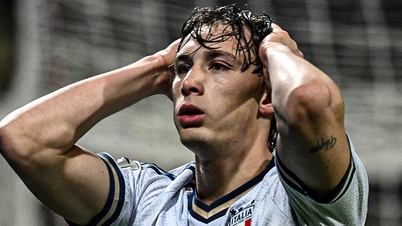
The defeat against Bosnia on the morning of April 1st no longer came as a surprise. It simply extended a series of failures that have lasted for almost a decade in Italian football.
After Sweden, North Macedonia, and now Bosnia, the four-time world champions are once again left out of the World Cup. Significantly, this time there is no longer any justifiable reason to excuse their absence.
Euro 2021 is just an exception.
In Zenica, Italy could cite a few controversial situations, particularly the fact that Muharemovic was not sent off. But when the opponent is ranked outside the top 70 in the world, clinging to such details only makes the defeat seem more devastating. Italy didn't lose because of the referee. They lost because of themselves.
Bastoni's red card was clearly a turning point. It reversed the course of the game and put the team in a difficult position. But even in that situation, Italy still had opportunities to seal the match. They failed to capitalize on them.
Inaccurate finishing, slow decisions at crucial moments – it all creates a familiar scenario. It's the image of a team that has lost its sharpness.
The penalty shootout was merely the conclusion. Esposito showed courage, Cristante hit the crossbar. Those details brought the match to a close, but didn't change the essence. Italy had lost control of their destiny long before that. Entering the tense shootout, they could only rely on luck.
Three consecutive absences from the World Cup cannot be considered an accident. It is the result of a prolonged period of decline.
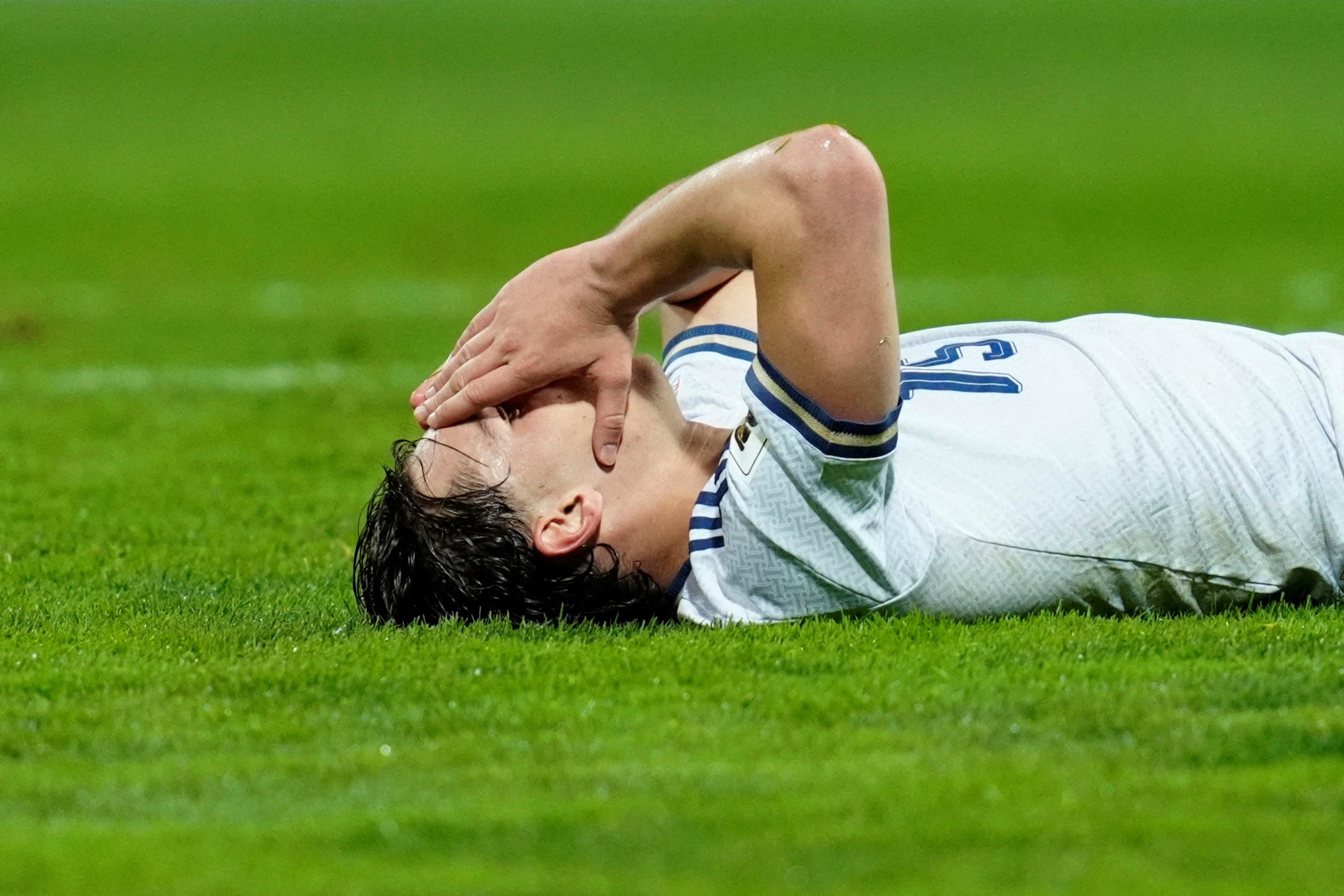 |
The defeat against Bosnia is a stain that will be hard to erase for the Italian national team. |
If there's one anomaly in this string of failures, it's the Euro 2021 championship. At Wembley, Italy played beyond their limits. They reached their peak at a time when the foundations weren't particularly solid. And when that effect wore off, the reality immediately became apparent.
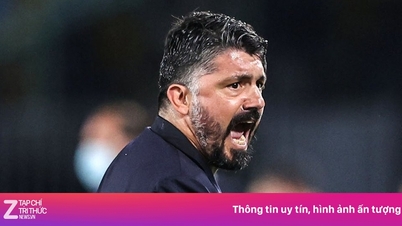
The most obvious thing is that the problem isn't on the coaching bench. Ventura failed, Mancini failed, Spalletti failed, and now Gattuso. Four coaches, four different approaches, but the same outcome. When constant changes don't yield results, it's a sign that the problem lies deeper.
Gattuso may have to pay the price for this failure. But changing the coach, if it happens, would only be a familiar solution. It helps appease public opinion, but it doesn't address the root cause.
Italian football is lacking a sustainable development ecosystem. From youth training and talent discovery to mechanisms that facilitate the development of domestic players, everything needs to be re-evaluated.
A systemic crisis, not just one person's problem.
In this context, the role of FIGC President Gabriele Gravina becomes particularly sensitive. He has witnessed two previous World Cup misses, and now a third. If he remains in office, it would be an unacceptable paradox.
In the past, leaders would leave immediately after the team failed, even in the finals. Now, Italy can't even get past the qualifying rounds.
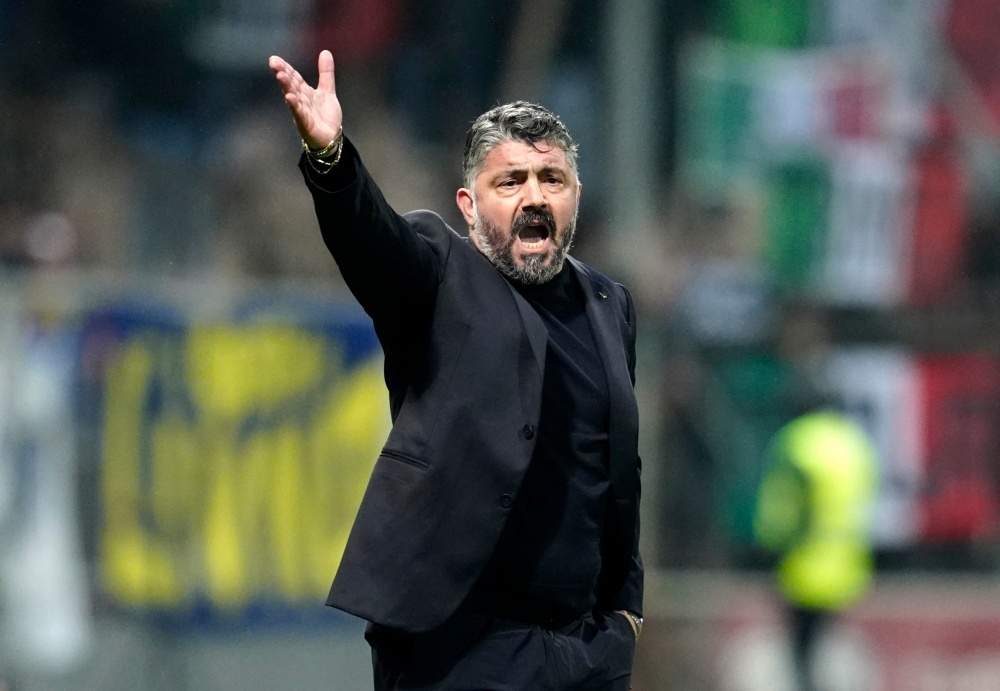 |
The coach is not the root problem of Italian football. |
History makes this defeat even more bitter. Since 1934, Italy has almost always participated in the World Cup, regardless of changes in the format from 16 to 24 and then 32 teams. The only exception was in 1958.
But now, with the tournament expanded to 48 teams, the opportunities are wider than ever, yet Italy still couldn't qualify. This isn't just a professional failure. It reflects a systemic decline.
Italy is no longer among the elite of world football. The gap lies not only in results, but also in the way things are run. Other footballing nations have invested heavily in youth development, sports science , and player development systems. Meanwhile, Italy seems to be still struggling with short-term solutions.
Therefore, the question now is no longer about who to replace, but how to change. Italian football needs a real overhaul. It needs proper investment in academies, a healthy competitive environment for young players, and, more importantly, a long-term vision.
There are no immediate solutions. But continued delays will only widen the gap. It's no longer unusual for generations of Italian fans to have grown up without ever seeing their national team participate in the World Cup.
If things don't change now, it will become the norm. And when absences become a habit, that will be the real end for a footballing nation that once stood at the top of the world.
Source: https://znews.vn/tuyen-italy-het-thoi-post1640014.html













































































Comment (0)