Photo: Pham Thao
This result reflects the effectiveness of the increase in school places in recent years, and also shows that students in the capital city have more suitable educational options after graduating from junior high school.
With a diverse school system ranging from public and private schools to vocational and continuing education institutions , the city continues to ensure educational opportunities for 100% of students and support them on their various development paths.
The admissions process was safe, smooth, and showed many positive signs.
On the evening of June 19th, the Hanoi Department of Education and Training announced the exam results and admission cutoff scores for 10th grade in public high schools for the 2026-2027 school year. This is a milestone that hundreds of thousands of parents and students have been waiting for after the largest exam ever held, with over 124,000 candidates participating.
To be admitted to non-specialized public high schools, candidates will take exams in three subjects: Vietnamese language and literature, mathematics, and a foreign language, on May 30th and 31st. Candidates applying to specialized schools will take the specialized subject exam on June 1st.
Prior to the announcement of results, the Hanoi Department of Education and Training developed a detailed plan and provided specific instructions on channels for checking exam scores and admission standards. This year, in addition to the Hanoi Department of Education and Training's electronic portal, the city's primary school enrollment portal, and the Hanoi Moi online newspaper, students can for the first time check their results on the iHanoi application. Diversifying information channels helps reduce pressure on the system and facilitates quick and accurate access to results for the public.
Ms. Nguyen Thi Hong (76 Nguyen Son Street) said that her family had closely followed the schedule for announcing exam results and cut-off scores announced by the Hanoi Department of Education and Training beforehand, so although quite nervous, they proactively arranged their work to wait until the time to check the results. According to Ms. Hong, checking online this year was quite convenient, with clear and accurate information displayed. Her family didn't have to travel or wait long; with just a few taps on their phone, they could find out the results.
One of the most notable results of this year's entrance exam is that the percentage of students admitted to 10th grade in public high schools reached over 80%.
According to data from the Hanoi Department of Education and Training, 102,243 students were admitted to public schools, representing more than 80% of the candidates who took the exam.
The total number of successful applicants reached 109,684 due to many students being accepted into different programs simultaneously. Notably, one student was accepted into up to five programs, including one non-specialized public school and four specialized or French-language bilingual programs.
This result is all the more noteworthy because, before the exam, many parents expressed concerns about the level of competition due to the sharp increase in the number of candidates. In reality, along with the expansion of enrollment and the addition of more school places, students' chances of getting into public schools have improved significantly.
The above results also reflect the city's efforts over the years to invest in the development of its school network. In recent years, Hanoi has continuously invested in building schools, renovating facilities, and adding classrooms in many areas with high population growth rates. Reviewing educational needs and setting realistic enrollment targets has contributed to increasing educational opportunities for students.
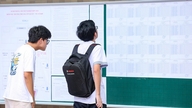

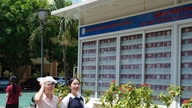
Besides increasing the number of available places, the organization of this year's exam continues to be highly praised for its safety, seriousness, and convenience for candidates.
With over 124,000 candidates taking the exam, the largest number ever, the Education sector has identified this as a top priority and has prepared well in advance. The Hanoi Department of Education and Training advised the city to issue comprehensive plans and methods for organizing the exam; coordinated with departments, agencies, and localities to review facilities and ensure that examination sites meet requirements for electricity, water, medical services , fire safety, and security.
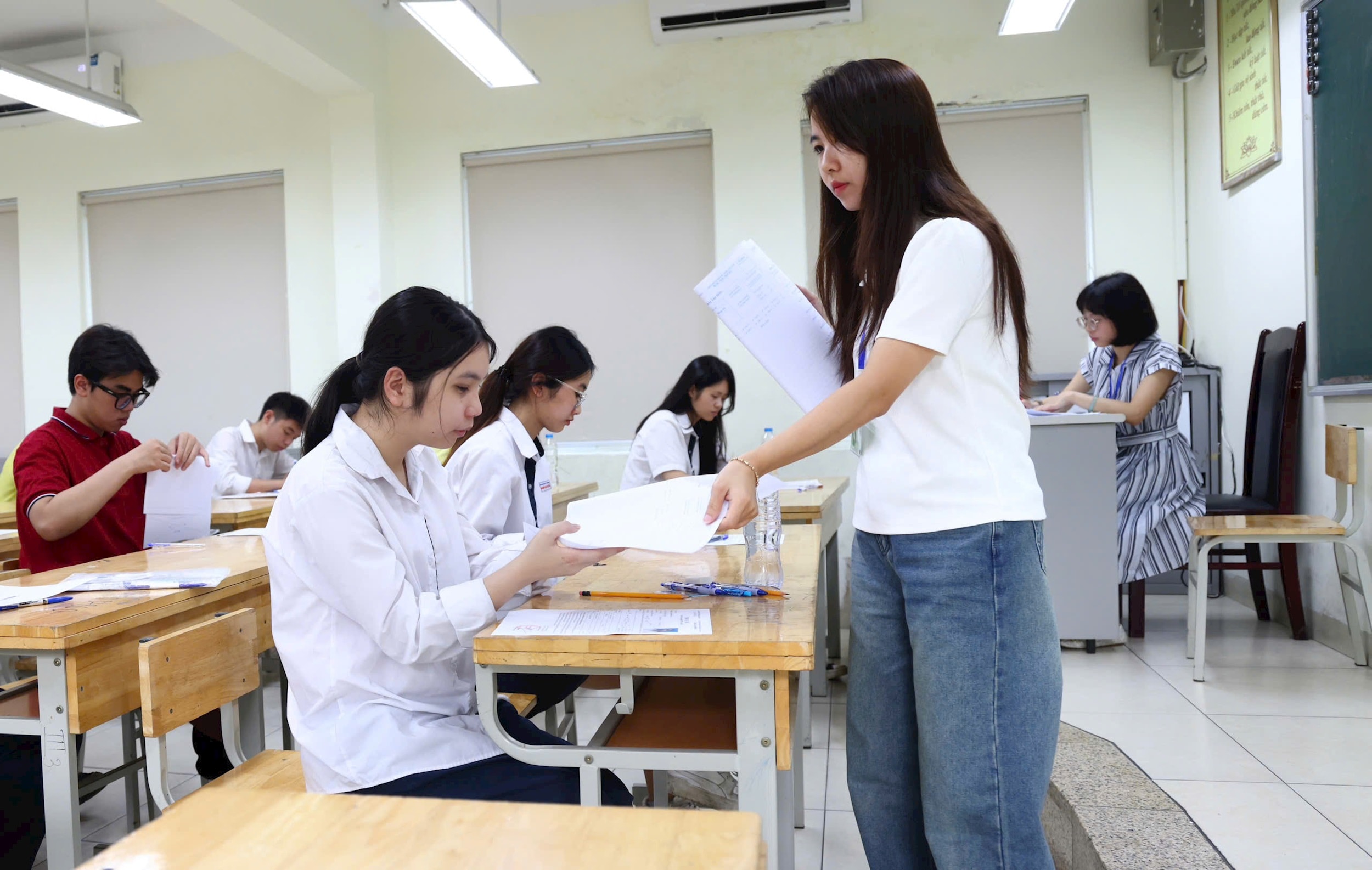
Security measures were implemented comprehensively across all stages, from exam question preparation, printing and copying, transportation of exam papers and answer sheets, to invigilation and marking. Thorough preparations were also made for handling unforeseen situations, preventing violations of exam regulations, and ensuring cybersecurity.
The coordinated efforts of all levels and sectors have contributed to creating a safe, serious, and humane examination, reducing pressure on students and their families.
Many post-secondary education options
In addition to expanding the scale of public schools, Hanoi has consistently pursued the policy of ensuring educational opportunities for 100% of students graduating from junior high school over the years.
For a long time, public high schools were considered the ultimate goal for most students after graduating from middle school. However, with the development of the education system and changes in the labor market, this perception is gradually changing.
More and more families are proactively exploring different educational pathways instead of focusing on just one option. The important thing is not the type of school, but finding an environment that suits the student's abilities, strengths, and developmental goals.
Currently, Hanoi's education system is quite diverse. Besides public high schools, students can also choose private schools, vocational training centers, continuing education centers, or vocational training institutions.
Private high schools alone have been allocated over 34,000 enrollment slots for the 2026-2027 school year. Many schools have invested in modern facilities, diverse training programs, enhanced foreign language classes, high-quality classes, and numerous experiential activities.
The admission methods for this group of schools are also quite flexible. Schools consider academic performance in junior high school, with some combining it with the 10th-grade entrance exam scores. This gives students more choices and reduces exam pressure.
In addition, the city's system of 29 vocational education and continuing education centers has been allocated nearly 12,000 enrollment quotas.



According to Tran Thi Hai Yen, Deputy Director of the Hoai Duc Vocational Education and Continuing Education Center, diplomas from continuing education programs are equivalent to high school diplomas from the general education system. After completing the program, students can still apply for admission to universities and colleges if they meet the prescribed conditions.
The advantage of this model is that students can both study academics and participate in vocational training through programs linked with vocational education institutions. This helps them gain additional vocational skills and job opportunities in the future.
According to Professor and Doctor Pham Xuan Khanh, Principal of Hanoi High-Tech College, the number of students choosing vocational training after junior high school has been increasing in recent years. The model of combining general education with vocational training allows students to complete their high school program while gaining early access to vocational skills. Many students find new motivation for learning when they study in a direction that suits their abilities and interests. They also have more options after graduation instead of focusing on only one path.
According to Ms. Tran Quynh Chi, a parent of a student at Ly Thuong Kiet Junior High School (Van Mieu - Quoc Tu Giam ward), the diversity of the current education system helps families reduce pressure during the enrollment season. Besides public schools, students can also choose private schools or vocational training centers/continuing education centers that suit their abilities and family circumstances. With multiple options to consider, parents feel more secure in supporting their children during this transition period.
With the support of the city, the education sector, and society as a whole, every student has the opportunity to choose a suitable path for themselves.
Source: https://hanoimoi.vn/ty-le-do-vao-lop-10-truong-cong-lap-dat-hon-80-ket-qua-tu-no-luc-tang-cho-hoc-o-ha-noi-1208545.html