

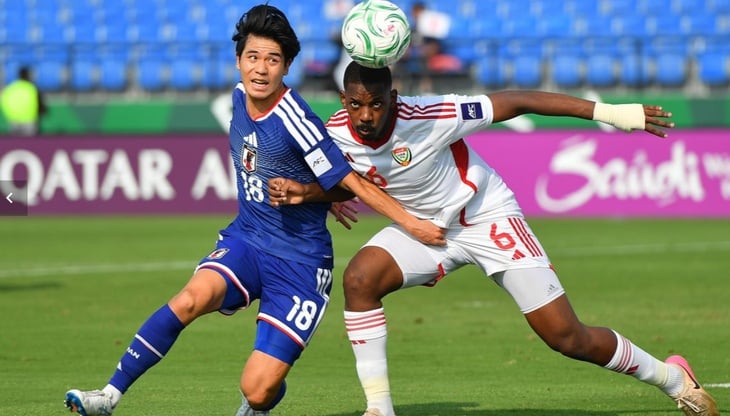
UAE U23 suffered a heavy defeat against Japan in the group stage - Photo: AFC
It's simply about money.
As the 2026 World Cup qualifiers entered their third phase in the Asian region, the UAE stunned the football world with a host of naturalized stars.
Specifically, ahead of the matches scheduled for March 2025, coach Paulo Bento has called up a total of eight Brazilian players to the national team. All of them are genuine "samba dancers," born and raised in Brazil, and have no blood ties to the UAE.
Asian football is no stranger to waves of naturalization, with Indonesia at one point fielding a team composed entirely of naturalized players. But at least those stars had Indonesian blood – a country with long-standing ties to the Netherlands.
As for the UAE, fans were truly surprised to see players named Bruno, Lucas, and Luanzinho dominating in the colors of the Arab team.
That's not even counting some other players of African descent. Similar to Indonesia, the UAE is more than capable of fielding a team composed entirely of naturalized players, none of whom have Asian ancestry. All of them acquired citizenship through residency in the host country for five years.
"We have to stop this farce before we have a team composed entirely of Brazilian players at the World Cup," former president Sepp Blatter said in 2007.
That statement turned out to apply to the UAE, not Qatar or China – teams that are also well-known for their tendency to naturalize players of Brazilian origin.
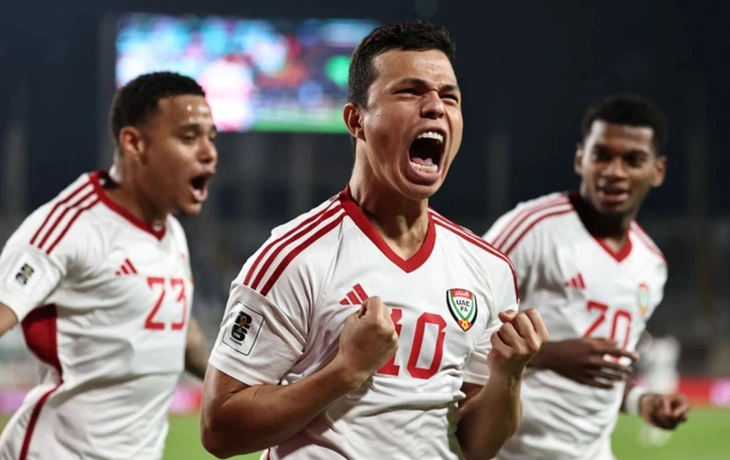
The UAE national team is full of naturalized players who are not related by blood - Photo: REUTERS
What makes Brazilian players, who have already shown their class in Europe like Caio Lucas (who once played for Benfica), accept naturalization in a foreign football league? Simply put, it's money.
Throughout his decade playing football in the UAE, Lucas consistently earned a salary of around $1-2 million, not including substantial signing bonuses and other generous rewards.
The UAE has gone even further, establishing a naturalization strategy at all levels. Richard Akonnor, one of the naturalized stars in the UAE U23 team, is a prime example.
This Ghanaian-born player was brought to Al Jazira FC when he was just 16 years old. This is one example of the UAE's extensive scouting network in African and South American football.
For about 10 years now, the UAE has been implementing this strategy, bringing in promising young players from Brazil or African countries when they are only under 18 years old. The goal is that by the time these players are eligible for citizenship, they will also be in their peak performance years.
This policy is considered to be more comprehensive than the one applied in China. Ten years ago, Chinese Super League clubs spent lavishly bringing in stars at the peak of their careers, only to have them naturalized (five years later) when these players were already past their prime.
UAE football is more forward-thinking, more systematic, and just as willing to spend as China. Obviously, with that approach, while they don't pay exorbitant salaries to a few stars, they spend a lot of money across the board.
And the result is... equally disastrous.
Wasting local talent.
Looking back at the history of UAE football, fans will inevitably feel a sense of regret for the team from the Middle East.
In 1990, the UAE qualified for the World Cup for the first time in history. At that time, Asia only had two spots, and the UAE brilliantly overcame a number of continental powerhouses to secure the coveted ticket to Italy that summer, alongside South Korea.
During that same period, the UAE consistently secured a place in the top four of the Asian Cup, before gradually declining in the 2000s.
By the 2010s, the UAE had risen to prominence, reaching the top four of the Asian Cup twice in a row (2015 and 2019). However, the power of oil wealth led UAE football leaders to harbor ambitions of taking shortcuts.
That's naturalization. A costly shortcut. Over the past 10 years, the UAE is estimated to have spent billions of dollars on salaries, transfer fees, and signing bonuses for a host of foreign stars, launching a large-scale talent recruitment campaign.
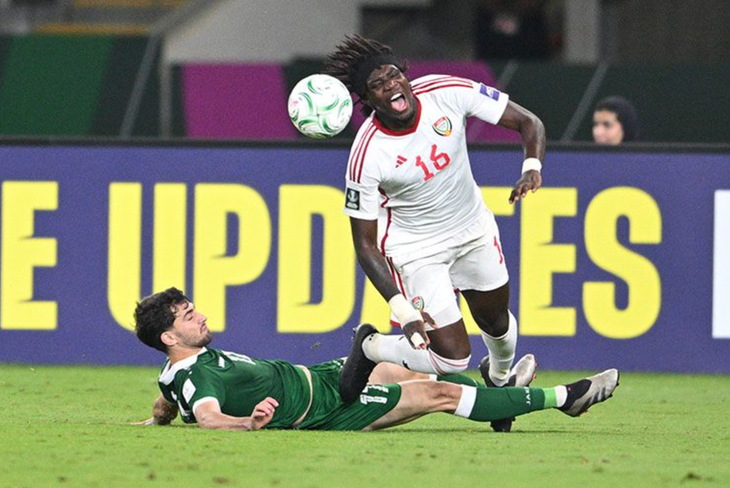
The UAE U23 team also has many naturalized players - Photo: AFC
That expense is comparable to that of China, and the outcome is the same. Chinese football quickly realized the truth and withdrew from the naturalization process in the early 2020s. The UAE, however, is only now beginning to feel the lessons learned.
In the 2026 World Cup qualifiers, when the chances of qualifying doubled thanks to FIFA's expanded scope, the UAE still failed to secure one of the eight official spots. They even lost to Iraq in the play-off round, completely shattering their dream of returning to the World Cup.
Having committed to the project, the UAE cannot abandon the naturalized players they have invested so much effort in training, especially since these players are all in their prime.

UAE played reasonably well, but not exceptionally well either, at the AFC U23 Asian Championship - Photo: AFC
Even at the U23 level, the UAE still has 4-5 promising naturalized stars who demonstrate superior qualities compared to local players. The problem is, their team just hasn't been playing well.
In the group stage, UAE fans were quickly disappointed after their impressive opening win against Qatar. In the next match, they lost 0-3 to Japan, and then luckily drew with Syria - a team with a relatively poor footballing background.
For a decade, the UAE tried to use money to take shortcuts to continental and World Cup success, but ultimately failed miserably. It was a huge waste, not only of money, but also of local talent whose foundation was on par with that of Japan, South Korea, or Iran.
Source: https://tuoitre.vn/uae-nen-bong-da-lang-phi-nhat-the-gioi-2026011520450923.htm


![[Photo] President Luong Cuong receives Speaker of the Jordanian House of Representatives Mazen Turki El Qadi](/_next/image?url=https%3A%2F%2Fvphoto.vietnam.vn%2Fthumb%2F1200x675%2Fvietnam%2Fresource%2FIMAGE%2F2026%2F02%2F03%2F1770112220330_ndo_br_1-3704-jpg.webp&w=3840&q=75)


![[Photo] Prime Minister Pham Minh Chinh receives Philipp Rösler, Chairman of the Switzerland-Vietnam Economic Forum.](/_next/image?url=https%3A%2F%2Fvphoto.vietnam.vn%2Fthumb%2F402x226%2Fvietnam%2Fresource%2FIMAGE%2F2026%2F02%2F03%2F1770121222295_ndo_br_dsc-8709-jpg.webp&w=3840&q=75)




Comment (0)