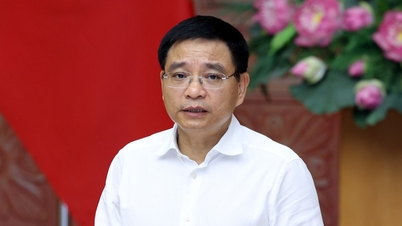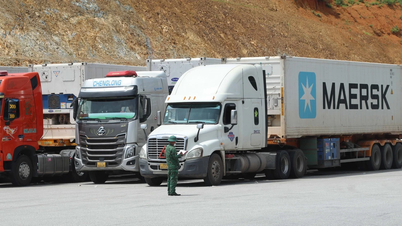
The tax authorities have obtained information on approximately 250 million bank accounts, including about 200 million individual accounts - Photo: HUU HANH
In the context of the booming digital economy and cashless payments, research and implementation of tax management based on cash flow analysis is becoming a trend.
Tax management based on cash flow
Mr. Dang Ngoc Minh, Deputy Director of the Tax Department ( Ministry of Finance ), stated that in recent times, the digital economy has developed strongly, and e-commerce, new business models, and cashless payments are fundamentally changing the methods of production, business, and consumption.
Money flows through the economy via the banking system, payment intermediaries, e-wallets, online payment gateways, and technology platforms.
This change facilitates economic development but also poses numerous challenges for tax administration, as transactions occur entirely in the digital environment, on a large scale, at high speed, and across borders.
"If we apply traditional management methods primarily based on tax declarations, accounting records, and post-audit work, in some cases it does not fully reflect the nature of economic transactions," Mr. Minh said, adding that research and the gradual implementation of tax management based on cash flow analysis is becoming a trend among many modern tax authorities worldwide .
Over the years, the tax sector has implemented a series of solutions such as electronic invoices, electronic invoices generated from cash registers, centralized databases, and portals for foreign suppliers... The implementation of electronic invoices has created a huge source of data on economic transactions in the economy.
However, according to Mr. Minh, many organizations and individuals still conduct frequent, high-value transactions through bank accounts, digital platforms, payment intermediaries, and shipping companies. These transactions may relate to the organization's production and business activities or the taxable income of individuals, but are not carried out through the electronic invoicing system or fully declared.
"Therefore, in the future, the tax authorities will use electronic invoice data as a basis to compare with other cash flows of taxpayers, thereby determining the actual tax liability, analyzing risks, and conducting audits when absolutely necessary," Mr. Minh said.

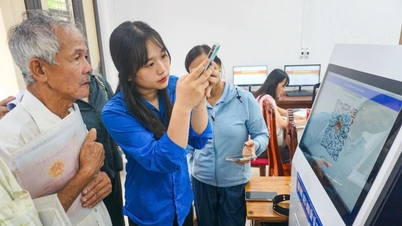
Illustrative image verifying taxpayer information.
Based on electronic data, electronic invoices...
According to the head of the Tax Department, to effectively manage taxes based on cash flow, there needs to be regular, automated, and real-time information sharing and coordination between the tax authorities and the State Bank of Vietnam, commercial banks, payment intermediaries, transportation companies, etc.
Invoice data combined with cash flow information from other sources will create a data "ecosystem" for taxpayers, helping to accurately determine actual tax obligations, not only contributing to combating budget revenue losses but also enhancing the transparency of the economy and creating a fair and healthy business environment.



According to Mr. Minh, the tax authorities have so far gathered information on approximately 250 million bank accounts, including about 200 million individual accounts. In cases where significant risk indicators, unusual transactions, or suspected tax evasion or money laundering are detected, banks will cooperate by providing information as required.
"The tax authorities don't monitor every individual transaction mechanically; instead, they use AI to analyze data, focusing only on cases with real risks," Mr. Minh said.
According to Ms. Nguyen Thi Cuc, President of the Vietnam Tax Consulting Association, banks are important partners of tax authorities in modern tax management. "When payments are made through banks, the flow of money is controlled, tax authorities can detect unusual transactions and limit tax revenue losses," Ms. Cuc affirmed.
Lawyer Pham Thanh Tuan from the Hanoi Bar Association believes that management based on electronic data, electronic invoices, and actual payment flows is a crucial solution to improve tax management efficiency and build a more transparent and fair business environment.
Regarding the real estate sector, it is necessary to establish a data linkage mechanism between notary offices, tax authorities, banks, and land registration agencies to compare declared values and actual payment flows. "This is considered a solution to limit 'two-price' transactions, tax revenue losses, and enhance the transparency of the real estate market," Mr. Tuan said.
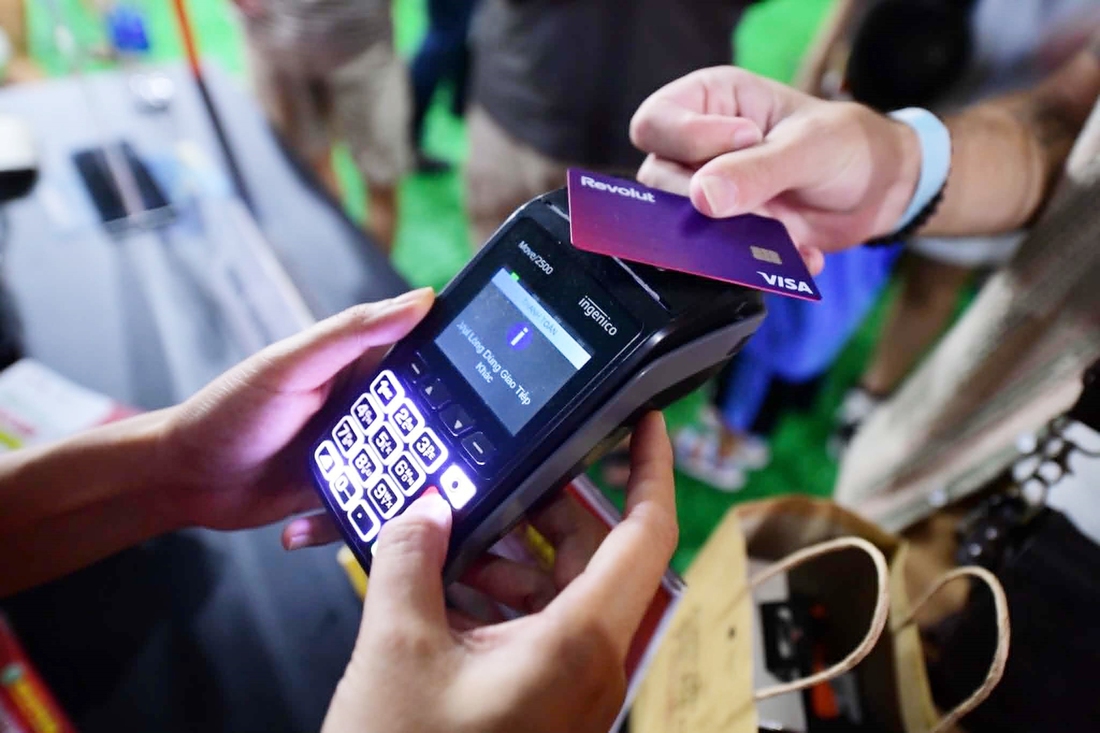
Experts advise that businesses need to be transparent about their cash flow if they want to do business in the long term - Photo: QUANG DINH
The flow of money needs to be transparent.
In the draft decree guiding the Law on Tax Administration, the Ministry of Finance proposes that banks, payment intermediaries, and online payment units provide taxpayers' payment account information to tax authorities to enhance tax management efficiency and contribute to preventing fraud and revenue losses for the state budget.
The information provided includes the account holder's name, date of birth, tax identification number, account opening location, transaction amount and value, money transfer and receipt information, account balance, and domestic and international transactions.
In addition, the bank also provides information on unusual and suspicious transactions as required by anti-money laundering laws (the current regulation is for transactions exceeding 400 million VND).
Mr. Le Van Tuan, Director of Keytas Tax Accounting Company Limited, stated that according to the Ministry of Finance's proposal, commercial banks will continue to provide account information to tax authorities, and the scope of this information may even be expanded. Under current regulations, the information provided includes the account name, account number, opening date, and closing date.
Meanwhile, according to the Ministry of Finance's proposal, in addition to current regulations, commercial banks will be responsible for providing additional information such as the quantity, value, transaction details, and balance. At the same time, banks must also report any unusual or suspicious transactions to the tax authorities.
According to Mr. Le Van Tuan, in addition to data from banks, tax authorities also have many tools to monitor business cash flow, such as data from e-commerce platforms and shipping companies. Therefore, business owners should separate accounts used for business operations from personal spending accounts to ensure full tax declaration and payment, minimizing the risk of penalties or even prosecution for tax violations.
"The management trend of authorities, including tax agencies, is risk-based management, applying big data and AI to analysis. Therefore, if they want to do business in the long term, businesses and households need to be transparent about cash flow, manage using software, and promote cashless payments to confidently focus on business development," said Mr. Le Van Tuan.
Identifying "ghost" business chains using invoice data.



According to the Ho Chi Minh City Tax Department, exploiting electronic invoice data combined with analyzing discrepancies between invoices and tax declarations... has become an important tool to improve tax management efficiency, identify "phantom" business chains established solely to issue fake invoices for tax refund fraud, and prevent budget revenue losses...
Specifically, the application alerts about electronic invoice issuance through the use of the K coefficient to warn of risks, expanding monitoring by industry to help detect and prevent daily invoice fraud, creating alert lists and sending emails to tax officials and taxpayers.
Furthermore, automatically comparing the total revenue and value-added tax on issued invoices with the revenue declared on the value-added tax return helps to promptly detect cases of tax evasion such as: unusual discrepancies, under-declaration of revenue, incorrect tax rates, etc., saving a lot of time for tax officials and improving the efficiency of tax management.
In 2025, Ho Chi Minh City Tax Department reviewed 45,596 taxpayers under warning status, and processed 341 cases by suspending invoice usage, enforcing invoice suspension, and issuing notices of inactivity at registered addresses in 2,939 cases.
Through the submission of notices for verification of discrepancies, businesses voluntarily declared additional taxes and paid them into the state budget. Specifically, the amount of output tax processed for adjustment and supplementation was over 2.025 billion VND, and the amount of input tax adjusted was over 2.455 billion VND.
To achieve a total domestic revenue target of 800,000 billion VND this year, Ho Chi Minh City Tax Department stated that it will focus on promoting digital transformation and applying big data to tightly control electronic invoices, thoroughly preventing fraud and transfer pricing.
Furthermore, to ensure fair and objective tax collection among individual businesses, including online tax collection, the Ho Chi Minh City Tax Department will establish cross-checking teams to assess the scale, workforce, and invoicing practices of businesses. They will proactively coordinate with inter-agency bodies such as the police, market management authorities, and the People's Committees of wards and communes to handle complex cases and non-compliance.
Source: https://tuoitre.vn/ung-dung-ai-de-phat-hien-gian-lan-thue-20260610000621197.htm