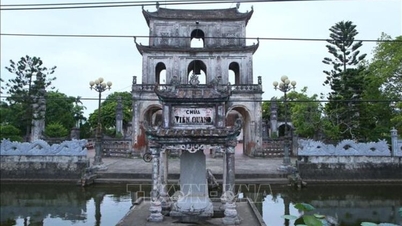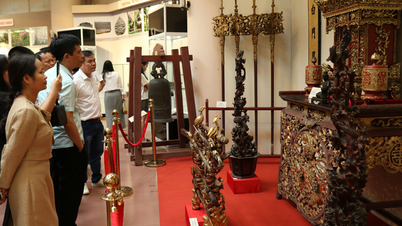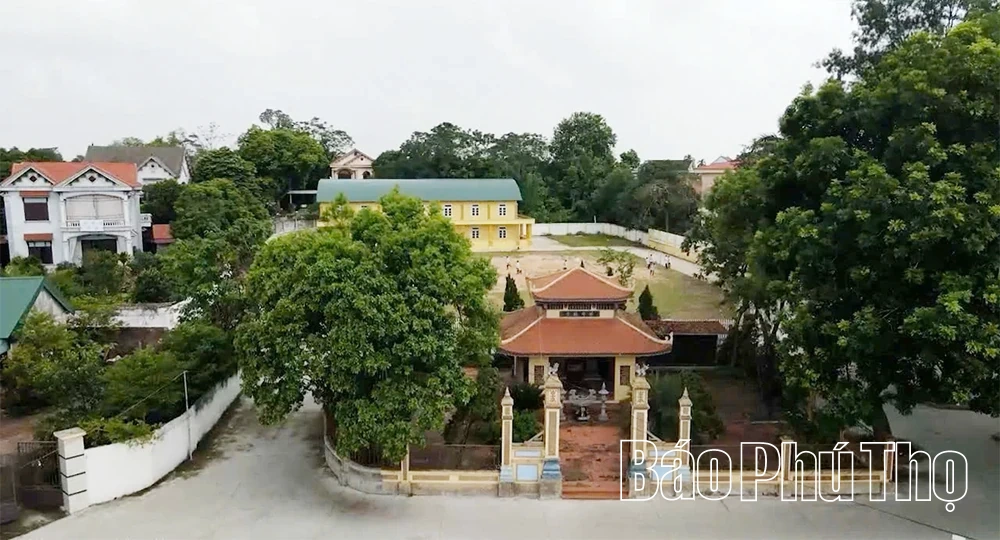
In 2010, the village's Confucian temple was restored and rebuilt in a new location near the communal house, facing President Ho Chi Minh's fish pond.
A symbol of the tradition of valuing education.
The ancients once said: "There are places we go to admire the scenery. There are places we return to rediscover memories. And there are structures that tell stories, prompting us to quiet our hearts and reflect." The Confucian temple in Dong village, Xuan Lung commune, Phu Tho province, is one such structure. Here, knowledge is considered the path to self-improvement and career success, a way of life that the people of Xuan Lung, no matter how poor they are, strive to ensure their children receive an education and become successful.
Văn Chỉ, also known as “Văn Tứ” or “Từ Vũ,” is a relic of Confucianism at the village level, similar to the Văn Miếu Quốc Tử Giám (Temple of Literature) of the entire country. It was established nearly five centuries ago, reflecting the beautiful, humane, and distinctly Vietnamese culture of the village.
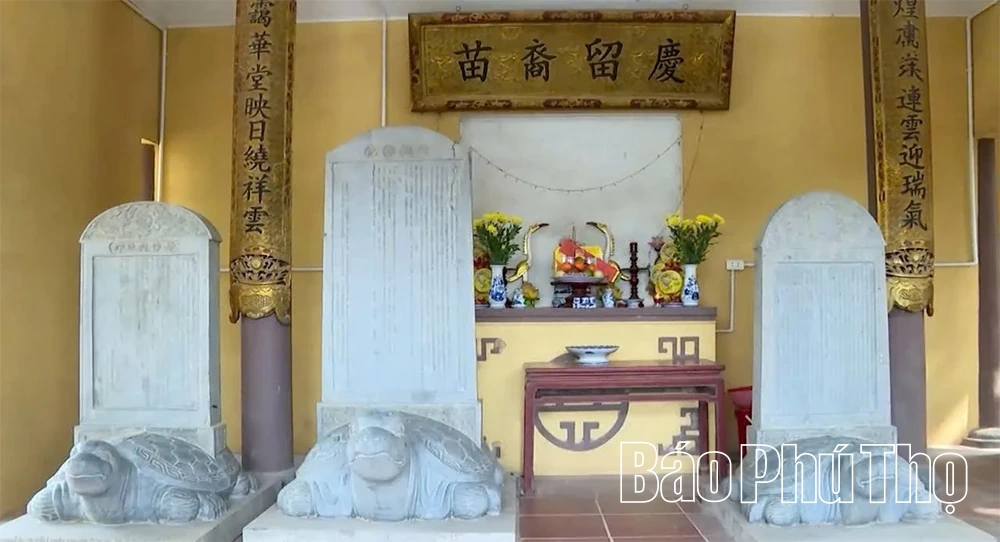
These stone tablets bear the names of 205 sons of Dòng village who achieved academic success at various levels.
According to ancient documents, the former Confucian Temple was located on sacred land in front of Pho Quang Pagoda (built in the early 15th century). The complex consisted of two buildings: The upper building was dedicated to Confucius - the founder of Confucianism, along with 72 other sages and the Four Disciples (Yan Yuan, Zeng Shen, Mencius, and Kong Ji). The lower building housed stone steles recording the names of those who passed the examinations.
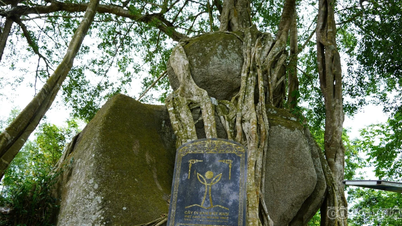
A plaque of honor on the back of a sacred turtle.
The sacred and proud highlight of the Temple of Literature is the three majestic turtles carrying stone steles on their backs. These are not only historical relics but also witnesses to the glorious history of Dong village.
These stone steles bear the names of 205 successful scholars from Dòng village, achieving various ranks, including four top-ranking scholars: Bùi Ứng Đẩu (who passed the Second Class examination in 1400 during the reign of Hồ Quý Ly); Nguyễn Doãn Cung (who passed the Third Class Doctoral examination in 1433); Nguyễn Chính Tuân (who passed the Hoàng Giáp examination in 1514, his name inscribed at the Văn Miếu Quốc Tử Giám in Hanoi ); and Nguyễn Mẫn Đốc (who passed the Bảng Nhãn examination in 1518, his name inscribed at the Văn Miếu Quốc Tử Giám in Hanoi). There are also 21 mid-level scholars (including 17 students and 4 bachelors). Along with many other Confucian scholars and officials.



Each inscription on the stele, though somewhat faded by time, retains its value, affirming that Xuan Lung is a land of learning with a tradition of "outstanding individuals in every generation."
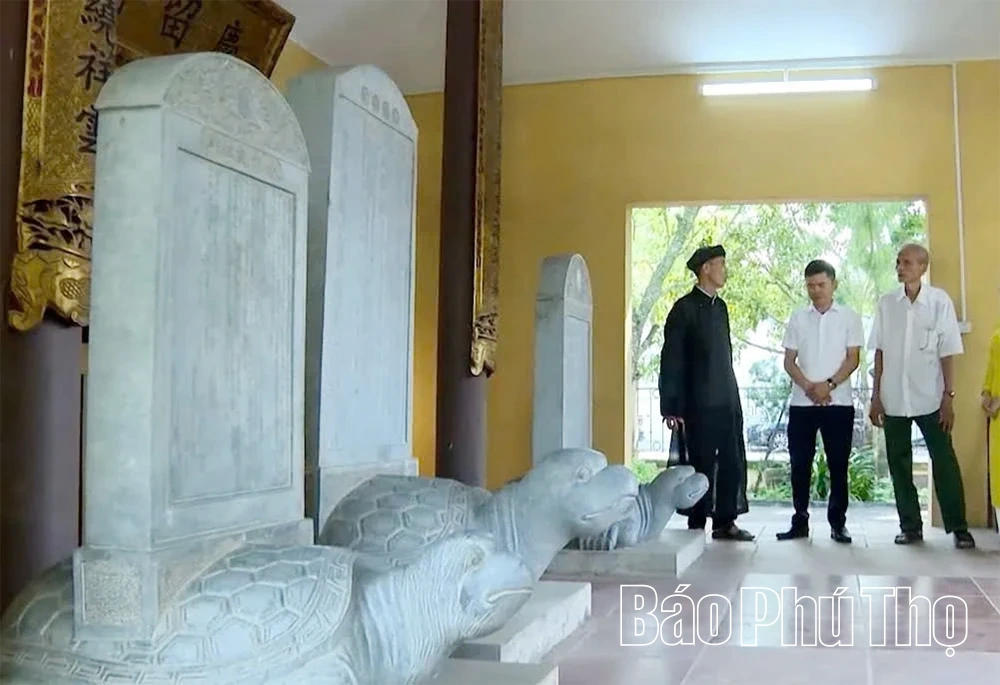
Each inscription on the stele, though faded by time, retains its historical value, affirming that Xuan Lung is a land of learning.
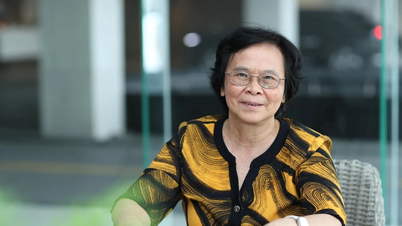
In 2010, with the unanimous support of the Party Committee and the people of the former Xuan Lung commune, this sacred structure was restored and rebuilt in a new location near Dinh Ca, facing President Ho Chi Minh's fish pond. Mr. Nguyen Van Tri, a local resident, shared: "This Confucian temple is always visited by officials and people of the commune who offer incense and offerings to worship it. We hope the deities will bless and protect all officials and people, especially the children of the schools... Every year, the descendants of Dong village uphold the tradition of studiousness of their ancestors and have received provincial and national awards."
The restoration of the three ancient stone steles was a remarkable feat. It required the expertise of Hán Nôm (classical Chinese and Vietnamese script) specialists to authenticate the steles, using ancient rubbings from the French School of Far Eastern Studies (EFEO) archived at the Institute of Hán Nôm Studies in Hanoi, in order to restore them to their original state: the Câu trúc Từ Vũ Bi, Trùng thuyền Bi Kí, and Từ Chỉ Bi.
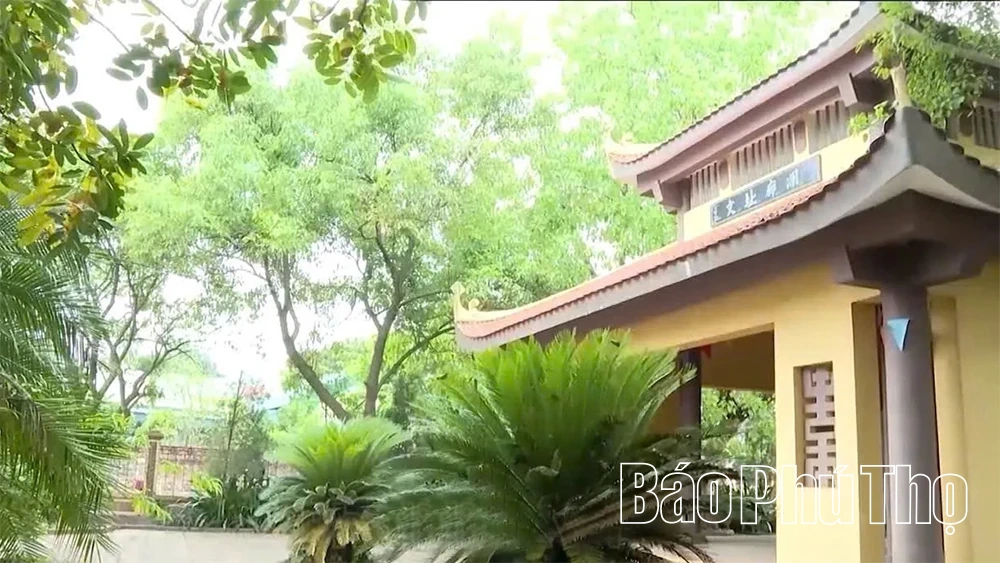
Around the historical site of the village's Confucian temple, ancient trees stretch their branches, casting their shade.
A peaceful haven for future aspirations.
Beyond its immense historical significance, Van Chi is also a peaceful haven, a spiritual anchor for those far from home to remember. Surrounding the monument, ancient trees stretch their branches to provide shade, and in front lies a vast lake, creating a scene that is both sacred and poetic, leaving a deep impression on visitors.
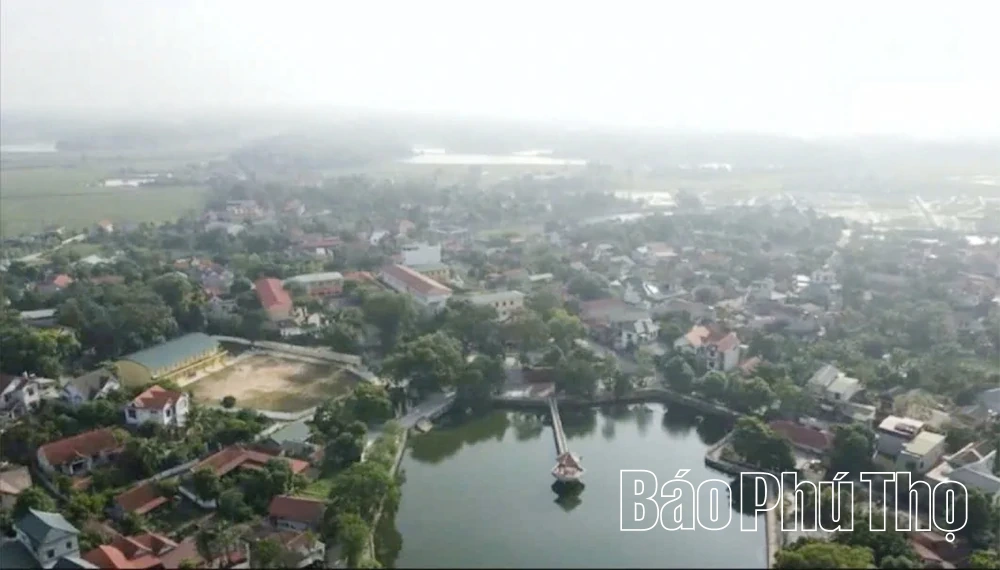
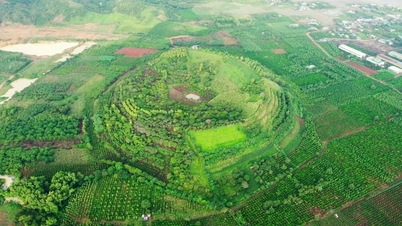
Panoramic view of Dong village, Xuan Lung commune.



Mr. Nguyen Luu, a resident of Xuan Lung, expressed: "It is a great honor to be born and raised in this land formerly known as the Village of Dragon and Culture. Therefore, many ancient customs are still preserved here. Families with about five members who excel in their studies and pass exams are rewarded and praised."
The village's Confucian temple is not just a historical site, but also a sacred symbol, embodying the enduring values of an entire region. It reminds generations that, in every era, knowledge remains the most solid foundation for moving towards the future.
This is the pride of the people of Xuan Lung - a village of cultural heritage in the ancestral homeland, where the tradition of valuing education has been kept alive for generations.
Ngoc Thang
Source: https://baophutho.vn/van-chi-lang-dong--linh-khi-dat-hoc-xu-to-243978.htm




![[Image] National conference summarizing one year of operation of the overall organizational model of the political system, the three-tiered government model.](https://vphoto.vietnam.vn/thumb/1200x675/vietnam/resource/IMAGE/2026/07/01/1782882811691_ndo_br_1-jpg.webp)