

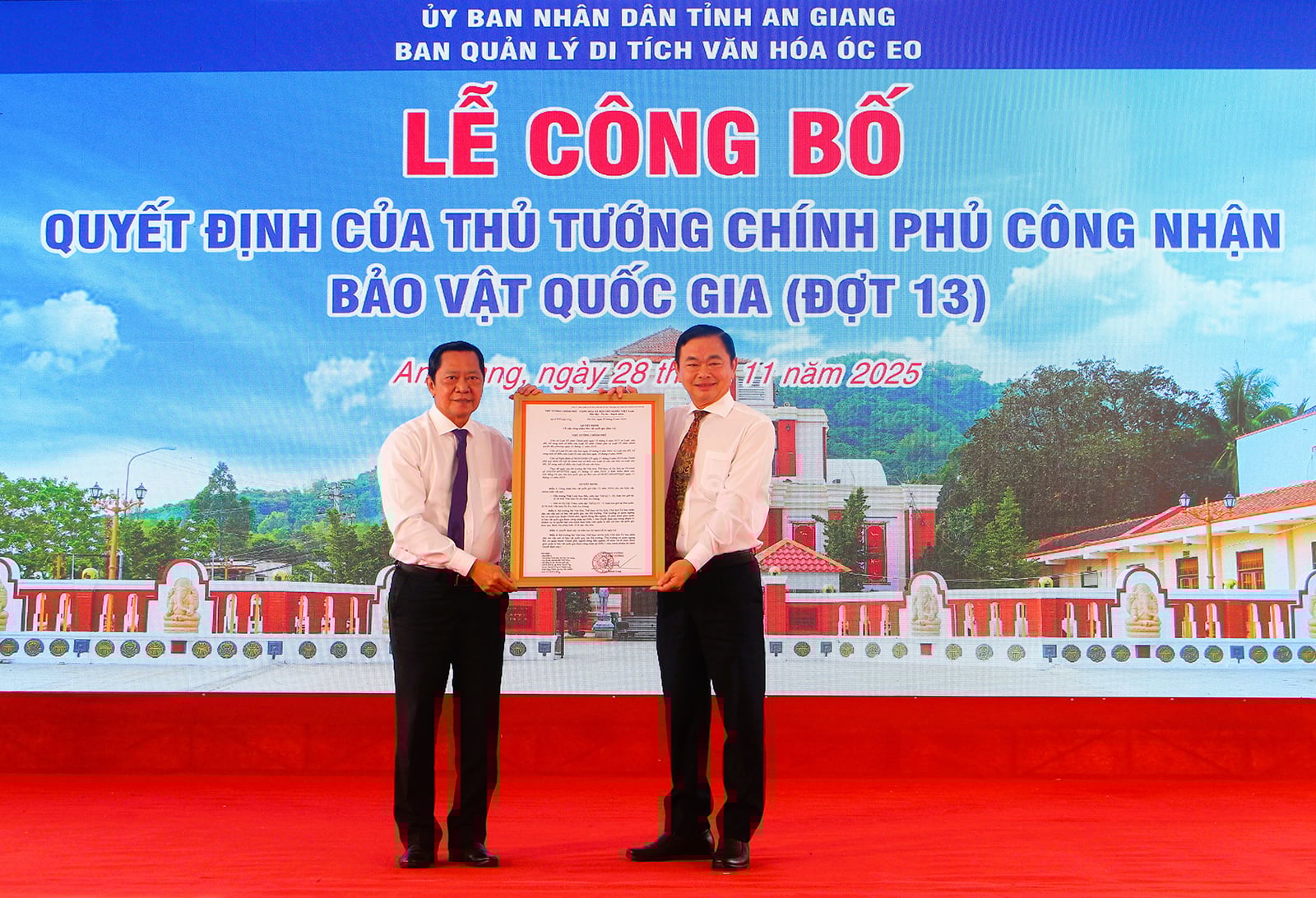
Director of the Oc Eo Cultural Relics Management Board, Nguyen Van Nhien (right), receives the Prime Minister 's decision recognizing two national treasures. Photo: Phuong Lan
With this valuable addition, An Giang now possesses 10 national treasures belonging to the Oc Eo culture. The Oc Eo culture, which formed and developed from the 1st to the 7th centuries AD, is considered a symbol associated with the Funan Kingdom – one of the most powerful ancient states in Southeast Asia. Identified by scholar Louis Malleret in 1944, this culture left behind a rich, unique, and exceptionally important system of relics and artifacts.
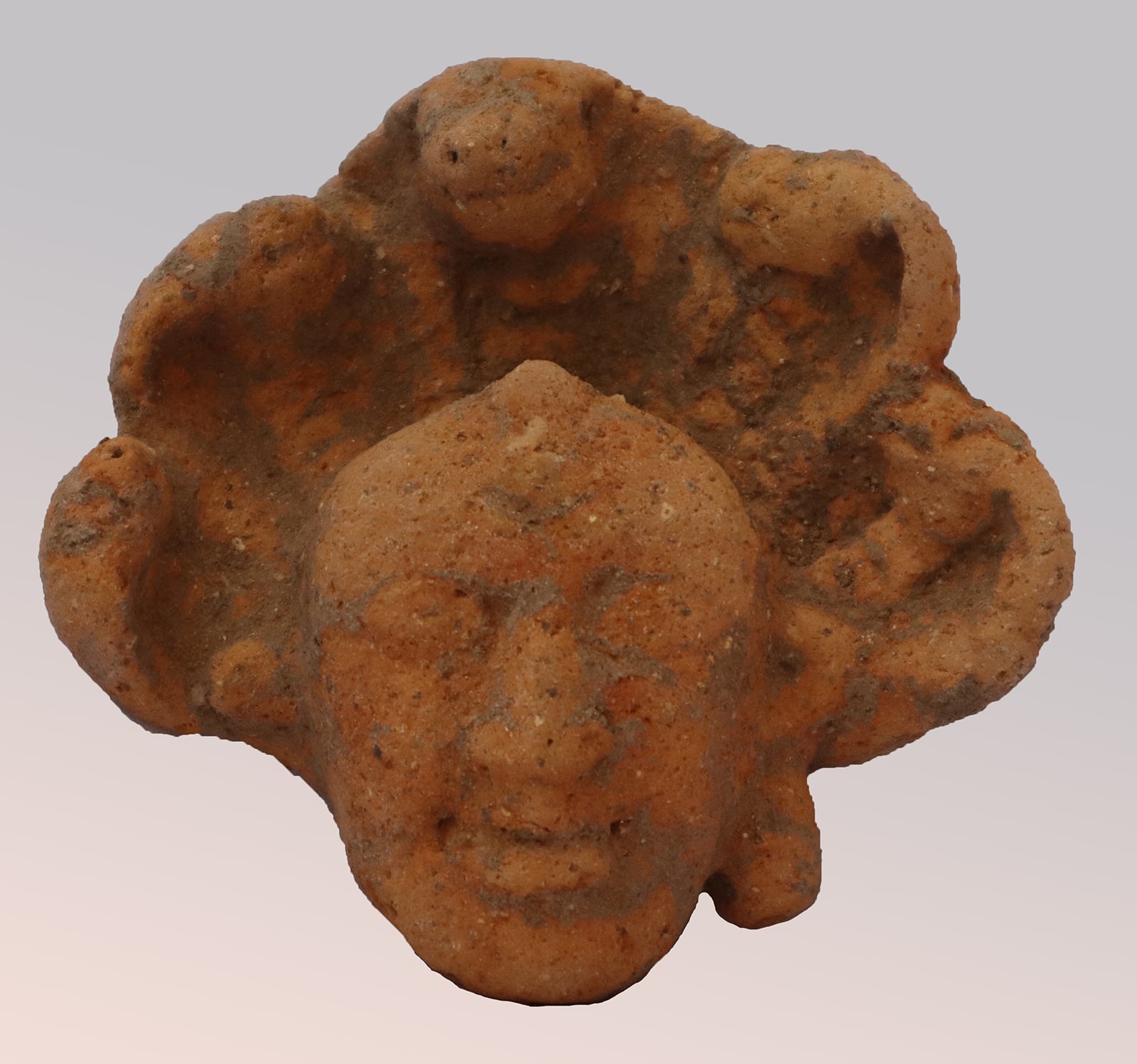
Image of the national treasure, the head of the Buddha statue at Linh Son Bac. Photo: PHUONG LAN
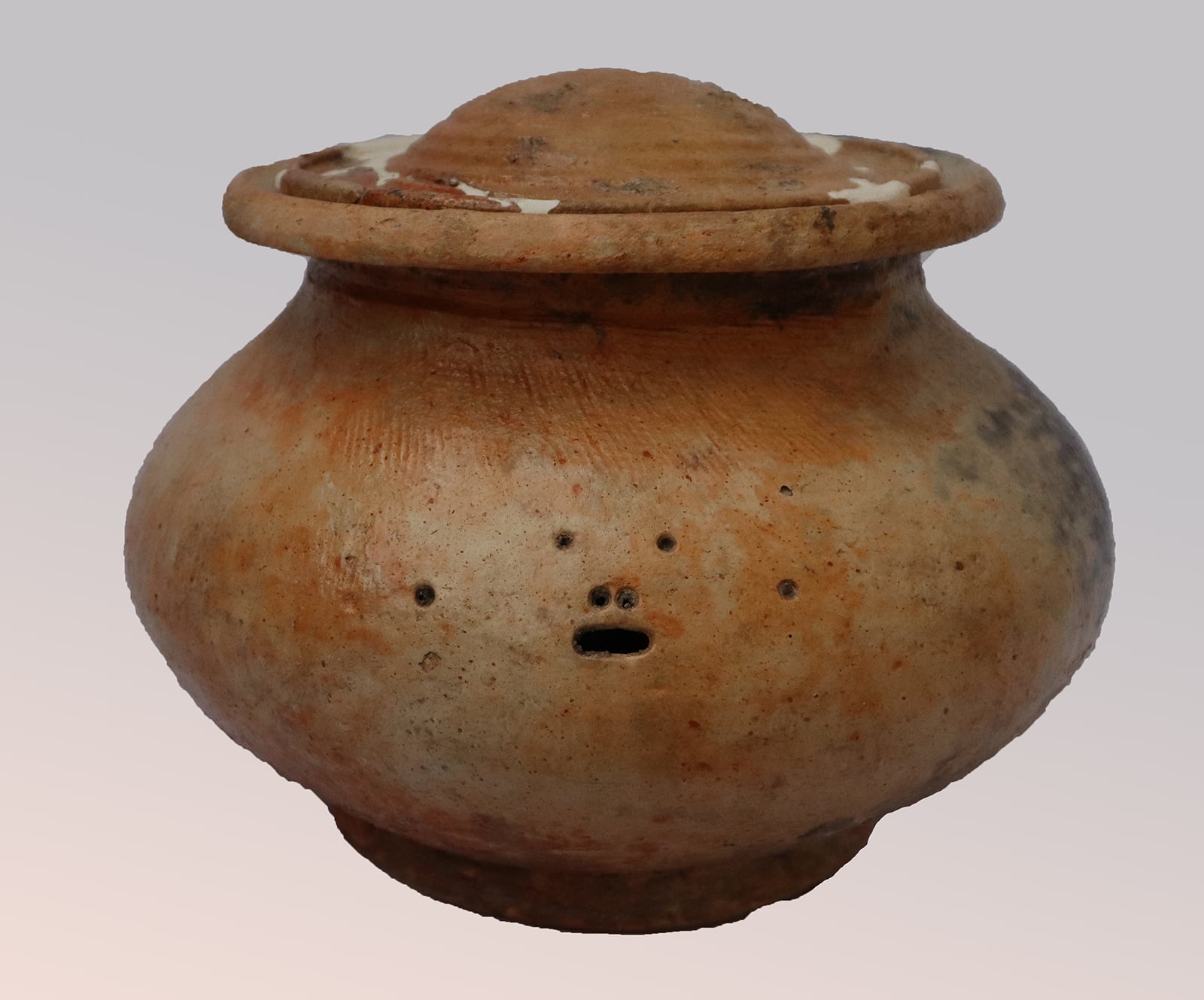
Image of the national treasure, the Go Cay Tram burial jar. Photo: PHUONG LAN
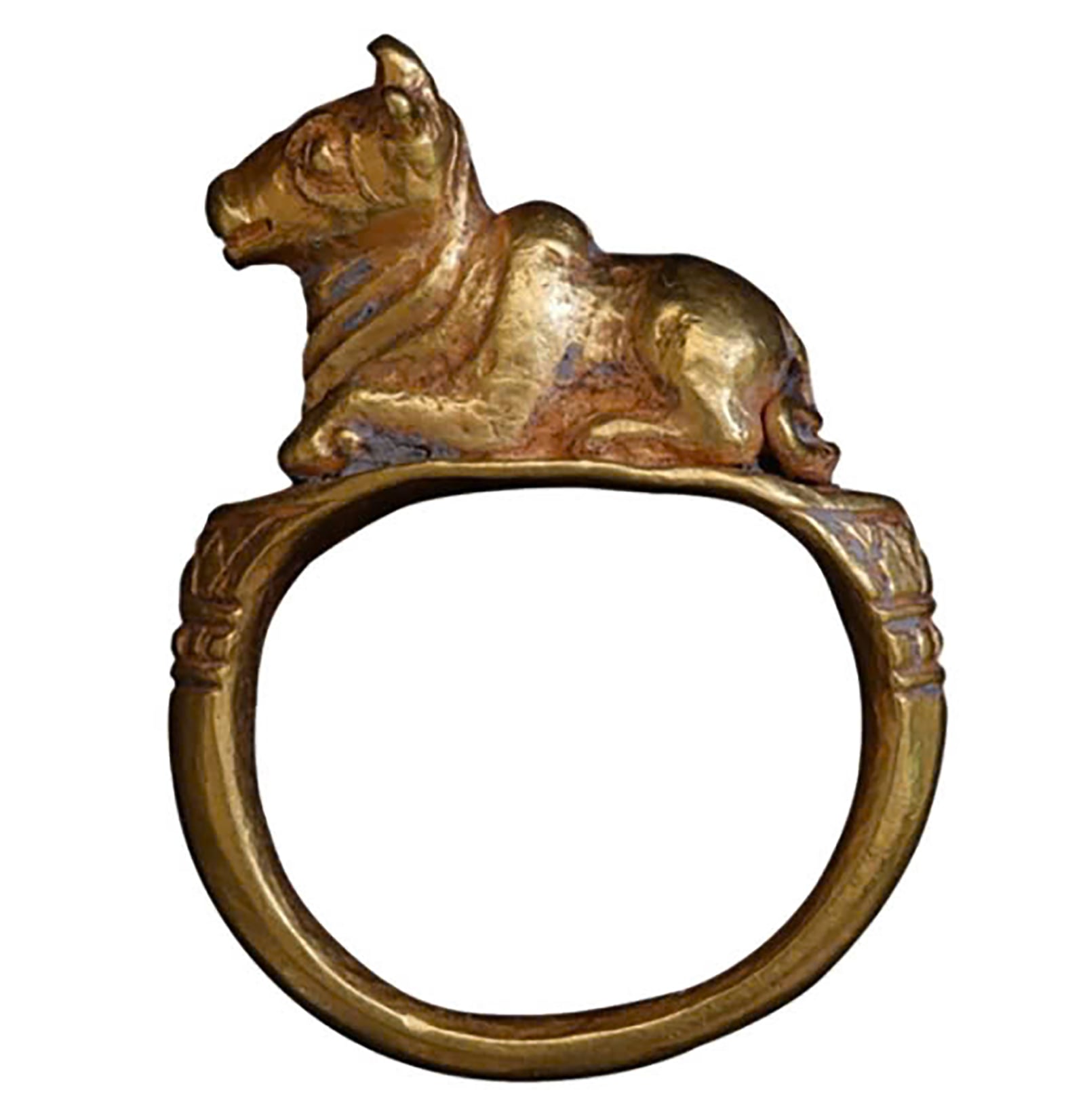
Nandin ring from Giong Cat. Photo: TRUNG HIEU
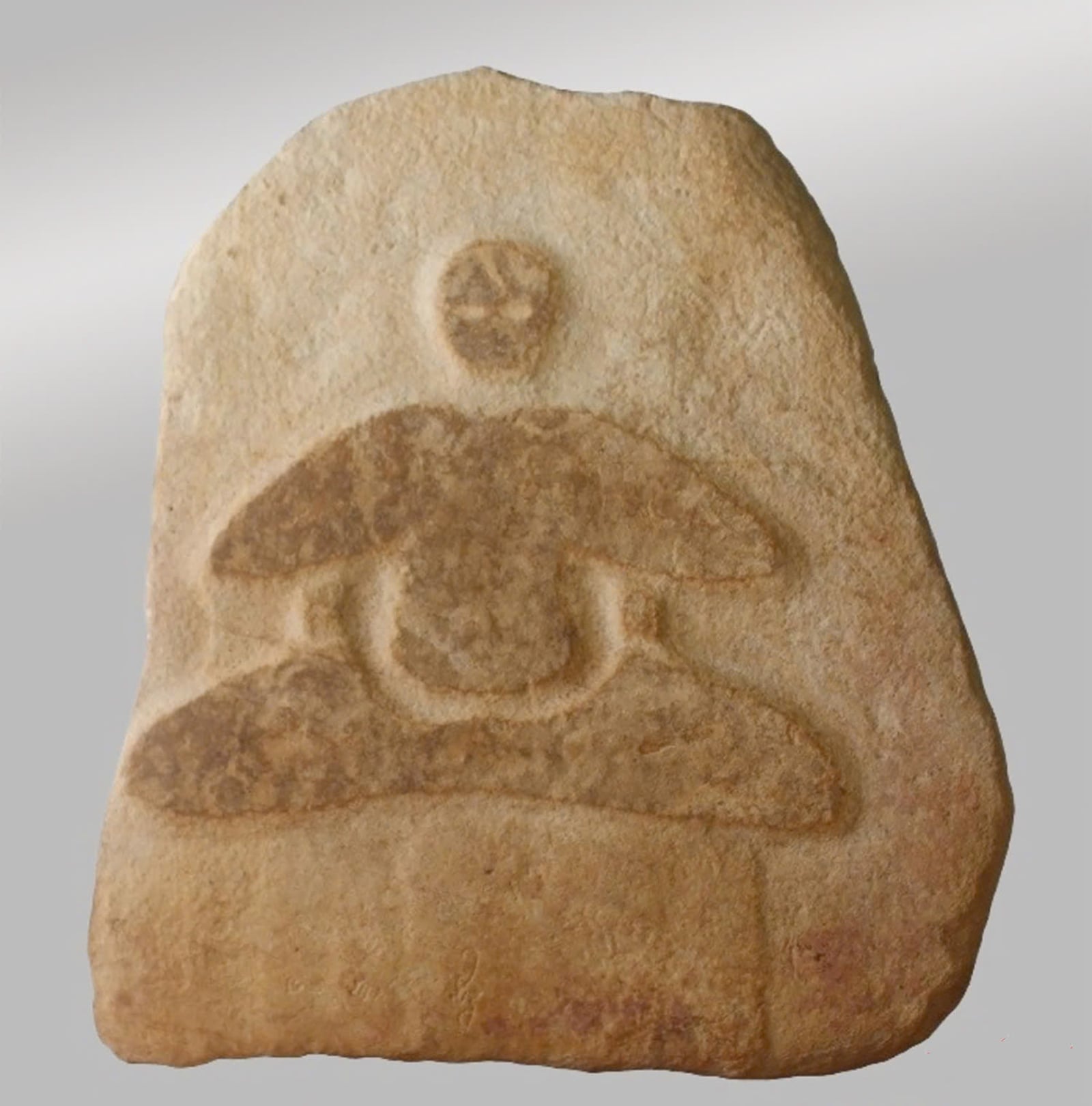
Relief sculpture of the Buddha at Linh Son North. Photo: TRUNG HIEU
Nguyen Van Nhien, Director of the Oc Eo Cultural Relics Management Board, emphasized the immense significance of the Oc Eo - Ba The heritage in highlighting the historical and cultural depth of An Giang province. Mr. Nhien affirmed: “The recognition of these as national treasures contributes to enhancing the status and image of the locality and opens a new path towards bringing the Oc Eo heritage to the world stage.” The two newly recognized treasures represent two unique aspects of Oc Eo culture. The Go Cay Tram burial jar was discovered during an excavation in 2018 by Vietnamese and Korean archaeologists at the Go Cay Tram site within the Oc Eo - Ba The Special National Relic Area.
According to the Oc Eo Cultural Relics Management Board, the outstanding value of the Go Cay Tram jar burial site lies in its discovery during an archaeological excavation with clearly defined stratigraphy, meticulously processed structure, and a high degree of scientifically accurate collected information. In the context of the Oc Eo - Ba The site in particular and the Oc Eo culture in general, the discovery of this type of jar burial site is very rare. To date, the Go Cay Tram jar burial site is the second site of this unique burial type discovered, following the Linh Son Nam jar burial site, which was found in the cultural layer beneath the religious architecture in the Linh Son Nam area during the 1998 excavation.
The Linh Son Bac Buddha head, a national treasure, is a perfectly crafted round statue depicting the head of the Buddha along with a canopy of five-headed Naga serpents radiating from behind, forming a canopy over the Buddha's head. It features a central head and two pairs of symmetrical serpent heads on either side, all facing towards the center. The characteristics of the cobra are clearly depicted but are highly symbolic and decorative. Behind the head is a circular hole running along the vertical axis, possibly used to secure the statue to another structure.
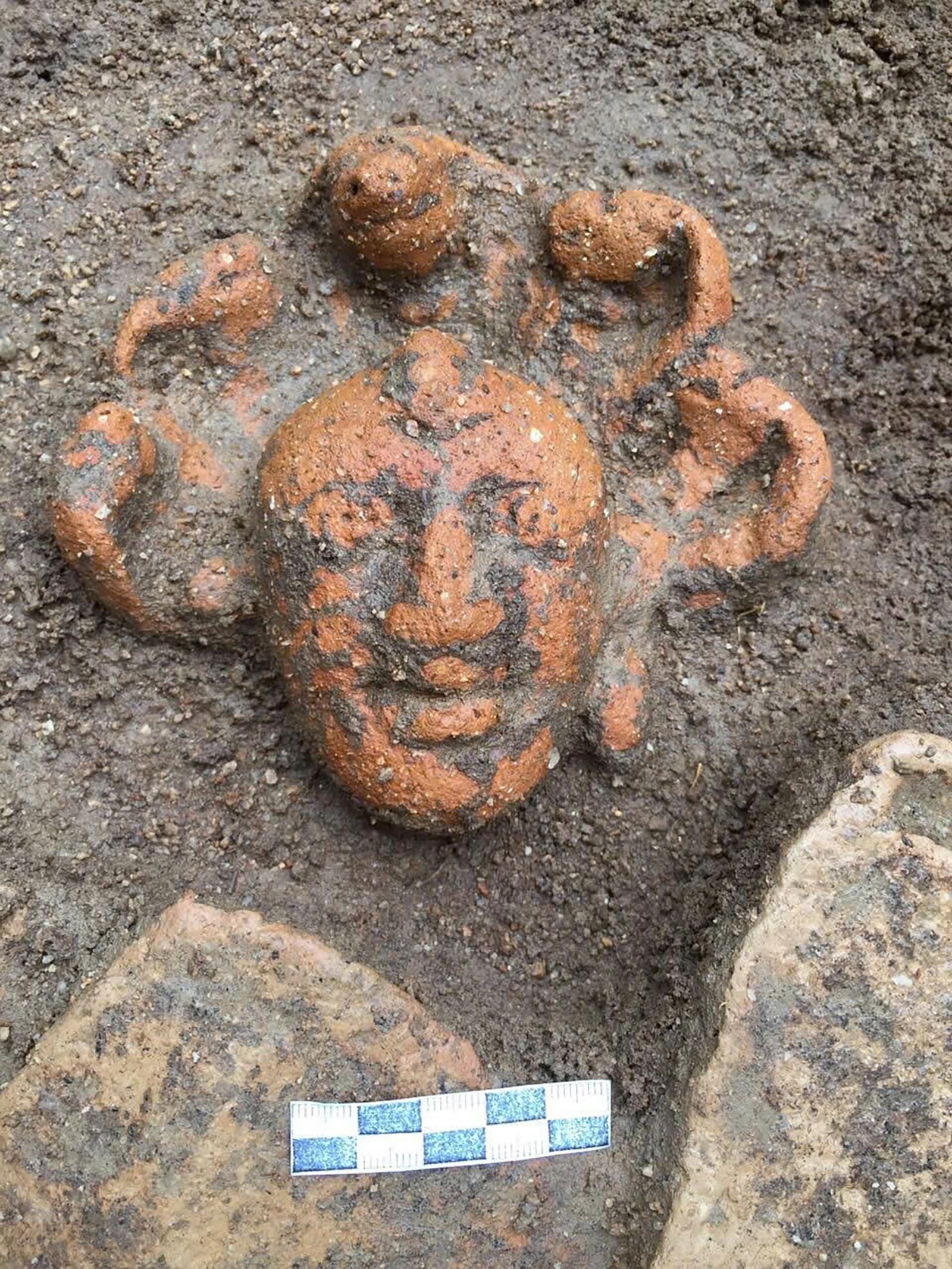
The artifact, a Buddha head from Linh Son Bac, was found in the excavation pit. Photo: PHUONG LAN
The artifact was discovered during the archaeological excavation of Linh Son Bac site (Oc Eo - Ba The relic site) as part of the project "Research on the Oc Eo - Ba The and Nen Chua relic sites (Oc Eo culture of Southern Vietnam)" 2017-2020. The head of the Buddha statue from Linh Son Bac is a valuable scientific document, an important artifact that can be studied from various perspectives by different scientific disciplines. This is crucial scientific material not only for archaeology but also for research into the history, culture, art, diplomatic relations, and religion of Southern Vietnam with India and the region during the Oc Eo culture period.
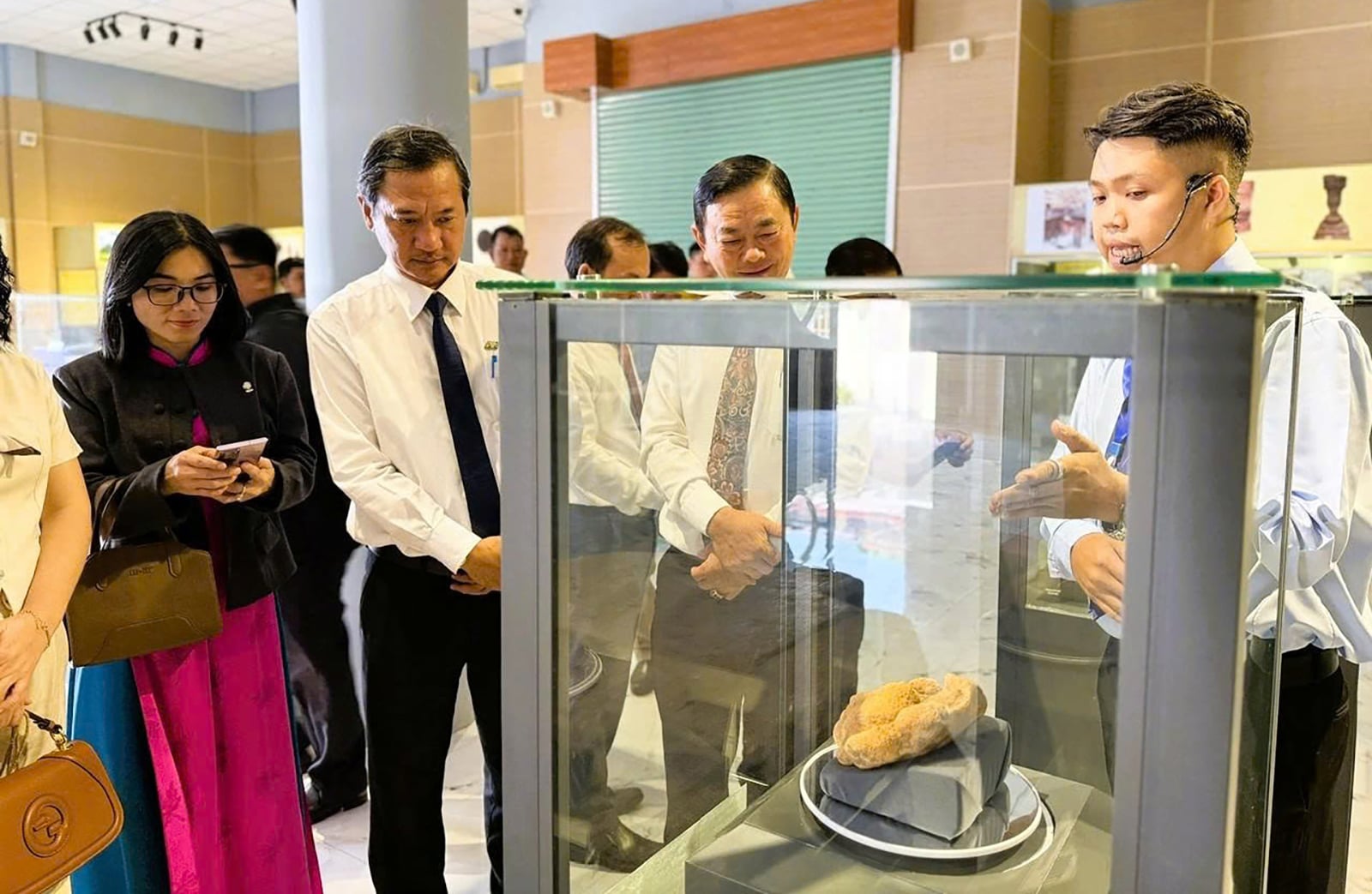
Visitors explore and learn about the national treasures, the Linh Son Bac Buddha head statue and the Go Cay Tram burial jar. Photo: PHUONG LAN
Mr. Nguyen Van Vien, Director of the Vietnam Institute of Intellectual Property, commented: “The visit to the Oc Eo - Ba The archaeological site was a profound experience that opened the door to a brilliant civilization that had been ‘sleeping’. This heritage is not only a national treasure but also the pride of the entire community, where each artifact holds invaluable historical, cultural, and social values. I am fully confident that, with the efforts already made and being made by the local authorities, Oc Eo will soon be recognized by UNESCO as a World Cultural Heritage site, attracting tourists from all over the world to admire it.”
Among the exhibits, the two newly recognized national treasures left the strongest impression on Mr. Vien. “The Buddha head at Linh Son Bac, although made of simple materials from the 1st to 3rd centuries, exudes a rare sacred spirit. Gazing at that compassionate Buddha face, one not only sees history but also feels a spiritual awakening within oneself. Besides that, the Go Cay Tram burial jar demonstrates progress in technique with its glazed surface and, especially, its exquisite patterns resembling human faces, evoking a sense of life and the soul entrusted to Mother Earth. Both treasures are the most concise symbols of a civilization that once flourished,” Mr. Vien remarked.
An Giang, with its 10 national treasures belonging to the Oc Eo culture, is gradually asserting its position. This increasingly proves that Oc Eo is not only a destination for historians but also a place where every citizen can find pride and a deep connection to the glorious historical flow of the nation. |
PHUONG LAN
Source: https://baoangiang.com.vn/van-hoa-oc-eo-them-dau-moc-moi-a469959.html

![[Photo] Prime Minister Pham Minh Chinh attends the inauguration ceremony of the Vietnam Space Center.](https://vphoto.vietnam.vn/thumb/1200x675/vietnam/resource/IMAGE/2026/03/13/1773397068038_ndo_br_dsc-3366-jpg.webp)

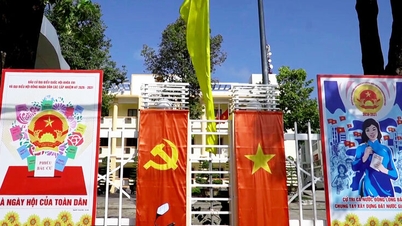
![[Photo] Ho Chi Minh City decorated with flags and flowers ahead of election day.](https://vphoto.vietnam.vn/thumb/1200x675/vietnam/resource/IMAGE/2026/03/13/1773392076518_anh-man-hinh-2026-03-13-luc-15-53-29.png)
































































Comment (0)