 |
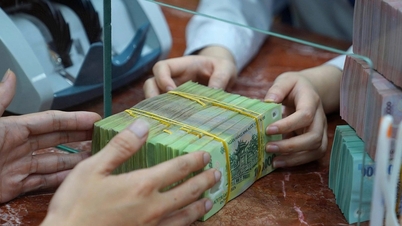
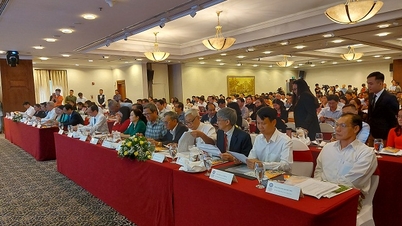
| According to experts, a thorough analysis of the company's "health" is necessary to find appropriate solutions. (Source: Investment Newspaper) |
A thorough analysis of the company's "health"
In preparation for the sixth session of the National Assembly in October, the National Assembly's Economic Committee recently reviewed the implementation of the 2023 Socio-Economic Development Plan and the projected plan for 2024.
In his report on this matter, Deputy Minister of Planning and Investment Do Thanh Trung summarized that the socio-economic situation in 2023 continued its positive recovery trend, with each month better than the previous one, each quarter better than the previous one, achieving the overall goals set and many important results in various fields.
“Based on the results of the first eight months, it is estimated that at least 10 out of 15 targets for the whole year of 2023 will be met or exceeded,” Deputy Minister Do Thanh Trung said. Regarding the GDP target, the report indicates that the goal is to “strive for the highest possible level”; the Consumer Price Index (CPI) is expected to exceed the target, estimated at 3.5%/4.5%.
One of the key results highlighted in the Ministry of Planning and Investment's comprehensive report is the continued active development of the business sector, promoting linkages, joint ventures, digital transformation, enhancing competitiveness, and deeper participation in domestic and regional value chains.
In August 2023, over 14,000 new businesses were registered, representing a 2.3% increase in the number of businesses and a 6.6% increase in registered capital compared to July 2023 (a 17.9% increase in the number of businesses and a 3.9% increase in capital compared to the same period in 2022). Overall, in the first eight months of the year, 149,400 businesses entered the market, 103,700 were newly registered, and 45,700 resumed operations.
These figures did not reassure the delegates attending the review session of the National Assembly's Economic Committee.
According to Mr. Dau Anh Tuan, Deputy Secretary General of the Vietnam Chamber of Commerce and Industry (VCCI), one of the worrying signs is the high rate of businesses leaving the market and the decrease in the rate of new business establishment, even though 2023 should have been a crucial period for a significant increase in new business establishment.
Reiterating the important goal of having 1 million businesses in the private sector by 2020 and 1.5 million by 2025, Mr. Tuan stated that, given the current pace of new business establishment, such a large and important goal will be very difficult to achieve. This also signals that employment and budget constraints will be challenging in the near future.
Arguing that a thorough analysis of the "health" of businesses is needed to find solutions to improve this indicator, Mr. Dinh Ngoc Minh, a member of the National Assembly's Economic Committee, impatiently raised the issue: "The report only states how many businesses were established this year. Expert Tran Dinh Thien said at the Vietnam Economic and Social Forum 2023 that our businesses are very hardworking and resilient, but they can't grow big. Is it due to policy or something else that they can't grow?"



According to Mr. Minh, businesses are established with readily available capital, which is then gradually spent, leading to bank loans and ultimately accumulating massive debts. "We need a report on how many businesses are indebted to banks and how many are not. From there, we can develop long-term policies for businesses," Mr. Minh suggested.
"In one month, 16,500 businesses withdrew from the market, and newly established businesses also faced difficulties. Those that withdrew were the strong ones; the newly established ones contribute only a limited amount to the market," commented Mr. Vu Hong Thanh, Chairman of the National Assembly's Economic Committee.
The policy is leaving businesses in a difficult situation.
Speaking from an agency that regularly receives information about the difficulties faced by businesses, Deputy Secretary General of VCCI, Dau Anh Tuan, said that 2023 saw several issues that significantly impacted the business community. "Never before has the impact been so great," Mr. Tuan emphasized.
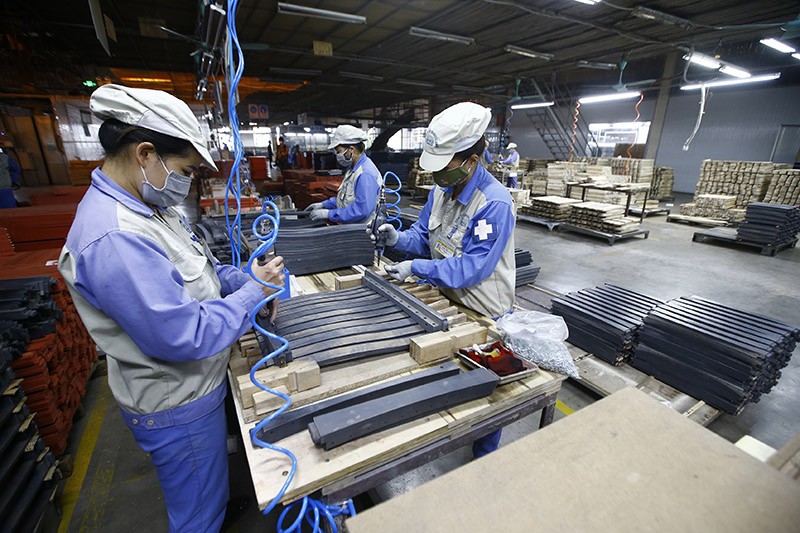
Typically, delays in value-added tax (VAT) refunds have a huge impact on businesses, especially those in export industries such as wood, rubber, and electronics.
“Some large-scale businesses like Lioa, which export to hundreds of markets, have now stated that they have completely stopped all export activities, and thousands of workers have been laid off. This is a tax refund issue. Of course, there are differences in perspective between the tax authorities and businesses, but it is clear that the consequences of this policy for domestic businesses with good brands like Lioa are unprecedented,” Mr. Tuan cited as an example.
The next example Mr. Tuan mentioned was Decree No. 132/2020/ND-CP regulating tax management for enterprises with related-party transactions, aiming to combat transfer pricing, but in reality regulating many domestic enterprises.
“Since the end of 2020, interest rates have been very high. When interest rates are high, borrowing costs increase significantly. Currently, many businesses are in a dire situation, facing extremely difficult business conditions, but borrowing costs and loan-to-equity ratios have increased due to the adjustments of Decree 132, resulting in additional taxes. Many businesses report extreme difficulties, but there has been no assessment, research, or review of this issue yet,” Mr. Tuan reflected.
"The State Bank of Vietnam has reduced interest rates four times, but has it effectively addressed the difficulties faced by businesses? Currently, disbursement procedures remain cumbersome for businesses, and additional fees (such as insurance fees) are required when businesses want to borrow," observed Mr. Nguyen Hai Nam, Standing Member of the National Assembly's Economic Committee.
Representative Nam analyzed that businesses currently have three sources of investment capital: fiscal policy, monetary policy, and foreign investment. Regarding fiscal policy, public investment disbursement reached over 42% in the first eight months, meaning that disbursement must be tripled in the last four months to meet the year's disbursement target. Monetary policy and credit growth in the first eight months was only 5.5%, while the target was 14.5%, indicating that credit growth is also a challenge. Meanwhile, non-performing loans on the balance sheet increased by 3.56%, significantly higher than the target of below 3%, putting pressure on capital costs, meaning commercial banks have to make additional provisions.
"The government needs to conduct a more thorough analysis of the financial situation in order to find solutions," Mr. Nam stated.



Responding to this issue, Deputy Governor of the State Bank of Vietnam Pham Thanh Ha affirmed that the State Bank has made every effort to provide credit to the economy and lower interest rates, but the difficulty lies in the economy's absorption capacity when aggregate demand is weak and businesses are facing health problems. Therefore, more comprehensive solutions are needed to boost orders, expand markets, and increase the guarantee mechanism for small and medium-sized enterprises when their financial and business plans do not meet the requirements of banks.
Regarding VAT refunds, in the case of Lioa, Deputy Minister of Finance Vo Thanh Hung stated that the company operates on a relatively large scale. Since 2019, Lioa's revenue has exceeded 8,500 billion VND, but its contribution to the state budget is very low, below 0.1% (0.089%) of revenue, meaning it falls under the risk category and requires investigation.
Mr. Hung added that from 2019 to the present, the tax refund agency has processed tax refunds 31 times. In the 32nd and 33rd refund periods, businesses requested a tax refund of 60 billion VND, of which 10 billion VND was processed for cases with sufficient invoices and documents.
Regarding the remaining 50 billion VND, verification in Dong Nai and Hung Yen provinces revealed that many businesses and factories supplying raw materials to Lioa are "phantom businesses".
"We have referred this matter to the investigative agency for verification. The tax authorities are fully performing their functions, and if all the necessary documents are available, they will refund the business according to regulations," Mr. Hung affirmed.
Source



![[Photo] Strengthening character and expertise: Intense training for artillery soldiers.](https://vphoto.vietnam.vn/thumb/1200x675/vietnam/resource/IMAGE/2026/06/30/1782815602541_lu-368-1875-4571-jpg.webp)