Developing a new development mindset.
In this approach, the environment, climate, oceans, and biodiversity are no longer marginalized in the development process, but are placed at the heart of development strategy, national security, social equity, and ethical development. This represents a significant shift in thinking.
For many years, the prevailing approach to environmental protection has focused on addressing emerging issues such as pollution, waste, environmental degradation, or reforestation and post-impact restoration. These actions are still necessary, but if we stop there, the environment will continue to be viewed as a "secondary" aspect of development: development first, consequences later.
The concept of "ecological civilization" opens up a broader vision. Accordingly, development must be designed from the outset within ecological limits; nature must be considered the foundation of life, economy , health, security, and the future of generations to come.
Ecological civilization, simply put, is a level of development in which humans no longer view nature merely as a resource to be exploited, nor as a receptacle for the waste products of growth. In ecological civilization, forests, rivers, seas, wetlands, biodiversity, a stable climate, and a healthy living environment are considered fundamental conditions for development.
Therefore, ecological civilization demands a new measure of development. An economy may achieve impressive short-term results, but if the ecological foundation is eroded, and the costs of disaster relief, healthcare , pollution, and livelihood loss increase, then it cannot be a sustainable development model.
The article by the General Secretary and President also emphasized that environmental protection must be recognized as a core component of national security and human security. This approach needs to be more strongly concretized in policy planning. In the 21st century, national security is not just about borders, defense, energy, or food. National security also includes ecological security, water security, climate security, maritime security, public health security, and the resilience of communities to natural disasters, epidemics, and environmental crises.



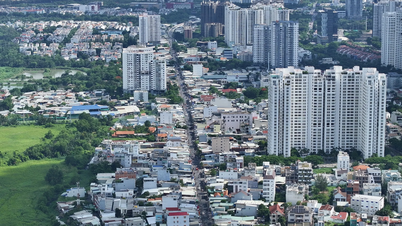
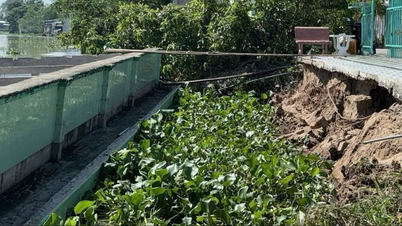
These risks are no longer distant warnings. According to a report by the Ministry of Agriculture and Environment, in 2025, natural disasters caused 484 deaths and disappearances, 811 injuries, and total estimated damage exceeding 104,733 billion VND. These figures don't just reflect extreme weather. They reflect the vulnerability of the current development system, with declining headwater forests, shrinking flood drainage corridors, rapid urbanization, low-lying areas lacking water storage space, and coastal communities losing natural shields such as mangrove forests and tidal flats.
From that perspective, investing in nature is investing in the future. If roads, seaports, airports, power grids, and industrial zones are economic infrastructure, then headwater forests, mangrove forests, wetlands, rivers, lakes, coral reefs, seagrass beds, and ecological corridors are also strategic national infrastructure. These are not only spaces with scenic or spiritual value, but also have essential functions: water retention, flood reduction, wave protection, erosion control, carbon sequestration, maintaining fisheries resources, soil protection, local climate regulation, and supporting the livelihoods of millions of people. Therefore, restoring natural ecosystems and building climate adaptation capacity should be considered contributing to the construction of the nation's strategic infrastructure.
Enforcement is the measure of ecological civilization.
The reality is that the biggest gap today lies not in a lack of policy, but in the capacity for implementation. Vietnam already has comprehensive laws, strategies, and international commitments on environmental protection, biodiversity, and climate change adaptation.
The question is whether green principles are actually incorporated into specific development decisions? Does planning prioritize ecological limits? Are environmental impact assessments sufficiently independent and effective in mitigating long-term risks? Is the budget for nature conservation commensurate with the role of ecosystems? Do polluters actually pay the costs? Do nature protectors, especially local communities, receive the deserved benefits?
Ecological civilization, therefore, must be measured by its implementation capacity. It's not just about green slogans, but also about how budgets are allocated, how projects are approved, how forest land conversion is controlled, how river basins are managed, how the sea is protected, how wetlands are restored, how environmental data is made public, and how accountability is addressed when degradation occurs.
This is also the foundation for turning ecological civilization into reality. A national data system on forests, biodiversity, water resources, emissions, air quality, waste, marine resources, erosion, saltwater intrusion, and corporate environmental compliance needs to be built in a transparent, interconnected, and verifiable manner. Satellite technology, environmental sensors, artificial intelligence, digital maps, and citizen feedback platforms can help enhance monitoring. But technology is only meaningful when accompanied by accountability, sufficiently strong sanctions, and genuine participation from the community, the press, scientists, and social organizations.
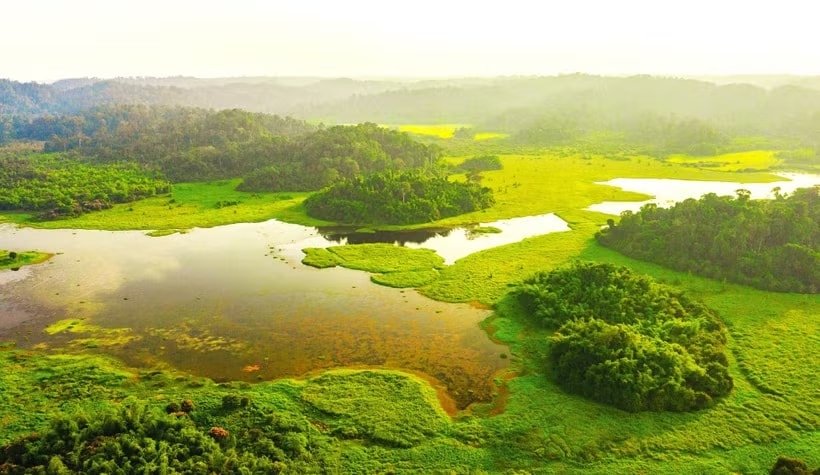
A green Vietnam is not just about having more trees. It must be a Vietnam that knows how to preserve natural forests, restore rivers, protect islands and seas, return space to wetlands, reduce pollution, protect biodiversity, control emissions, and ensure the right to a safe life for its people. An ecological civilization will not be measured by the number of green messages, but by whether rivers are cleaner, natural forests are better protected, the seas have less waste and are recovering their resources, cities are more resilient to floods, and future generations will inherit a sufficiently healthy natural foundation to continue developing.



The article by the country's top leader on World Environment Day can therefore be seen as a declaration that development in the new era must be development that respects ecological limits. When nature is placed at the center of national governance, environmental protection is no longer a peripheral task, but becomes a condition for prosperity, security, and national survival.
Our responsibility today is not only to make the country greener in the present, but also to leave behind for the next 100 years a Vietnam that still has forests, rivers, seas, wildlife, and the capacity to nurture a sustainable future.
Source: https://daibieunhandan.vn/van-minh-sinh-thai-va-thuoc-do-moi-cua-phat-trien-10419513.html