

The project proposal is required to adhere closely to Conclusion No. 49-KL/TW on the orientation for the development of Vietnam's railway transport system until 2030, with a vision to 2045. The government aims to complete the approval of the investment policy for the high-speed railway project on the North-South axis by 2025.
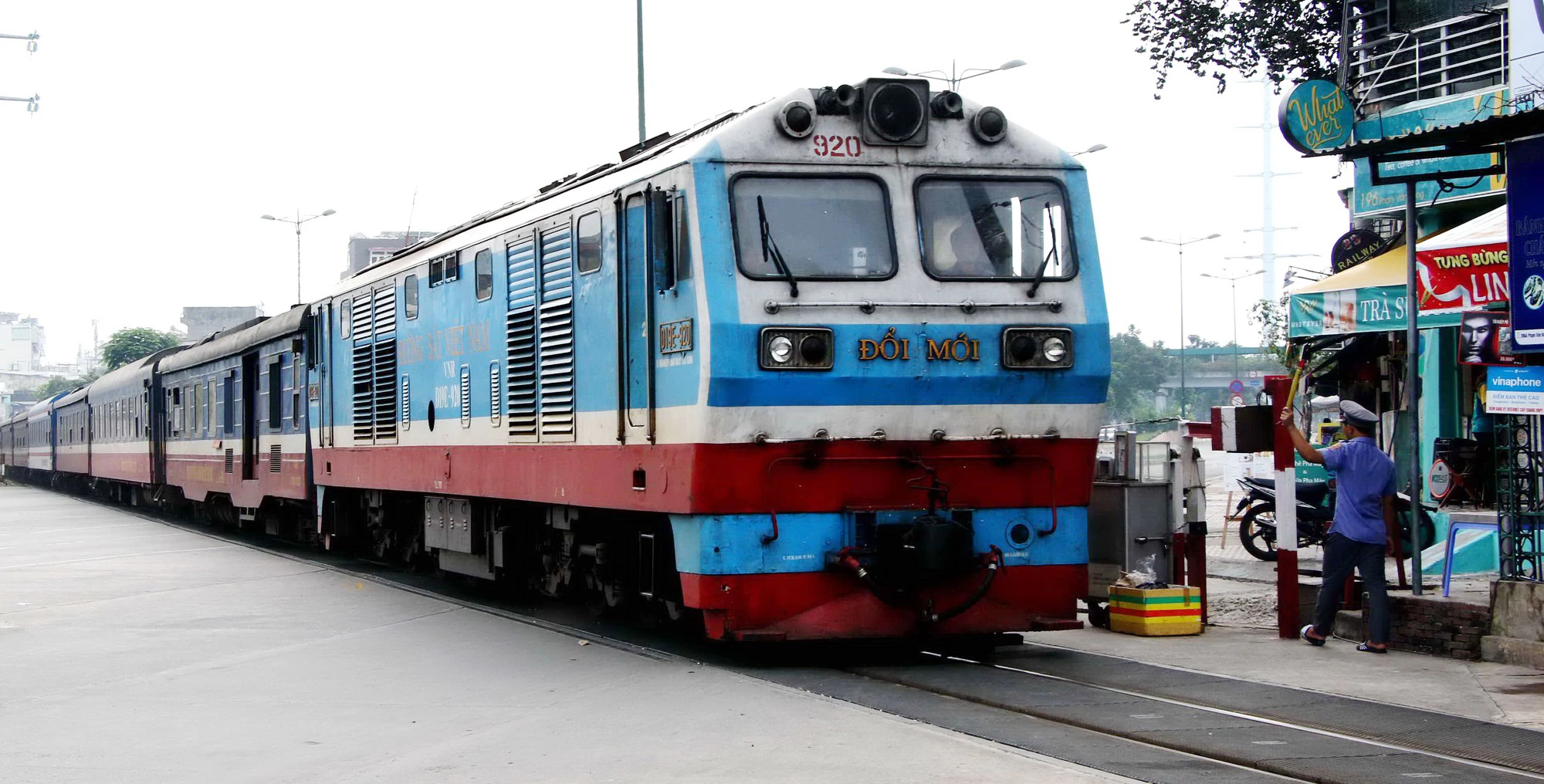
The Ministry of Transport has just submitted to the Standing Committee of the Government a proposal on the policy of building a high-speed railway on the North-South axis.
Add a scenario for the 350 km/h option.
Unlike previous draft proposals which focused on two options: trains running at 350 km/h for passenger transport only, or 250 km/h for both freight and passenger transport, this latest proposal from the Ministry of Transport is seeking opinions on three scenarios.
Specifically, Scenario 1 involves investing in the construction of a new double-track, 1,435 mm gauge, 1,545 km long North-South high-speed railway with a design speed of 350 km/hour and a load capacity of 17 tons per axle, operating only passenger trains. The existing North-South railway line would be upgraded to transport freight, tourists , and short-distance passengers. The total investment is approximately US$67.32 billion.
The consulting firm assessed the advantages of this scenario as lower land acquisition and investment costs compared to the other two options. However, it is not feasible to increase capacity if freight transport demand on the existing railway line becomes overloaded.
In Scenario 2, the North-South railway line will be newly constructed with a double track, 1,435 mm gauge, a load capacity of 22.5 tons per axle, and will accommodate both passenger and freight trains. The design speed will be 200-250 km/hour, with freight trains running at a maximum speed of 120 km/hour. The existing North-South railway line will also be modernized to specialize in freight, tourist passenger transport, and short-distance passenger transport. The total investment under this scenario is approximately 72.2 billion USD. The advantage is the ability to transport both passengers and goods on the same route, facilitating convenient international intermodal connections. However, the disadvantage is the low traffic speed.
Priority will be given to the Hanoi - Vinh and Ho Chi Minh City - Nha Trang sections.
Regarding specific targets, the Politburo has determined that by 2025, the goal is to complete the approval of the investment policy for the North-South high-speed railway project; and to commence construction on priority sections during the 2026-2030 period.
(Hanoi - Vinh, Ho Chi Minh City - Nha Trang), striving to complete the entire line before 2045. The Ministry of Transport has also organized a working group to learn from the experiences of several countries with developed high-speed rail systems such as Europe and China to update and supplement the pre-feasibility study report of the project and to have a complete and objective scientific basis.
Scenario 3 involves investing in a double-track North-South railway line with a 1,435 mm gauge, a load capacity of 22.5 tons per axle, and a design speed of 350 km/hour, operating passenger trains and providing a reserve for freight transport when needed. The total investment for the project is $68.98 billion. If infrastructure, equipment, and vehicles are also invested in to operate freight trains on this line, the project investment would be approximately $71.69 billion.
Under this scenario, the North-South railway will be completely rebuilt with 60% bridges, 10% tunnels, and 30% on unpaved ground. In addition, 74 distributed-drive trains with 1,184 carriages will need to be purchased, providing a train capacity of 175 pairs of trains per day (150 pairs of high-speed trains and 25 pairs of existing trains), transporting approximately 133.5 million passengers and 20 million tons of goods annually.
The consulting firm assessed the advantages of scenario 3 as follows: passenger-only trains offer high speed, comfort, safety, and competitiveness with other modes of transport. This option also allows the new railway line to transport freight in case the existing North-South railway line is overloaded. However, the disadvantages include high investment costs and a large speed difference between passenger and freight trains, which reduces throughput capacity.
Is 200 km/h a reasonable speed?
While maintaining the view that high-speed rail is most effective when operating at speeds of 200-250 km/hour, Associate Professor Dr. Ha Ngoc Truong, Vice Chairman of the Ho Chi Minh City Bridge, Road and Port Association, affirmed that investing in the North-South high-speed rail system according to scenario 2 is the most suitable for Vietnam's economic conditions, scientific and technical capabilities, and practical needs.
After a 21-day on-site inspection of Japan's Shinkansen high-speed rail system in 2019, Dr. Truong assessed that investing in a 350 km/hour high-speed rail line has several drawbacks: Firstly, the cost of maintaining and servicing this rail system is particularly expensive, accounting for approximately 5-10% of the construction cost. Shinkansen is also struggling to cope with losses due to these expenses.
With total investment for options 1 and 3 ranging from 67 to 72 billion USD according to the Ministry of Transport's plan, Vietnam's high-speed rail system will "consume" approximately 6 billion USD annually for maintenance. This doesn't even account for the impact of climate change, topography, and weather, which significantly affect the North-South railway system, especially the section through Central Vietnam, making maintenance even more costly. This level of expenditure, compared to Vietnam's economic situation in the next 50-80 years, remains completely unsuitable.
Secondly, the total investment figure proposed by the Ministry of Transport only covers infrastructure construction. If we include investment in vehicles, maintenance costs, operating personnel, and upkeep, the total could reach $100 billion, which is not commensurate with the current national financial capacity.
Thirdly, if the Ministry of Transport considers a new high-speed railway project solely for passenger transport, while upgrading the existing railway system for freight, this option is not feasible. The existing 1-meter gauge railway runs too slowly, has weak logistics connections with ports and roads, and suffers from poor management, making collisions and accidents highly likely. It cannot be used solely for freight transport. Investing in a mixed-use system for both passenger and freight transport, as in scenario 3, would require enormous costs, exceeding Vietnam's financial capacity.
"Furthermore, Vietnam is finalizing the planning for the North-South railway network, connecting with the Ho Chi Minh City - Can Tho railway line, which has already received investment approval. The line will have train speeds of 200-250 km/hour, carrying both passengers and goods. Therefore, the train speeds across the entire North-South route need to be standardized to ensure suitability," Associate Professor Dr. Ha Ngoc Truong noted.
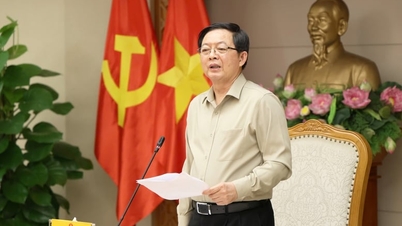
Agreeing with the view that scenario 2 should be chosen, Mr. Hoang Minh Hieu, Standing Member of the National Assembly's Law Committee and National Assembly representative from Nghe An province, analyzed: Many studies show that a 350 km/hour high-speed railway is only highly effective for distances of about 500 km because below that distance, people will choose to travel by car, and for longer distances, air travel is preferred. Furthermore, choosing 350 km/hour train technology would mean complete dependence on foreign technology. Therefore, at present, if building the North-South railway, the 250 km/hour option should be chosen. However, it should be noted that investing in a 250 km/hour railway must also be accompanied by the goal of mastering railway technology to achieve high efficiency in public investment.
Economically, Mr. Hoang Minh Hieu believes that building a railway system that combines freight transport would be suitable for the current logistics needs of the economy, helping to alleviate the burden on the road transport system. He suggests further consideration of the economic efficiency of the high-speed railway between Vientiane (Laos) and Kunming (China). Just one year after its launch (as of December 2022), this railway line transported 2 million tons of goods worth 10 billion yuan (nearly 1.5 billion USD) and nearly 1 million passengers, giving Laos the opportunity to become a "super" land-based trade hub.
Regarding concerns that high-speed rail operating at 200-250 km/h will face fierce competition from low-cost airlines and expressways, reducing operational efficiency, Mr. Hoang Minh Hieu commented: The trend of increasing airfares may only be temporary. Looking back at the long-term trends in other countries, for distances of around 1,700 km between Hanoi and Ho Chi Minh City, air travel is generally more popular, so we cannot expect rail transport to compete with air travel. Meanwhile, until we complete the North-South expressway with a maximum speed of 120 km/h, road transport will still have many limitations compared to rail transport with speeds of 200 km/h.
We must carefully examine the needs and lessons learned around the world.
From a technical standpoint, Associate Professor Dr. Tran Chung, Chairman of the Association of Investors and Transport Project Managers, supports the plan to build a high-speed railway line using the most modern technology to achieve train speeds exceeding 300 km/hour. This is because high-speed railway technology exceeding 300 km/hour is advanced, requiring specialized and complex technical expertise. If a railway system with speeds of only 200-250 km/hour is built, upgrading to over 300 km/hour later would require starting from scratch, resulting in significantly higher costs.
If train speeds are only 200 km/hour, many people will choose to travel by road. This would put the railway at a disadvantage compared to air travel, and it would also have to compete with road transport, making it difficult to ensure efficient operation. Furthermore, while Vietnam cannot yet master 350 km/hour high-speed rail technology, we must approach it, starting with purchasing core technology and gradually mastering it. We must strive and prepare now, both in terms of material and human resources, and have clear policies to move towards mastering high-speed rail technology exceeding 300 km/hour in the future.
However, Mr. Tran Chung also noted that the Ministry of Transport needs to carefully analyze scenario 3 based on two factors: scientific basis and practical lessons from around the world. Specifically, regarding the scientific basis, the first step is to calculate demand. Who will the high-speed railway serve, and what will it serve? Given Vietnam's long, longitudinal topography, is the volume of goods transported from Ho Chi Minh City to Hanoi at such a high speed truly substantial? Only after assessing demand can technical requirements be considered, because building a high-speed railway capable of carrying freight requires increased axle load, calculations of track dimensions, train sizes, tunnel and bridge construction, etc., significantly increasing the total investment cost. Not to mention, freight transport also requires enhanced scheduling and management, the construction of additional freight stations along the route, and connecting lines to the stations…
According to this expert's survey, many places around the world have invested in high-speed rail lines running at 300-350 km/hour, such as Japan, China, Taiwan, South Korea, and Indonesia, which only carry passengers and do not combine passenger and freight transport. The high-speed rail line being planned for investment in India also chooses this approach. Only one country uses mixed-use trains: Germany, operating trains at 250 km/hour.
The Ministry of Construction proposes choosing scenario 3.
In a previous submission, Minister of Construction Nguyen Thanh Nghi - a member of the steering committee for the project - agreed to choose scenario 3, arguing that to ensure international intermodal transport requirements in future operation, the Ministry of Transport needs to study upgrading and modernizing the existing North-South railway line by replacing the entire current 1,000 mm gauge with a standard 1,435 mm gauge.
Railway investments are costly and have long payback periods, making it very challenging to attract private investment. However, policies could be implemented to encourage large enterprises and corporations to participate in certain stages of the railway industry, aiming to master railway technology such as tracks and carriages.
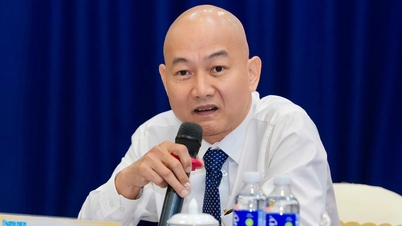
Mr. Hoang Minh Hieu (Standing Member of the National Assembly's Law Committee, National Assembly representative from Nghe An province)
Source link























































































Comment (0)