

At that time, in the kitchens of Hue, the spirit of Tet (Lunar New Year) was blossoming with the fragrance and color of countless Tet dishes, contributing to a more meaningful Tet celebration in the ancient capital. Vegetables and fruits; seafood from rivers, lakes, and the open sea; fresh cuts of meat from livestock and poultry from gardens and farms… All these fresh, vibrant ingredients were being prepared for a competition called: making Tet dishes. And participating, of course, were mostly Hue women, with their skillful hands having passed down and adopted culinary art techniques through generations.
***
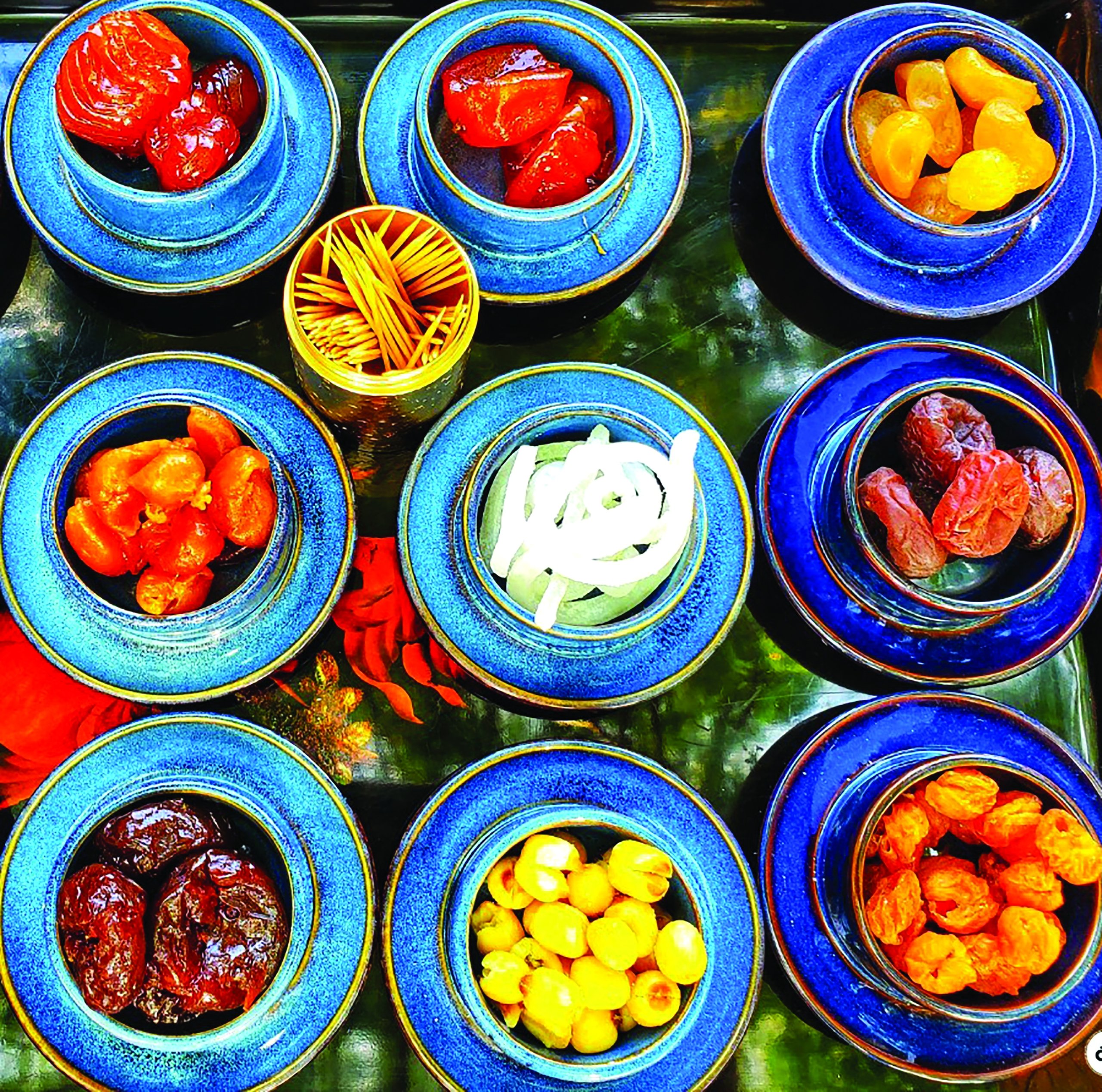
During Tet (Vietnamese New Year), everyday dishes like clam rice, various types of banh beo, banh nam, banh loc, banh canh, etc., temporarily cease their street vending. This is when dishes that create the unique flavor of Hue Tet appear: fruits and vegetables are sweetened in various jams; sticky rice is molded into long, slender banh tet and square banh chung; dried vegetables and humble pickled shallots are used to make the legendary pickled vegetables; and pork and beef are fermented in nem and tre... reminding us of a rich history of Vietnamese culture intertwined with Cham culture.
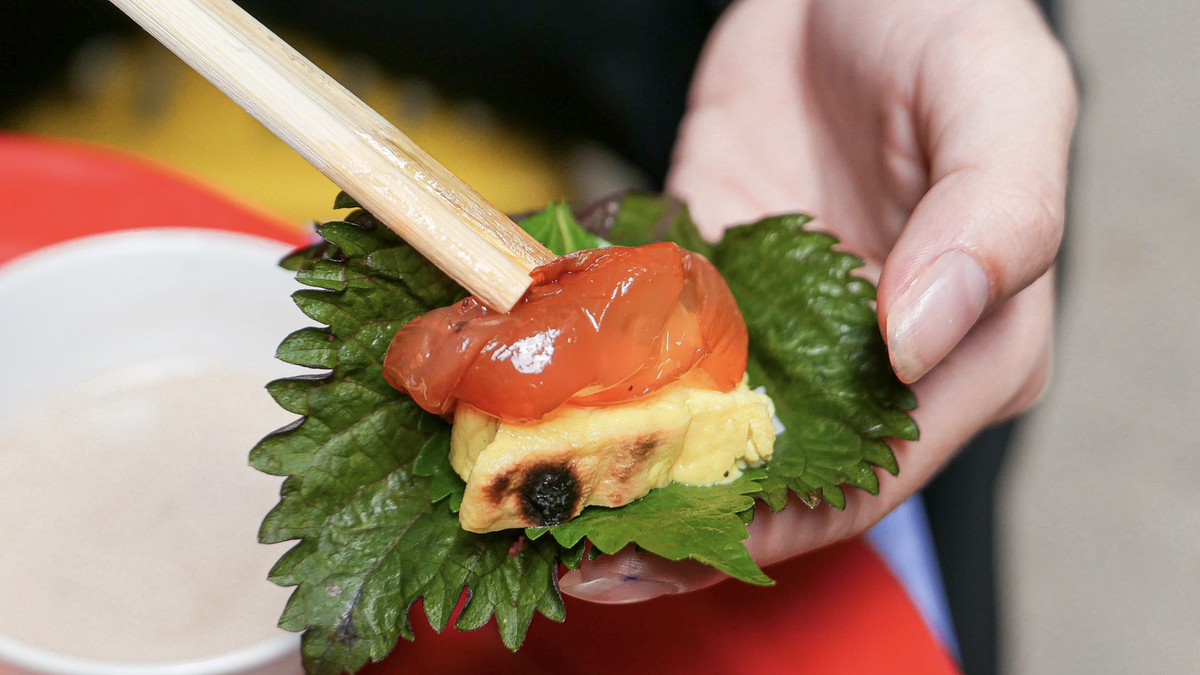
The Hue New Year's feast remains as magnificent as ever, featuring both traditional folk dishes and many preserved royal delicacies. For example, the "phoenix-shaped" sausage is still made by many today, thought to be difficult to make, but surprisingly, with a little skill in wrapping the omelet, minced meat, and seaweed, it takes shape and appearance. This year, the Year of the Dragon, the feast will surely include a "dragon-shaped" dish.
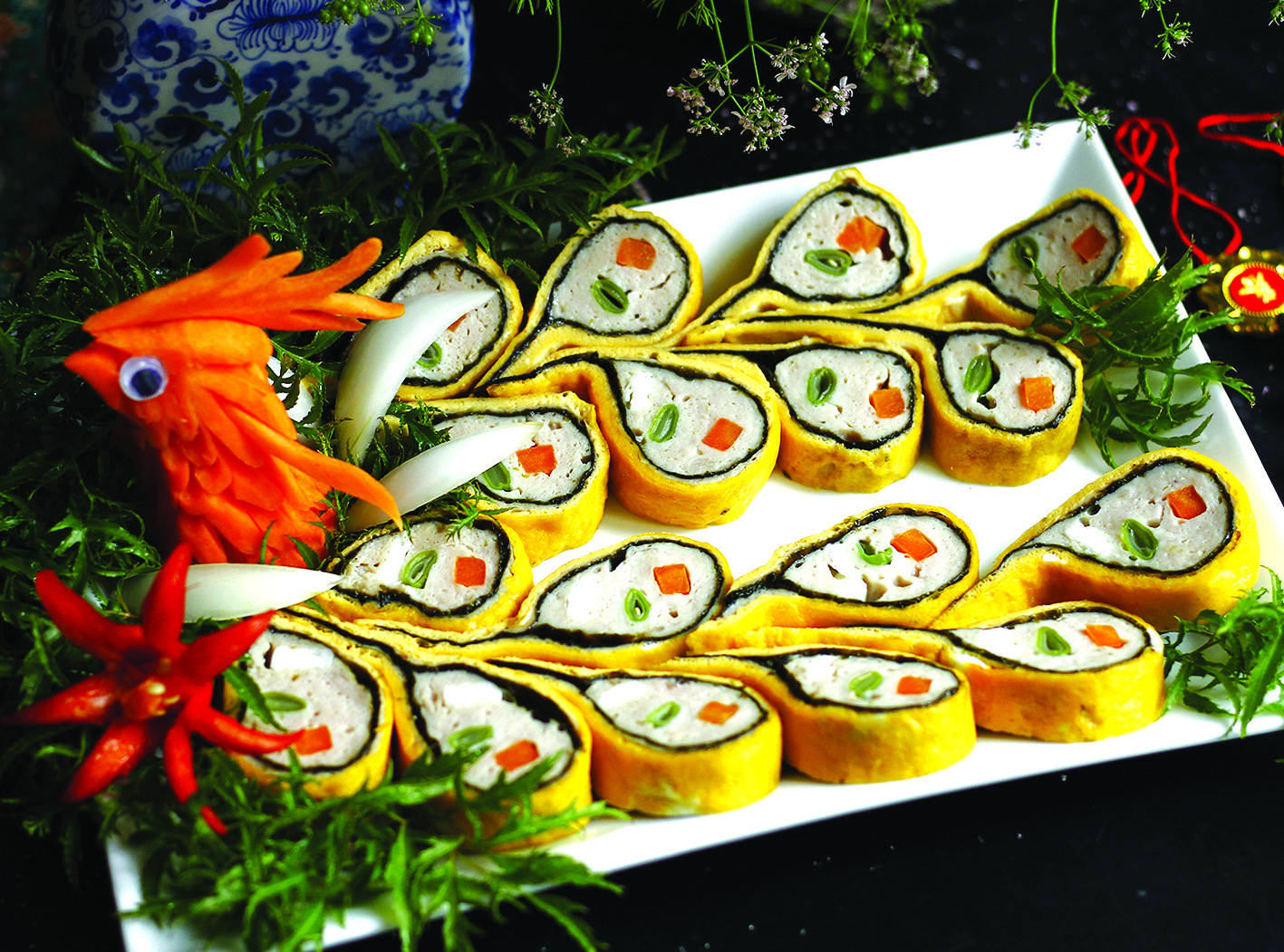
The phoenix-shaped meatball dish only requires a little skillful hands to achieve its desired shape and appearance.
In Hue, people eat with their eyes, so even the Tet feast must be as beautiful as the golden apricot blossoms in front of the house. The Tet feast must be as beautiful as a flower arrangement. The plate of raw vegetables is surrounded by a ring of pristine white unripe banana seeds, inside are crescent-shaped slices of ivory-colored fig, further inside are starfruit cut into green stars, topped with a playful handful of fresh mint and garnished with long, bright red chili slices.
The most famous Hue New Year's treat, found in every household, is Kim Long ginger jam. Some say Kim Long ginger jam is delicious and spicy because the beautiful and talented, yet jealous, women of Kim Long are the reason behind its creation. That story makes perfect sense. After all, ginger and chili peppers are spicy, and beautiful women are prone to jealousy. Especially when it comes to women from the renowned Kim Long region, known for its "beautiful women"...
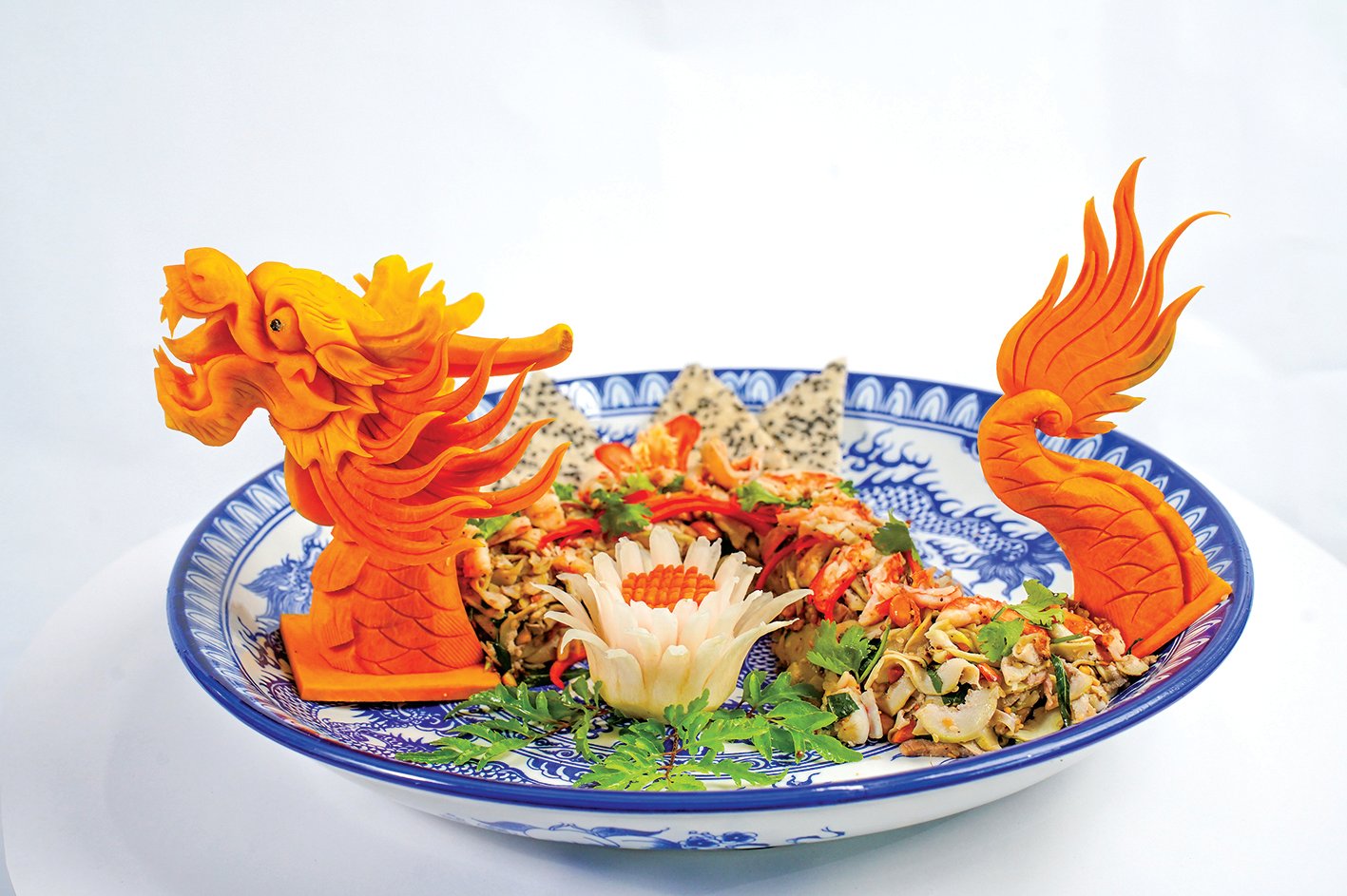
Mixed salad shaped like a dragon. Photo: LE DINH HOANG
Last year, just before Tet (Lunar New Year), when the city had just expanded from the source of the Perfume River to Ngã Ba Sình, Hue organized a gathering of dozens of stalls from the traditional craft villages of Hue's 36 streets. The Tet food of Hue at that time was a culinary "parade," bringing together famous Hue delicacies such as: Thuan Thanh fried rice cakes, Kim Long ginger jam, Minh Mang wine, Thien Huong sesame candy, Thuan Hoa sticky rice cakes, Phu Binh fermented pork sausage, Perfume River sour shrimp, and even fish sauce from the distant coastal region of Phu Thuong…
Oh, the Tet dishes of Hue! I can't forget the jars of pickled mustard greens and pickled onions from Thanh Trung vegetable village, in the ancient Hoa Chau citadel…
***
Hue people are very democratic in their culinary enjoyment, so food not only satisfies the senses of taste and hearing but also pays close attention to sight. Hue has elevated the art of culinary color coordination to a supreme level with its own five-color system: red - purple - yellow - green - blue. This five-color system inherits the traditional Vietnamese five colors mixed with Champa colors, influencing not only the presentation of Hue's meals but also the dishes served during the spring festival, imbued with a color palette that, as writer Hoang Phu Ngoc Tuong said, "is both dazzling and pleasing to the eye." Therefore, it's not surprising that Hue's Tet offerings often include elaborate dishes: five-colored sticky rice, five-colored porridge, five-colored vermicelli, and even five-colored banh it (rice cakes)...
Besides cooked dishes, dry pastries are often decorated with colorful wrapping paper. First is the printed cake, which the people of Hue used to call "banh co," made from mung beans mixed with sugar and molded into cakes, wrapped in five-colored cellophane paper, printed with the characters for longevity, double happiness, or lotus flowers... In the past, printed cakes were also offered to the king, and some families have preserved this tradition for nearly half a century. During Tet (Lunar New Year), the colorful cake for children is "banh phuc linh," a derivative of printed cakes, made from mung beans rolled into balls and wrapped in five-colored cellophane paper, twisted at both ends with tassels. In the past, children liked to keep these cakes in their pockets, implicitly symbolizing their wishes for a new year of academic success, prosperity, and peace.
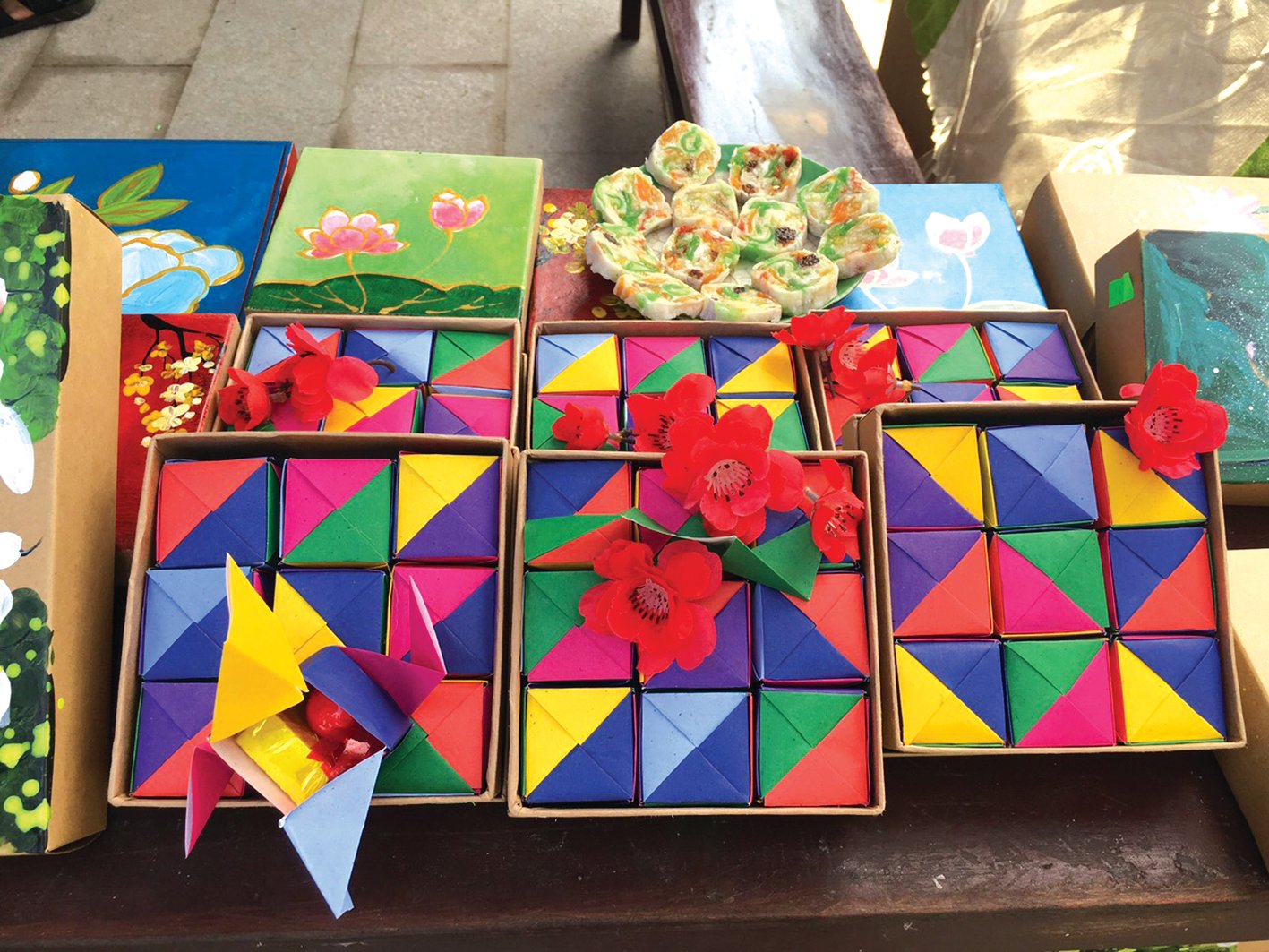
The French-style cakes from Thanh Tien village are distinguished by their colorful wrapping paper.
There is a woman from Hue, Pham Thi Dieu Huyen, who lives near Tinh Tam Lake and has recently started a business by reviving the traditional cloisonné cake. It's still a type of printed cake, but it's packaged and arranged in a unique box. The highlight of this box is the outer wrapping paper, which uses five-colored paper from Thanh Tien village, inspired by the five basic colors of cloisonné art.
In recent years, Tet dishes have become increasingly beautiful, with the five-color enamelware of Hue being widely used. The printed cakes in Dong Ba Market are arranged beautifully like impressionistic paintings, in a full spectrum of green, red, purple, and yellow. Hue dishes also incorporate new technologies, making them more beautiful and convenient.
The same Tịnh Tâm lotus tea is packaged by artisans in Tây Lộc ward in a box representing the four seasons – spring, summer, autumn, and winter – as a way to introduce it to tourists who will visit Huế during the Four Seasons Festival. Similarly, the women in Thủy Biều ward package over a dozen products from green tea for spring: jam, wine, essential oils, and even green tea shampoo for women… The wooden lanterns used for Tet rituals in Hương Hồ ward are made from non-toxic butter and hand-blown light bulbs. Hue sesame candy is cut into smaller pieces by artisans and uniquely packaged in boxes printed with paintings from Sình village, depicting martial arts during spring, tug-of-war during Tet, pigs, and chickens…
It is said that every 300 years, the landscape changes dramatically. Yet, from the time of their settlement on the banks of the Perfume River around 1306 until now, Hue cuisine has never lost its unique flavor and color, befitting the imperial capital…
Source







![[Photo] Prime Minister Pham Minh Chinh receives the Chinese Ambassador to Vietnam](https://vphoto.vietnam.vn/thumb/1200x675/vietnam/resource/IMAGE/2026/04/05/1775397481797_ndo_br_dsc-5512-jpg.webp)




































Comment (0)