

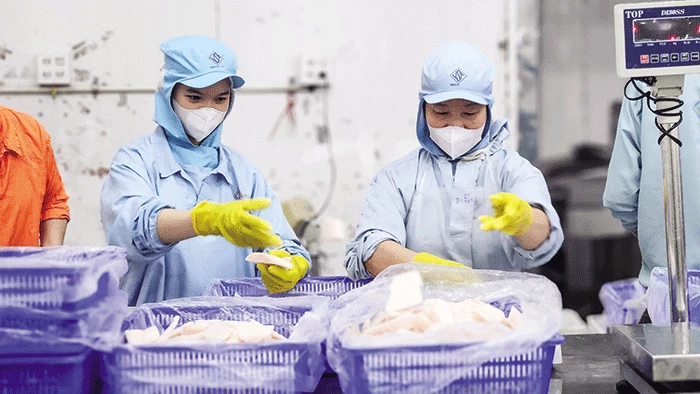
Southern Aquatic Products Industry Co., Ltd. Photo: MY THANH
New space, new resources
July 1st, 2025, will go down in history for the "brotherly" Can Tho, Hau Giang, and Soc Trang, which, after decades of separation, have finally come together as one. The new Can Tho city, with an area of over 6,300 km² and a population of over 4 million, is opening up new development opportunities, connecting the Long Xuyen Quadrangle, the Western Hau River sub-region bordering the Ca Mau peninsula, and encompassing the islands along the Hau River extending to the East Sea.
Can Tho City boasts a multimodal transportation infrastructure connecting to Can Tho International Airport, major arterial roads, cross roads, bridges over rivers, National Highway 1, the North-South Expressway, My Thuan - Can Tho Expressway, Can Tho - Hau Giang - Ca Mau Expressway, Chau Doc - Can Tho - Soc Trang Expressway, vital waterways, and major shipping lanes via the Quan Chanh Bo Canal and the Dinh An - Can Tho shipping lane. The new Can Tho City not only has the largest seaport cluster in the region but also the future Tran De - Soc Trang international mega-port, with a capacity of 55 million tons per year, capable of accommodating large ships of 50,000 DWT to the East Sea, forming a "transport triangle" of rail - road - waterway. This centrally-governed city needs the central government's attention to accelerate investment for this new phase.
Reducing administrative fragmentation means expanding development space and strengthening intra-regional and inter-regional linkages. The new Can Tho City, formed from the "trio" of Can Tho - Soc Trang - Hau Giang, is now linked together to play a pivotal role in the delta region. From three previously somewhat disjointed pieces, this new center of the delta is expected to create new space and new resources for regional and national development.
The merger of provinces is welcome news for both citizens and businesses. Land procedures, business registration, and planning adjustment permits will certainly see significant reforms, shifting from manual to digital administration, shortening the one-stop service time from 15 days to 7 days. Approximately 25-30% of departments and offices will be streamlined, saving tens of thousands of billions of dong in budget each year, which will be reinvested in healthcare, education , and digital infrastructure.
The new city is also expected to create a diverse economic and cultural ecosystem, drawing from the rich identity of the three ethnic groups—Kinh, Hoa, and Khmer—who have coexisted for generations in the Mekong Delta. The added value from this new development space also comes from intangible resources: the confidence of businesses in the investment environment and the confidence of the people in the government's service capabilities. When confidence increases, informal costs decrease, and capital will flow to new "coordinates" on the open map.
The indigenous cultural values, from the intangible heritage of Cai Rang floating market, the garden civilization, traditional folk music, and festivals rich in the ethnic identities of the Kinh, Hoa, and Khmer people – from the architecture of temples in Soc Trang to the Ok Om Bok festival – are valuable tourism resources for building unique tourism products and creating a tourism route that connects the two banks of river civilization. Agricultural experiential tourism, green tourism, community tourism, spiritual tourism, heritage preservation, along with MICE tourism and river tourism in Can Tho, are predicted to attract even more tourists.
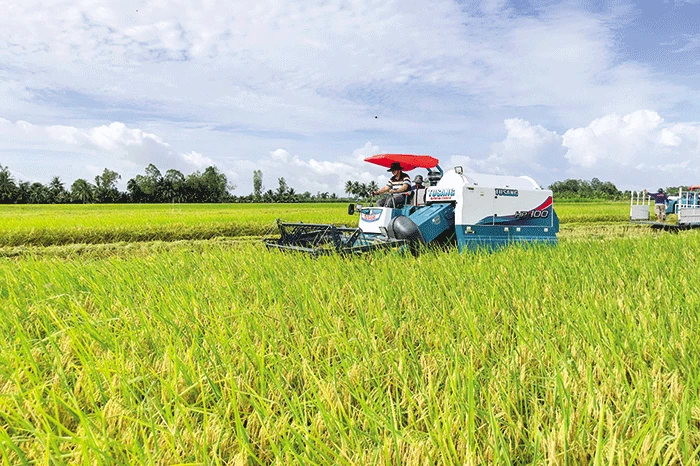
Rice harvesting in the former Hau Giang province. Photo: MY THANH
Two-tiered government - New expectations
Reducing the number of administrative procedures within a unit will only truly create new momentum when the system operates effectively, efficiently, and in a user-friendly manner. To achieve this, it is necessary to confront three key issues and focus on resolving and removing bottlenecks:
Firstly, the creation and structuring of a two-tiered government apparatus is the backbone. The authority and accountability of local governments will be increased. Specifically, the commune and ward levels will focus on serving the people and businesses. Behind the name change must be the requirement for thorough digitization of land records, population data, and business registrations, which must be uploaded to the national data warehouse before July 1, 2025, the official start date of the new government's operation.
Secondly, there needs to be a breakthrough in personnel. When functions and tasks change, staffing levels and job positions must be restructured. The KPI mechanism – a performance-based salary system, with performance-based pay and independent evaluations – should ensure "a living wage and bonuses for contributions," replacing the passive work style and comfort zone-seeking approach of many officials and civil servants in the system in recent times. Redundant staff should receive adequate compensation, but the interests of the community must be prioritized over the "stability" of a minority group.
Thirdly, the supervisory and regulatory role of local state power bodies, namely the People's Councils, needs to be strengthened. Monitoring data and voter opinions should be publicly tracked on the public electronic information system, avoiding feedback disruptions.
The merger of provincial-level administrative units, the abolition of district-level units, and the reorganization of commune-level administrative units this time is a historic decision. It's not just about combining geographical boundaries; the core objective is to open up new development opportunities, create new resources, and encourage innovation.
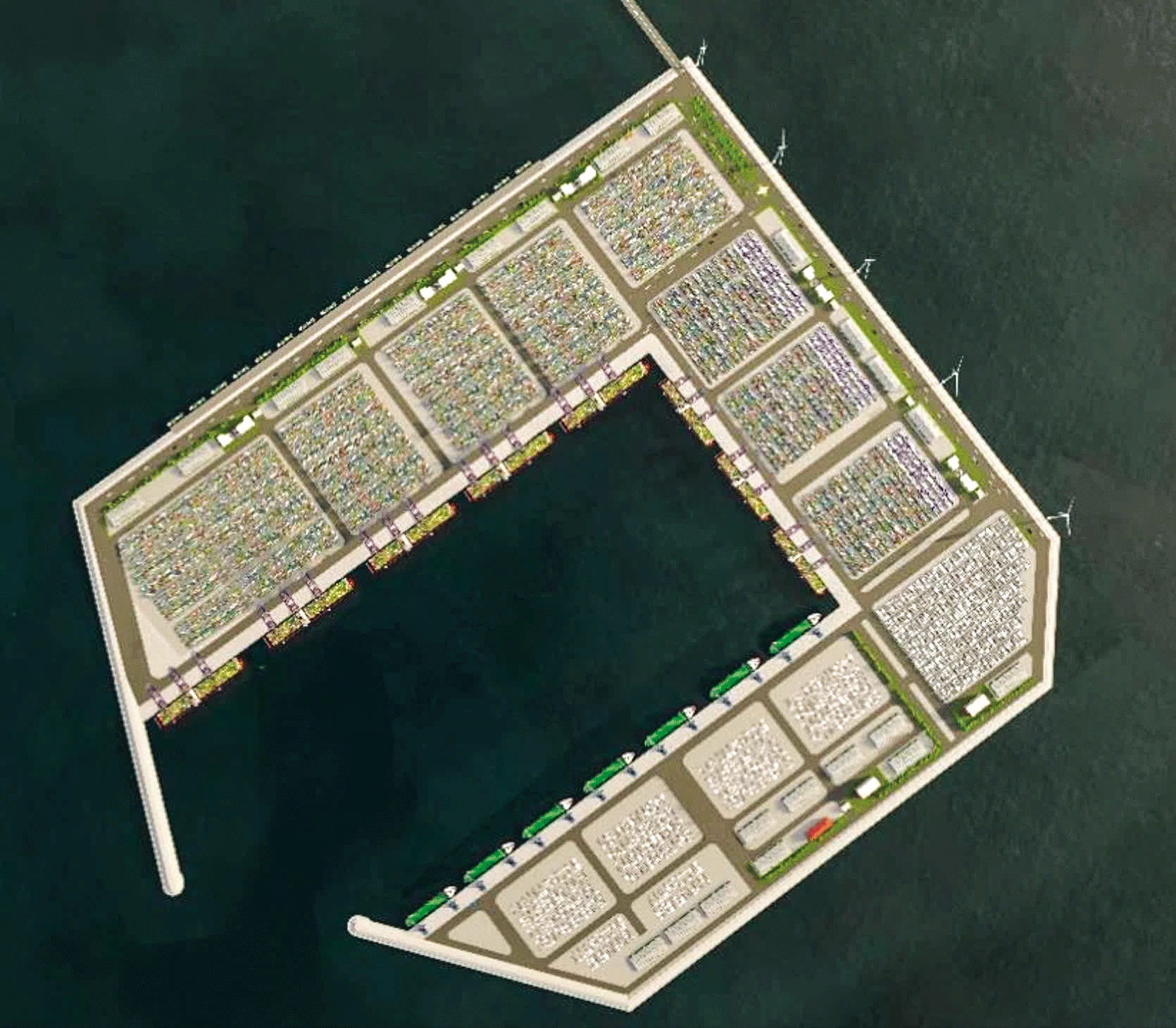
Perspective view of Tran De port. Photo: MY THANH
Working together to achieve a breakthrough.
The potential for breakthroughs in Can Tho depends on the simultaneous activation of three groups of solutions. First, regarding institutional and inter-regional coordination, a Development Coordination Board under the Government should be established, empowered to quickly decide on priority infrastructure projects, allocate budgets, and operate the Development Investment Fund. A "one-stop shop" system, from planning and land clearance to environmental permits, will transform the "procedural labyrinth" into a "runway" for businesses to take off.
Solutions for mobilizing capital and creating smart infrastructure are also essential for this megacity in the delta. High-speed rail, coastal roads, the Tran De mega-port, and the coastal protection forest belt against erosion in Can Tho and Soc Trang currently need investment. Digital infrastructure for a modern administration serves citizens and businesses more effectively. Can Tho needs green bonds and municipal bonds for this new era of development.
The quality of human resources has long been a weakness in regional development, requiring accelerated investment to meet the operational demands of a knowledge-based economy. Initiatives are needed to encourage people in Can Tho to "learn to return," calling on approximately 10,000 Vietnamese expatriate intellectuals, long-time emigrants, and outstanding students to return and contribute, ensuring that those with ideas have opportunities to utilize their skills, access to social housing, and shareholding in startups. A "land bank" model, creating a mechanism for voluntary accumulation and adequate compensation, allows smallholder farmers to become shareholders in a modern agricultural cooperative, receiving dividends while retaining farming rights... these are "unique mechanisms" for the new Can Tho.
That expectation requires Can Tho to overcome challenges in management and administration. If administrative agencies continue to follow the old ways, with each department and sector still operating under separate "internal and external" systems, the dream of an integrated e-government will be difficult to realize. To avoid a situation of "three brothers, three systems," all public services, from birth registration and construction permit issuance to tax payments, must be consolidated on a single portal, ensuring that citizens and businesses receive the best possible service, only then can we hope to create a breakthrough.
When geographical boundaries are seamlessly connected, resources flow freely; when the government, businesses, and people work together, new resources will be created. If we are determined to turn words into commitments, commitments into projects, and projects into concrete results, Tay Do will not only unlock the vital energy of the Mekong Delta but also ignite a green, inclusive, and humane growth pole for the country in the era of deep integration.
Dr. TRAN HUU HIEP
Source: https://baocantho.com.vn/ve-chung-mot-nha-a188037.html



















![[INFOGRAPHICS] Strengthening the strategy for ethnic affairs work until 2030, with a vision to 2045](https://vphoto.vietnam.vn/thumb/402x226/vietnam/resource/IMAGE/2026/05/23/1779540129141_1779539919.webp)

















































Comment (0)