


Do My Pagoda is also known as Kho Pagoda.
For a long time, Do My Pagoda has been a familiar spiritual destination, attracting numerous locals and tourists from all over to offer incense and admire the scenery. In its spacious and airy atmosphere, along with the pervasive scent of incense, each person not only finds peace of mind but also has the opportunity to learn more about the historical and cultural traditions of the locality associated with this pagoda.
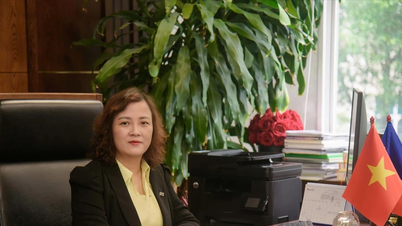
Nun Thich Dam Hung, abbess of Do My Pagoda, said: Do My Pagoda was formerly known as Kho Pagoda, located to the west of the village, and no one knows exactly when the pagoda was originally built.
In the 4th year of the reign of Emperor Khai Dinh (the year of Canh Ngo, 1920), Kho Pagoda was moved to the land next to the communal house of Do My village and was called Do My Pagoda by the people (named after the village), and has retained its name to this day. During the reign of Emperor Bao Dai (the year of Binh Ty, 1936), Do My Pagoda added an ancestral hall, monks' quarters, and a guesthouse in the shape of the Chinese character "Đinh". The main hall contains three statues of the Three Buddhas, followed by three statues of the Buddha Shakyamuni, a statue of Tuyet Son, and a statue of Maitreya Buddha, with two smaller statues on either side. Through many generations of abbots, by the end of the Nguyen dynasty, Do My Pagoda was built on a relatively grand scale, reflecting the architectural style of the Nguyen dynasty.
During the national liberation struggle, Do My Pagoda was not only a place of worship but also known as a "red address" for the local revolutionary movement. It welcomed comrades To Huu, Le Tat Dac, and Le Chu who came to direct the movement, and also served as a hiding place for key cadres of the former Ha Trung district. The monks became silent liaisons, connecting the revolutionary base. Do My Pagoda also supplied food and provisions to the Ngoc Trao revolutionary zone in the former Thach Thanh district. Through these practical contributions, Do My Pagoda played a significant role in the victory of the August Revolution in 1945. However, over time and through the vicissitudes of history, Do My Pagoda has deteriorated, and its ancient architectural remains are now only in the memories of the local people.
Nun Thich Dam Hung shared: In 2002, when she became the abbess here, Do My Pagoda only had an old foundation with three small rooms; the pagoda also preserved some artifacts, such as incense burners and the Nine Dragon altar. Thanks to the attention of the State, the Party Committee, the local government, and the joint efforts of monks, nuns, Buddhists, and visitors from all over, Do My Pagoda has gradually been restored and renovated many items, such as the triple gate, the mother's house, the ancestral worship house, the bell tower... Through this, it meets the cultural and religious needs of the people and visitors from all over.
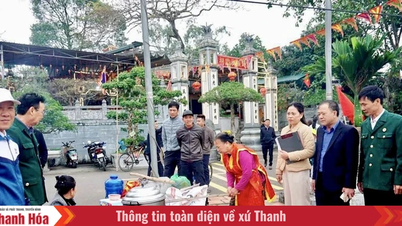
Besides its historical value, Do My Pagoda is also a spiritual destination attracting many locals and tourists from all over to visit and worship. Ms. Nguyen Thi Mai, a tourist from Hac Thanh ward, shared: “My first impression of the pagoda was not only its serene and airy atmosphere, but also its calming effect on my soul, relieving the worries and anxieties of daily life. Furthermore, learning about the local history and revolutionary traditions through this historical site makes me feel more proud and more responsible in preserving and promoting its value.”
“With its historical value, the Do My communal house and pagoda complex was recognized as a provincial-level historical and cultural relic in 1996. Over the years, the management, protection, and restoration of the relic have always been a priority for the Party committee, government, and people. This not only helps meet the religious needs of the people but also serves as a significant site for educating future generations about traditions, contributing to building a more prosperous, beautiful, and civilized homeland,” said Mr. Vu Van Chien, Deputy Head of the Culture and Social Affairs Department of Tong Son commune.
Text and photos: Trung Hieu
Source: https://baothanhhoa.vn/ve-tong-son-nbsp-tham-chua-do-my-285047.htm











































Comment (0)