


Bao An Pagoda, Bien Thuong commune - a spiritual tourism destination for visitors from all over.
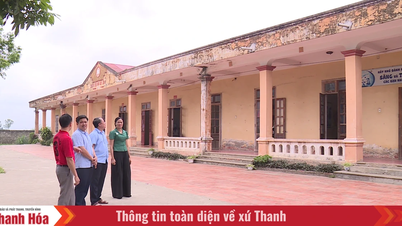
Following the officials of Bien Thuong commune, we arrived at Bao An Pagoda – an ancient temple situated in a prime location: the pagoda nestled against the sturdy Bao Mountain, facing the gentle Ma River, calm during the dry season but powerful during floods. According to documents preserved at the Culture and Social Affairs Department of the Bien Thuong Commune People's Committee, the exact year of Bao An Pagoda's construction is unknown, but according to folk beliefs, it was established during the Ly-Tran dynasties – a flourishing period of Vietnamese Buddhism.
Based on the inscription "Vien Quang Pagoda Inner Stele" at Bao An Pagoda, composed by Cao Lac Hien (also known as Lu Vuong), the District Magistrate of Minh Chinh, during the reign of Emperor Tu Duc, the Vien Quang Pagoda was built in the year of the Rat (1852) under the supervision of the venerable Zen master Thich Thu (also known as Dieu Tri). The person enshrined in the pagoda is Zen master Bui, whose given name was Tai Tam, and whose title was Dieu Chan. He was originally from Thanh Mien district (now Hai Duong province), and from a young age, he was fortunate enough to be adopted by a family in Bong Thuong for 15 years. Being intelligent and eager to seek enlightenment, he traveled to Yen Son in Shandong province (China) – the birthplace of Confucius – to study under a master for many years. After achieving enlightenment, he returned and became the abbot of Loc Son Pagoda, renaming it Bao An Pagoda. By the end of the 19th century, Bao An Pagoda became a significant site in the Can Vuong movement against French colonialism. The Hung Linh Uprising, led by Dr. Tong Duy Tan, chose this place as the location for important meetings of the rebel army.
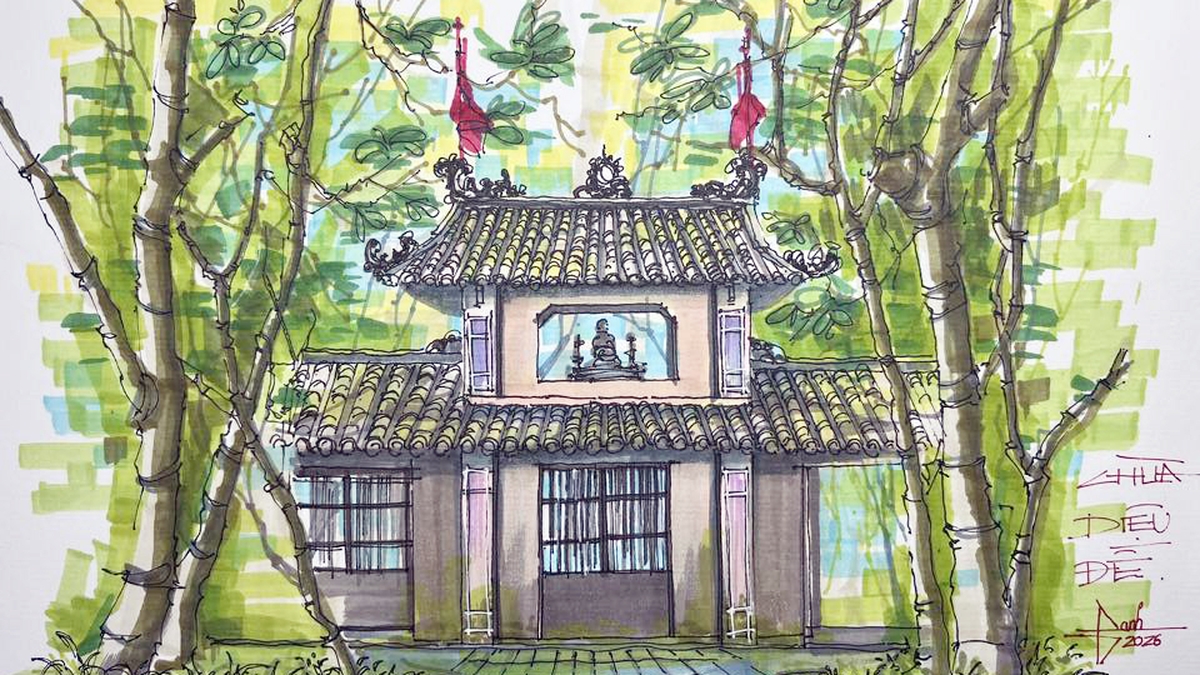
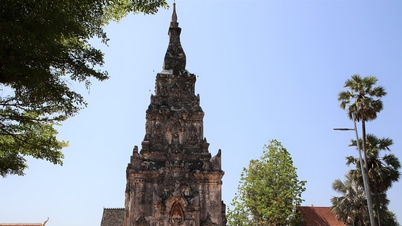
Bao An Pagoda boasts unique architecture, including the main hall (Tam Bao), the temple building (Phu), a statue of Avalokiteśvara Bodhisattva, a stone stele, and the Vien Quang Tower. Currently, the pagoda preserves many valuable ancient artifacts such as a bronze bell, an ancient tower, and the stone stele of the Vien Quang Tower. Due to its profound historical and cultural significance, the pagoda was recognized as a provincial-level historical site in 2000.
Visiting Bao An Pagoda between the 27th and 29th of the lunar calendar, tourists can immerse themselves in the unique water procession festival of the people living along the Ma River. The festival begins with the release of shimmering lanterns on the Ma River on the evening of the 27th to pray for peace. The following morning, the water procession begins as five ceremonial boats dock. To the resounding sounds of traditional music, the boats glide through the water to the middle of the Ma River. At the central rock area, a respected elder performs the ritual of filling a porcelain vase with water, after which the boats return to shore. From there, the procession continues through nearby villages before returning to the pagoda. Finally, the water is sprinkled around Vien Quang Tower to purify it, conveying wishes for good fortune and a prosperous life. After the solemn ceremonies concluded, locals and tourists alike immersed themselves in the lively atmosphere of the festival with traditional folk games such as human chess or card games, creating a joyful and vibrant atmosphere.
Visiting Bao An Pagoda, tourists not only find peace of mind but also immerse themselves in the serene beauty of the place. Ms. Nguyen Thi Huong from Ba Thuoc commune, a tourist visiting Bao An Pagoda, shared: "Every time I come to Bao An Pagoda, I feel my soul is calm, relaxed, and full of energy. My family's visit to the pagoda ended with a sense of regret and a desire to return someday to immerse ourselves in this peaceful atmosphere."
Bao An Pagoda is not only a place of spiritual activity but also a place for educating the younger generation about traditional cultural values.
Ms. Trieu Thi Nhung, Principal of Nguyen Dan Que Secondary School in Bien Thuong commune, shared: "To awaken pride and a sense of responsibility towards heritage, the school has organized practical history lessons at local historical sites, including Bao An Pagoda. This activity not only creates enthusiasm for learning but also helps students gain a deeper understanding of their homeland's culture, thereby proactively participating in the preservation and promotion of heritage values."
“In 2018, Bao An Pagoda officially became a provincial-level tourist destination. This is an important milestone, opening up great opportunities for the development of spiritual tourism in the locality. Bien Thuong commune has been introducing and promoting the value of the pagoda through mass media. At the same time, it connects the pagoda with the scenic spots of Kim Son Mountain, Han Son scenic area (Tong Son commune), Tran Khat Chan temple, Nhan Lo Pagoda (Vinh Loc commune), and the Ho Dynasty Citadel World Heritage Site (Tay Do commune). All resources are being mobilized to invest in building transportation infrastructure; renovating and beautifying the landscape and grounds of the pagoda, meeting the needs of people and tourists from all over to visit and sightsee,” shared Mr. Nguyen Van Hung, Chairman of the People's Committee of Bien Thuong commune.
Text and photos: Manh Hai
Source: https://baothanhhoa.vn/ve-voi-chua-co-bao-an-281991.htm


![[Photo] Da Nang: Over 38,000 people "painted the streets red" during the Olympic Run for National Security.](https://vphoto.vietnam.vn/thumb/1200x675/vietnam/resource/IMAGE/2026/03/22/1774148860624_ndo_br_chay-15-jpg.webp)
































































Comment (0)