


The Gia Mieu communal house relic attracts many tourists who come to visit and admire the scenery.
In the dry, golden days of November, under the winter sun, we had the opportunity to visit Ha Long. Our first stop was Gia Mieu communal house – one of the beautiful and representative architectural works in the Northern Delta and the Thanh-Nghe-Tinh region, built by King Gia Long in 1804. The communal house is dedicated to the village's tutelary deity, Nguyen Cong Duan – a meritorious official who helped establish the nation by fighting the Ngo invaders. The harmonious combination of architecture and sculpture makes the communal house even more majestic, solemn, and of profound historical, cultural, and architectural value. According to the records of the Nguyen Huu family (Ha Long commune), five Nguyen Dynasty kings came to worship their ancestors at Gia Mieu communal house: Gia Long, Minh Mang, Thieu Tri, Thanh Thai, and Bao Dai.
With its historical, cultural, architectural, and artistic values, Gia Mieu communal house was recognized as a national historical and cultural relic by the Ministry of Culture, Sports and Tourism in 2000.
Having endured many historical ups and downs, Gia Mieu communal house suffered serious deterioration, affecting the spiritual life of the people. From 1985 to the present, thanks to the attention of the State, philanthropists, and the local people, Gia Mieu communal house has been restored and renovated three times in 1985, 1992, and 2017. After being restored and renovated, the communal house is now spacious and meets the spiritual needs of the people and attracts a large number of visitors from all over. Every year, Gia Mieu communal house welcomes about 10,000 visitors who come to visit, admire the scenery, and pray for blessings and peace.
On our journey exploring the Ha Long area, we visited the historical and scenic complex of the Dragon Temple and Water Temple, located about 15km from the center of Ha Long commune. Speaking about the history of the Dragon Temple and Water Temple, Mr. Bui Van Kinh, deputy head of the relic management subcommittee, said: According to historical records and accounts from elderly villagers, the history of the Dragon Temple and Water Temple is closely linked to the migration of the Muong people from Hoa Binh to Tong Son to establish Nghia Dong village. Around the beginning of the 15th century, Nghia Dong was a wild, desolate area with dense forests and dangerous waters. When the Muong people came here to clear land and establish villages, they followed the Khe Nan stream, going all the way to the cave entrance to bring water to the village for daily life and production. Their ancestors believed that the safety of hunting in the forest, obtaining fresh, cool water from the stream, and bountiful harvests were due to the assistance of the Forest God and the Water God. Therefore, the Muong people in Nghia Dong always worshipped the Forest God and the Water God. In the beginning, people would stick incense sticks into the crevices of rocks to express their reverence to the Forest God (Lord of the Mountains) and the Water Goddess (Mother of the Water).
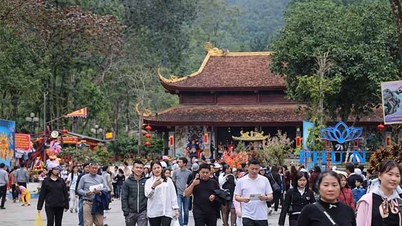
During the Le Trung Hung period, the Dragon Temple - Water Temple was officially granted royal decrees for construction by the feudal dynasties. Today, in addition to worshipping the Goddess of the Mountains and the Mother Goddess of the Waters, the Dragon Temple - Water Temple complex also worships the First Holy Mother Lieu Hanh and other deities belonging to the Mother Goddess worship tradition. Every year, on the 24th day of the 2nd lunar month, the traditional festival at the Dragon Temple - Water Temple complex attracts a large number of locals and tourists who come to offer incense, admire the scenery, and pray for blessings and peace.
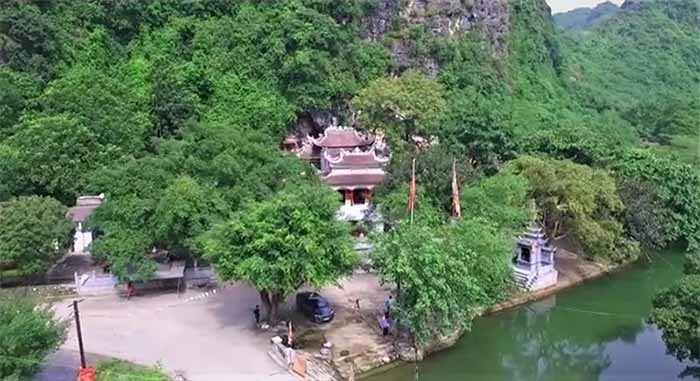
A view of the historical and cultural site, scenic spot, and landmark of the Dragon Temple - Water Temple.
From July 1st, 2025, Ha Long commune was established by merging the entire natural area and population of Ha Bac and Ha Giang communes and Ha Long town. Following the merger, the cultural space has expanded, and cultural values have converged, making Ha Long commune a locality with many historical sites. According to the report from the Culture and Social Affairs Department of Ha Long commune, the entire commune has 11 historical and cultural relics, scenic spots, and landmarks, including 3 national-level relics: Gia Mieu communal house, Trieu Tuong mausoleum, and Nguyen Huu family church.
Proud of its homeland rich in historical and cultural traditions, Ha Long commune always pays attention to the management and protection of historical relics against damage; mobilizing all resources to restore and preserve relics in order to promote the values of historical and cultural relics associated with the development of spiritual tourism. Strengthening the work of disseminating information, introducing, and promoting the historical and cultural relics and tourist destinations of the commune to a wide range of visitors from all over... As a result, the number of visitors coming to visit and experience the land of Ha Long is increasing.
Mr. Dang Vu Thuat, residing on Dinh Tien Hoang Street, Hong Bang Ward (Hai Phong) - a tourist visiting Ha Long Commune, shared: "Through the media, we learned that Ha Long Commune is a land rich in historical and cultural relics. Therefore, on this trip, our family chose Ha Long Commune as our destination. Here, we were able to admire the majestic natural scenery, with its mountains and hills, and visit historical sites such as Gia Mieu communal house, Trieu Tuong mausoleum, Quan Chiem pagoda, Dragon Temple, Water Temple... which made my soul feel peaceful. Ha Long is truly a place worth experiencing and exploring; if I have the opportunity, I will definitely return."
Mr. Pham Van Tuan, Head of the Culture and Social Affairs Department of Ha Long commune, said: Currently, Ha Long commune is focusing on developing a cultural tourism development plan until 2030. This includes strengthening management, mobilizing investment resources for the restoration and preservation of historical and cultural relics to develop spiritual and cultural tourism. At the same time, emphasis is placed on developing supplementary tourism products, such as agricultural experience tourism, resort tourism associated with the high-tech agricultural zone project and a golf course complex combined with resort villas, and exploring the culture of the Muong ethnic group. Through these efforts, the commune aims to attract a large number of tourists to visit, sightsee, and experience, contributing to promoting the beauty of Ha Long.
Nguyen Anh (Source: Baothanhhoa)
Source: https://svhttdl.thanhhoa.gov.vn/van-hoa/ve-vung-dat-quy-huong-1009995

























































Comment (0)