Old memories
The unique allure of Sa Pa has been known since the winter of 1903, when an expedition of the Indochinese government set foot on this unfamiliar land and discovered its mysterious beauty. Less than two decades later, nearly 300 villas sprang up amidst the mountain mist, transforming Sa Pa into the "summer resort capital" of all of Indochina. However, Sa Pa's economic potential suddenly stalled, plunging the tragic chapter of its tourism into a deep slumber. This silence is subtly depicted by writer Nguyen Thanh Long in his work "Silent Sa Pa," a place likened to a pristine oasis, surrounded "on all sides by only trees, grass, and cold mist," turning its inhabitants into the "loneliest people in the world." From then on, the people continued to live primarily on a purely agricultural, self-sufficient, and simple economy.
Recalling his youth, Mr. Hoang Duc Kim (born in 1960, Ta Van commune, Sa Pa ward) said that the weather in the Hoang Lien Son mountain range in winter was bitterly cold. The harsh weather meant that crops and flowers could barely survive, and his family spent their lives carefully saving every grain of rice from the previous harvest to survive until the next, with poverty relentlessly clinging to them. However, those difficult years also laid the foundation for his determination to rise above his circumstances. Then, when he reached his early 30s, capital from the Social Policy Bank (NHCSXH) helped him boldly change his life in his hometown.
Immediately after the government implemented a policy of providing preferential loans to poor households, he began his entrepreneurial journey with 2 million VND from the Sa Pa Social Policy Bank to buy an old buffalo for plowing, which was also the first asset that allowed his family to embark on a more directed path of agricultural production. In 2003, he boldly borrowed another 5 million VND to buy two more buffaloes, expanding his livestock herd and becoming more proactive in land preparation and planting. In 2008, recognizing that cardamom was gradually becoming a high-value crop in the highlands, his family borrowed another 15 million VND with a 5-year term to plant it. Thanks to timely and appropriate capital, Mr. Kim's family's economy gradually stabilized. Successful cardamom harvests, a thriving buffalo herd, and sufficient upland rice... helped his family repay all their bank debts and officially escape poverty.
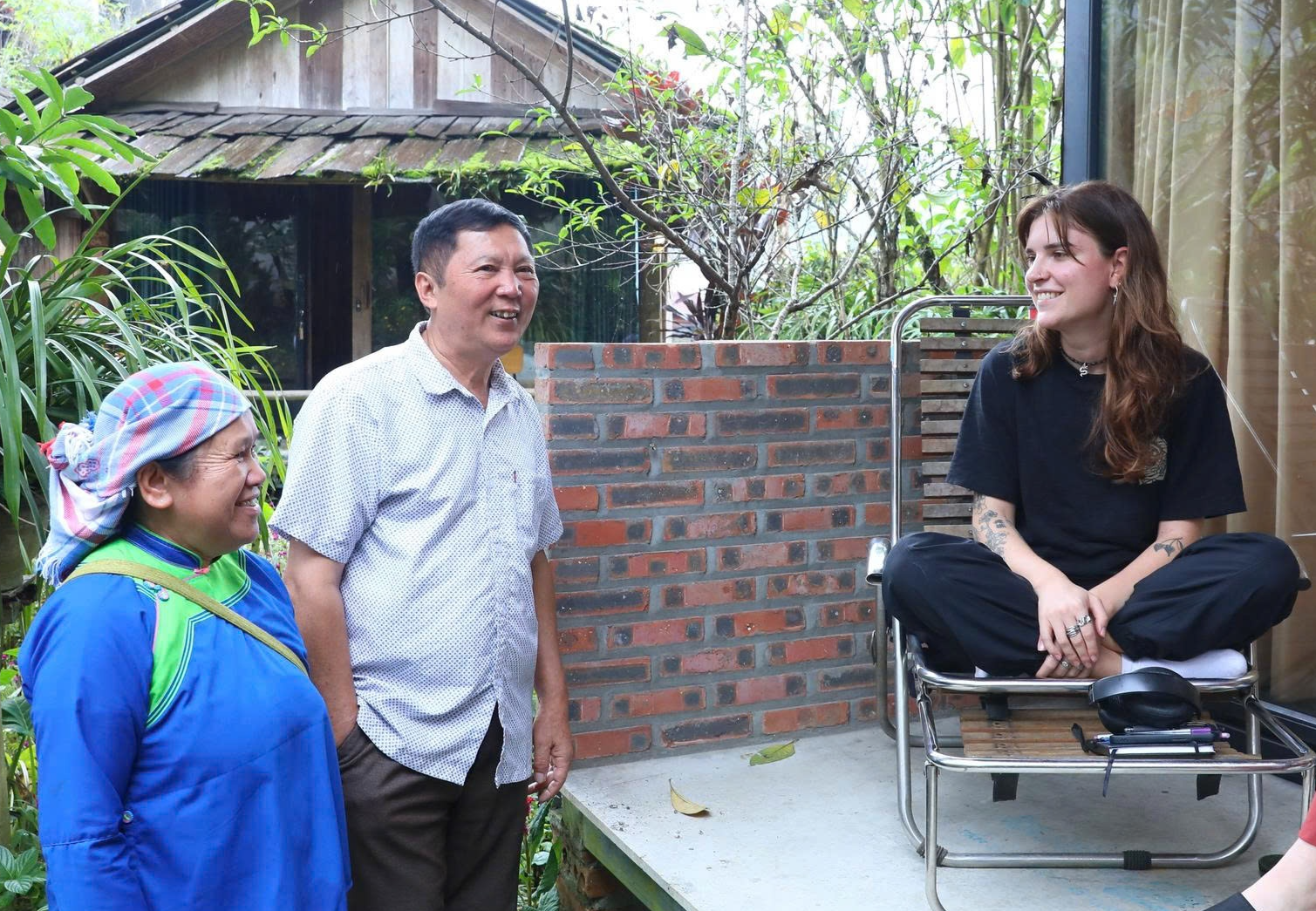 |
| Mr. Hoang Duc Kim with tourists next to the homestay that his family invested in, covering a total area of 1,000m². |
That's also how, for a long time, the people of Sa Pa persevered and clung to their lives, waiting for the moment when the tourism potential of this land would be awakened. And indeed, their perseverance was rewarded. When Vietnam opened up and integrated into the global economy, international tourists began to return to Sa Pa. The tourism economy developed rapidly and strongly, gradually becoming a key economic sector of the locality. Particularly in 2017, the Prime Minister recognized Sa Pa as a National Tourist Area of international stature, thereby creating a foundation for promoting its image, attracting investment, and drawing tourists to Sa Pa.
Guided by government directives and an unmissable trend, Mr. Hoang Duc Kim decided to change his family's economic model. Using a 200 million VND loan disbursed by the Sapa Social Policy Bank under Resolution 06/2021/NQ-HĐND on policies supporting the development of tourism products, Mr. Kim invested comprehensively in purchasing equipment and furniture (blankets, sheets, pillows, mattresses, etc.) for a community homestay model covering a total area of 1,000m² with 8 self-contained bungalow rooms and 1 traditional stilt house. Not only does this business model provide a stable income for his family, but it also creates regular employment for 2-3 ethnic minority workers in the locality. Salaries for employees range from 5 million to 5.5 million VND per month, contributing to increased income and improved living standards for the local people.
However, tourism will struggle to create a lasting impression if visitors cannot experience the unique cultural values of the region they visit. In Sa Pa, the easiest and most subtle way to connect with the culture is through the art of ethnic costumes – where the memories, techniques, and souls of the people are conveyed through each stitch and thread. This is also the path chosen by Mr. Vu Van Sang (Ta Van Giay 2 village) to start his business and escape poverty after receiving capital from the Social Policy Bank.
The H'Mong people's traditional clothing, with its exquisite embroidery on brocade, and the vibrant red attire of the Red Dao people, accented with sparkling silver handcrafted accessories… these are the characteristics that Mr. Sang focuses on showcasing in the products displayed and sold at his shop. He carefully selects and purchases his products from households with long-standing embroidery skills in the village. Prices depend on the pattern and size; for example, a brocade embroidery painting costs between 450,000 and 500,000 VND. Thanks to the development of tourism, these handcrafted products from Sa Pa not only reach domestic tourists but also travel across mountains and forests, accompanying international visitors to many different countries, becoming souvenirs imbued with the cultural essence of the highlands.
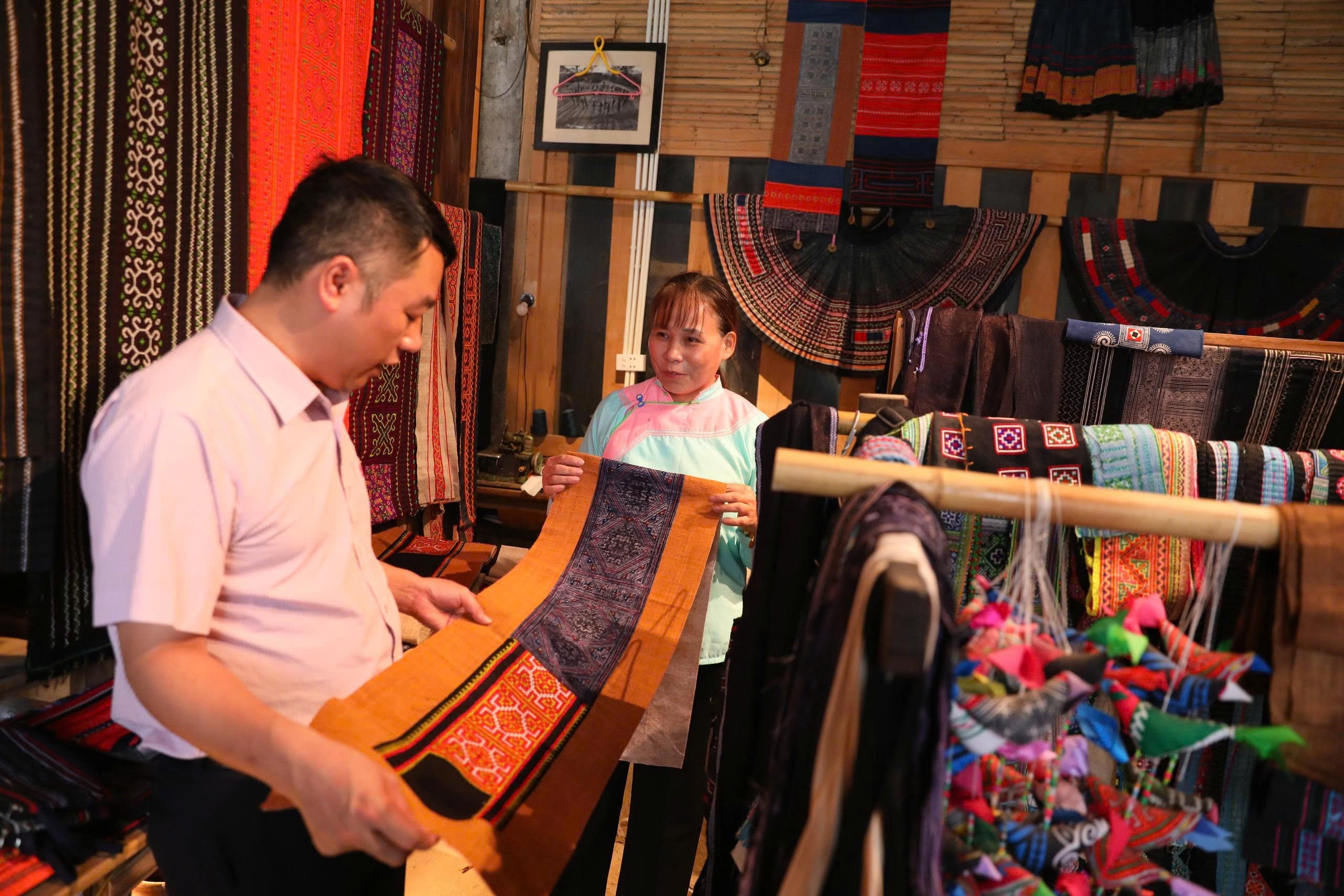 |
| Traditional costumes: The memories, techniques, and soul of the people are conveyed through every stitch and thread. |



To attract and retain tourists for longer periods, thereby boosting spending and aiming for approximately 5.8 million visitors by 2025, Sa Pa tourism is focusing on extending the length of stay by diversifying its experiential products. Once the basic needs of "good food and beautiful clothes" are met, tourists seek a space for relaxation and wellness. This is a natural advantage of the Red Dao people in Sa Pa, who possess a treasure trove of valuable medicinal herbs and unique folk remedies found nowhere else.
Ms. Tan Ta May (Ta Phin commune, Sa Pa ward) fondly recalls her entrepreneurial journey, which was closely linked to preferential credit from the Social Policy Bank. Ms. Tan Ta May shared: “My childhood was intertwined with the traditional herbal bath remedies of the Dao people, passed down through many generations in my family. My maternal grandmother was a renowned traditional healer and also an artisan in making herbal bath remedies. I always harbored a deep desire to develop my own brand and expand products based on these traditional remedies.”
When the Red Dao Community Cooperative was first established, it had only 7 members, with capital sufficient to roof 3 thatched bathrooms and buy 6 wooden tubs. By the end of 2015, a major turning point came when the cooperative secured a 500 million VND loan from the Social Policy Bank. This was the largest loan available to businesses at that time. Thanks to these preferential loans, after 8 years of establishment, the cooperative has over 120 members, with enough bathrooms to serve 200 customers daily, generating approximately 3 billion VND in revenue per year.
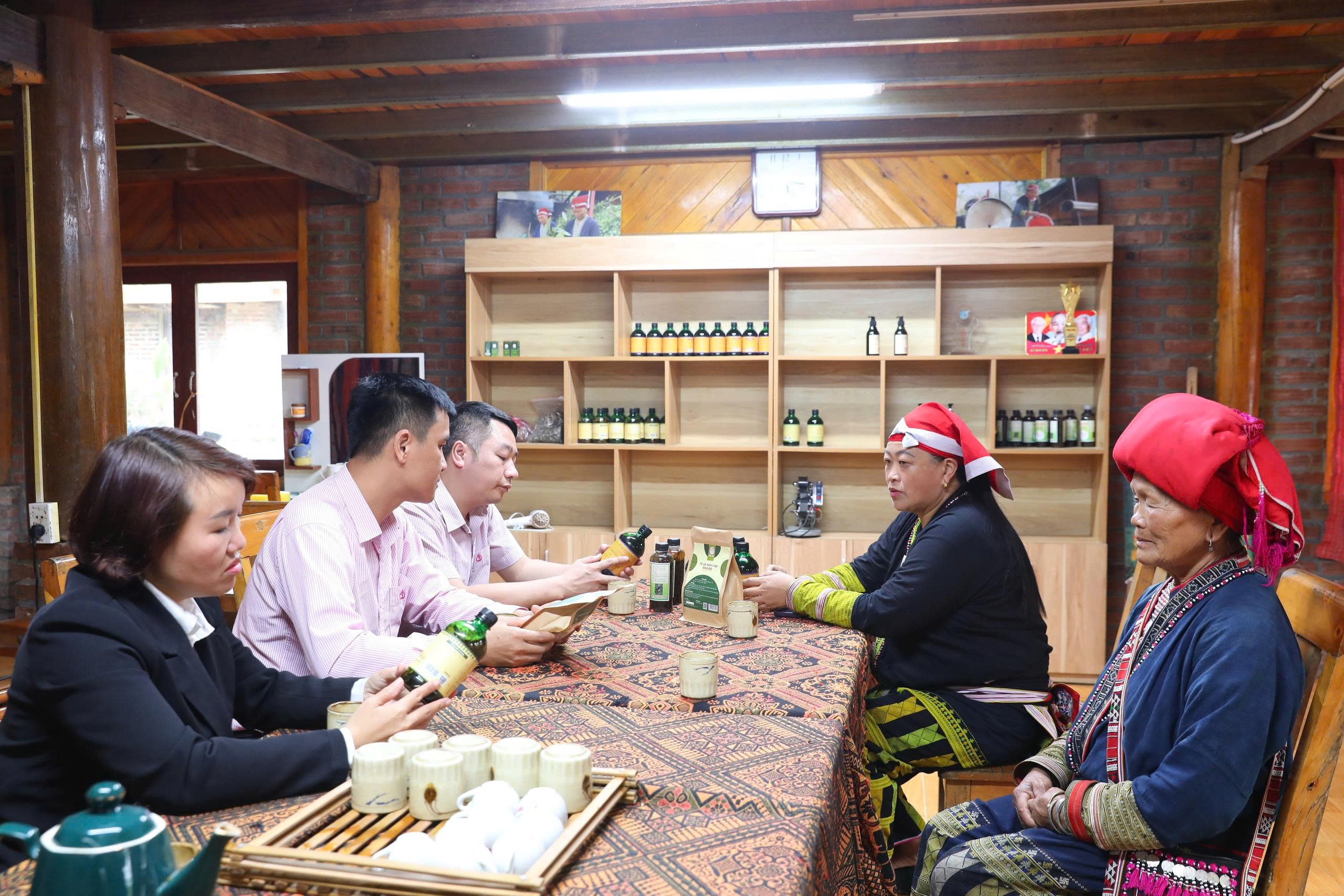 |
| Ms. Tan Ta May introduces the unique medicinal products of the Red Dao people. |
Furthermore, Ms. May decided to collaborate with Hoang Lien National Park to expand the raw material area and develop a medicinal plant seed production center covering 4 hectares, involving 300 households and 120 Dao ethnic women in cultivation. On average, 1 hectare of medicinal plant cultivation yields 40 million VND, significantly higher than growing rice or corn. In addition, the cooperative members receive training in cultivation skills, are provided with plant seedlings, and are guaranteed purchase during the harvest season…
In particular, from being a borrower herself, Ms. Tan Ta May has become an inspiration for many women's startup models in the highlands. She also regularly participates with the Women's Association and heads loan groups of the Social Policy Bank in the locality to encourage women to borrow capital to develop their economy. "I myself built my brand and developed a cooperative with policy credit capital, so I want to motivate women who are passionate about business to boldly borrow capital and invest in production. With low interest rates and preferential repayment periods, this is truly a support system for many families to rise out of poverty," Ms. Tan Ta May shared.
Capital flows link the past, present, and future.
From Ms. May's story, Ms. Trinh Thi Hue, Chairwoman of the Women's Association of Ta Phin commune, realized that policy-based loans have become an important tool for empowering ethnic minority women economically. Through these loans, people, especially women, have become more confident, daring to think, act, and make their own economic decisions for their families. In particular, the awareness of borrowing among ethnic minority people in Ta Phin has significantly improved. People are highly responsible with their loans. They understand that they borrow to develop their economy, ensure repayment to the bank, and simultaneously accumulate personal savings for reinvestment. The effective use of loans by many households has helped to replicate economic models (livestock farming, handicrafts, tourism) to neighboring households, thereby fostering absolute trust in the Party's policies and the Social Policy Bank's loan programs.
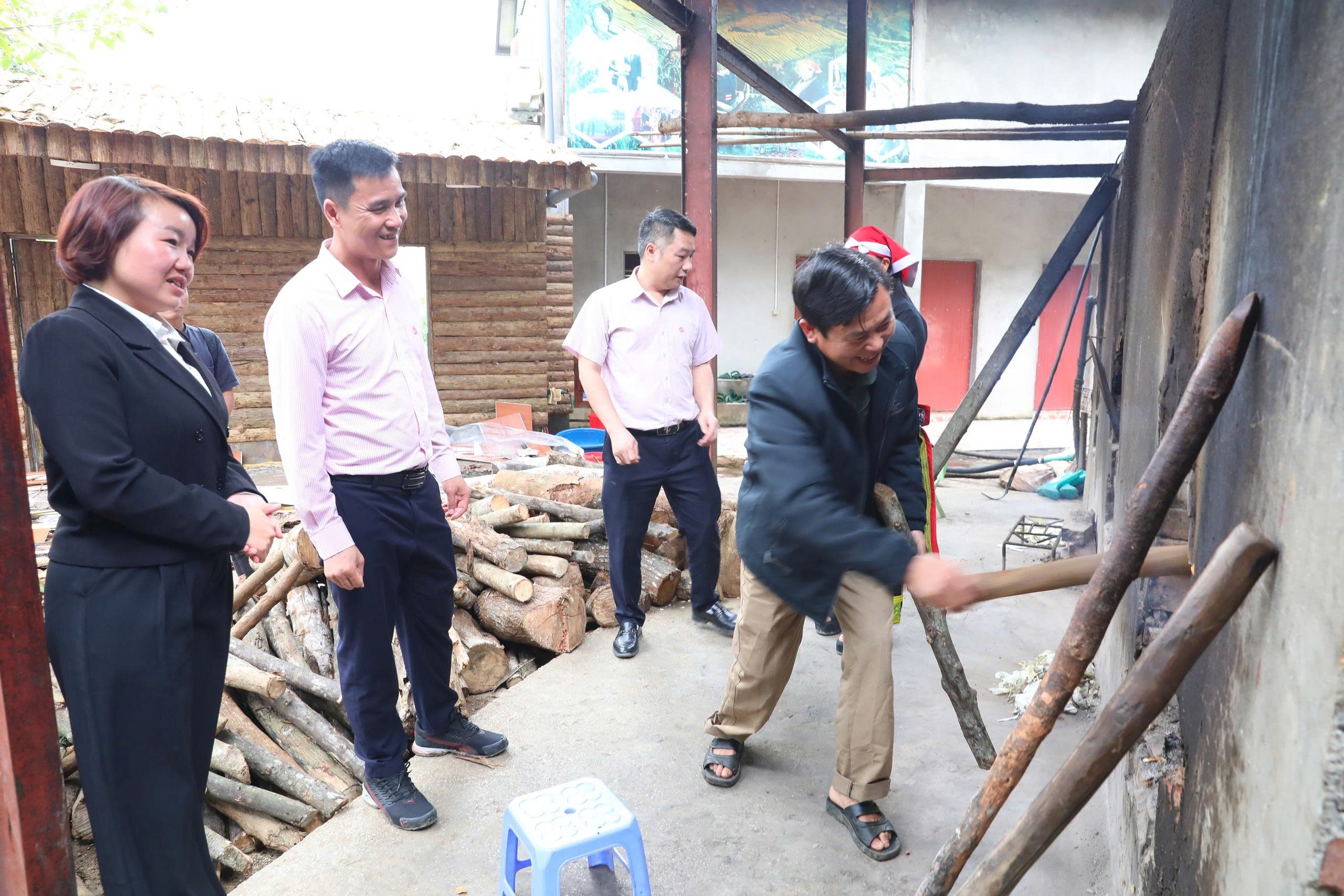 |
| To prepare a traditional herbal bath, the Dao people must meticulously gather both ingredients and follow the cooking method. |
Mr. Duong Phu Khanh, Deputy Director of the Sa Pa Branch of the Vietnam Bank for Social Policies (VBSP), affirmed that entrusted organizations play an indispensable role in policy credit activities. These organizations play a significant role in transmitting capital to households, while also managing, inspecting, and supervising loan activities. They are considered a crucial component in helping people access capital and ensuring its proper and effective use. The Sa Pa VBSP has also implemented many credit programs to support people in developing tourism and restoring traditional crafts. The VBSP has provided loans for programs such as those for poor households, near-poor households, households that have escaped poverty, production and business, and job creation. This capital helps people invest in facilities producing brocade, handicrafts, and processing local specialties to serve tourists. In particular, in Sa Pa, frequent storms often affect the tourism facilities of local people. The rugged terrain, difficult roads, and challenging weather conditions pose constant challenges for the staff of the Vietnam Bank for Social Policies (VBSP). However, VBSP staff will go directly to the affected areas to assess the damage, coordinate with local authorities to facilitate access to additional loans for people to repair the damage and reinvest.
It can be seen that, despite the passage of time, the mountains of Sapa remain majestic and the clouds still blanket the landscape. However, since the arrival of policy-based credit, the sunlight of greater prosperity has parted the clouds, making Sapa even more beautiful. Mr. Vu Xuan Quy, Chairman of the People's Committee of Ta Phin commune, Lao Cai province, affirmed that policy-based capital plays a crucial role in helping many households boldly participate in new business models. This capital not only provides financial support but also helps people change their mindset, become more confident in starting businesses and developing household economies, contributing to the construction of new rural areas.


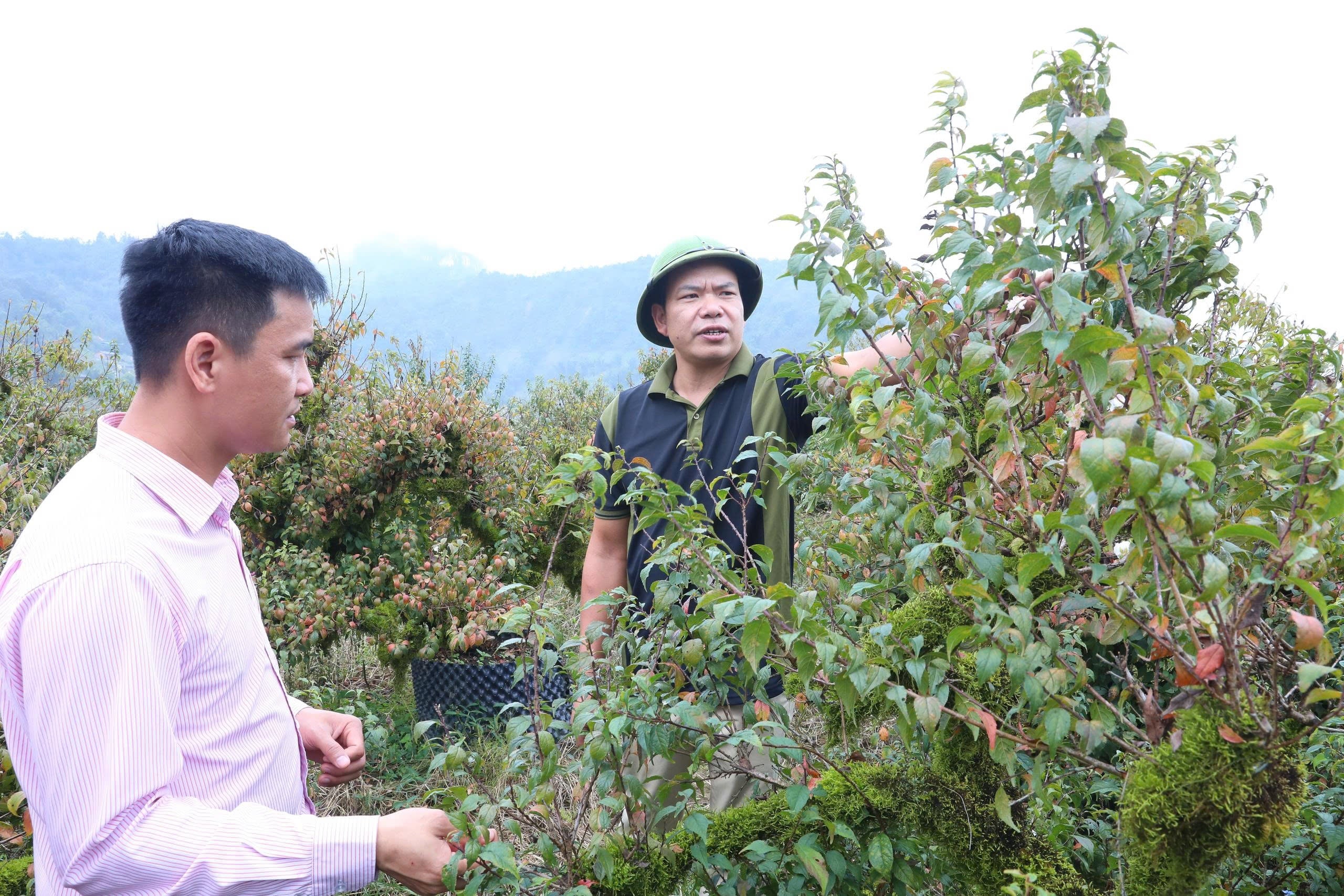
The reality in Sa Pa today is different. Sa Pa's economy has experienced breakthrough growth, with an average annual growth rate of 13.8% during the 2022-2025 period; per capita income has reached 91.72 million VND/year; tourism and services have developed strongly, affirming their role as a key economic sector with revenue reaching 22,950 billion VND…; the urban landscape is increasingly synchronized and modern; national defense and security are maintained, and social order and safety are ensured. These results provide a solid foundation, strongly inspiring self-reliance, self-improvement, and aspirations for advancement, creating momentum for Sa Pa ward to develop rapidly and sustainably in the next phase.
To further enhance the effectiveness of state capital, the Ta Phin commune government will continue to closely coordinate with the Vietnam Bank for Social Policies (VBSP) to effectively utilize the capital. The Ta Phin commune government is implementing many comprehensive policies to support people's participation in tourism development. These include organizing in-depth training sessions to raise awareness, guide people on hospitality skills, ensure food safety and hygiene, and promote community development. They also support the preservation of local traditional crafts that are at risk of disappearing, to serve tourism. Furthermore, they actively connect people with travel agencies to promote community tourism products to domestic and international tourists. Simultaneously, they focus on the rational planning of community tourism destinations and provide loans to help people invest in tourism equipment and renovate their homes.
Despite the constant challenges and the lofty goals needed for the people's happiness, Mr. Duong Phu Khanh affirmed that the Sa Pa branch of the Vietnam Bank for Social Policies (VBSP) is committed to continuing to support the people of Sa Pa in developing community tourism and preserving ethnic identity. The VBSP also identifies this as a key task and will continue to accelerate the disbursement of policy credit loan programs. The unit will create the best conditions for people, especially ethnic minorities, to access capital in an open and transparent manner. The VBSP will coordinate with local authorities to review actual loan needs, particularly in areas with potential for community tourism, while strengthening communication, inspection, and supervision of effective capital utilization.
Source: https://thoibaonganhang.vn/ven-may-truoc-cong-troi-175328.html
![[Photo] General Secretary and President To Lam working with the Technical and Professional Center, Ministry of Public Security](https://vphoto.vietnam.vn/thumb/1200x675/vietnam/resource/IMAGE/2026/07/06/1783318005842_a1-bnd-1129-2263-jpg.webp)