

According to Dr. Bhumesh Tyagi, an internal medicine physician in India, the hands and feet are the furthest body parts from the heart, so they are more sensitive to changes in blood circulation.
When the body focuses on keeping vital organs warm, blood vessels in the extremities constrict, causing them to become cold. If this happens frequently, it's not simply a matter of poor blood circulation but may be related to several underlying health issues, according to the Indian health website Onlymyhealth .
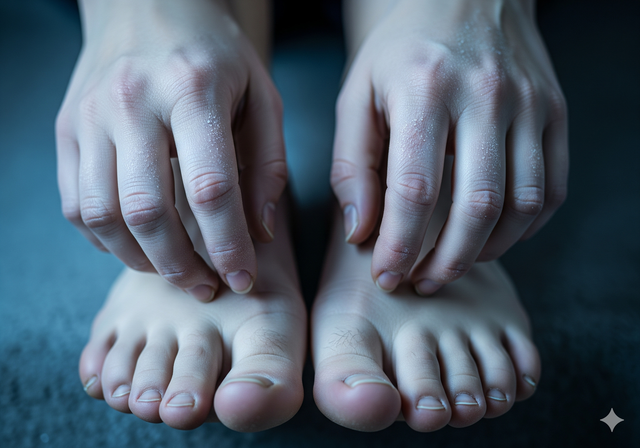
If cold hands and feet are accompanied by symptoms such as numbness, tingling, changes in skin color, dizziness, etc., the patient needs to see a doctor immediately.
Illustration: AI
Poor blood circulation
Prolonged sitting, lack of exercise, or cardiovascular conditions can reduce blood flow to the hands and feet, leading to a persistent feeling of coldness.
This is a common situation in modern life, where office work leads to a lack of physical activity.
Anemia
When the body lacks iron, the amount of oxygen in the blood decreases, leading to tissues and organs not receiving enough necessary energy.
People with anemia often experience cold hands and feet, as well as easy fatigue and weakness. These are warning signs that many people often overlook.
Hypothyroidism
Hypothyroidism slows down metabolism, reducing the amount of heat the body produces. This is often the first thing to feel in the hands and feet.
Besides having cold hands and feet, people with this condition may also experience fatigue, unexplained weight gain, and dry skin.
Raynaud's syndrome
This is a condition where blood vessels overreact to cold or stress. When suffering from this syndrome, the fingers and toes may turn white, then blue, and finally purple, accompanied by numbness and tingling pain.
Raynaud's syndrome is more common in women and is more likely to recur during cold weather.
Diabetes
People with diabetes often experience poor blood circulation and peripheral nerve damage.
This leads to a persistent feeling of coldness in the hands and feet, which may even be accompanied by numbness, tingling, or loss of sensation.
Vitamin deficiency
A deficiency in vitamin B12, magnesium, or other nutrients can affect the function of the nervous system and circulatory system.
A deficiency in essential vitamins can hinder the body's ability to regulate temperature and transmit nerve signals, making cold hands and feet a frequent symptom.
Dr. Tyagi advises that if cold hands and feet are accompanied by symptoms such as numbness, tingling, changes in skin color, dizziness, or unusual weight gain or loss, patients should seek immediate medical attention. These could be signs of cardiovascular disease, metabolic disorders, or more serious health problems. Early examination will help detect and treat the condition promptly, avoiding unpredictable complications.
Source: https://thanhnien.vn/vi-sao-tay-chan-lanh-18525090311115248.htm

![[Photo] General Secretary and President To Lam presides over a working session with the Central Policy and Strategy Committee on the development of the materials industry.](https://vphoto.vietnam.vn/thumb/1200x675/vietnam/resource/IMAGE/2026/05/21/1779359935432_a3-bnd-3129-1412-jpg.webp)
![[Photo] National Assembly Chairman Tran Thanh Man working with the Standing Committee of the Law and Justice Committee](https://vphoto.vietnam.vn/thumb/1200x675/vietnam/resource/IMAGE/2026/05/21/1779378929214_ndo_br_1-4610-jpg.webp)







































































































Comment (0)