

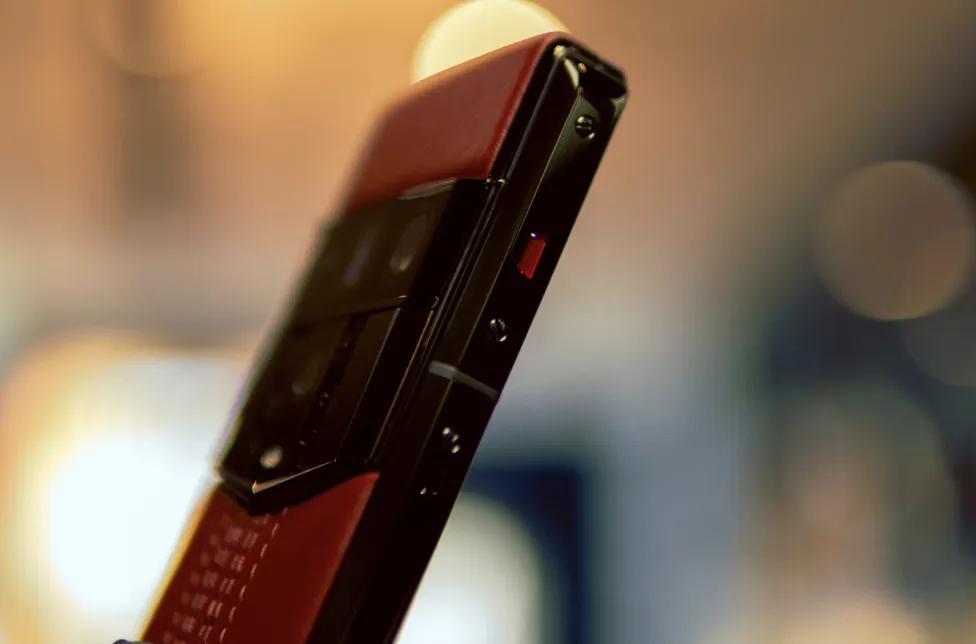
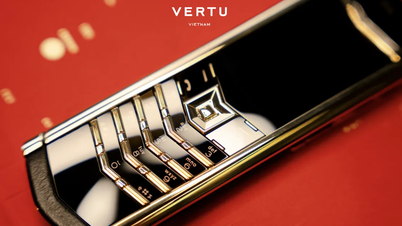
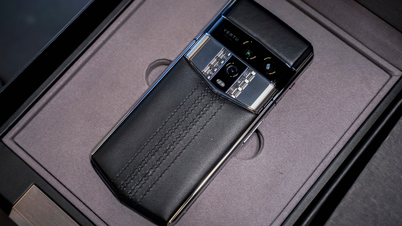
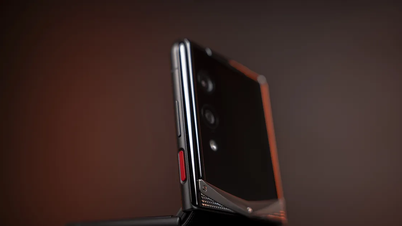
The Ruby key boasts exquisite craftsmanship with perfectly sculpted, multifaceted facets.
High-end consumer trends are shifting significantly towards craftsmanship, with modern users seeking connection through precise physical touch rather than just interacting on a screen.
In the brand's designs, originality is clearly expressed through the details of the buttons. Among many personalization options for leather or color, the Ruby button is a detail that is usually kept fixed. The core reason lies in the technical standards, as the Ruby stone is chosen for its low friction coefficient and ideal hardness, ensuring precise operation.
Specifically, the spring mechanism beneath the keycaps adjusts its pressure based on the specific weight and smoothness of the ruby. Replacing it with a different material could easily lead to inaccuracies in rebound or the loss of the characteristic mechanical feedback sound. Therefore, this detail is kept fixed to ensure the standard tactile experience.
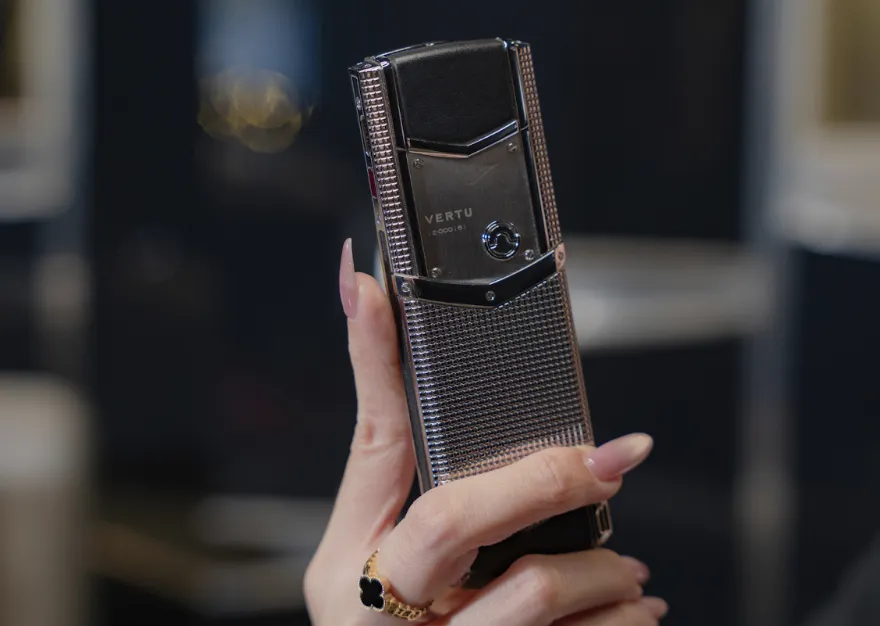
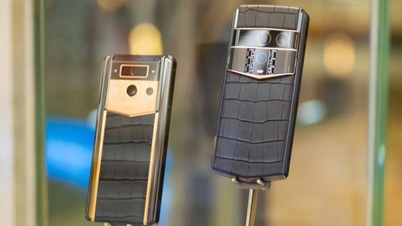
The Ruby key has become a distinctive feature of the legendary Signature V series.
For a small detail to become an icon, the crafting process demands meticulousness and skill. Each button takes weeks to create, starting with the selection of pure raw stone, then using specialized diamond grinding discs to cut and shape it into multiple facets. Afterward, the stone is polished to achieve perfect brilliance, ensuring the button not only refracts light brilliantly but also provides a smooth, tactile feel, making it completely different from the touch and swipe gestures on a typical touchscreen.
The meticulous craftsmanship serves not only aesthetic purposes but also aims to honor the most important function: connecting exclusive services. The "journey" of this detail began in 2002 on the legendary Signature line, when a specialized button for Concierge services was created, featuring an operating mechanism on sophisticated gemstone-encrusted supports.
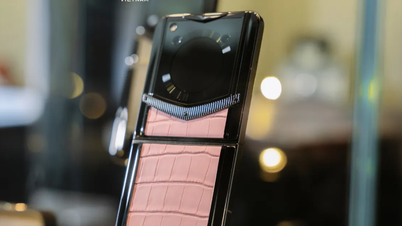
Over more than two decades, this feature has undergone flexible evolution to adapt to each stage of technology. While on the Signature V series, it served as a "key" to connect directly with the butler, on the Aster P series, the button becomes a multi-functional gateway for lifestyle services.
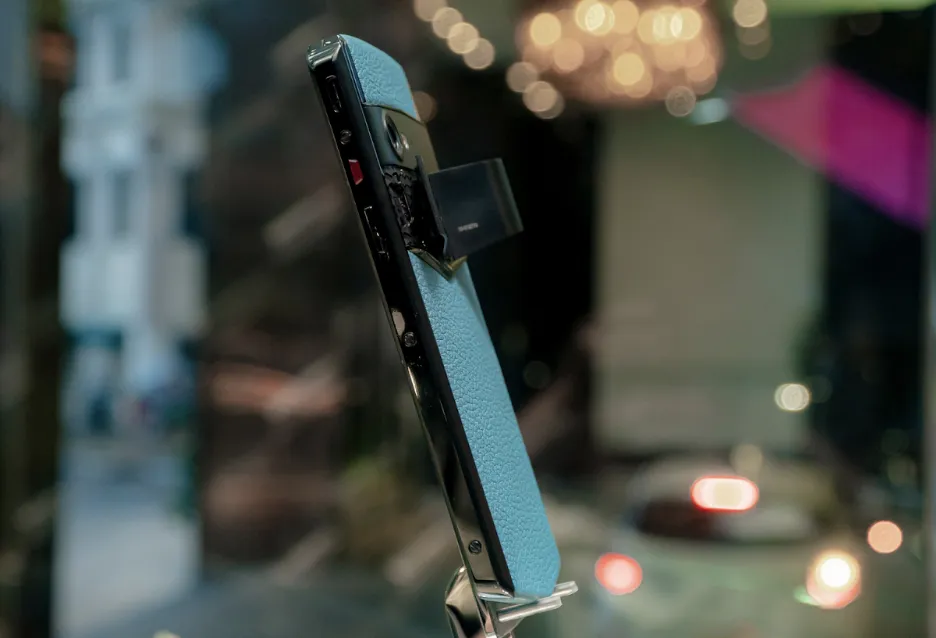
Ruby Key serves as a bridge connecting users to the global Vertu support network.
With the Agent Q series, the button was upgraded to “Ruby Talk.” This is the only physical port that activates the AIGS Agent (artificial intelligence) system and opens up a separate, encrypted data space. When the button is pressed, the device immediately establishes a private connection to the server, allowing users to issue voice or text commands to the global support team.
In reality, on devices of unknown origin, the Ruby key will be disabled or simply become a "dead" button in terms of functionality because it fails to pass the security authentication step from Vertu's global server system.
A representative from Vertu Vietnam shared: “At Vertu, the Ruby key is a crucial detail for identifying the device. Only genuine devices can use this key to connect to the support system. If pressing the key does not open the service, it is not a product supplied by the company.”
KIM THANH
Source: https://www.sggp.org.vn/vi-sao-vertu-van-giu-phim-ruby-trong-ky-nguyen-ai-post826116.html
![[Photo] National Assembly Chairman Tran Thanh Man attends the policy seminar to promote Vietnam-Türkiye cooperation.](https://vphoto.vietnam.vn/thumb/1200x675/vietnam/resource/IMAGE/2026/04/16/1776351415367_vna-potal-chu-tich-quoc-hoi-tran-thanh-man-du-toa-dam-chinh-sach-thuc-day-hop-tac-viet-nam-tho-nhi-ky-8705791-jpg.webp)

















![[Image] Bridges and roads connecting the eastern part of Ho Chi Minh City](https://vphoto.vietnam.vn/thumb/1200x675/vietnam/resource/IMAGE/2026/04/16/1776328595108_ndo_br_bh-vt5-jpg.webp)

























![[Infographic] Details of the Hanoi-Quang Ninh High-Speed Railway Project](https://vphoto.vietnam.vn/thumb/402x226/vietnam/resource/IMAGE/2026/04/16/1776338188424_anh-man-hinh-2026-04-16-luc-18-16-10.png)

![[Photo] National Assembly Chairman Tran Thanh Man meets with the Speaker of the Georgian Parliament](https://vphoto.vietnam.vn/thumb/402x226/vietnam/resource/IMAGE/2026/04/16/1776338494029_anh-man-hinh-2026-04-16-luc-18-21-21.png)











Comment (0)