The scale in terms of area, population, and economy of each commune and ward in the capital is significantly larger than before, opening up space to meet the requirements of modern and civilized urban development, promoting historical and cultural values, accelerating administrative reforms, and better managing and exploiting the space and resources of the thousand-year-old capital in the new era.
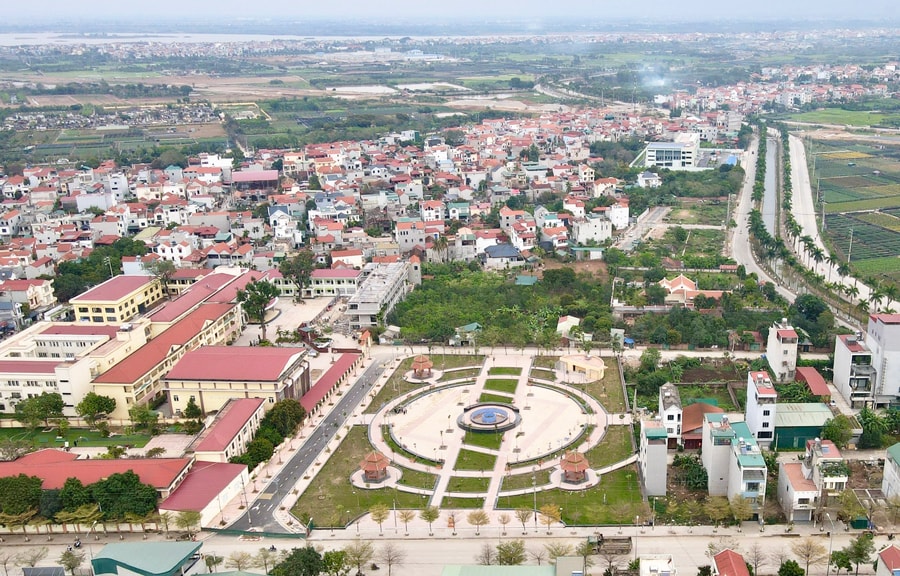
1. Looking at the map of the 126 new communes and wards of the capital, it is easy to see that all 126 new communes and wards of Hanoi ensure the distinctive characteristics and identity of each locality. From the perspective of prioritizing the creation of long-term development opportunities, the current 126 communes and wards are both independent entities in terms of administrative boundaries at the commune level and create a continuous, solid block in the economic, cultural, social, security, and defense sectors of the capital.
A prominent and noticeable feature of the current 51 wards is the fundamental resolution of geographical fragmentation, facilitating people's access to education, transactions, work, and ensuring comprehensive, scientific , and rigorous state management. Previously, many wards, residential areas, and neighborhoods within the inner city had overlapping areas, with some urban areas even being managed by multiple wards. Furthermore, a single ward or neighborhood was often interspersed between numerous roads and separated by rivers, which significantly impacted socio-economic development and hindered administrative procedures for residents and officials in carrying out their duties. Therefore, the current demarcation of administrative boundaries at the ward level along roads and rivers in the inner city has helped residents easily identify their living areas, while also facilitating local management and opening up more opportunities for development.
In suburban areas, most communes are merged based on the existing structures of their former selves. Therefore, even if a commune is formed by merging two or three other communes, it still ensures cultural compatibility within the village, commune, and clan system, as well as the development of the local people's agricultural economy.
Thus, in addition to ensuring the stability and continuity of administrative units, the current 126 communes and wards have created a sufficiently large space in terms of area, population, and economic scale to move towards strong and sustainable future development.
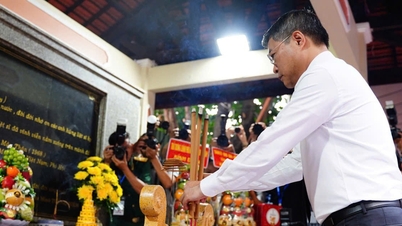
Notably, the cultural identity, history, and customs of each locality and region are clearly reflected in the names of communes and wards. Specifically, while preserving the names that have become part of the history of this thousand-year-old land of culture and the consciousness of the people of Hanoi, many names with unique historical and cultural elements closely associated with the local people have also become the names of new communes and wards.
All the socio-economic, cultural, and historical factors of the current communes and wards will create more room for development, thereby helping the Party Committee, government, and people of Hanoi enter a new phase of development with many new expectations.



2. The establishment of a two-tiered local government system, encompassing the 126 communes and wards of Hanoi today, is a vivid testament to the significant transformation in the capital's governance reform mindset and opens up new avenues for development. This helps Hanoi continue to maintain its leading role and driving force for growth not only within the Capital Region and the Northern Key Economic Zone but also for the entire country.
With their new position and new opportunities, the authorities of the 126 communes and wards need to identify the key priorities and issues that need to be prioritized for development in the coming period. This task should be built upon existing strengths, while also unleashing new potentials that have emerged from the expansion of each locality's administrative boundaries.
In the new context, communes and wards need to identify their local development issues from a perspective of "the most important of the most important," "the most groundbreaking of the most important," in each field. More specifically, based on the system of policies and laws issued by the Party, the State, and the city, communes and wards need to focus on development pillars that are appropriate for their locality. Accordingly, the goals and tasks of each commune and ward should focus on the "four pillars" of the Politburo: Resolution No. 57-NQ/TƯ on breakthroughs in the development of science, technology, innovation, and national digital transformation; Resolution No. 59-NQ/TƯ on international integration in the new situation; Resolution No. 66-NQ/TƯ on reforming the work of drafting and implementing laws to meet the requirements of national development in the new era; and Resolution No. 68-NQ/TƯ on the development of the private economy. With this "four-part framework," communes and wards need to research and develop appropriate and strategic goals, tasks, and solutions that fit within the overall objectives of the city in the coming period.
In particular, communes and wards also need to base their calculations on Resolution No. 15-NQ/TƯ dated May 5, 2022, of the Politburo on the direction and tasks for the development of Hanoi Capital City until 2030, with a vision to 2045; and the 2024 Law on the Capital City to quantify development indicators, thereby contributing to realizing the goal by 2045: Hanoi Capital City will be a globally connected city with a high standard of living and quality of life, with a Gross Regional Product (GRDP) per capita exceeding US$36,000; its economy, culture, and society will be comprehensively, distinctively, and harmoniously developed; it will be exemplary for the whole country; and its level of development will be on par with the capitals of developed countries in the region and around the world.
With a vision and specific goals and targets, both short-term and long-term, communes and wards need to position themselves in a new way, adopting a new mindset in shaping their development path. In the current context of the capital city, localities need to prioritize science, technology, innovation, and digital transformation as the main driving force contributing to economic development. Together with the city government, the commune and ward governments and the people of Hanoi need to prioritize and focus on addressing pressing issues related to people's lives, such as environmental pollution, especially improving air quality, rehabilitating inner-city rivers, and developing more parks and gardens. At the same time, localities need to prioritize land allocation for public transportation development; continue to improve the quality of education and training; ensure food safety and healthcare for the people... The overall goal is to enhance social welfare, thereby contributing to further improving the material and spiritual lives of the people of Hanoi.
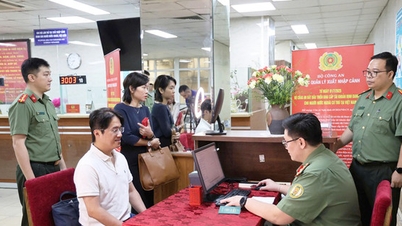
3. The commune and ward-level units of the capital city are now larger in scale, and their tasks and responsibilities are heavier. However, overall, this is a valuable opportunity for local authorities to innovate leadership thinking, reform methods of state management, strongly apply science and technology, improve the quality of local governance, and enhance the effectiveness of serving the people.
The greater the responsibility, the greater the demands. The current administrative apparatus of communes and wards in the capital must be strong, operate effectively and efficiently, and be closer to the people. The goal is to ensure that the commune and ward governments are the places where the policies and guidelines of the Party, State, and city are implemented effectively and substantially; ensuring that there are no delays, bottlenecks, or disruptions to social activities, especially those related to citizens, businesses, and essential public services.
With this new position, the local authorities at the commune and ward levels, especially the team of officials and civil servants, need to thoroughly understand that the spirit of a service-oriented government will no longer be just a slogan but will become concrete, substantive actions reaching directly to the people and businesses.


In this new journey, which presents many opportunities but also numerous challenges, every organization and every individual is a crucial link. Therefore, unity, solidarity, and consensus will create invincible strength to overcome all obstacles and difficulties, working together to build a more civilized and prosperous homeland.
Building upon a thousand-year tradition of culture and heroism, a spirit of unity, intelligence, and aspiration for development, under the leadership of the City Party Committee and with the companionship and trust of the people of Hanoi, the Party Committees and governments of the 126 communes and wards will wholeheartedly promote the strength of national unity, continue to lead in reforming management models, improving the quality of grassroots government, and building a modern, professional administration to better serve the people.
With an unwavering spirit of innovation, the Party Committee, government, and people of Hanoi will continue to set a leading example, successfully implementing the two-tiered local government model, ensuring the smooth, effective, and efficient operation of the organizational system; protecting the legitimate rights of the people, improving social welfare, and expanding development opportunities for all strata of Hanoi's population in the new era.
Source: https://hanoimoi.vn/vi-the-moi-van-hoi-moi-708590.html