"Helpers" for a bountiful harvest
Climate change is posing increasingly significant challenges to Vietnamese agriculture . Prolonged droughts, saltwater intrusion, and rising temperatures are causing crop yields and reduced resilience. Meanwhile, Vietnam generates millions of tons of agricultural by-products each year, such as straw, fruit peels, leaves, and post-harvest biomass.
Based on this reality, the GreenNano project – using bio-nano particles from agricultural by-products to help plants grow and combat climate stress – was born. The project was carried out by a group of engineering physics students from the University of Technology, Vietnam National University, Hanoi, including Pham Tuan Anh, Nguyen Manh Trung, Tran Ngoc Hieu, and Nguyen Anh Hao.
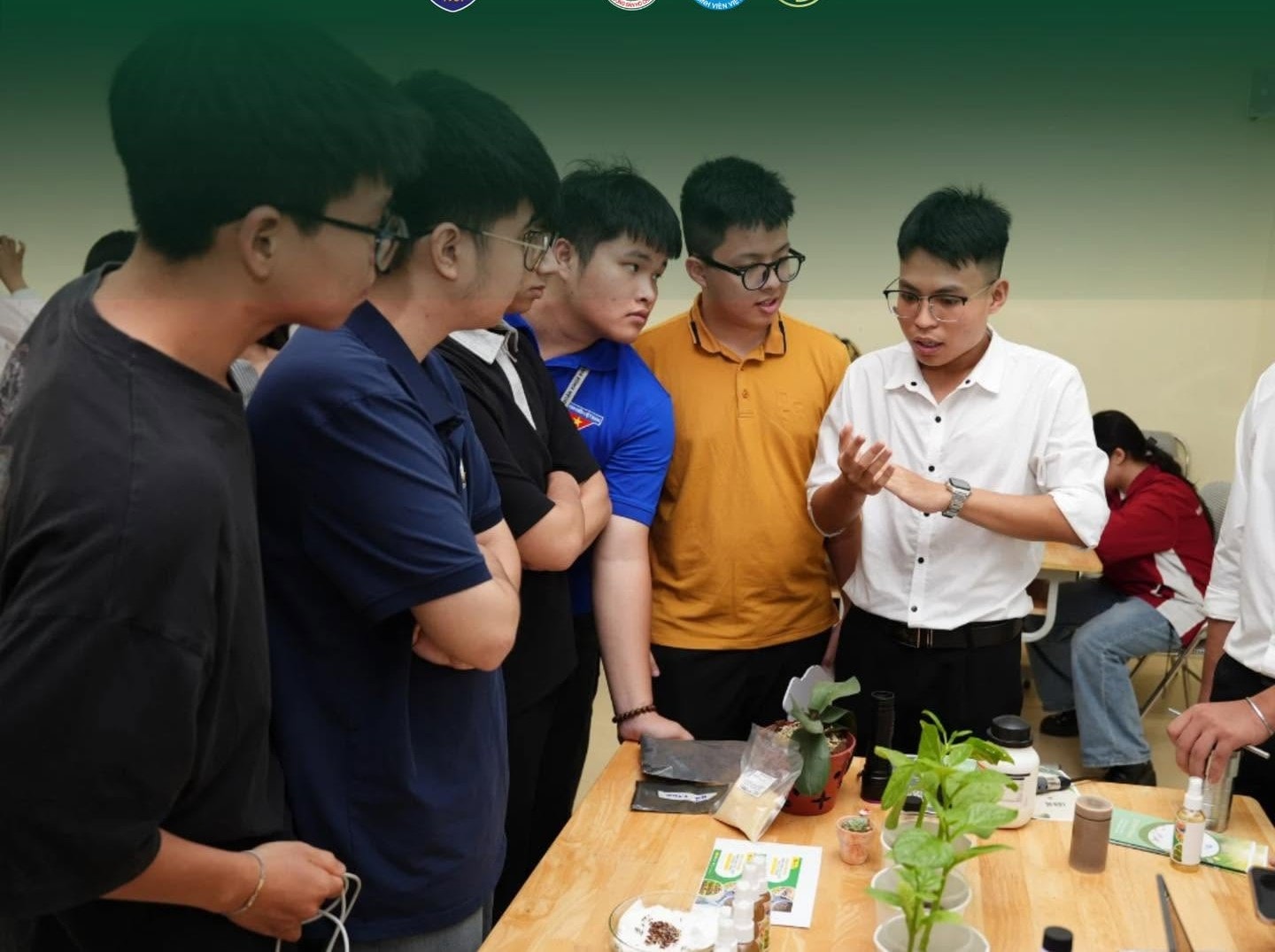
Pham Tuan Anh stated: “Instead of viewing agricultural by-products as waste to be disposed of, the research team sought to transform them into input materials for a new technological solution. Using straw, fruit peels combined with citric acid, gelatin, and DMSO, the team successfully synthesized Carbon Quantum Dots (CQDs) bio-nanomaterials.”
CQDs are ultra-small carbon nanomaterials containing multiple active functional groups that interact effectively with plant cells. As a result, these products can support better plant growth and increase their resistance to adverse environmental conditions.
Initial test results showed that seeds treated with CQDs germinated faster and grew healthier compared to the control group. For plants, the bio-nano solution resulted in greener leaves, better root development, and increased adaptability to adverse environmental conditions.
In particular, GreenNano not only solves the productivity problem but also opens up a new direction for utilizing agricultural by-products. This is the spirit of the circular economy - transforming waste from one process into a resource for another.
Many environmental experts believe that the future of agriculture lies not only in increasing production but also in adapting to climate change and reducing emissions. Initiatives like GreenNano demonstrate that technology can absolutely act as a bridge between economic growth and environmental protection.



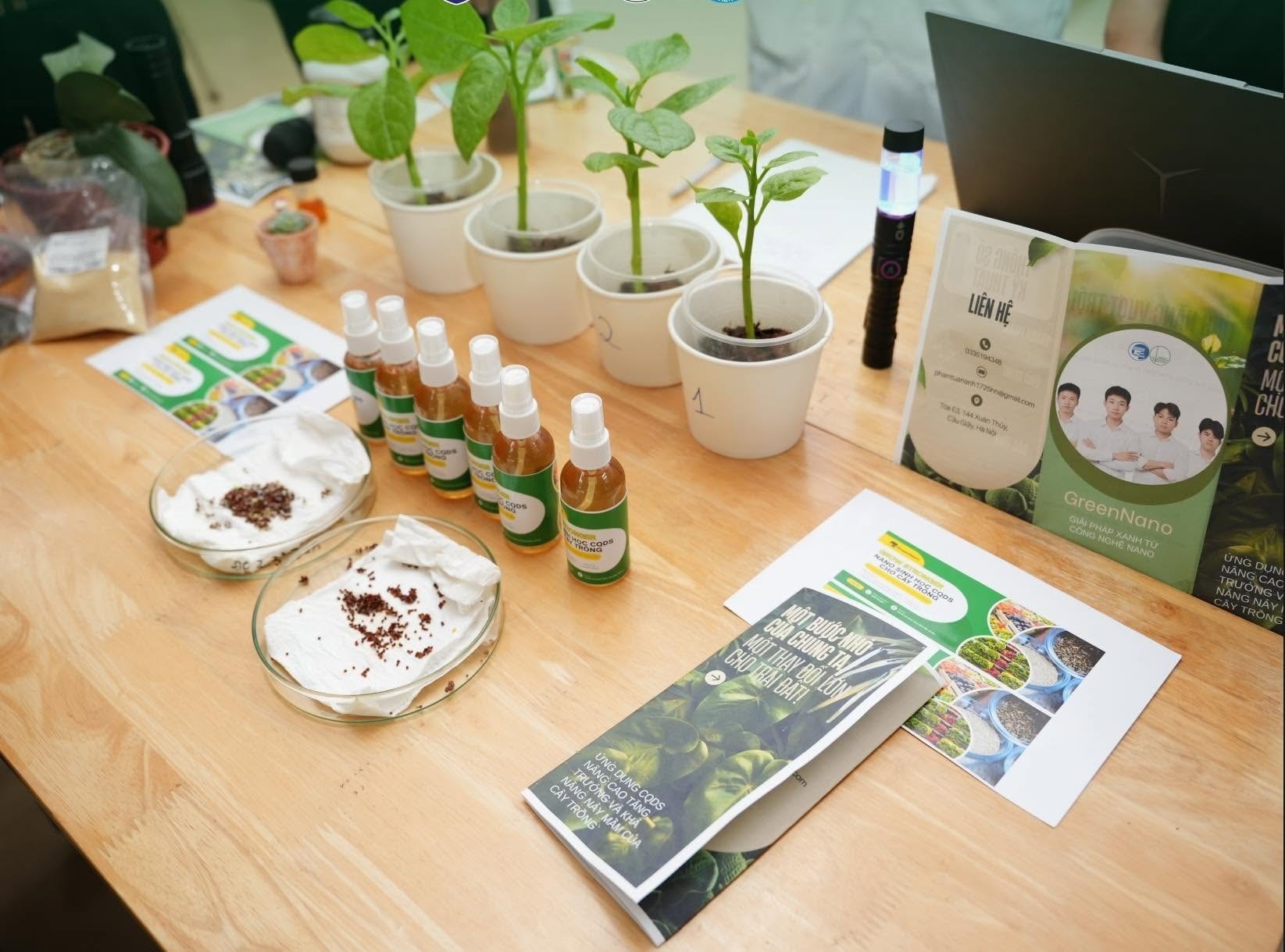
After product optimization, crop testing, and preparation for large-scale application, the research team expects GreenNano to become an affordable solution for farmers, contributing to building a greener, smarter, and more sustainable agriculture in the future.
Coconut fiber becomes a "green shield" for rivers and lakes.
While GreenNano aims to solve problems in the fields, the CocoBoom project – a biodegradable waste barrier made from coconut fiber for rivers and lakes – seeks to clean up rivers that are increasingly under pressure from waste and water pollution.
According to young people in the PentaGreen group, which includes students from the Academy of Policy and Development and students from Hoai Duc B High School (Hanoi), hundreds of thousands of cubic meters of wastewater, along with thousands of tons of garbage and oil spills, are polluting rivers and lakes in Vietnam every day. In Hanoi alone, the majority of wastewater is still discharged directly into the environment while the treatment rate remains limited.
It's worth noting that many current waste collection solutions still use plastic or metal materials. After a period of use, these very materials can become new sources of pollution.
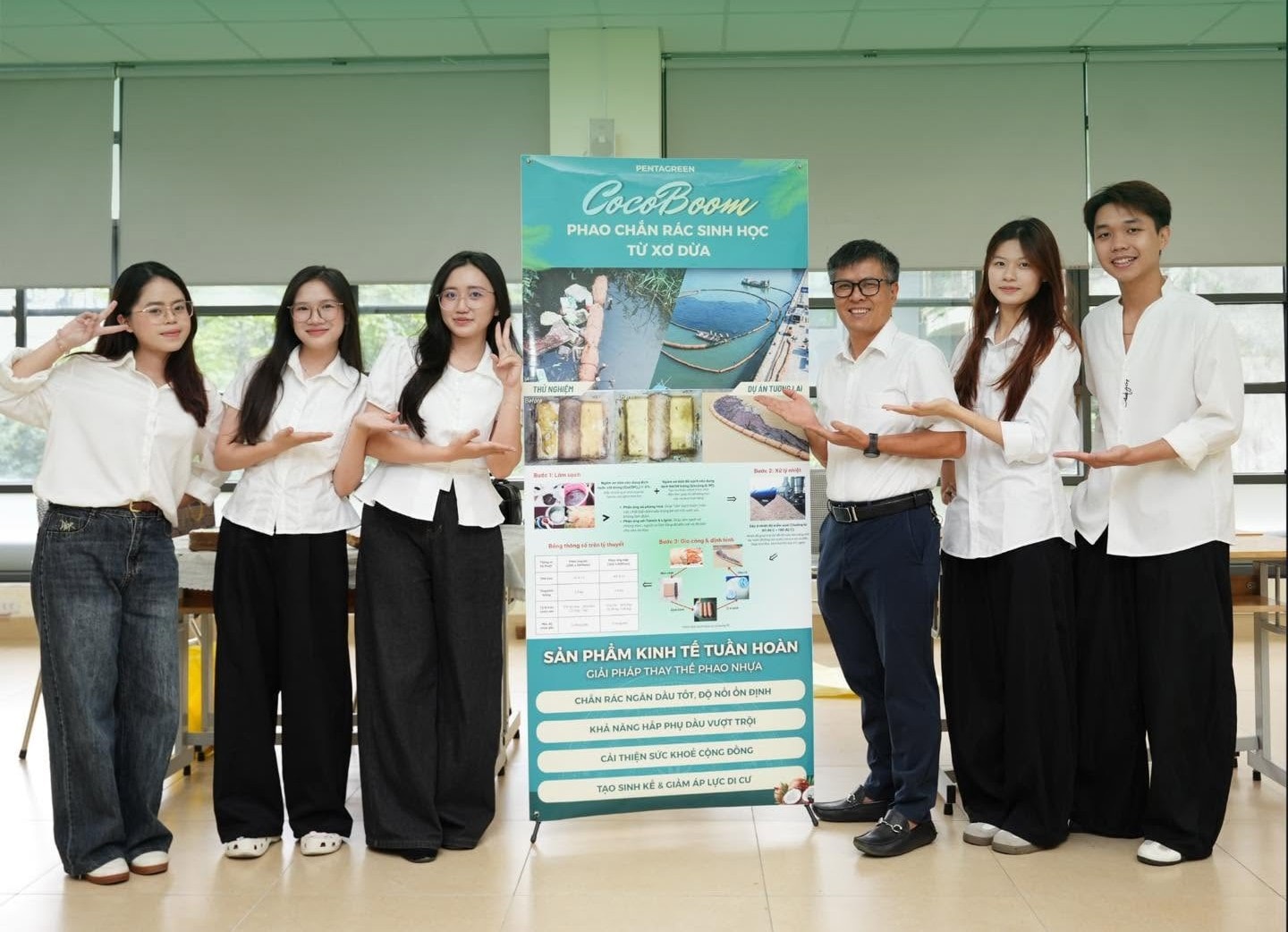
From that paradox, CocoBoom was developed as a more environmentally friendly solution. The product uses natural coconut fiber – an abundant and low-cost resource in Vietnam. Its structure consists of a compressed coconut fiber core that allows it to float on water and a surrounding biodegradable mesh layer to increase durability.
Thanks to its simple yet effective design, CocoBoom can prevent and collect floating debris such as plastic bags and bottles at drains, canals, and garbage collection points on rivers and lakes. Furthermore, the coconut fiber material also demonstrates quite effective oil absorption capabilities.
“We tested the product in the canals of An Khanh area, Hanoi for two weeks and received positive feedback. Oil absorption tests also yielded promising results, showing the potential for practical application of the solution,” said Hoang Thi Thuy Duong, a student at the Academy of Policy and Development.



One of the most effective approaches today is to utilize local resources to address local environmental problems. CocoBoom is a prime example of this mindset, simultaneously treating water pollution, utilizing agricultural by-products, and reducing reliance on non-biodegradable materials.
Beyond being a single product, CocoBoom also reflects the growing trend of community-oriented innovation among young people. Through collaboration with the government and social organizations, the team hopes to expand the model to many localities.
The valuable aspect of these projects lies not only in the technology or its practical application, but also in how young people re-evaluate the value of things once considered waste. When straw, fruit peels, or coconut fiber are given a "new life cycle," they not only contribute to solving environmental problems but also convey a message about a more sustainable future where all resources can be used efficiently and responsibly.
Source: https://hanoimoi.vn/vong-doi-moi-cua-rom-ra-va-xo-dua-1160397.html