But behind those goals is more than just the story of three superstar strikers. It's also a sign that, in the era of the 48-team World Cup , goal-scoring records have a new "runway" to be set.
The superstar strikers accelerate together.
The World Cup always needs big stars. Smaller teams can spring surprises, newcomers can write fairy tales, but for the tournament to become a truly memorable event, it still needs names powerful enough to draw the whole world to their screens.

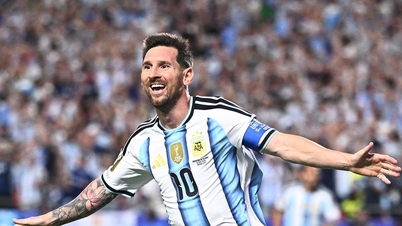
Messi shines with a hat-trick for Argentina.
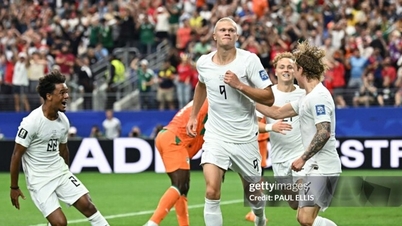
Messi, Mbappé, and Haaland are doing exactly that. In the first match, Mbappé scored a brace for France, Haaland scored a brace for Norway, and Messi shone with a hat-trick for Argentina. In the second match, all three continued to score. Messi added another brace, Mbappé found the net again, and Haaland added two more goals.
Once might be a coincidence. Twice in a row, that's a phenomenon.
The 2026 World Cup is only in its early stages, but the race among top scorers has already heated up rapidly. Messi has not only scored goals but also broken historical records. Mbappé continues to move closer to the top spot on the all-time World Cup scoring list. Haaland, meanwhile, only needed his first two games to show that he didn't come to the World Cup just for his debut.
But the more important question is: why did those milestones come so quickly?
New format , new game.
The 2026 World Cup is unlike previous World Cups. The tournament has been expanded to 48 teams, the number of matches has increased significantly, and the knockout rounds begin from the round of 32. This changes not only the scale of the tournament but also the context in which records are set.
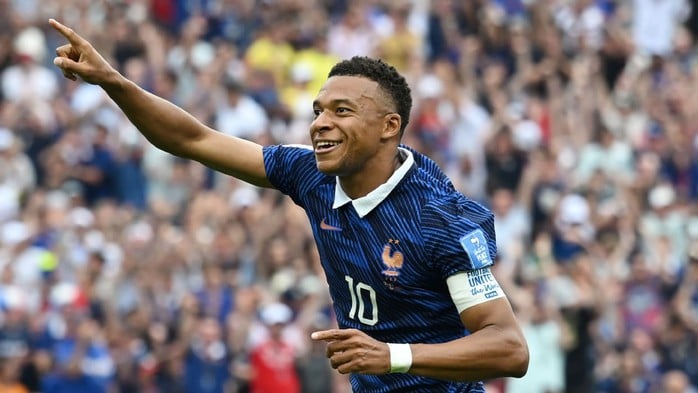
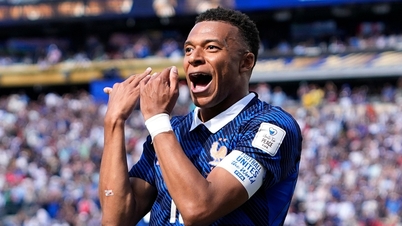
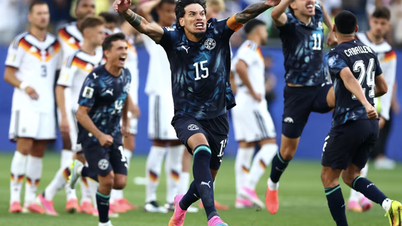
Mbappé scores a brace for France.
Previously, a team wanting to progress further had to get past the 32-team group stage and then directly into the round of 16. Now, strong teams have another stepping stone before entering the more intense knockout rounds. Super strikers also have more opportunities to play, more opponents to face, and more time to accumulate goals.
That's not to say records lose their value. Scoring at the World Cup is never easy. Scoring on the world's biggest stage still requires character, class, and the ability to handle immense pressure.
But to be fair, records are no longer set in the same context as before. With a larger World Cup, the path to history is longer and offers more opportunities.


That's what makes the 2026 World Cup special. The tournament not only opens the door to more footballing nations, but also broadens the runway for big superstars to accelerate their careers.
Behind every superstar
A striker can be great, but he can't achieve World Cup records on his own without a strong team behind him. Mbappé is the clearest example. He belongs to the same generation as Haaland, but has a huge advantage because he plays for the French national team. That's a team with depth, experience, and a track record of consistently progressing deep into major tournaments. When a superstar striker is placed in such a strong system, goals come not only from individual talent, but also from the quality of the entire team behind him.
Messi is no different. Argentina is no longer a team that relies solely on the inspiration of a genius. This team knows how to organize, how to protect Messi, and how to position him in areas where he can decide the game. Therefore, at nearly 39 years old, Messi can still continue to score goals, continue to make milestones, and continue to extend his legacy.
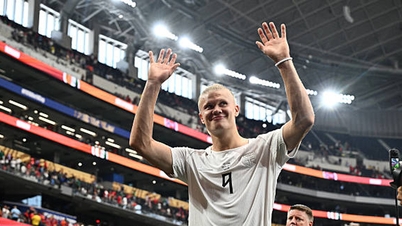
Haaland is different. At club level, the whole world knows he's a goal-scoring machine. But the World Cup is about the national team. Wearing the Norway shirt, Haaland doesn't have the same launching pad as Mbappé in France. He has to carry the dreams of a footballing nation that has long been outside the mainstream of the World Cup.
It is precisely these differences that make the race so exciting. Mbappé plays in a major national team. Messi is supported by a more complete Argentina. And Haaland must transform Norway into a respected team on the big stage.
Therefore, the scoring race is not just a race between three individuals. It's also a race between three team ecosystems.
The value of the old and new records
Every time the format changes, football has to learn to look at the numbers again.
In the past, records were set in a World Cup with fewer teams and fewer matches. Now, records are set in a larger tournament with more matches and more opportunities for both strong and weak teams. This may cause new numbers to increase more rapidly, but their value should not be underestimated.

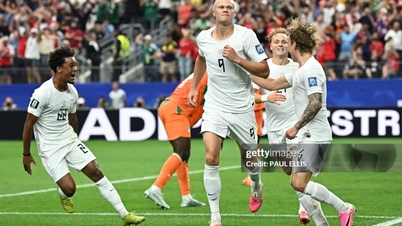
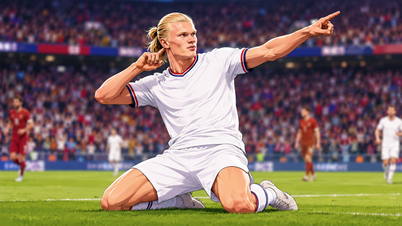
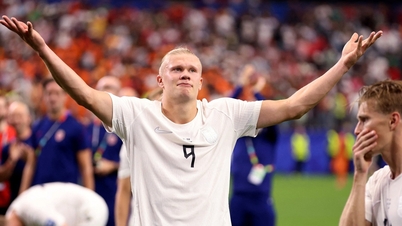
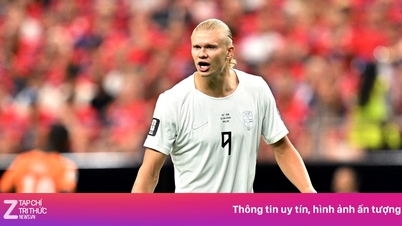
Haaland scored a brace for Norway.
Football doesn't stand still. The World Cup doesn't stand still either. From 16 teams, then 24 teams, to 32 teams, and now to 48 teams, each expansion creates a new world. And in that new world, great players must prove that they are not only good in the old conditions, but also know how to take advantage of the new conditions to rewrite history.
Messi did it with the class of a legend who refuses to leave the stage. Mbappé did it with the speed of a superstar in the prime of his career. Haaland did it with the power of a center forward who truly got his first opportunity to shine at the World Cup.
Three different paths, but they all meet at one point: they are setting the World Cup record books in motion.
Today's numbers



A 48-team World Cup not only adds more matches, more teams, and more time slots. It also ushers in a new era of numbers.
Goal-scoring records may be broken faster. Top scorer races may become more intense. Big superstars may have more opportunities to extend their legacy. But at the same time, the pressure is also greater, because with more opportunities comes higher expectations.
For Messi, each goal now is another line added to the end of a great career. For Mbappé, each goal is a step closer to the throne of history. For Haaland, each goal is a declaration that the World Cup finally has a place for his goal-scoring power.
From that perspective, the phenomenon of Messi, Mbappé, and Haaland all exploding onto the scene is not just a beautiful day for attacking football. It signals a changing World Cup.
The World Cup is expanding to create new stories for smaller football nations. But the expansion of the World Cup also provides more opportunities for superstars. And when players like Messi, Mbappé, and Haaland know how to take advantage of that opportunity, history will not stand still.
Source: https://nld.com.vn/world-cup-48-doi-duong-bang-moi-ky-luc-moi-196260623144807173.htm


![[Photo] Strengthening character and expertise: Intense training for artillery soldiers.](https://vphoto.vietnam.vn/thumb/1200x675/vietnam/resource/IMAGE/2026/06/30/1782815602541_lu-368-1875-4571-jpg.webp)