The 48-team format once caused many to worry that the World Cup would become diluted, with many one-sided matches and many teams only coming to "play second fiddle".
A surprising "newcomer" from Cape Verde
Cape Verde is the most beautiful story of the group stage in that spirit. A small island nation in the Atlantic, small in population, area, and even in its reputation on the world football map, reached the round of 16 by finishing second in Group H. Even more remarkably: they didn't need a play-off spot.
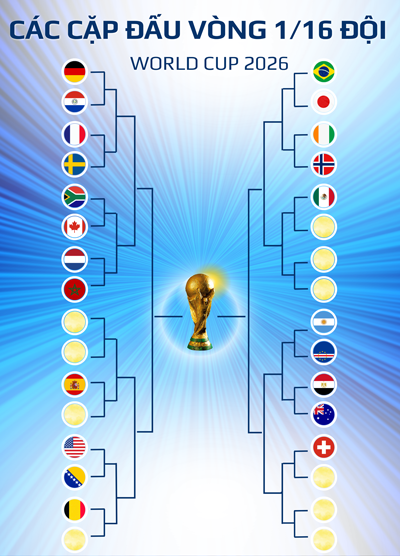
The 2026 World Cup is heating up as it enters the knockout round (round of 32). Graphic: VE LOAN
In a World Cup with eight spots reserved for the best third-placed teams, a newcomer clinging to a "backdoor" route could be considered a miracle. But Cape Verde did even more than that. They didn't advance through a narrow calculation, they didn't anxiously await results from other groups, and they didn't rely on luck. They finished as the top two teams in a group that included Spain , Uruguay, and Saudi Arabia.
The Cape Verde story is not simply a case of a "small team causing a surprise" in the conventional sense. It's a powerful reminder that in football, national size doesn't determine the scale of the dream. A team may be small on the map, but it must not be small in how it approaches the game, handles pressure, and seizes its opportunities.


The story of Uruguay and Saudi Arabia
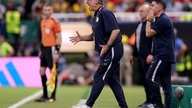
Uruguay has a past that many football nations admire: two World Cup titles, a long-standing tradition, and a renowned fighting spirit. But the World Cup doesn't grant a ticket to history. Stars from the old pages of history can't automatically translate into points on today's rankings. When a team lacks sharpness and the strength to advance from their group, the past remains only a fond memory.
Saudi Arabia is a different case. In recent years, Saudi football has been associated with vast resources, great ambition, and a desire to step onto the world stage. Money can buy infrastructure, attention, and glamorous tournaments, but it cannot instantly buy World Cup experience.
Iran offers a different kind of experience: not as dazzling as Cape Verde, not as explosive as the big teams, but resilient. Against Egypt, Iran stood firm, keeping their hopes alive in the race for third-placed teams. If Cape Verde represents a small team making it through the main gate, Iran symbolizes teams that know how to survive until the very end. In a 48-team World Cup, survival is also a skill. Not every team plays beautifully and achieves resounding victories, but those who can withstand pressure deserve respect.
This isn't just about the smaller teams. France beat Norway 4-1 and sent an important message: They don't rely solely on Kylian Mbappe's goalscoring ability. A team aiming for the World Cup can't depend on just one superstar. When Ousmane Dembele shines and other attacking options come into play, France shows that depth is what makes a title contender strong.
Belgium did the same. After two lackluster opening matches, they beat New Zealand 5-1 in the final game to top the group. It wasn't just a resounding victory. It was the response of a team that understood that the reputation of their golden generation, whether still standing or faded, wasn't enough to protect them. To progress, Belgium had to reawaken themselves.
In this tournament, every team can dream. But to keep those dreams alive, they must decide their own fate on the pitch. Opportunities may be greater, but the standards remain high. More doors may open, but no team can simply walk through them based on reputation, money, or past achievements.



Source: https://nld.com.vn/world-cup-khong-co-ve-cho-hao-quang-cu-196260627181753438.htm