Results after one month of implementation
After more than a month of nationwide rollout, E10 biofuel has moved beyond the initial phase and is now entering its most crucial test: market application.
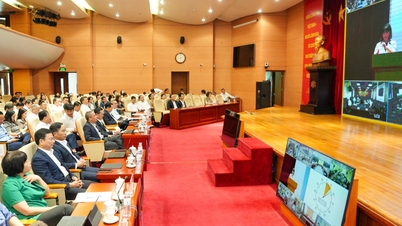
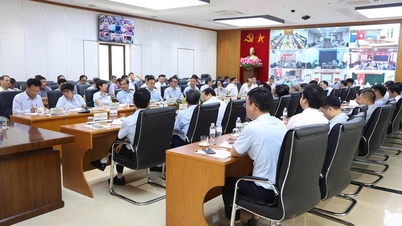
At the online seminar " E10 Gasoline : A Scientific and National Energy Security Challenge" held on the morning of July 2nd, experts stated that, after more than a month of implementation, E10 gasoline has not only demonstrated effectiveness in terms of technology and market, but has also gradually affirmed its role in ensuring energy security, promoting green transformation, and forming a new value chain from agriculture to industry.
According to Dr. Dang Tat Thanh, Director of the Department of Innovation, Green Transformation and Industrial Promotion ( Ministry of Industry and Trade ), as of June 28, 2026, the total consumption of bioethanol nationwide reached approximately 980 million liters, of which E10 gasoline accounted for 924 million liters and E5 gasoline for 56 million liters. Thus, E10 gasoline accounted for more than 96% of the total bioethanol consumption.

"This is a very encouraging figure, confirming that the transition has taken place quickly and people have accepted and used E10 gasoline as a regular fuel," said Dr. Dang Tat Thanh.
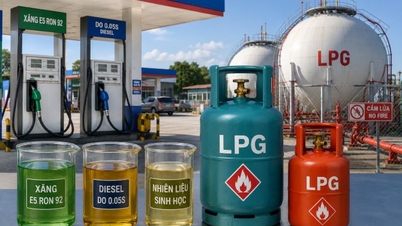
To date, all retail gasoline stations nationwide are selling E10 bioethanol fuel. Two major companies, Petrolimex and PVOIL, along with 24 other distributors, are supplying E10 fuel nationwide. At the same time, 11 out of the 26 distributors continue to sell E5 fuel to meet consumer demand.
"It can be said that, after a month of implementing the E10 biofuel blending roadmap, the market is operating stably, the supply is ensured, and people have accepted biofuel as a regular fuel," he emphasized.
Representatives from the Ministry of Industry and Trade also stated that a comparison of environmental monitoring data before and after the implementation of E10 showed positive improvements in air quality in both Ho Chi Minh City and Hanoi. In Ho Chi Minh City, pollution indicators such as CO, NO₂, NOx, O₃, SO₂, and fine dust all decreased significantly. Meanwhile, in Hanoi, CO and fine dust levels also showed a downward trend.
"These initial results partly show that the implementation of the E10 biofuel roadmap has made a positive contribution to improving air quality, aiming for a healthier living environment and enhancing the quality of life for the people," commented Dr. Dang Tat Thanh.


From a scientific perspective, Associate Professor Pham Huu Tuyen, Director of the Center for Research on Power Sources and Autonomous Vehicles (Hanoi University of Science and Technology), believes that bringing E10 to the market is a scientific problem for the entire economy.
According to him, research results and the practical use of E10 gasoline worldwide and in Vietnam show that E10 bio-gasoline has performance equivalent to traditional mineral gasoline, ensuring all the technical features of the vehicle.
Thanks to its approximately 3.4% oxygen content, E10 gasoline facilitates more complete combustion in engines, thereby reducing emissions of pollutants such as HC and CO. This improvement in emission standards also helps vehicles better meet inspection requirements according to Vietnamese regulations.
Vietnamese cassava in the energy value chain
From an economic perspective, Associate Professor Dr. Tran Dinh Thien - Chairman of the Economic Advisory Council - Central Committee of the Vietnam Fatherland Front, former Director of the Vietnam Institute of Economics, assessed the implementation of E10 as an initial success in changing the consumption habits and psychology of society.
According to him, the greatest significance of E10 lies not in consumption volume but in strategic vision and timing of implementation. In the context of a volatile global energy market, Vietnam's introduction of E10 demonstrates a more proactive approach to ensuring energy security.

"A multi-faceted approach helps people understand that this is a story of overall benefit and strategic importance, not just limited to local concerns linked to personal motives or interests," the expert emphasized.
Associate Professor Tran Dinh Thien believes that the greater value that E10 brings lies in the formation of a new value chain, in which agriculture is no longer excluded from the energy story.
He cited the example that, for many years, cassava – one of the key raw materials for ethanol production – was mainly exported in its raw form to markets like China with low added value. At that time, "gasoline was gasoline, cassava was cassava," and the two sectors had almost no connection.



However, the widespread rollout of E10 gasoline has created a completely different approach, whereby "gasoline must be linked to Vietnamese cassava." This means that cassava is no longer just an agricultural product for export as a raw material, but has become a link in the national energy value chain.
As ethanol demand increases, the domestic market will create a more stable outlet for raw materials, encouraging businesses to invest in deep processing instead of exporting raw materials. This will therefore retain more added value domestically, benefiting farmers, processing businesses, and the economy as a whole.
According to Mr. Thien, this is not just about consuming agricultural products, but also about connecting agriculture with the processing industry, between raw material areas and technology and markets. This new value chain will create momentum to increase productivity and improve income for cassava growers, while helping Vietnamese businesses master ethanol production technology and gradually enhance their competitiveness.
"This is a new approach, linking agriculture with industry, ensuring energy security is more firmly linked to food security," Associate Professor Dr. Tran Dinh Thien shared.
Source: https://doanhnghiepvn.vn/kinh-te/xang-e10-tao-dau-ra-moi-cho-cay-san/20260702025117432