Leading the nation in the implementation of digital education.
According to Mr. Nguyen Van Hieu, Director of the Ho Chi Minh City Department of Education and Training, after 50 years, Ho Chi Minh City now leads the country in implementing student assessment programs according to international standards, pioneering the introduction of international certificates in English and computer science into schools, implementing optional English language teaching from grade 1, and organizing many activities to prepare for the implementation of the "Gradually making English the second language in schools" project...
With 98% of general education institutions implementing management and teaching in a digital environment; and 60% of continuing education institutions implementing teaching and learning in a digital environment..., Ho Chi Minh City has completed and exceeded most of the digital transformation targets in the education sector by 2025, becoming the leading locality nationwide in terms of speed and scale of digital education implementation.
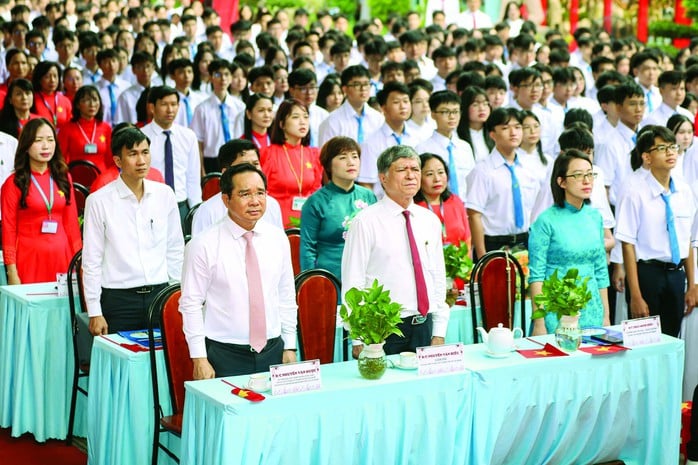
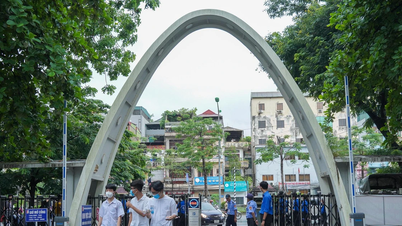
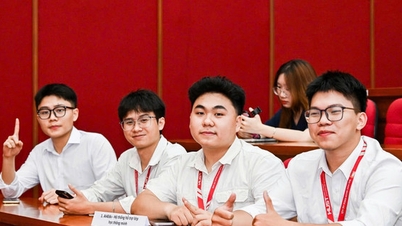
Deputy Secretary of the City Party Committee and Chairman of the People's Committee of Ho Chi Minh City, Nguyen Van Duoc, and Director of the Department of Education and Training of Ho Chi Minh City, Nguyen Van Hieu (front row, first and second from the left), attend the opening ceremony of the new school year at Tran Phu High School.
Following its merger with Binh Duong and Ba Ria - Vung Tau, Ho Chi Minh City has become a leading economic, industrial, service, and logistics center in the country, with a dynamic network of industrial parks, seaports, and supply chains. This creates an urgent need for high-quality human resources with digital skills and modern technological skills.
Currently, Ho Chi Minh City's education sector is the largest in the country, with over 2.6 million students, 110,000 teachers, and nearly 3,500 schools at all levels. Leaders of the Ho Chi Minh City Department of Education and Training emphasized that, with a long-term vision, Resolution No. 71-NQ/TW affirms that rapid and sustainable development must begin with people, with an advanced, modern education system that reflects Vietnamese identity and a global perspective.
"With that spirit, the Ho Chi Minh City Department of Education and Training is entrusted with the responsibility of leading the way in building high-quality human resources, developing a learning society, and forming global citizens - individuals who are both imbued with national identity and capable of integrating into the knowledge economy ," Mr. Hieu emphasized.
Objective: Modernization and comprehensive development


According to the leaders of the Ho Chi Minh City Department of Education and Training, the world is changing every day with the explosion of digital technology, artificial intelligence (AI), big data, the Internet of Things (IoT), and virtual reality (VR/AR). In this context, education must undergo a strong transformation – from "learning to know" to "learning to do, learning to create, and lifelong learning." Ho Chi Minh City has early on identified fundamental and comprehensive reform of education and training as a strategic requirement for the 2025-2030 period, aiming to build an open, flexible, modern, and internationally integrated education system, with the goal of ensuring that every student has the opportunity to develop their full potential.
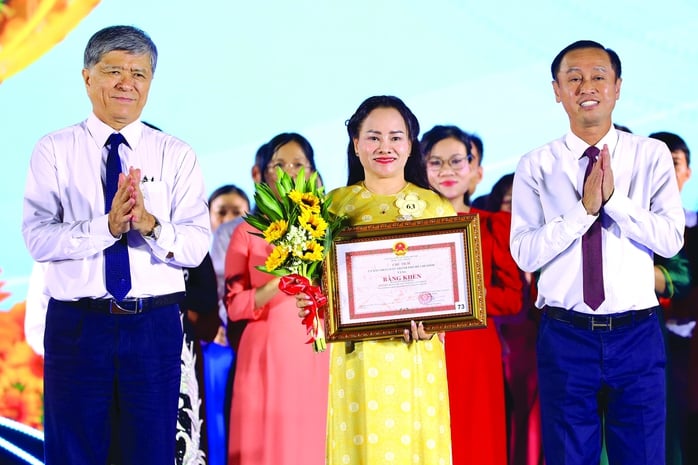
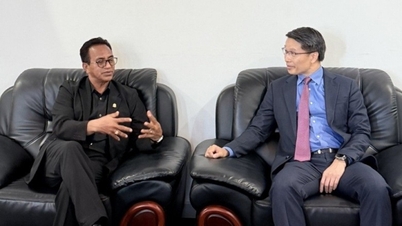
Vice Chairman of the Ho Chi Minh City People's Council Huynh Thanh Nhan (far right) and Mr. Nguyen Van Hieu, Director of the Ho Chi Minh City Department of Education and Training, present certificates of merit to teachers who won the Vo Truong Toan Award in 2025. Photo: HOANG TRIEU
The major pillars that the city is focusing on implementing to create a real breakthrough include:
Firstly, developing English – the language of knowledge and integration. The city is committed to raising foreign language proficiency standards according to international competency frameworks, expanding bilingual programs, and collaborating with reputable educational institutions. AI applications support speaking practice and speech recognition, helping students confidently communicate and develop their foreign language skills in learning, research, and global interaction.
Secondly, digital transformation is identified as the foundation of modern education, and AI is seen as the new arm of the teacher. In fact, Ho Chi Minh City is promoting the construction of the City's AI Education Center, aiming to integrate technology to support teaching, learning analysis, automated grading, 3D simulation, and personalized lesson design. AI does not replace teachers but helps them become "intelligent guides," allowing them to dedicate more time to creativity and character education.
The combination of digital transformation, AI, and pedagogical innovation is bringing Ho Chi Minh City's education sector closer to the "Education 4.0" model – where learners are at the center, knowledge is digitized, and learning takes place anytime, anywhere.
According to Nguyen Van Hieu, Director of the Ho Chi Minh City Department of Education and Training, the city's education sector is committed to investing in human resources and building creative citizens from preschool to university. At the primary school level, this includes laying the foundation for character and digital thinking through models such as "Happy School," "Digital School," and "Emotional and Values Education," which are implemented synchronously to help students develop positive habits, critical thinking, and technological skills from an early age.
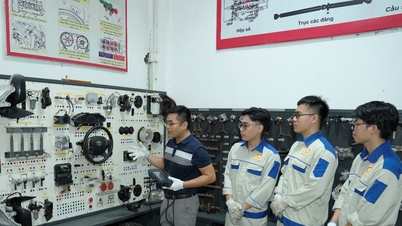
At the lower secondary level, the focus is on developing digital citizenship skills. The city has emphasized soft skills education, digital ethics, critical thinking skills, and collaboration skills. STEM, robotics, AI, and project-based learning programs help students connect theory with practice, understand technology, and shape their future careers.
At the high school level, the focus is on nurturing creative and integrated human resources. Many schools adopt international programs such as Cambridge, IB, and Edexcel, emphasizing personalized learning, assessing practical abilities, and developing entrepreneurial thinking.



At the college and university level, the city will be a center for research, innovation, and training of highly skilled human resources for the southern region. The city aims for a "Learning City - Knowledge City" model - where all citizens can engage in lifelong learning and participate in the innovation process.
Entering the 2025-2030 period, Ho Chi Minh City will continue to strengthen budget investment in education, developing green, smart, and happy schools, aiming for every school to be a center of innovation and character development. The city will focus on training teachers with digital skills, AI skills, and innovative capabilities – educators who are knowledgeable, compassionate, and pioneers in digital transformation. Simultaneously, the system of community learning centers, digital libraries, and open creative spaces will be expanded, contributing to the formation of a "learning society – lifelong learning".
Source: https://nld.com.vn/xay-dung-nen-tang-tri-thuc-cho-sieu-do-thi-196260210130549251.htm