

According to the latest figures from the General Department of Customs, the total export value of the whole country in October 2023 is estimated at 32.31 billion USD, an increase of 5.3% (equivalent to an increase of 1.62 billion USD) compared to the previous month.
Meanwhile, imports in October were estimated at $29.31 billion, an increase of 2.9% (equivalent to an increase of $823 million) compared to the previous month.
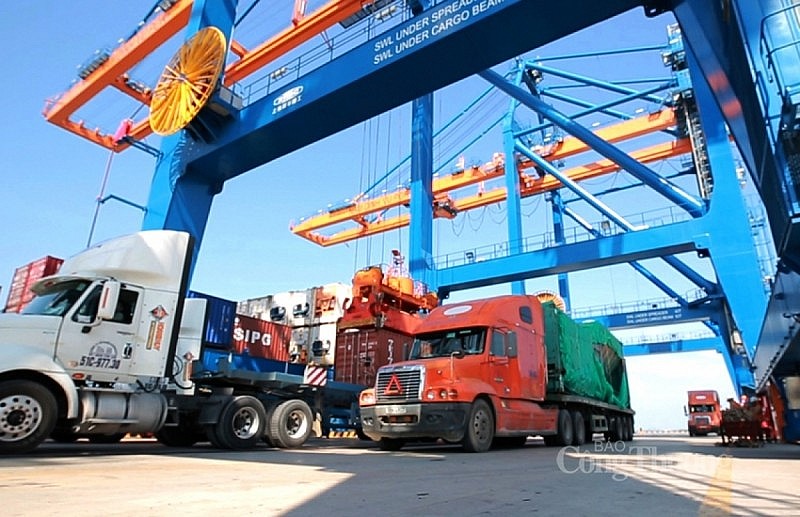 |
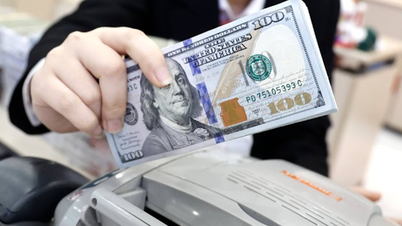
| Record trade surplus after 10 months (Photo: Can Dung) |
Total imports and exports in October 2023 are estimated at US$61.61 billion, an increase of 4.1% (equivalent to an increase of US$2.45 billion) compared to the previous month. Thus, the trade balance for October is estimated to have a surplus of US$3 billion.
For the first 10 months of 2023, the total import and export value of the whole country is estimated at 557.95 billion USD, a decrease of 9.6% (equivalent to a decrease of 59.49 billion USD) compared to the same period in 2022.
Specifically, exports in the first 10 months of 2023 are estimated at US$291.28 billion, a decrease of 7.1% (equivalent to a decrease of US$22.22 billion) compared to the same period in 2022; imports in the first 10 months are estimated at US$266.67 billion, a decrease of 12.3% (equivalent to a decrease of US$37.27 billion) compared to the same period in 2022.
Thus, after 10 months, the trade balance is estimated to have a surplus of $24.6 billion.
Previously, in 2022, the total import and export turnover of the whole country reached 730.28 billion USD, an increase of 9.2%, equivalent to an increase of 61.28 billion USD compared to 2021. Of which, exports reached 371.3 billion USD, an increase of 10.5% (equivalent to an increase of 35.14 billion USD) and imports reached 358.9 billion USD, an increase of 7.9% (equivalent to an increase of 26.14 billion USD).
Vietnam's merchandise trade balance in 2022 recorded a surplus of $12.4 billion, significantly higher than the $3.33 billion surplus in 2021.
The trade surplus is a positive sign in the foreign trade picture. However, according to experts, the market picture in the last months of the year does not show many clear signs of recovery; inventory levels of importers and domestic businesses are both high, while demand remains low.
Meanwhile, export markets in general, and the EU in particular, are imposing increasingly stringent requirements on imports, especially agricultural products. Several of Vietnam's key export sectors, such as seafood, wood and wood products, iron and steel, and plastic products, are facing pressure from trade defense investigations, creating difficulties in export markets in recent times.
Simultaneously, protectionist policies in many countries are increasing. Developed countries are increasingly concerned about consumer safety, sustainable development, and climate change mitigation – a prerequisite for establishing new standards and regulations related to supply chains, raw materials, labor, and the environment for imported products. Adding to this is the risk of economic recession, inflation, and persistently high interest rates in Vietnam's major trading partners (the US, the EU, etc.).
Therefore, given the unprecedented risks and challenges facing export activities, it is necessary to prepare timely response plans and solutions to achieve the set export growth target of approximately 6%.
Accordingly, export businesses need to continue to make good use of trade agreements, especially the signed free trade agreements (FTAs), and make greater efforts in trade promotion activities, promoting market and product diversification to reduce dependence on traditional markets/product lines, specifically by expanding exports to Northern Europe, Eastern Europe, Latin America, etc.
The potential in markets with FTAs remains quite large, opening up many opportunities for domestic businesses. However, to effectively exploit these FTA markets, it is necessary to meet requirements regarding origin of goods, along with changes in raw materials and production lines to meet the demands of trading partners.
Source link

![[Image] Nearly 125,000 Hanoi students completed the Literature exam for the 10th grade entrance exam.](https://vphoto.vietnam.vn/thumb/1200x675/vietnam/resource/IMAGE/2026/05/30/1780117233041_ndo_br_thiet-ke-chua-co-ten-2-png.webp)
























































































Comment (0)