

According to the latest report from BloombergNEF and PV Tech, total global investment in the energy transition process over the past year has increased by more than 8%, reaching a record high of $2.3 trillion (approximately 57.5 trillion VND).

Total global investment in the energy transition is projected to increase by 8% in 2025, reaching a record high of $2.3 trillion (Photo: Bloomberg).
When money seeks green "havens".
Data shows that investors are increasingly placing their trust in mature technologies with stable business models. Of the aforementioned massive capital, approximately $1.2 trillion (30 quadrillion VND) has been invested in renewable energy and the power grid – the two "backbones" of the modern economy .
Notably, the electrified transportation sector, encompassing electric vehicles and charging station infrastructure, has become a shining star, attracting $893 billion (over 22 trillion VND), experiencing strong growth driven by booming demand in Asia and Europe. This demonstrates that the shift towards green transportation is not just a slogan but has become a real race for investment capital.
Albert Cheung, Deputy Managing Director of BloombergNEF, optimistically stated that the global energy transition is demonstrating remarkable resilience. As countries prioritize energy security and strive to localize supply chains, opportunities for investors remain vast, especially given the proliferation of AI-powered data centers, creating an unprecedented demand for clean energy.
The new energy power map: Who's leading?
Looking at the geographical picture, the Asia-Pacific region continues to be the world's "green factory," accounting for nearly half of total global spending. China remains the leader with investments totaling $800 billion, representing 34% of the global total. Although this figure has decreased slightly due to internal policy adjustments, China is still the only country in the top 10 allocating more than 4% of its GDP to energy transition.
On the other side of the globe, the US maintained its second position with $378 billion (nearly 9.5 trillion VND), a 3.5% increase year-on-year. Significantly, this growth occurred even amidst a changing policy environment in Washington under President Donald Trump, with moves to reduce support for clean technologies. The resilience of the US market demonstrates that the momentum for energy transition there is strong enough to overcome short-term policy hurdles.
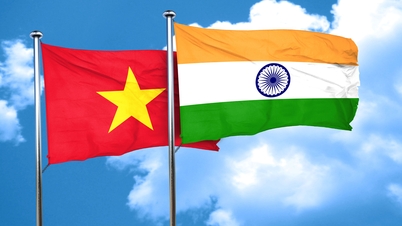
Another interesting highlight is the rise of India. This populous nation has surpassed France to enter the top 5 largest clean energy investment markets in the world, with an impressive growth of 15%, reaching $68 billion (1.7 trillion VND).

The world has invested $893 billion in clean energy transportation by 2025 (Image source: BNEF).
The paradox of records: Many, but not enough.
While the trillions of USD figures may sound overwhelming, from an ESG (Environmental, Social, and Governance) perspective, the picture isn't entirely rosy. Experts point out that investment growth is showing signs of slowing down. Last year was the first time since 2019 that growth only reached single digits.
More seriously, for the world to achieve net zero emissions by the middle of this century, BloombergNEF estimates that capital inflows would need to reach $5.2 trillion (130 quadrillion VND) annually throughout this decade. Thus, the current record figure only meets less than half of the actual need.
In addition, some previously high-potential sectors such as green hydrogen and nuclear power have seen a decline in investment. Even renewable energy has decreased by 9.5% due to the slowdown in the Chinese market. Conversely, investment in battery storage – the heart of the new energy system – is accelerating, surpassing even investments in battery metals or solar power.
From the above figures, it can be seen that global investment trends are shifting strongly towards grid infrastructure and energy storage. For manufacturing businesses and those practicing ESG in Vietnam, this signals that greening should not only stop at installing rooftop solar power, but also consider overall energy storage and optimization solutions.
The first decline in global fossil fuel investment since 2020 also serves as a reminder that cheap capital for "brown" projects is becoming increasingly scarce. Green transition is no longer an optional "nice to have," but a prerequisite for accessing international capital and participating in sustainable global supply chains.
Source: https://dantri.com.vn/kinh-doanh/2300-ty-usd-do-vao-cong-nghe-xanh-20260126222851343.htm


![[Photo] Da Nang: Exploring the inside of Vietnam's largest "sail" symbol.](https://vphoto.vietnam.vn/thumb/1200x675/vietnam/resource/IMAGE/2026/03/31/1774964764698_ndo_br_anhcau1-jpg.webp)


![[Photo] General Secretary To Lam attends the Conference summarizing the work of the election of deputies to the 16th National Assembly](https://vphoto.vietnam.vn/thumb/1200x675/vietnam/resource/IMAGE/2026/03/31/1774952471746_ndo_br_bnd-2315-6970-jpg.webp)






















![[Image] Creating urban areas along the Dong Nai River](https://vphoto.vietnam.vn/thumb/1200x675/vietnam/resource/IMAGE/2026/03/31/1774936857389_ndo_br_z7673258220978-0364bf985edfd080118668ad3c015934-resize-5023-jpg.webp)





























































Comment (0)