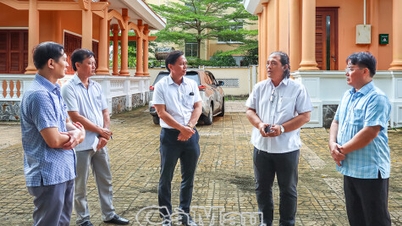
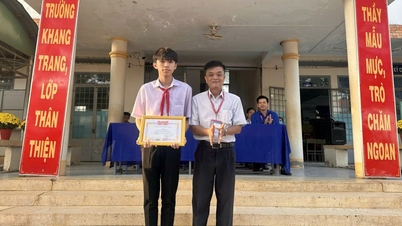
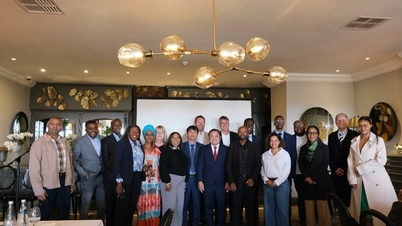
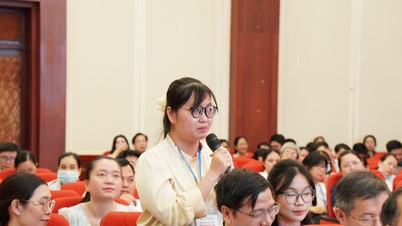
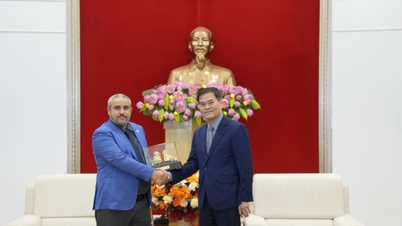
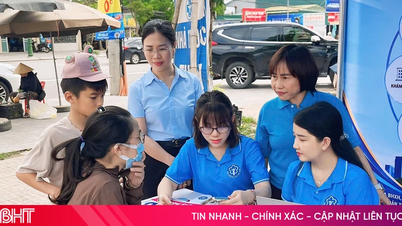
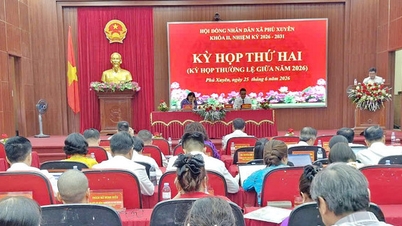
- Provincial leaders visit the Ca Mau - Ninh Binh Hometown Association.
- Strengthening the bond of friendship between Ca Mau and Ninh Binh , aiming for sustainable development.
- Ca Mau and Ninh Binh sign new cooperation agreement.

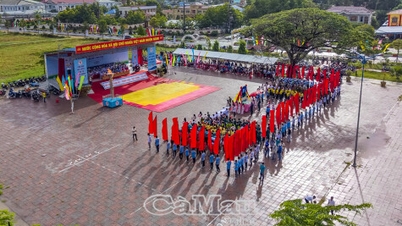
The 65th anniversary celebration of the sister city relationship between Ca Mau and Ninh Binh is an opportunity for the two localities to look back on their loyal and steadfast journey and continue to nurture their friendship for today. Photo: TIEN LEN
I've written about the close relationship between Ca Mau and Ninh Binh , traced through documents about the North-South brotherhood movement, listened to stories of Ninh Binh natives who went to Ca Mau to fight and build their lives; and been moved by the stories of Ca Mau teenagers being raised in the loving care of teachers in the ancient capital. Yet, when I heard Phi Thuong mention the Ca Mau-Ninh Binh Boarding School, I still felt a moment of silence.
From that phone call, I began to piece together the story.
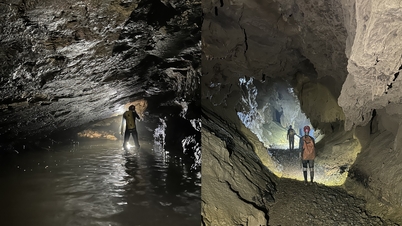
Ca Mau, located at the southernmost tip of Vietnam, where the mainland stretches out to the vast ocean. Ninh Binh, in the Northern Delta, where the Trang An mountains cast their shadows upon the green river, and where the ancient capital of Hoa Lu still preserves millennia of history. One side is the sea, the other is the mountains. One is salty and expansive; the other is tranquil and ancient. Yet, for the past 65 years, these two regions have been connected by a thread that cannot be measured in kilometers. That thread began in 1960, during the North-South brotherhood movement.
Back then, the country was divided. The North was the great rear base, and the South was the great front line. Ninh Binh formed a sister-city relationship with Ca Mau, accepting Ca Mau as a part of its own flesh and blood.
And great acts of kindness often begin with very small things. A potato shared in half. A shirt sent to a child in the South. A can of rice given away during a time of scarcity. A teacher from the North bending down to correct each stroke of a student's handwriting in the southernmost tip of Vietnam. A soldier from Ninh Binh marching south, living, fighting, and then resting in the U Minh forest, on the Rach Goc alluvial plain, Ngoc Hien, as if resting in his homeland.
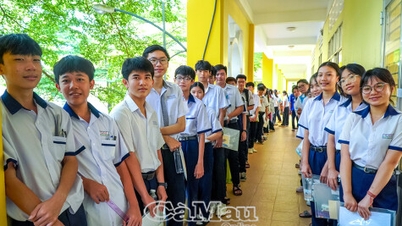
In 1964, amidst bombs and countless hardships, the Ca Mau - Ninh Binh Boarding School was established. Simple thatched houses. Children far from home. Meals were often meager. At night, listening to the wind in the mangrove and nipa palm forests, each child surely longed for their father, mother, and homeland engulfed in flames. But here, they had their teachers.
The teachers in Ninh Binh taught their students how to love their homeland and country, how to stand firm in the face of the challenges of a time when each person had to bear their own share of history. The teachers cared for their students with every meal, every piece of clothing, every notebook, and even with restless sleep amidst the echoes of bombs and bullets.

From the Ca Mau - Ninh Binh Boarding School, many generations of students have grown up. Some have become officials, doctors, teachers, engineers, and officers. Some survived the war, returned to civilian life, and quietly contributed to their homeland. Some have become heroes. Among the school's alumni is Major General Ho Viet Lam, Hero of the People's Armed Forces. His life, in a sense, is a beautiful continuation of his alma mater: from literacy to ideals, from gratitude to responsibility to the Fatherland.
After the reunification of the country, the bond between Ca Mau and Ninh Binh flowed in a different direction. Thousands of families from Ninh Binh left Dragon Mountain, Trang An, Hoa Lu, and the plains of Northern Vietnam to settle in the southernmost tip of Vietnam. At that time, Minh Hai was a very wild and undeveloped area. Vast mangrove and nipa palm forests stretched as far as the eye could see. Saltwater and acidic water constantly challenged the area. Mosquitoes, rain, sun, and roads were treacherous. Sometimes, even building a house required careful planning, saving every plank and every post.
The people of Ninh Binh cling to the land, the forests, the shrimp ponds, and the rice paddies. They learn to live with saltwater and acidic water, learn how to navigate boats, cast nets, build embankments, and construct houses in this new land. Gradually, they become like people of Ca Mau without even realizing it. The people of Ca Mau treat them with the same care as their own relatives. They share whatever they have: a can of rice, a meal, a piece of thatch for roofing, a word of advice on how to live in this harsh environment. These things may seem small, but in this new land, they are incredibly precious. Because what newcomers need most is not just a place to live, but the feeling of being accepted into a community.
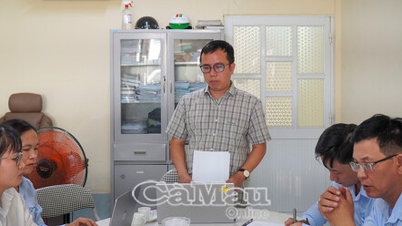
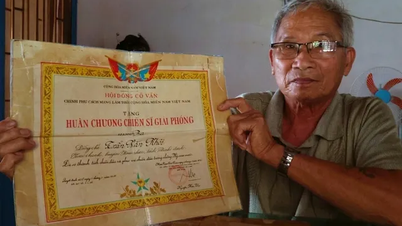
Mr. Tran Kim Chung, Head of the Ninh Binh Hometown Association in Ca Mau Province, expressed that for Ninh Binh compatriots in Ca Mau, Ninh Binh is their birthplace, while Ca Mau is where they have rooted their lives.
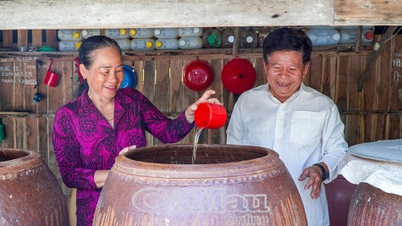
The bonds of friendship are both etched in memory and evident in the rhythm of daily work. Mr. Le Van Manh, Deputy Director of Tan Hiep Phat Cooperative (Dat Moi commune), a native of Ninh Binh, has led the cooperative to greater success, making practical contributions to the land of Ca Mau, a region that values loyalty and friendship.
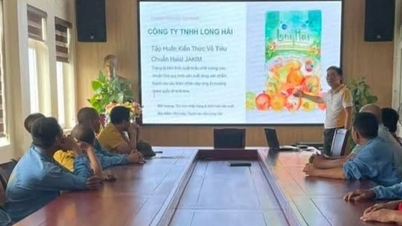
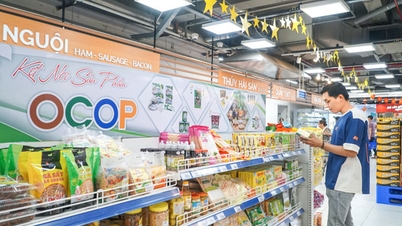
At the local level, in 2025, Ca Mau, Bac Lieu, and Ninh Binh jointly organized two conferences connecting supply and demand for goods, bringing together more than 50 establishments, businesses, cooperatives, and OCOP (One Commune One Product) entities to participate in displaying and promoting their products; resulting in the signing of 21 cooperation agreements. At the Red River Delta - Ninh Binh Trade Fair, the two provinces organized two joint booths, supporting six businesses in introducing their products and signing four additional cooperation agreements. Standing in the middle of the booth, looking at the packages of shrimp crackers, crabs, dried shrimp, dried fish, and refined bird's nest from Ca Mau, along with products from Ninh Binh such as cassava starch, turmeric starch, herbal tea, etc., one can feel the vibrant flow of trade.
In December 2025, Ca Mau and Ninh Binh will celebrate 65 years of their sister city relationship and sign a cooperation program for the 2025-2030 period. I like how the two localities talk about cultural spaces in this new phase. Ca Mau wants to have a promotional space in Ninh Binh, where tourists visiting Trang An, Tam Coc - Bich Dong, and Bai Dinh can see images of Ca Mau Cape, mangrove forests, the sea and sky, and Southern OCOP products. Conversely, Ca Mau is also opening spaces for Ninh Binh to have a presence at Ca Mau Cape, at tourist spots and product exhibition points. A "corner of Ca Mau" in the ancient capital. A "corner of Ninh Binh" at the southernmost point. Just hearing about it warms my heart.
Culture has its place, and sentiment also takes shape: the zither placed in Ninh Binh; the Hoa Lu citadel gate in Ca Mau; the scenic bridge connecting the Memorial Temple for Heroes and Martyrs and Meritorious People of Ca Mau province - these ideas demonstrate how each region sends its symbols to the other.
But the deepest bonds of friendship are those that are reflected in the lives of the people. I understand that the solidarity between Ca Mau and Ninh Binh will continue to manifest itself in a well-equipped health station to provide better healthcare for people in remote areas; in new houses for poor and disadvantaged families, helping them settle down; in new classrooms for children in coastal areas; and in roads and bridges connecting villages, opening up business opportunities for the people...
After days of reading materials and tracing each character, I understood why Mr. Pham Phi Thuong's phone call that day left me speechless. He not only gave me a documentary script, but also entrusted me with a debt of gratitude – a debt to the teachers who preserved literacy during the war, to the students who grew up in those schools, and to the people of Ninh Binh who spent their youth in Ca Mau.



I know that a 30-minute documentary can't possibly tell the whole story of 65 years. A memoir of a few thousand words can't capture all the lives, farewells, meager meals, tears of reunion, and cooperative handshakes of today. But I will try my best to preserve the soul of the story. I hope that after watching, the audience will have something left in their hearts. A little warmth. A little compassion. A little pride. A reminder that this country has gone through so much division to achieve this reunification, and in that journey, there are bonds of affection worth preserving as if they were a part of our very flesh and blood.
As long as the mangrove forests cling to the land at Ca Mau Cape, as long as the Trang An mountains cast their shadows upon the green river, the bond between Ca Mau and Ninh Binh will remain. Not noisy, not ostentatious, but quietly flowing through generations, like the waters of the South, like a spring within the mountain rocks, like a promise that began in 1960 and continues far into the future.
Nguyen Hoang Le
Source: https://baocamau.vn/65-nam-vun-dap-nghia-tinh-a129898.html