

TP - Fourteen years after the National Assembly voted against the project, the North-South high-speed railway project was brought up again in the National Assembly, sparking lively discussions among delegates on the morning of November 13th.
TP - Fourteen years after the National Assembly voted against the project, the North-South high-speed railway project was brought up again in the National Assembly, sparking lively discussions among delegates on the morning of November 13th.
Unlike in 2010, the delegates' primary concern was not the tens of billions of USD or the worry about public debt, but rather the issue of technology transfer to achieve self-reliance, thereby "activating" the development of the domestic railway industry.
"We don't just have the North-South high-speed railway project; there are a series of other projects being considered for investment and construction, such as the Ho Chi Minh City - Can Tho railway project, the railway to the Central Highlands, and urban railways in Hanoi and Ho Chi Minh City..."
Therefore, the important issue is not capital or public debt, but technology transfer and mastery of technology, so that from this project, we will "activate" the development of the domestic railway industry, and from there proactively implement construction," said Hoang Van Cuong, a member of the National Assembly's Finance and Budget Committee and National Assembly representative, to a reporter from Tien Phong newspaper.
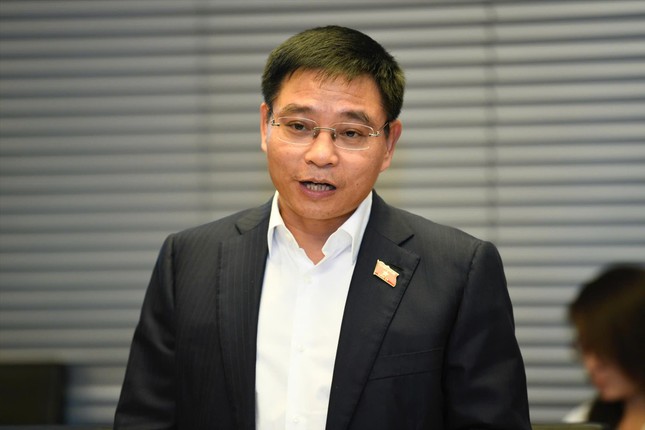 |
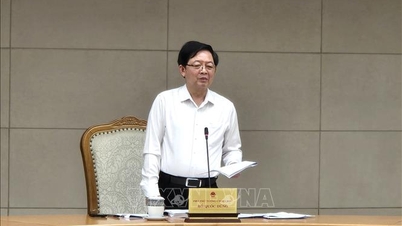
Minister of Transport Nguyen Van Thang affirmed that Vietnamese enterprises will undertake and take ownership of the project. Photo: Nhu Y. |
Activating the development of the railway industry.
What Mr. Cuong said was also a point emphasized by the Minister of Transport, Nguyen Van Thang, when presenting the Government's report to the National Assembly on the investment policy for the North-South high-speed railway project. According to Mr. Thang, compared to 2010 - the time when the National Assembly had not yet approved it - the context and scale of the Vietnamese economy have changed significantly.
Specifically, the size of Vietnam's economy has tripled compared to 14 years ago, and public debt is now only at 37% of GDP (lower than 56.6% in 2010). "Resources for project investment are no longer a major obstacle," Mr. Thang said.
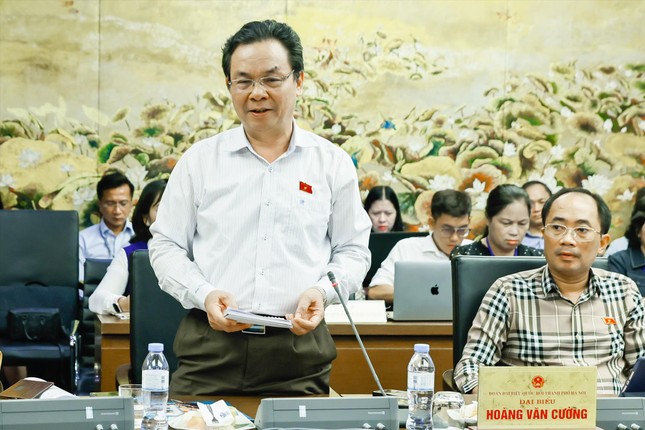 |
National Assembly Deputy Hoang Van Cuong proposed that technology transfer should be mandatory when implementing high-speed rail projects. |
Regarding benefits, the Minister of Transport said that, in addition to meeting transportation needs and promoting economic and social development, the project will create momentum for Vietnam to master the railway construction industry and localize the production of railway vehicles in the fields of information, signaling, operation, maintenance, and repair…
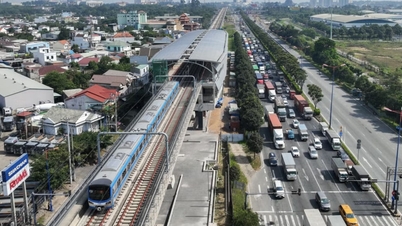
Speaking to a reporter from Tien Phong newspaper about this issue, Hoang Van Cuong, a member of the National Assembly's Finance and Budget Committee, repeatedly mentioned the lessons learned from the Hanoi and Ho Chi Minh City urban railway projects. According to him, the Cat Linh - Ha Dong, Nhon - Hanoi Station, and Ben Thanh - Suoi Tien railway projects differed from one another due to the lack of technology transfer and standardized practices, leading to dependence and numerous obstacles.
"If we don't master the technology and build our own railway industry, does that mean that in the future, for every project and every line, we will have to buy and depend on the technology of other countries? Spending $67 billion on a high-speed rail project without requiring technology transfer will create a burden for future generations," Mr. Cuong said.
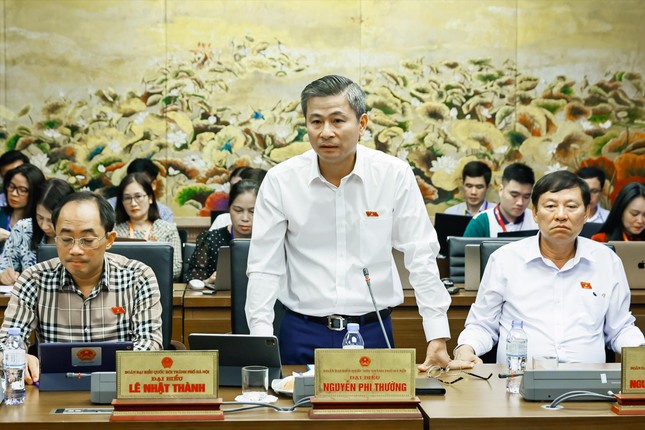 |
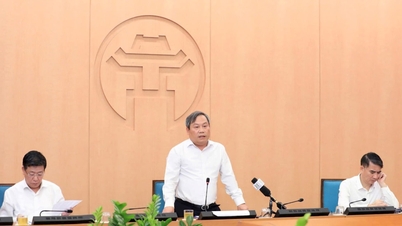
Director of Hanoi Department of Transport Nguyen Phi Thuong proposed establishing a monitoring unit for technology transfer. |
According to Nguyen Phi Thuong, Director of the Hanoi Department of Transport, technology transfer is very important. Citing the practical operation of Hanoi's urban railway lines, Mr. Thuong said that there are still many shortcomings, inadequacies, and difficulties in the implementation process.
For example, the Cat Linh - Ha Dong project has been applying temporary standard unit prices since December 2021. The transfer of new technology has only gone as far as training to support line operation. "In cases where components need replacing, we are completely dependent on foreign suppliers," Mr. Thuong stated.
"We are spending $67 billion on a high-speed rail project without mandatory technology transfer or technological self-sufficiency, which will create a burden for future generations."
National Assembly representative Hoang Van Cuong
Establish a unit to monitor technology transfer.
According to the Director of the Hanoi Department of Transport, technology transfer should not only involve mastering operation and maintenance but also include the production and installation of equipment, especially core technologies such as electric trains, tracks, and signaling systems. "Technology transfer fees are one of the major and important costs that need to be identified in the project," Mr. Thuong said.
Sharing the same view, Mr. Cuong believes that if the technology is mastered, the North-South high-speed railway project will create "double benefits," especially in the development of the railway industry.
"At that time, we will be completely independent and confident to proactively implement other railway projects according to the plan, with an estimated value of up to hundreds of billions of USD," Mr. Cuong said, adding that we should not be too concerned about whether it is expensive or cheap, but should emphasize the requirement for technology transfer.
As evidence of the immense benefits of mastering technology, delegate Hoang Van Cuong recalled the lessons learned from the "lightning-fast" construction of the 500 kV circuit 3 power line project. Thanks to technological self-reliance, domestic contractors were able to work diligently, overcoming the elements and working in shifts, completing the project in record time.
According to the member of the National Assembly's Finance and Budget Committee, technology transfer opens doors for Vietnamese businesses to participate in the project, from construction to the production of rail systems and carriages.
To effectively implement technology transfer, Mr. Thuong proposed that foreign companies participating in the bidding process must form a joint venture with a domestic contractor, complete technology transfer negotiations with domestic companies, and sign a complete technology transfer contract before bidding.
Foreign companies that cannot sign a technology transfer contract before the bidding process will be disqualified. The Director of the Hanoi Department of Transport proposed the establishment of a unit to inspect, monitor, and evaluate the implementation of technology transfer, along with evaluation criteria.
"Vietnamese businesses must definitely take control!"
Regarding the issues of technology transfer raised by delegates, during the group discussion on this project, Minister of Transport Nguyen Van Thang stated that previous metro projects lacked experience and a clear understanding of how to implement them. Furthermore, the ODA loan mechanism imposed restrictions on partner selection, which was very disadvantageous.
"Relying on foreign partners is very costly. Vietnamese businesses must definitely take responsibility and be in control." - Minister of Transport Nguyen Van Thang
Therefore, for the North-South high-speed railway project, the selection of partners must focus on finding contractors with good quality, reasonable prices, and who are required to transfer technology, without relying on foreign loans.
"If loans are taken out, they will not exceed 30% of the total investment, which, divided annually, would be approximately 46,000 billion VND (1.85 billion USD/year). The project will mainly use domestic capital; if foreign loans are taken out, they must be cheaper than domestic loans and have no binding mechanisms, so that during construction, there will be no dependence on or constraints from technology," Mr. Thang affirmed.
According to Mr. Thang, there were previously many opinions suggesting that foreign partners should be required to transfer technology. However, the Government and the Ministry of Transport agreed to select a number of large enterprises under the Ministry of National Defense and some private enterprises, designating them as national enterprises to receive technology transfer and participate in the project. "Dependence on foreign partners is very costly. Vietnamese enterprises must definitely take responsibility and be in control," Mr. Thang affirmed.
According to the government report, the North-South high-speed railway project has a length of 1,541 km; a design speed of 350 km/h; and a total investment of approximately 67.34 billion USD. The project is expected to commence in 2027 and is projected to be substantially completed by 2035.
Source: https://tienphong.vn/67-ty-usd-dau-tu-du-an-duong-sat-toc-do-cao-bac-nam-tu-chu-tranh-le-thuoc-post1691285.tpo

![[Photo] General Secretary and President To Lam meets with National Assembly delegates from ethnic minorities.](https://vphoto.vietnam.vn/thumb/1200x675/vietnam/resource/IMAGE/2026/04/20/1776696701056_a1-bnd-8331-3342-jpg.webp)



![[Image] National Assembly discusses the implementation of the socio-economic development plan.](https://vphoto.vietnam.vn/thumb/1200x675/vietnam/resource/IMAGE/2026/04/20/1776696707422_ndo_br_img-20260420-185419-jpg.webp)













































































Comment (0)