

The supply of E10 gasoline has been prepared.
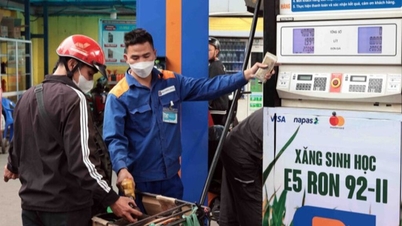
On April 15th, Petrolimex Da Nang Co., Ltd. (Petrolimex Da Nang) began selling E10 RON95-III bioethanol fuel at four of its stores in the area. The price is 23,070 VND/liter, 470 VND/liter lower than comparable conventional gasoline. According to a company representative, from now until the end of May, the E10 product will be rolled out across the entire system in a phased manner, gradually replacing conventional gasoline and meeting the bioethanol fuel transition roadmap as directed by the Government and the Ministry of Industry and Trade . Petrolimex will also organize the blending of E10 RON95-III fuel to supply units in the Central Vietnam region.
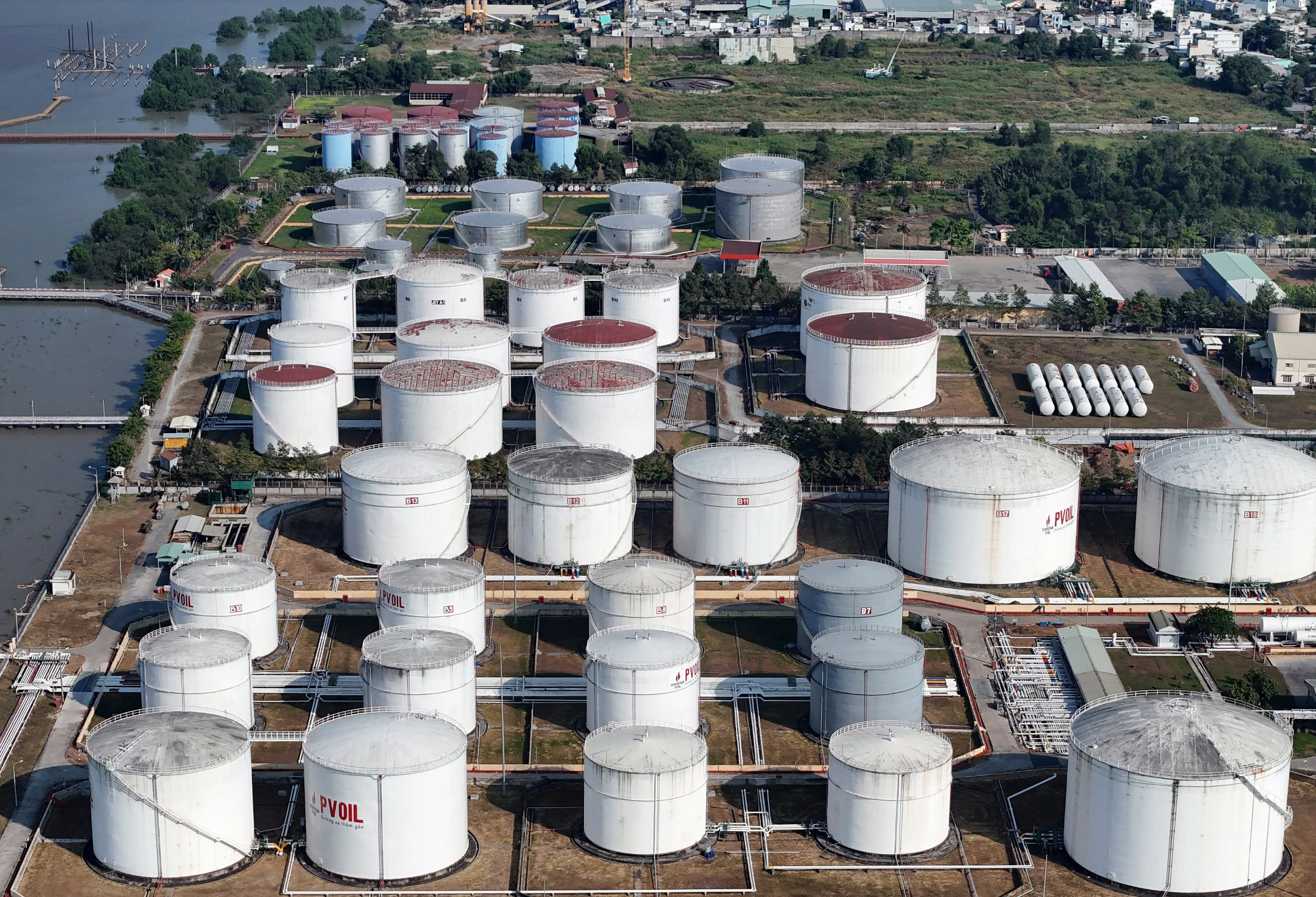
Increasing biofuel production would reduce dependence on fossil fuels by approximately 10%.
Photo: Ngoc Duong
In Ho Chi Minh City, Petrolimex Saigon Co., Ltd. (Petrolimex Saigon) announced that it currently has two technologies in its E10 gasoline blending system: in-line blending and in-tank blending. It is expected that in May, Petrolimex Saigon will complete the upgrade of its blending capacity at the Nha Be Petroleum Depot, ensuring it can fully meet the needs of Petrolimex in the southern region when transitioning from conventional gasoline to bio-gasoline according to the planned schedule. As of April 20th, in Ho Chi Minh City, 63 out of 138 Petrolimex-owned gas stations are selling E10 gasoline. For the remaining gas stations, the company has prepared the necessary infrastructure and developed detailed conversion plans for each station.
A representative from this company affirmed that the company is closely following the government 's roadmap for the transition to biofuels and the directives of Petrolimex Group, and has proactively prepared the necessary infrastructure, plans, and implementation strategies. Simultaneously, the company is also intensifying its communication efforts through its website, banners, and standees at its stores, while providing comprehensive training to its sales staff to ensure they are ready to advise customers on E10 gasoline.
"With its blending and sourcing capabilities at the Nha Be Petroleum Depot, Petrolimex Saigon is ready to fully meet the transition roadmap to E10 bioethanol for Petrolimex's system in the southern region, including both directly owned and franchised gas stations," a representative from Petrolimex Saigon said.
Similarly, Mr. Le Trung Hung, Deputy General Director of Vietnam Oil Corporation (PVOil), stated that at this point, it can be confirmed that E10 gasoline is no longer in the preparation or testing phase, but has entered the stage of being ready for practical deployment. After Hanoi and Hai Phong, PVOil expanded to Da Nang, Quang Ngai, Ho Chi Minh City, and then to other provinces and cities nationwide. Currently, PVOil's blending facilities are supplying E10 gasoline to the market through more than 300 gas stations, including directly owned stations as well as the distribution network and dealers. Notably, the consumption of E10 gasoline is showing a clear upward trend, especially in the context of market conditions with tight supply such as in March and early April, the sales volume of E10 gasoline continued to improve.
PVOil's leadership emphasized that one of the key factors demonstrating PVOil's readiness is its fuel blending and storage infrastructure capacity. Following the pilot phase, the company has invested comprehensively in blending, storage, operation, and quality control systems. As of April this year, PVOil has established 13 E10 gasoline blending facilities nationwide, including 6 capable of flexibly blending both E10 RON95 and E5 RON92 gasoline simultaneously using various blending methods and operating in parallel.
Currently, PVOil's blending capacity reaches over 300,000 m³/month for E10 RON95 and E5 RON92 gasoline. PVOil aims to increase capacity to nearly 400,000 m³/month by the end of this year to meet market demand when it is widely implemented. Ethanol (E100) raw material storage capacity has also been increased by approximately 40,000 m³, ensuring supply to the entire nationwide warehouse system. "With our current capacity, the company not only serves its internal distribution system but is also ready to supply other partners when needed," a PVOil representative confidently stated.
Dr. Dao Duy Anh, Deputy Director of the Department of Innovation, Green Transformation and Industrial Promotion (Ministry of Industry and Trade), informed that the Ministry has been conducting a comprehensive review to accelerate the deployment of E10 gasoline ahead of schedule. Currently, both major distributors, Petrolimex and PVOil – which account for up to 75% of Vietnam's petroleum market share – are ready to widely distribute E10 gasoline in April as directed by the Prime Minister. Notably, throughout the distribution of E10 gasoline from August 2025 to the present, PVOil and Petrolimex have received almost no complaints regarding the quality of E10 gasoline.
The clear benefits of E10 also lie in its environmental impact. Reducing emissions of CO and unburned organic compounds improves air quality, thereby contributing to public health protection. Furthermore, with current support policies, E10 gasoline is typically cheaper than conventional gasoline, providing direct economic benefits to users.
Associate Professor Pham Huu Tuyen, Director of the Center for Research on Power Sources and Autonomous Vehicles (Hanoi University of Science and Technology)
Which types of vehicles can use E10 gasoline?
The news that E10 gasoline will completely replace traditional A95 gasoline still leaves many people wondering. Mr. Truong Ngoc Tien, 55 years old, residing in Thanh Loc Ward (Ho Chi Minh City), asked: "My family has 5 people, mainly traveling by motorbike, and the motorbikes are different models. For example, I use a Dream, and my daughter uses a new Vision. Will switching to bio-gasoline affect the engines in any way?"

Biofuel will replace traditional gasoline from May 2026.
Photo: Nhat Thinh
Mr. Nguyen Van Loi, residing in Ea Ning (Dak Lak province), also wondered: "I work in agriculture and often use A95 gasoline for my generators, lawnmowers, and agricultural vehicles. This is the most suitable fuel for smooth operation, maximum equipment durability, and the most powerful engine output. If A95 gasoline is eliminated and E5 or E10 gasoline is used, will it affect these vehicles? Will the market only offering E5 and E10 gasoline meet all the needs of gasoline-powered vehicles, and if equipment is damaged when using bio-gasoline, will anyone compensate for the losses?"
Responding to this issue, Mr. Nguyen Minh Dong, an automotive engine expert in Germany, shared: Ethanol in E10 is produced from biofuels such as sugarcane, cassava, and corn, which helps increase the octane rating and reduce harmful CO and HC emissions compared to conventional gasoline. Unlike conventional unleaded gasoline, ethanol is considered somewhat carbon-neutral because during growth, plants absorb more CO₂ than is released during fuel production and combustion. This is an advantage of biofuel, but it also has the disadvantage of less acceleration and slower revving. In Germany and many other countries, the widespread use of E10 bioethanol fuel has been implemented alongside traditional gasoline types such as A95 and A98 since 2011. "In my opinion, we need to continue maintaining these fuel options so people have a choice. Currently, E10 is cheaper than A95, but it's still not attractive enough. If bioethanol fuel were 10% cheaper, I'm sure people would automatically switch to using E10," Mr. Dong suggested.

Biofuel will replace traditional gasoline from May 2026.
PHOTO: NHAT THINH
According to engine experts, some older motorcycle models manufactured before 2010 are not recommended to use E10 gasoline. Meanwhile, newer models of motorcycles, scooters, and manual transmission bikes produced and distributed by Honda, Yamaha, Piaggio, etc., in recent years are suitable for use. For cars, most vehicles manufactured within the last 10 years have instructions allowing the use of E10 gasoline without significantly affecting the vehicle's quality and performance.
Mr. Le Trung Tinh, Chairman of the Ho Chi Minh City Automobile Transport Association, also noted that in many countries such as the US, Brazil, and Thailand, E10 gasoline has become a popular fuel, even being upgraded to E15 or E20 to optimize environmental protection. In fact, E10 gasoline is encouraged because it contributes to reducing harmful emissions into the environment; the transition to biofuels for environmental protection is a good goal. However, regulatory agencies need to provide thorough advice to the public on proper usage.
Associate Professor Pham Huu Tuyen, Director of the Center for Research on Power Sources and Autonomous Vehicles (Hanoi University of Science and Technology), shared: "One of the major concerns of consumers is that ethanol has a lower calorific value than conventional gasoline, which could increase fuel consumption. However, according to research and tests, this difference is insignificant and is compensated by better combustion efficiency. In fact, engine power and fuel consumption when using E10 are almost equivalent to traditional gasoline, and in some cases even improved. Beyond operational efficiency, the clear benefits of E10 also lie in environmental factors. Reducing CO emissions and unburned organic compounds helps improve air quality, thereby contributing to protecting public health. In addition, with current support policies, the price of E10 gasoline is usually lower than conventional gasoline, bringing direct economic benefits to users."
Long-term support policies are needed.
Amid escalating conflicts in the Middle East, global fuel prices have been under constant pressure. The National Assembly and the Government have swiftly implemented supportive policies, significantly reducing taxes and providing budget advances to the Fuel Price Stabilization Fund, thereby quickly lowering fuel prices and maintaining them at levels significantly lower than in other countries in the region. However, given the inherent uncertainties in the global energy market, proactively diversifying supply sources, reducing reliance on fossil fuels, and shifting towards biofuels is considered a sound, long-term, and sustainable policy.
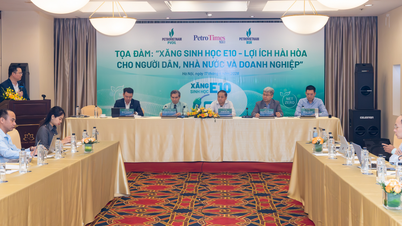
In a recent seminar on biofuels, Mr. Mai Tuan Dat, Deputy General Director of Vietnam Refining and Petrochemical Corporation (BSR), stated that biofuels should be viewed not only from an environmental perspective but also as part of a national energy security strategy, especially given the current global fuel market tensions and rising prices. Furthermore, E10 biofuel creates a domestic value chain, from raw materials and ethanol production to blending and distribution. This enhances the self-reliance of the economy and supports the goal of transitioning to a greener and more sustainable energy environment.
According to the Ministry of Industry and Trade, 12 businesses have invested in blending systems, but only 3 meet the requirements to be licensed for blending E10 gasoline. Based on the previous implementation of E5 gasoline, the Ministry of Industry and Trade has highlighted three key issues to consider when deploying E10 gasoline. These include regularly updating fuel requirements to match engine development. Gasoline engine technology is constantly improving, leading to changes in fuel technical standards over time. For example, from January 1, 2025, new vehicles manufactured and assembled in Vietnam must meet Euro 5 emission standards, therefore the fuel used must also be compatible. Selecting and using the appropriate base gasoline is crucial to ensuring operational efficiency and compliance with regulations. Secondly, it is necessary to strengthen coordinated efforts among ministries, departments, localities, and relevant stakeholders to promptly resolve obstacles for businesses throughout the entire value chain, from production, blending, circulation, to distribution. Thirdly, transparent and scientific communication and dissemination of information are crucial to ensure public understanding and foster social consensus.
In the context of Vietnam's pursuit of double-digit growth and its focus on green transformation and digital transformation, Associate Professor Dr. Nguyen Thuong Lang (National Economics University) emphasized that biofuels are an important part of Vietnam's energy restructuring strategy. However, this transition initially still heavily relies on imported ethanol raw materials. "Therefore, to achieve self-sufficiency in biofuels, we need supportive policies to attract investment and encourage businesses to boldly invest and transform. Specifically, we could consider tax exemptions during the first five years of implementation. Secondly, we need policies supporting preferential interest rates, initial investment costs, or even subsidies during necessary periods. Thirdly, we need incentives regarding land and infrastructure. Facilitating businesses' access to land and the development of production and distribution infrastructure will significantly reduce costs, thereby enhancing the competitiveness of biofuels," proposed Associate Professor Dr. Nguyen Thuong Lang.
We will explore options for E15, E20, or higher-grade gasoline.
E10 gasoline is just the beginning; the Ministry of Industry and Trade will continue to research E15, E20, or even higher. Globally, industrialized countries like the US have been using E10 gasoline since the 1980s and now use E85. The Philippines and Thailand are widely using E15, with plans to upgrade to E20 from 2026.
Dr. Dao Duy Anh, Deputy Director of the Department of Innovation, Green Transformation and Industrial Promotion (Ministry of Industry and Trade)
This is a major energy transition, similar to electricity usage, and we have several incentive policies to support those installing rooftop solar power. In the green transition framework, it's not just about achieving self-sufficiency in biofuels, but also about building a foundational industry in the energy sector.
Associate Professor Dr. Nguyen Thuong Lang (National Economics University)
Source: https://thanhnien.vn/xang-sinh-hoc-e10-da-san-ready-185260420224231387.htm


![[Image] National Assembly discusses the implementation of the socio-economic development plan.](https://vphoto.vietnam.vn/thumb/1200x675/vietnam/resource/IMAGE/2026/04/20/1776696707422_ndo_br_img-20260420-185419-jpg.webp)
![[Photo] General Secretary and President To Lam meets with National Assembly delegates from ethnic minorities.](https://vphoto.vietnam.vn/thumb/1200x675/vietnam/resource/IMAGE/2026/04/20/1776696701056_a1-bnd-8331-3342-jpg.webp)

















![[PHOTO] The most beautiful sidewalks in Saigon that captivate people, captured with smartphones.](https://vphoto.vietnam.vn/thumb/402x226/vietnam/resource/IMAGE/2026/04/21/1776707735189_anh14_rlcz.jpeg)



























































Comment (0)