

Many Western media outlets are currently engaged in heated debate about the issue of enhancing Ukraine's counter-attack capabilities.
Follow the steps regarding Counter-Attack Fire (KBS) in order.
Russia's adversaries have expressed satisfaction with the Ukrainian army's significant progress in counter-fire capabilities. Everyone is well aware that a well-deployed KBS system provides an advantage in artillery operations, and artillery in military operations is key to success.
That's right, despite the presence of cruise and tactical missiles on both sides, guns, mortars, and kamikaze drones – artillery – caused 90% of the damage to enemy military equipment and personnel.
“...The Ukrainian army continues to fight for artillery superiority in the future. A major role in this is played by counter-fire, and especially radar, which facilitates highly accurate firing. It is reported that many Russian artillery units lack counter-fire radar systems to accurately detect incoming fire. Furthermore, due to their high-tech nature, Russia would find it difficult to replace them with new power sources” (Quoted from The Drive).
It's noteworthy that the absence of a KBS system in the artillery regiment wasn't just a headache for the regimental commander. But it's true that if you tried to locate the "ZOO-1" KBS station within the typical structure of a Russian mixed artillery regiment, you wouldn't find it anywhere.
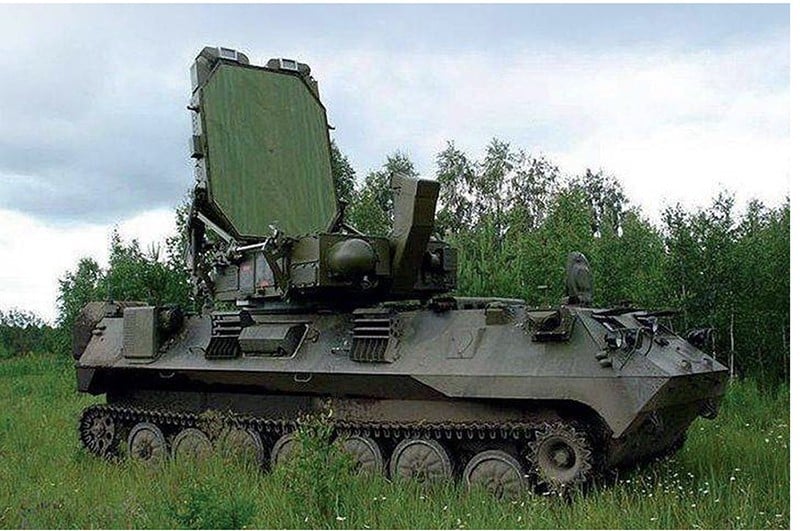 |
| Zoo |
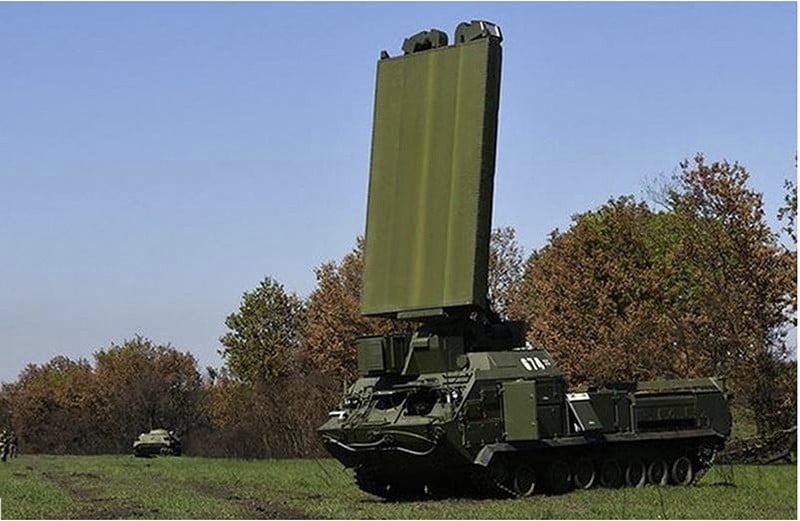 |
| Zoopark-1M |
It could be likened to this: there are cars, but no parking spaces. However, it's not accurate to say there were no KBS departments before; there were, but they've been removed.
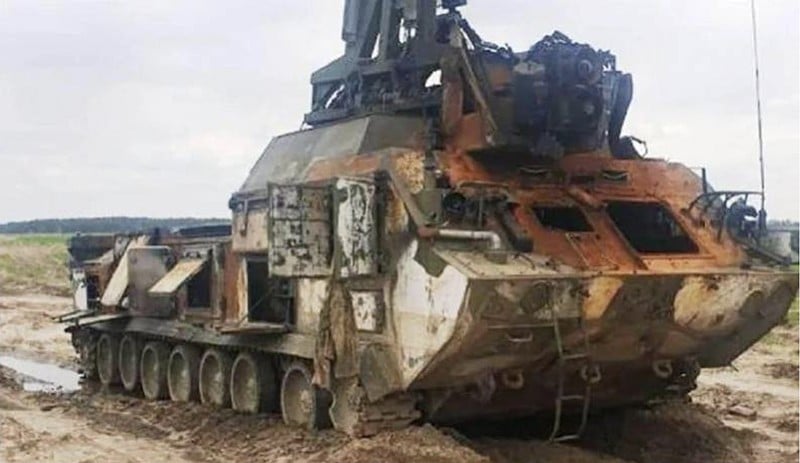 |
| The only evidence of the Zoopark's destruction. |
British intelligence believes that during the conflict with Russia, the Ukrainian army only lost 6 KBS (Karaoke Broadcasting Station) stations to missiles from enemy aircraft. Clearly, the idea of using Su-35s with anti-radar missiles in the initial phase of the military operation proved very effective.
On the Russian side, according to British intelligence, their army also lost 6 or 7 stations, plus one station under the control of the Ukrainian Armed Forces as a war trophy near the city of Izyum.
Now we will examine the components of the entire counter-fire exchange between both sides.
1. Reconnaissance and fire control radar system (counter-artillery radar)
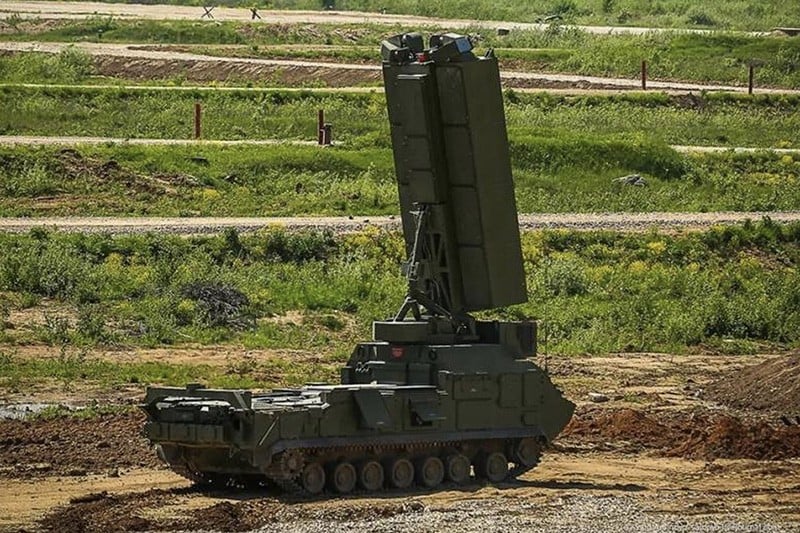
On the Russian side, the most effective system is Zoopark-1M. The APU has AN. On the Ukrainian side, it's the American TPQ-36.
 |
| Return fire: Whoever is faster wins. |
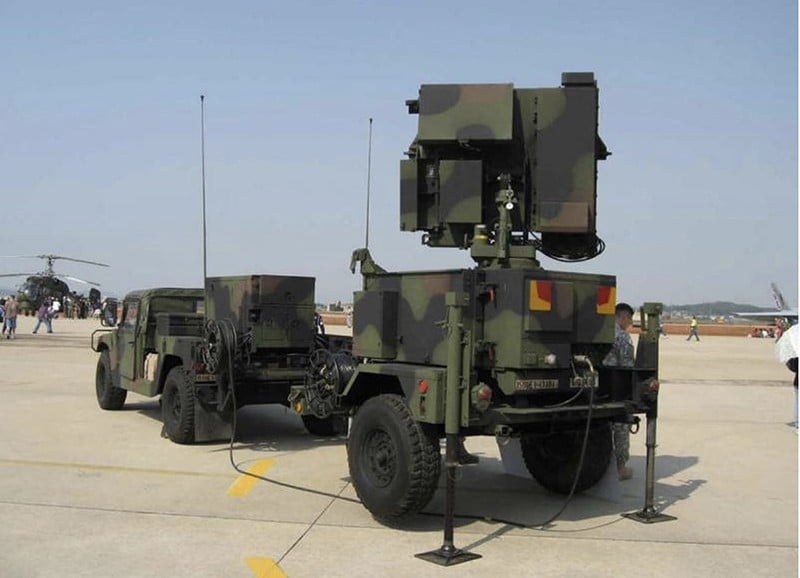 |
AN/TPQ-36 |
Typically, a US convoy requires three Humvees with trailers, but Ukraine has simplified it to two vehicles and omitted the backup generator. The V7 variant has been in production since 1995 and is quite suitable for modern warfare.
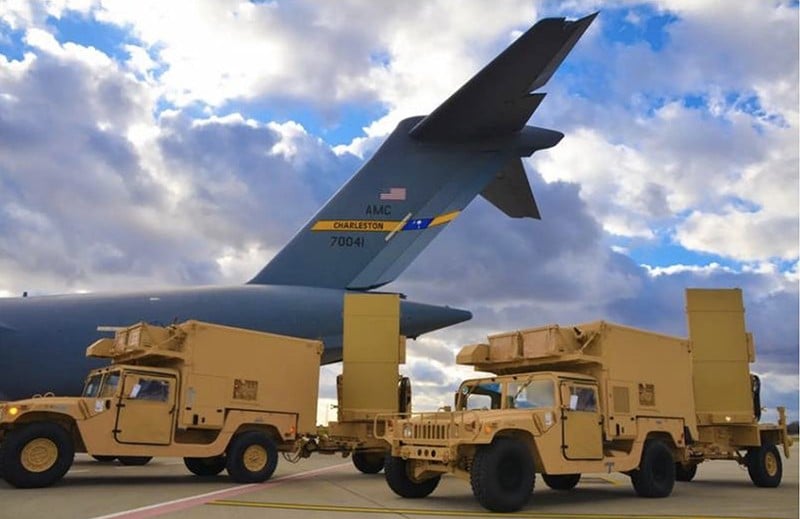 |
| The AN/TPQ-36 can detect artillery positions at distances up to 18 km and launch missiles up to 24 km. |
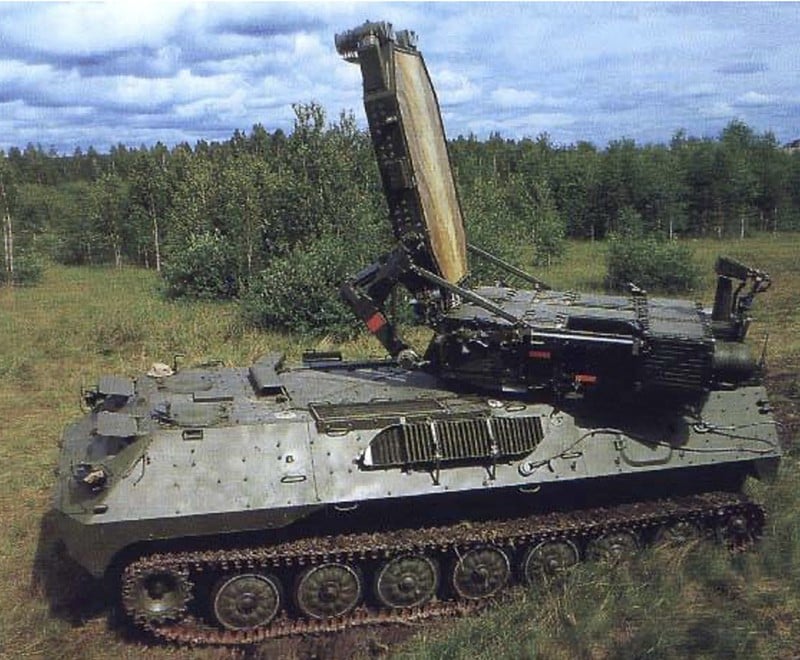
Meanwhile, the Russian "Zoo-1M" system, deployed in close proximity, can detect enemy howitzers from a distance of up to 18 km. The system is equipped with a maximum of 15 guns, a multi-layered rocket launcher with a range of 22 km, and tactical missiles with a range of 45 km.
However, the Russian system has undeniable advantages:
- All necessary equipment can be placed in one unit (one vehicle);
- The shooters have protective armor;
- Better penetration ability;
- The ability to limit detection by the enemy has been improved.
- With a similar range to the AN/TPQ-36, the Russian "Zoo" boasts superior accuracy and speed specifications.
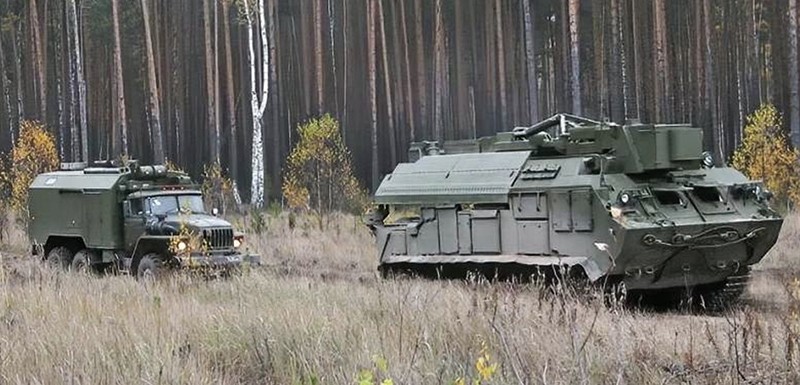 |
| The Russian "Zoo" complex on a vehicle. |
Furthermore, producing "Zoo" is very easy. Zoo is manufactured in the city of Yekaterinburg, in unlimited quantities because all components are domestically produced.
 |
The real problem with KBS Russia lies in the following weakness:
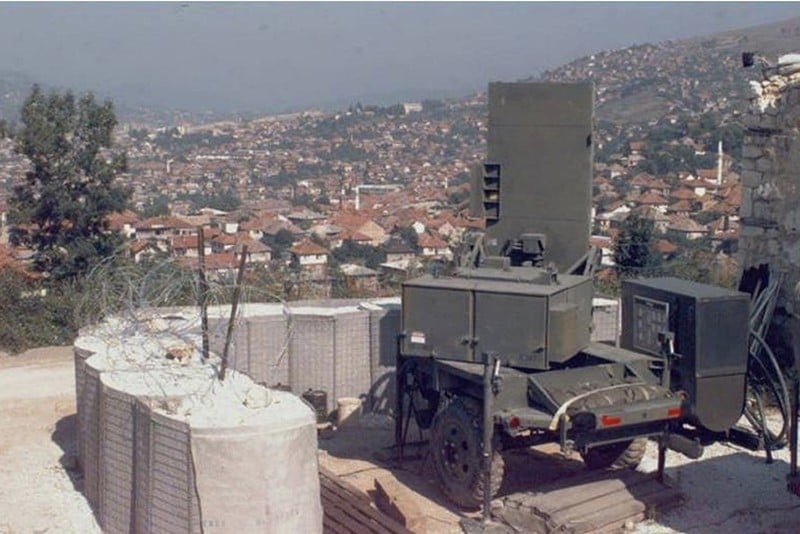
The Americans have used the KBS radar system in all military operations wherever possible. American military experts are proficient in working with the AN/TPQ-36, or any other system. This is simply because the American military is always in a state of combat readiness and has extensive practical experience, as even in exercises, the Americans always use live artillery shells and missiles.
 |
For the Russians, the first issue is the shortage of specialists for "Zoopark." There aren't many young people willing to sign professional contracts like the US military, capable of operating cameras, detecting, identifying, and transmitting coordinates to the correct location.
Furthermore, the training centers (there are two of them) lack adequate modern equipment and offer limited opportunities for practical field experience.
On the other hand, in the Russian military, a strict decision-making process is essential. Received data requires a response within seconds, but traditionally, it must be relayed to superiors, through a chain of personnel, until it reaches the decision-maker. This wastes valuable time, but without approval, the gun crew cannot obtain enemy coordinates and the order to fire.
Systems that counter adversaries
An equally important point is that the radars detect the enemy, provide coordinates, the command center coordinates everything (with the Ukrainian Armed Forces, the field commander is the one who decides on artillery attacks), and then the artillery will open fire. Multi-Layer Missile Systems (MLRS) and tactical missiles are included.
Artillery
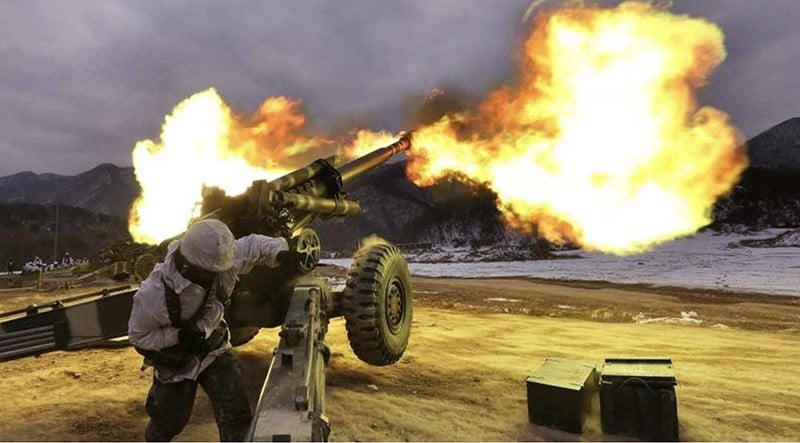 |
Before the conflict, Russia and Ukraine had a comparable number of howitzers. "Carnation," "Acacia," and "Msta" were completely equal, but because the Russian armed forces outnumbered the Ukrainian armed forces, the advantage tilted towards the Russian army.
Western systems have a longer range and higher accuracy than Russia's Msta-S. These artillery pieces may not offer an overall numerical advantage, but with these advantages, they have begun to be used by Ukraine for counter-attack purposes. Everything unfolded sequentially: radar detected the Russian artillery, and the "Europeans" began suppressive fire from positions beyond the reach of the Russian artillery.
The thousands of Excalibur guided missiles that NATO transferred to Ukraine have become a significant counterweight. Russia has the "Krasnopol," which, in principle, has almost equal numbers of artillery shells, but the range advantage of NATO artillery plays a crucial role.
Both sides demonstrated "one-shot" accuracy, especially when using UAVs, but in terms of UAV reconnaissance and calibration, the advantage once again leaned towards Ukraine.
Multi-Layer Missile System (MLRS)
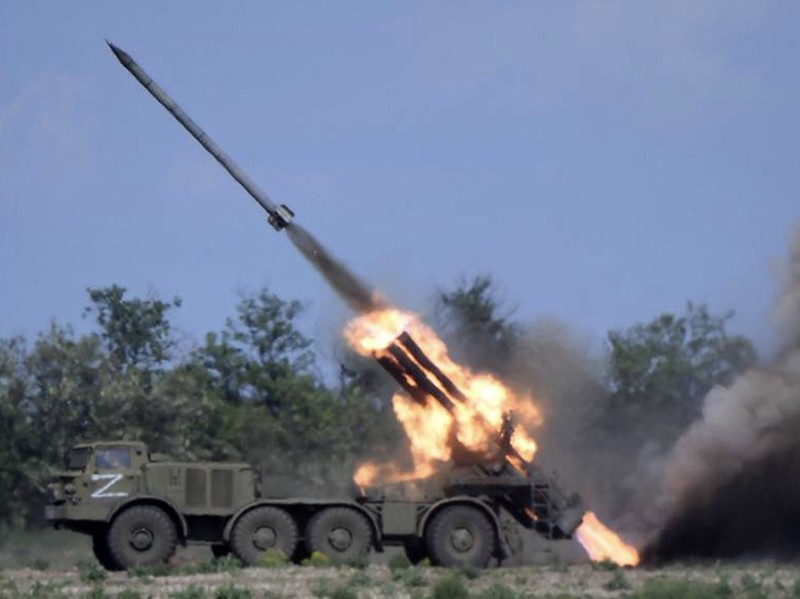 |
Of course, the Hymars launcher proved itself here. This system overshadowed the success of the Bayraktar system, which Türkiye supplied to Ukraine in the early stages, and demonstrated a very high level of accuracy. Ukrainian UAVs recording the launch and target destruction process proved this result.
Russia's Iskander and Tornado-S may be inferior, however, there is no data to confirm their performance.
Drones
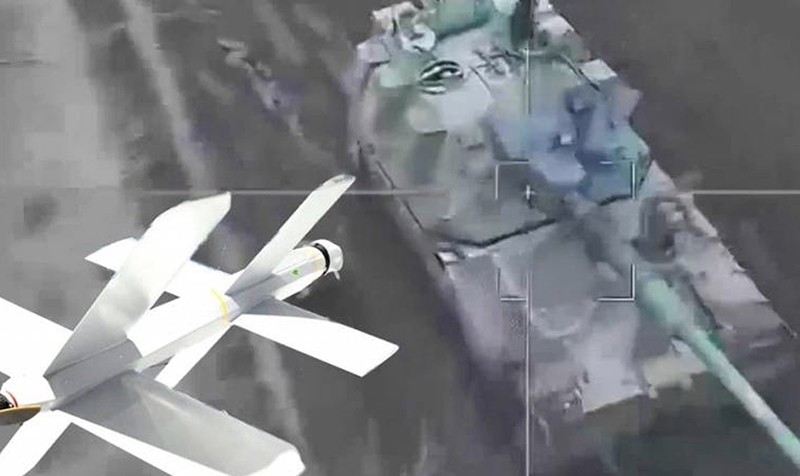 |
Here, it's difficult to say which side has the advantage. "Lancet" and similar devices are technically comparable on both sides. They are a good alternative to guided projectiles. However, 3-5 kg of explosive for a UAV is still less than 7-8 kg for an artillery shell, and even then, multiplied by speed and accumulated kinetic energy.
3. Communication and control systems
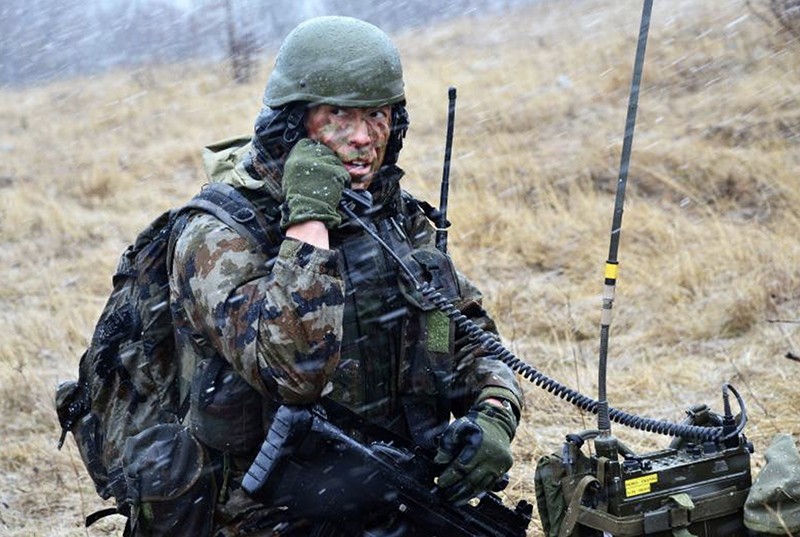 |
This is an area where Ukraine has a clear advantage over Russia.
Russia lacks an integrated system for transmitting coordinates, communication at different levels, and a timely response to changing situations.
While the West has provided Ukraine with significant support, it's quite simple: they've given Ukraine the ability to maintain normal communication, allowing for the rapid transfer of information between different levels.
Unfortunately, the lack of modern communication systems in the Russian army makes artillery firing precise at the coordinate transmission stage. Even disregarding the problems of integrating artillery firing radar at the regimental and divisional levels, transmitting the coordinates of detected targets can be useless, as all existing radio communications are perfectly intercepted and exploited by the enemy. Once the enemy identifies the types of Russian artillery that will fire, they calmly regroup and leave their positions. At that point, the Russian artillery barrage falls into an uninhabited area.
Conversely, after only 2-3 volleys, the artillery platoon must withdraw from its position, as counter-fire would be unavoidable.
Meanwhile, the Ukrainian side didn't have much time for decision-making. The division commander received the information and decided to open fire on the enemy positions. In fact, the decisions were made quite quickly.
Synthetic
According to the article, the author argues that Ukraine actually implemented a more effective counter-attack theory, and moreover, this had been going on for some time.
Ironically, Russia has a significant technological advantage over its adversaries, but the aforementioned weaknesses have prevented the Russian military from exploiting these advantages.
Source


![OCOP during Tet season: [Part 3] Ultra-thin rice paper takes off.](/_next/image?url=https%3A%2F%2Fvphoto.vietnam.vn%2Fthumb%2F402x226%2Fvietnam%2Fresource%2FIMAGE%2F2026%2F01%2F28%2F1769562783429_004-194121_651-081010.jpeg&w=3840&q=75)





Comment (0)