

 |
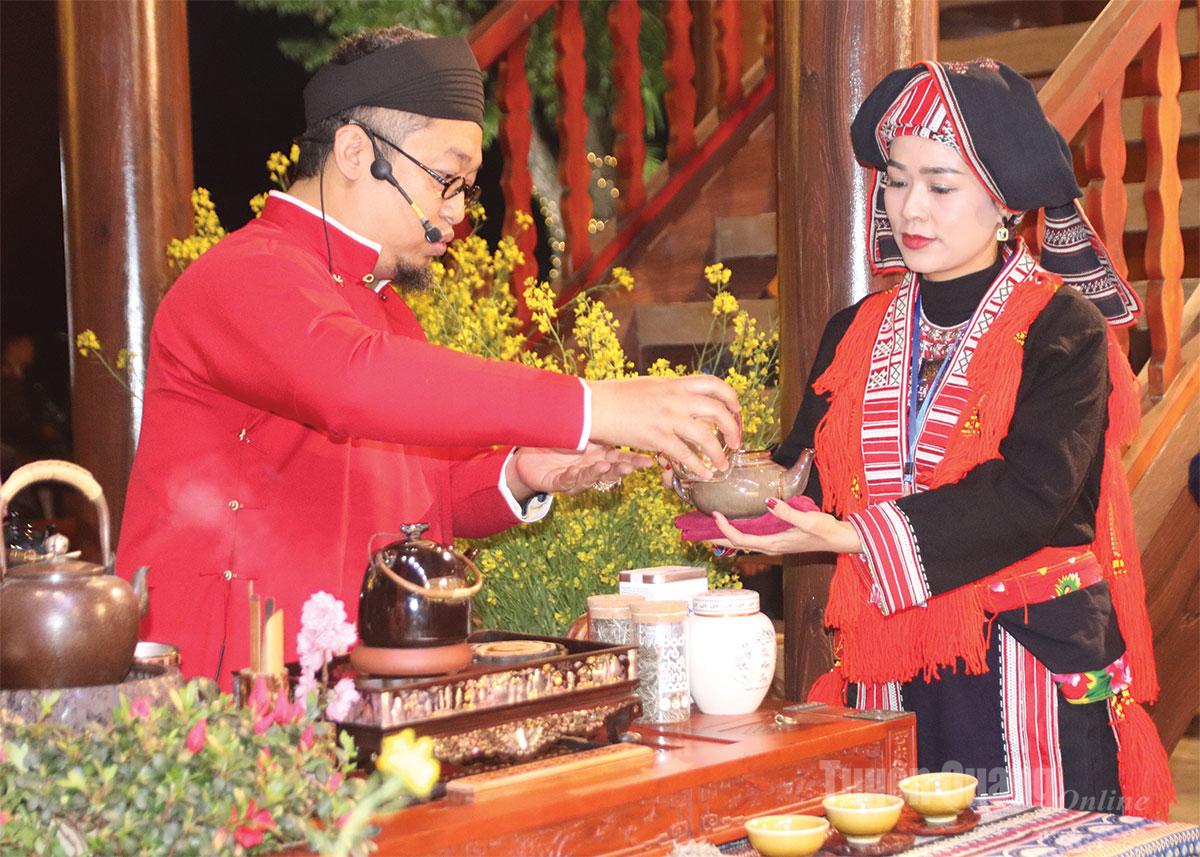
| Demonstrating the brewing of Shan Tuyet tea in a community tourism setting offers a unique experience of the tea culture of the Tuyen Quang highlands. |
Extracting the essence from hardship.
Tuyen Quang, home to 22 ethnic groups, boasts a rich and unique culinary heritage, considered one of the best in the northern mountainous region. Each dish not only reflects the natural environment but also embodies the vitality, knowledge, and enduring adaptability of the local communities. Amidst the sharp, jagged mountain slopes, cold climate, and limited arable land, the Mong, Dao, Tay, and Lo Lo ethnic groups have learned to distill the essence of hardship to create dishes that sustain life and enrich the cultural identity of this highland region.
A meal in the highlands begins with the most familiar things: corn, rice, bamboo shoots, wild vegetables, chicken, stream fish… But hidden behind this simplicity is a treasure trove of indigenous knowledge. The Hmong people are closely connected to corn on their barren, high-altitude fields, so men men (corn porridge) and corn pho have become culinary symbols linked to the life and culture of their villages. Mr. Lai Quoc Tinh, Chairman of the Board of Directors of H'Mong Village Resort, said: “Corn pho is our creation, inspired by men men – the golden staple food that sustains the Hmong people. We combine the essence of Hmong ethnic cuisine with the soul of Vietnamese pho to create a unique product. Pho is already a national treasure, while corn is the soul of the highlands. By combining these two values, we not only create a dish, but also define identity through flavor, giving tourists the key to unlocking the cultural heritage of the Hmong people.”
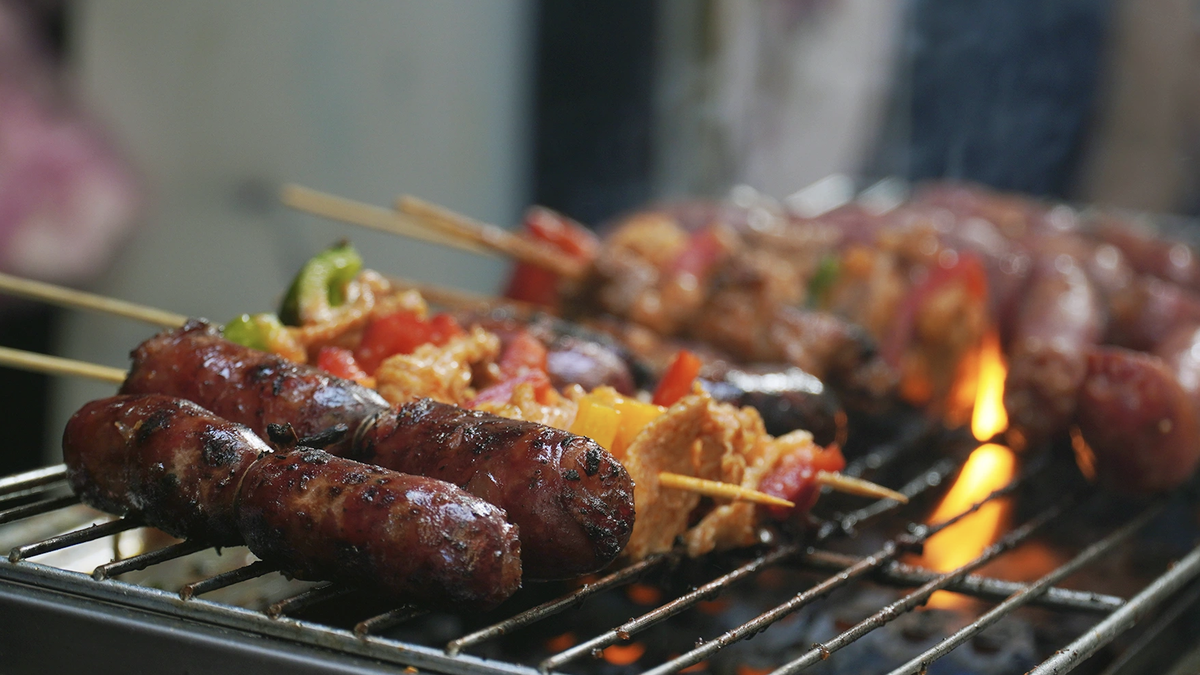
Not only the Hmong, but each community has its own culinary choices based on their knowledge and natural conditions. The Dao people are famous for their medicinal-rich diet: chicken stewed with herbs, fish stewed with forest leaves, and herbal rice wine – dishes that are both delicious and nutritious. The Tay people are sophisticated in their preparation of banh khao, banh chung gu, and five-colored sticky rice – dishes that embody the philosophy of the five elements and the belief in a bountiful harvest. Meanwhile, the Lo Lo people use smoked meat, smoked sausages, and buckwheat cakes to preserve the flavors of the mountains and forests through winter, while also preserving the traditional lifestyle of their community.
Besides its culinary delights rich in local knowledge, Tuyen Quang also stands out with its distinctive beverages, closely linked to nature and community life, becoming a symbol of the highland culture. Among them, ancient Shan Tuyet tea, known as the "green gold" of the mountains, grows on peaks thousands of meters high, shrouded in clouds year-round, with tea buds covered in a layer of white down like snow. When brewed, the tea has a golden hue, a refreshing astringent taste, and a deep, sweet aftertaste; each cup of tea not only nourishes the body but also embodies the spirit of the mountains, the wisdom, and the indomitable spirit of the highland people. In addition to Shan Tuyet tea, the Dao, Tay, and Mong people also use forest leaf water – mugwort leaves, stevia leaves, and forest roots – to make daily drinks to cool the body, aid digestion, and prevent disease, becoming a treasure trove of indigenous medical knowledge preserved through generations. The combination of Shan Tuyet tea and Meo Vac mint honey or Phuc Son honey also creates unique drinks that are both delicious and rich in cultural value, especially loved by tourists.
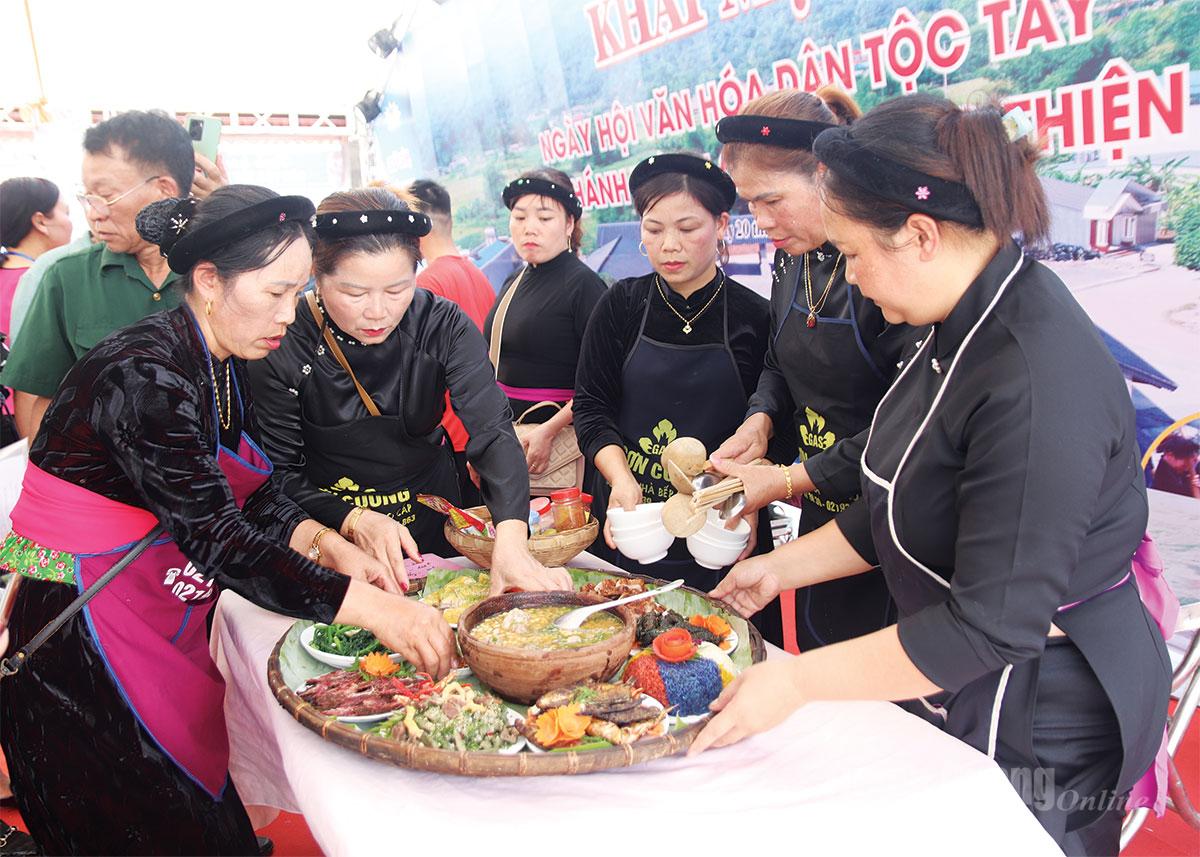 |
| Homestay owners in Ha Giang 1 ward showcased their cooking skills at the Tay ethnic group's cultural festival. |
Furthermore, from the small kitchens of ethnic minority communities, many local products have been awarded OCOP stars and granted geographical indications, becoming reputable brands in the market such as: Gù sticky rice cake, buckwheat cake, Yellow beef, Ham Yen Sành oranges, Shan Tuyet tea... Mèn mén (a type of steamed cornmeal), Ấu tẩu porridge, Thắng cố (a type of stew), and "piglet carried under the arm" pork have even made it into the Top 100 Vietnamese specialty dishes; Shan Tuyet tea, buckwheat cake, and seedless persimmons are also included in the Top 100 Vietnamese specialty gifts, demonstrating the attractiveness of highland cuisine to tourists.
"Keeping the flame alive" in every dish.
On a late winter afternoon, in a small, smoke-filled kitchen in Na Tong village, Thuong Lam commune, Mrs. Trieu Thi Xuong, a Tay woman, busily rekindled the wood-burning stove that had been her home for more than half her life. As the fire blazed and the logs crackled, the conversation about highland cuisine began. “To understand the people of the mountains, you have to sit by the stove and watch them cook,” Mrs. Xuong said with a gentle smile, her eyes narrowing behind the smoke.
Ms. Xuong recounted that each dish of the Tay people is associated with a season and a rhythm of life in the mountains and forests. Five-colored sticky rice only fully reveals the essence of the mountains and forests when the rice is dyed with the natural essence of leaves and roots and cooked with pure spring water; sour pork must be fermented in sufficient sunlight and wind to develop its flavor; ant egg cakes are only available when the forest is in season and black ants build their nests; steamed wild banana blossoms with fig leaves, the Tay people say, is a dish to "preserve the essence of the forest" during the rainy season; and the wild vegetable and egg patties represent the taste of hard work, going to the fields in the morning and gathering a few handfuls of vegetables and cracking an egg to make a warm meal for the whole family.
In the highlands, the kitchen is not just for cooking. It's a place for passing down skills, where children listen to their grandmothers tell fairy tales, where men discuss farming matters, and where women teach each other the secrets of making rượu (rice wine), marinating meat, and fermenting leaves. During the bitterly cold winter days, the kitchen is the only gathering place that keeps the whole house warm.
Mr. Hong Mi Sinh, from Pa Vi Ha village, Meo Vac commune, is affectionately called "the guardian of the Mong culinary soul" by the locals. For more than half his life, he has diligently preserved the traditional flavors of his ethnic group, from steaming pots of thang co (a traditional stew) and golden bowls of men men (a type of corn porridge) to earthenware jars of corn wine fermented with leaves... "Visitors come here not only to satisfy their hunger, but also to understand why each dish appears on the table, carrying with it stories, knowledge, and the soul of the mountains and forests," Mr. Sinh recounts.
From these simple dishes, visitors gain a deeper understanding of the lifestyle, beliefs, and spirit of the highland people. They eat thang co (a traditional stew) to hear stories about the market; taste au tau porridge to feel the philosophy of resilience and hard work; see the pieces of meat hanging in the kitchen rafters to see the traces of the harsh winter; and sit by the fire to feel the warmth of human connection. Therefore, cuisine is not just about flavor, but a living cultural map, preserved not by museums, but by everyday life itself.
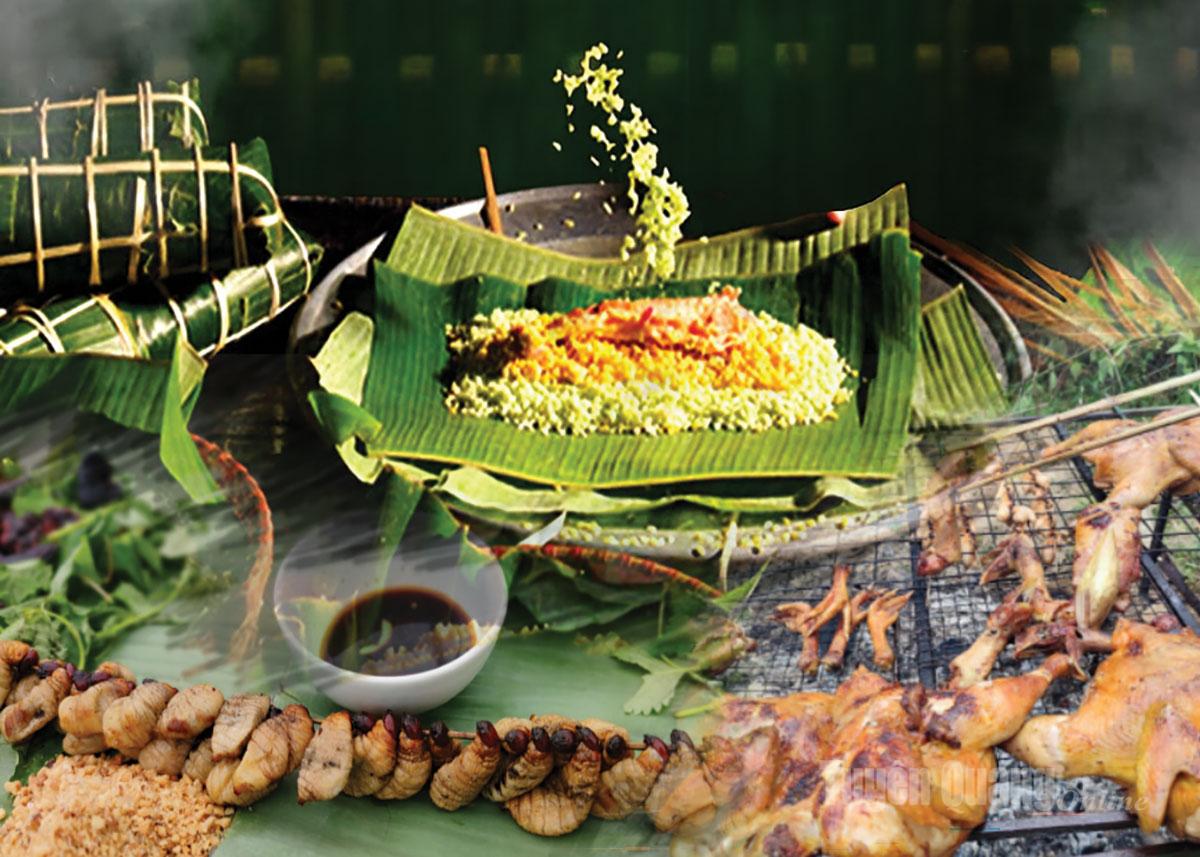 |
| Tuyen Quang boasts one of the richest and most unique culinary treasures in the northern mountainous region. |
From humble village meals to cultural "ambassadors"
In traditional village homes, meals, once reserved for family and community, have now emerged into the daily living space, becoming cultural "ambassadors" that bring the identity of the highlands to tourists. The emergence of community homestays has opened a new "stage" for highland cuisine. Many homestays, such as Hoang Tuan (Thuong Lam commune), Danh House (Lung Cu commune), Hong Thu homestay (Quan Ba commune), etc., have proactively incorporated cooking experiences into their tourism services.
Experiences such as making men men (a type of steamed cornmeal), marinating meat and hanging it over a fire, cooking thang co (a traditional stew) with local herbs, and wrapping banh chung Gu (a type of sticky rice cake)... make the cuisine of the highlands vibrant, familiar, and attractive to tourists. Ms. Duong My Thien, a tourist from Ho Chi Minh City, shared: “At Nam Dip and Ban Bon Homestays in Lam Binh commune, we were invited by the hosts to enjoy five-colored sticky rice, pick wild vegetables, and cook traditional Tay dishes. Through this hands-on experience, I had a fascinating journey, satisfying my taste buds while discovering the treasure trove of local knowledge, customs, and life philosophy of the highland people.”
To improve service quality, many localities have organized cooking classes, helping people improve their skills while preserving the essence of traditional cuisine. According to Le Xuan Manh, Vice Chairman of the People's Committee of Ha Giang 1 Ward: “Currently, there are 4 community-based tourism villages in the ward with nearly 50 households providing homestay services. Experts and artisans – masters of local cuisine – play the role of true instructors. They meticulously guide each step, from selecting ingredients to processing and presentation, while also sharing stories, knowledge, and cultural values associated with each flavor.”
Thanks to this, visitors not only witness the cooking process but also feel the rhythm of life, the wisdom, and the spirit of the mountains and forests blended into each grain of sticky rice, each piece of cake, and each wisp of smoke from the kitchen fire – a profound experience that goes beyond taste.”
Tuyen Quang cuisine is an invaluable cultural asset. Each dish is not only a flavor but also a story about indigenous knowledge and the vibrant spirit of the highland community. Deputy Director of the Department of Culture, Sports and Tourism, Nguyen Thi Hoai, shared: To make cuisine a cultural "ambassador," the industry has been implementing a comprehensive and professional transformation strategy. The focus is on creating experiences, shifting from selling food to selling cultural experience tours, extending the length of stay for tourists; developing a supply chain of clean ingredients, awarding OCOP stars and geographical indications, and preserving traditional recipes; and organizing food festivals to position Tuyen Quang cuisine on the Vietnamese culinary map…
Each dish in the highlands of Tuyen Quang is not just a flavor, but a story about indigenous knowledge, the vibrant spirit, and the creativity of the ethnic communities. Preserving these dishes means preserving the cultural heritage and identity of the community. When a small village meal becomes a tourism "ambassador," it is then that the people and the land of the highlands are most fully present to friends from all over the world – through the aroma of mountain kitchens, through genuine local hospitality, and through an unmistakable cultural depth.
Thu Phuong
Source: https://baotuyenquang.com.vn/van-hoa/202512/am-thuc-can-cuoc-van-hoa-1507944/

![[Photo] Hanoi is ready for the "National Festival"](https://vphoto.vietnam.vn/thumb/1200x675/vietnam/resource/IMAGE/2026/03/12/1773305846167_ndo_br_z7612336508628-14627dc7d18cc27532ffea5d4089713b-4105-jpg.webp)
![[Photo] Trial run of the election process at polling stations in Dong Da ward (Hanoi)](https://vphoto.vietnam.vn/thumb/1200x675/vietnam/resource/IMAGE/2026/03/12/1773306146728_ndo_br_van-hanh-thu-to-bau-cu-4070-755-jpg.webp)













































Comment (0)