

Did Vietnamese people in the past get to eat delicious food?
According to the book "Vietnamese Customs," Vietnamese cuisine is rich and varied, ranging from rice, meat, vegetables, fruits, and spices to cakes, pastries, wine, and tea. Depending on the tastes and customs of each region, Vietnamese cuisine includes many unique dishes that other ethnic groups would avoid or refrain from eating. The book also acknowledges that Vietnamese cooking is still somewhat clumsy and not as sophisticated as that of the Chinese or Japanese.
Mr. Phan Kế Bính commented on the meals of Vietnamese people in the past: "In this world, food and drink vary from place to place. People in the city, in affluent households, have more stir-fried dishes, roasted meat, sausages, ham, fried fish, fried eggs, crab… Ordinary families usually have a plate of braised meat or fish, plus beans, vegetables… Only during ancestral commemorations, Tet (Lunar New Year), or when hosting guests do they use elaborate dishes; rich families prepare more, poor families prepare less, but there must always be seven, eight, or even four bowls of stew, with dishes like rhinoceros skin, shark fins, fish maw, squid sauce, braised duck, stir-fried birds… For the more refined, Western or Chinese dishes are used."
In rural areas, life was still hard; only the wealthy could afford meat, ham, and fish... ordinary families mostly ate crab, snails, shrimp, and tofu, only occasionally daring to eat meat or fish. Even poorer families ate pickled vegetables, soy sauce, boiled water spinach, and braised beans all year round...
"Sometimes, for ancestral commemorations, Tet (Lunar New Year), celebrations, or funerals, wealthy families might cook in the city style, but mostly it's rare beef or buffalo meat, boiled pork, boiled chicken or duck with salt and pepper, or turtle stew, imitation dog meat stew, stir-fried vermicelli, or bamboo shoot stew... However, eating and drinking in the countryside is more expensive than in the city, because in the countryside, whenever there's a feast, they have to invite people from the village and neighborhood, sometimes hundreds of tables, whereas in the city, even with many invitations, you'd only get ten tables at most."

Mr. Phan Kế Bính also observed that people in the countryside tend to drink more alcohol than people in the city; some drink a whole large bottle at once, while others drink slowly throughout the day.
Dr. Hocquard also observed Vietnamese eating habits when he visited North Vietnam, from eating customs at the market to consuming blood pudding and dog meat. When he entered a roadside eatery, he saw many attractive dishes with clean plates and bowls: "...pieces of roasted duck for 5 small coins a plate, large shrimp for 1 small coin, crabs and fish fried in sesame oil, roasted meat skewers cut into small pieces and arranged on a layer of purslane, mashed beans, boiled green beans dipped in fish sauce..." (A Campaign in Tonkin, Hanoi Publishing House, 2020).
Dr. Hocquard shared that in Tonkin at that time, people only needed to spend 30 zinc coins, equivalent to about 3 French cents, to have a hearty meal. The meal would consist of two plates of meat, a bowl of soup, and two bowls of rice. After eating, people would drink green tea and smoke opium-laced tobacco. “On the tea shop table, there was a small bowl for them to use with a pinch of opium-laced tobacco, usually tucked into their belt. After taking one or two puffs, they would continue their journey with a piece of betel nut in their mouth. That was how they had a very hearty meal” (A Campaign in Tonkin, Hanoi Publishing House, 2020).
Regarding the quality of meals and food preparation, Mr. Phan Kế Bính offered a very objective assessment. He believed that while Vietnam has no shortage of delicacies and abundant vegetables, the cooking methods were still clumsy. The dishes were monotonous, consisting of dishes like pork sausage, fried tofu, stir-fried vegetables, fried fish, and imitation dog meat stew… He also warned that Vietnamese people did not pay attention to their diet, lacked knowledge of proper nutrition, and therefore had weak bodies, making them unable to perform strenuous work… Furthermore, Vietnam lacked cookbooks; cooking was simply a matter of the people themselves, with servants cooking for the wealthy according to their own preferences, gradually becoming a habit.

What Phan Kế Bính said is true, but to have nutritious and wholesome food, one needs to have the economic means. At that time, Vietnamese people were very fortunate to have enough to eat and wear. Eating well and dressing well was only possible for the wealthy, the affluent, or royalty.
800 people served food and drinks to the king.
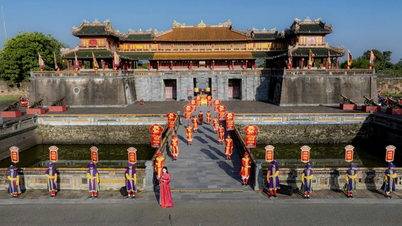
In his book *A Campaign in Tonkin*, Dr. Hocquard notes that, while observing a market near the imperial city of Hue, the royal chefs also came there to buy food for the king. However, the chefs' methods of selecting food followed unique rules that were not always pleasing to the vendors.
Dr. Hocquard recounted that the king's chefs, known as "supreme chefs," numbered in the hundreds. Each chef had to prepare a dish for a fixed price of 30 zinc coins (equivalent to 3 to 5 French cents). Every morning they would spread out to the markets around the capital to buy food. When they found something suitable, they would simply pick it up without worrying about the price. They would give the seller the 30 zinc coins they were allocated, even though the price of a good fish at the market was usually 60 French cents. They would choose the best part of the fish, then pay the seller the rest.
"If only the king's chefs behaved in such an authoritarian manner towards market vendors, it wouldn't be so bad, but even the chefs of the empress dowager, the princes, and even the servants of high-ranking officials all behaved this way. And the poor vendors could only silently endure it because they didn't know who to turn to for justice," Dr. Hocquard observed.

The preparations for the king were considered the most elaborate and meticulous. They involved rituals and required a large, professional staff, and according to Doctor Hocquard, "no king in Europe was served such elaborate meals as the king of Annam."
According to this French doctor's statistics, "besides nearly a hundred chefs, there were also 500 people called 'hammermen' commanded by a captain. They were responsible for supplying game meat for the king's meals. Another force of 50 people called 'military personnel' specialized in hunting birds with bows and arrows for the king's food."
Along the coastal regions and on the nearshore islands of Annam, there were also groups of soldiers specializing in fishing and gathering swallows' nests to supply the royal court. Each swallow's nest supplier or fisherman was a detachment of 50 people. Finally, there was a team of 50 people specifically responsible for serving tea and refreshments, known as the "tea-serving team." Thus, the total number of people solely responsible for the king's and court's food and drink reached 800.
The king always enjoyed delicacies and rare foods, so most localities were responsible for supplying the king's favorite products for the royal meals. For example, villages around the imperial city of Hue provided short-grain, translucent, slightly sticky rice specifically for the king, while the southern provinces supplied crocodile meat. The northern provinces sent fine fabrics via postal services. Ba Chuc, a town in An Giang province, supplied dried fish, shrimp, mangosteen, and coconut beetle larvae. All these tribute products were included in the tax, and the annual amount paid was carefully calculated.
“Every day, at mealtime, a bell would ring from within the palace. The chefs would then prepare the food, scooping it into small porcelain bowls placed on a large lacquered tray. They would pass the tray to the eunuchs, who would then pass it to the palace maids, who were allowed to approach the king and kneel to offer him the meal. The king ate his daily meals like the French eat bread. The rice had to be exceptionally white and meticulously selected grain by grain by the royal gardeners; absolutely no broken grains were permitted. The rice was cooked in an earthenware pot and used only once, then smashed after the meal,” Dr. Hocquard described in detail.

Emperor Tự Đức was very cautious and vigilant about food, fearing poisoning. He had physicians taste the food beforehand. The chopsticks he used had to be made of bamboo and replaced daily; he refused to use silver chopsticks because he considered them too heavy.
“During meals, the king carefully drank filtered water or a type of white wine distilled from lotus seeds and infused with herbs. The amount of rice the king ate at each meal was calculated in advance, and he never ate more than that. If the king did not have an appetite as usual, a physician would be summoned, who would immediately prescribe medicine and the king would have to take a sip of it in front of the king” (A Campaign in Tonkin, Hanoi Publishing House, 2020).
“Our meals have a special flavor that is difficult to describe in words. Simple meals with seasonal ingredients: boiled water spinach with soy sauce, vegetable broth with lemon juice as soup… boiled cabbage with fish sauce and egg, pickled eggplant with shrimp paste, pickled eggplant with soy sauce, sweet potato leaf soup, plain water spinach soup, sour cucumber soup, stir-fried pork with fermented fish sauce, a few pieces of braised fish… those meals of yesteryear never bored people, on the contrary, they always brought joy to the scenery, a deep affection for the homeland and country, without a hint of longing or craving for delicious food from elsewhere. Each dish, to some extent, evokes memories, the image of the capable housewife, the kind mother, the filial sister who cooked with her own hands. The wife lovingly prepared delicious food for her husband, and the husband, lovingly enjoying it, felt even more love. Everyone in the extended family felt even more bound together spiritually” (Customs and Traditions of the Land - Nhat Thanh).
Source: https://baophapluat.vn/am-thuc-viet-tu-thon-da-den-thanh-thi.html


















































Comment (0)