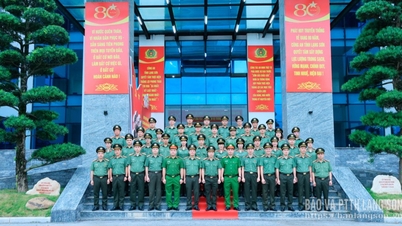
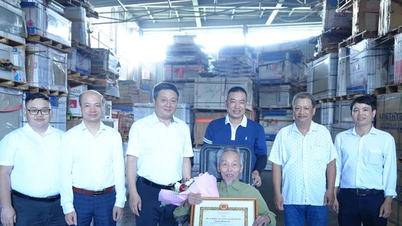
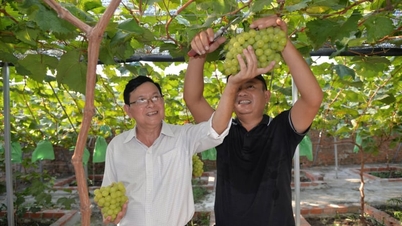
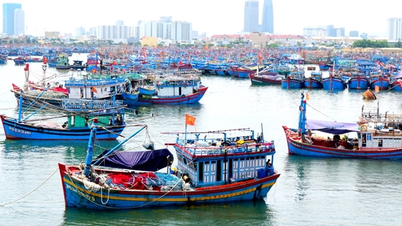
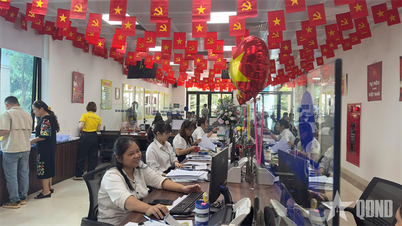
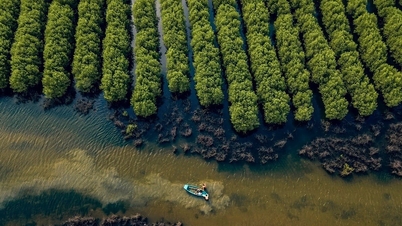
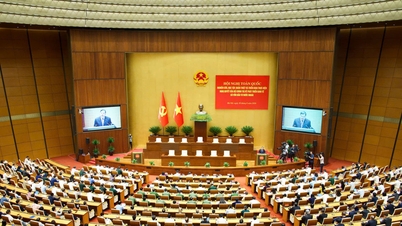
Taken as a whole, these three resolutions do not view the three economic sectors as separate entities of development, but rather place them within a unified, interconnected, and mutually supportive development ecosystem, all aiming towards the goal of building an independent, self-reliant, and deeply integrated Vietnamese economy.
Over the years, whenever discussing development models, many opinions have often raised the question: Which sector plays a decisive role in growth? Or will foreign-invested enterprises "overshadow" domestic enterprises? These approaches partly reflect a "selective" mindset, viewing economic sectors as competing entities in terms of their roles.
The series of three Resolutions 68, 79, and 10 shows that the approach has changed. The private sector is identified as "the most important driving force of the national economy." The state-owned economy continues to "play a leading role in the socialist-oriented market economy." The foreign-invested economy is "an important part of the national economy." These viewpoints do not cancel each other out. Each economic sector has its own mission, and only when each sector operates according to its role can the economy develop sustainably.
It is also important to emphasize that these three economic components are complementary, not complementary or opposing. The state-owned economy plays a leading role in fundamental areas, ensuring major balances and macroeconomic stability. The private economy is the driving force of innovation, production development, and productivity enhancement. The foreign-invested sector supplements resources, technology, modern management methods, and connects the economy with global value chains. The issue is not which sector is more important, but how to best leverage the strengths of each sector within a unified whole.

In reality, a "connectivity gap" still exists between these three economic sectors. The localization rate in many industries remains low. Vietnamese businesses are not yet widely involved in the supply chains of multinational corporations. Some experts liken foreign-invested and domestic businesses to "two economies coexisting within one economy."
Therefore, the overarching message of the three resolutions is to leverage the combined strength of all economic sectors through a clear delineation of the functions and roles of each sector. The state-owned economy plays a foundational role; the foreign-invested sector brings resources, technology, and international connections; and the private sector is the force that absorbs, masters technology, and disseminates value throughout the economy.
Resolution 10 also sets the goal that, by 2045, the foreign-invested economic sector must be closely linked with the state-owned and private economies, making Vietnam one of the leading centers for production, services, innovation, and regional governance with high competitiveness in Asia, deeply involved in global value chains.
To realize that goal, the resolutions all emphasize promoting public-private partnerships (PPP), developing domestic supply chains, and strengthening technology transfer. When each component leverages its strengths and is effectively connected, it will create synergy, enhancing the competitiveness and endogenous strength of the economy.



The Politburo 's three resolutions on the development of the private economy, the state-owned economy, and the foreign-invested economy will truly be effective when they are concretized through effective institutional and organizational implementation. This requires continued improvement of the investment and business environment, ensuring fair competition, promoting linkages between economic sectors, and building strong policies to transform the spirit of the resolutions into new drivers of development.
Source: https://daibieunhandan.vn/ba-nghi-quyet-mot-muc-tieu-10422016.html